

Understand the key differences between private funding and public markets, including capital access, investor expectations, governance, and liquidity. Learn how startups transition from venture-backed growth to becoming publicly listed companies.
Written by TFN Research Desk | covering startups, technology, venture capital, and business strategy.
Flipkart spent more than a decade as a private company, raising round after round from Tiger Global, SoftBank, and eventually Walmart, without ever having to explain a single quarter’s numbers to a retail investor in Indore. In 2026, it reverse-flipped back to India, cleared the NCLT, and started exploring a pre-IPO round before what could be one of the country’s largest listings. Eighteen years of private capital discipline, about to meet public market scrutiny for the first time.
That transition is the entire subject of this piece. Private funding and public market capital are not two sizes of the same thing. They are two different relationships between a company and the people who own it, and founders who treat the jump from one to the other as a formality usually get an expensive lesson in how different the two actually are.
Private Funding Is a Negotiation. Public Markets Are a Verdict.
When a startup raises from a VC, the terms are negotiated. Valuation, board composition, liquidation preference, even the wording of protective provisions, all of it gets argued over a term sheet by two parties who know exactly what they are agreeing to. The company has real influence over the outcome of that conversation.
Public markets do not negotiate. The market sets the price every single trading day based on what thousands of strangers are willing to pay, and a founder has no seat at that table beyond the disclosures they choose to make. A private round closing at a flat valuation is a quiet disappointment between a founder and a handful of investors. A public stock trading down 20 percent in a week is a headline.
What a Startup Gains by Staying Private
Private capital, whether early-stage VC or growth equity, comes with patience that public markets structurally cannot offer. A VC investing in year three of a ten-year fund is underwriting a long arc, accepting that the path to a strong outcome may include a rough patch nobody outside the boardroom ever has to see. There is no quarterly earnings call, no analyst downgrade, no retail investor panic-selling because growth slowed from 80 percent to 60 percent.
Private funding also lets founders keep strategic decisions out of public view. Pricing experiments, restructuring, even a pivot, can happen without moving a stock price or triggering a regulatory disclosure. This is precisely why companies like PhonePe, Razorpay, and Groww spent years compounding privately, raising larger and larger rounds, before even beginning to discuss a listing timeline.
The tradeoff is liquidity. Private equity is illiquid by design. Employees holding ESOPs and early investors holding a decade-old stake cannot simply sell on a bad day, or a good one. Liquidity events come from acquisitions, secondary sales, or eventually, an IPO, not from a click of a button.
What a Startup Gains by Going Public
Public markets offer something private funding structurally cannot: a deep, continuously priced pool of capital, and a way for early backers, founders, and employees to finally convert paper wealth into something they can spend. India’s IPO market gave startups exactly this in 2025, when 18 new-age companies listed and collectively raised roughly 41,248 crore rupees, providing the first real liquidity many early investors in those companies had seen in years.
Public listing also brings a credibility signal that private rounds, however large, cannot fully replicate. Passing SEBI’s disclosure requirements, surviving public scrutiny of financials, and being held to listed-company governance standards tells customers, partners, and future hires something a Series E press release does not.
The cost is permanent and public accountability. Once listed, a company reports every quarter, forever. Margins, customer growth, churn, all of it becomes visible to competitors and short sellers alike. A bad quarter is not a private conversation with a board, it is a stock price move that every employee holding options can see in real time.
A Side-by-Side Look
| Factor | Private Funding | Public Market Listing |
| Who sets the price | Negotiated between founder and investor | Set continuously by the open market |
| Disclosure requirements | Minimal, limited to investors and board | Quarterly results, SEBI disclosures, public scrutiny |
| Liquidity for early holders | Low, tied to secondaries or exit events | High, tradeable daily on exchanges |
| Patience for underperformance | High, multi-year investment horizons | Low, judged quarter to quarter |
| Capital pool size | Limited to fund size and investor appetite | Large, includes retail, mutual funds, FIIs |
| Governance bar | Set by negotiated board terms | Set by SEBI listing regulations |
The Mistake Founders Keep Making in Both Directions
Some founders chase a public listing too early, lured by valuation headlines from the 2025 IPO boom without the underlying cash flow discipline that 2026’s more selective public market is now demanding. SEBI-approved DRHPs from companies like Infra.Market show a clear pattern: even a large, fast-growing business saw its net profit fall 42 percent year on year even as revenue grew 27 percent, a mismatch that public market investors are far less forgiving of than private ones were during the growth-at-all-costs years.
The opposite mistake is staying private too long out of fear of public scrutiny, missing a listing window when valuations and investor appetite are strong, and eventually being forced to list during a weaker cycle on worse terms. Founders who treat the IPO decision purely as a fundraising event, rather than as a fundamental change in how the company will be run and judged afterward, tend to be the ones surprised by what comes next.
Where the Indian Market Stands on This in 2026
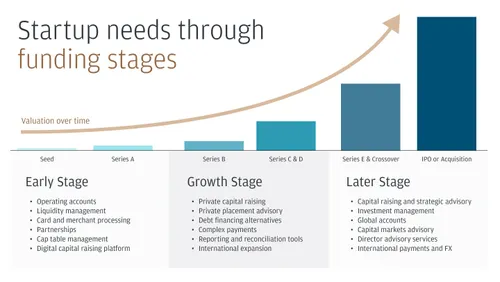
The numbers tell a clear story about which way the pendulum has swung. India recorded 47 tech IPOs in FY26, a 52 percent jump over FY25, with marquee listings including Lenskart, Groww, and Meesho. At the same time, late-stage private funding in FY26 fell 38 percent compared to the previous year, even though it remained 18 percent above FY24 levels. Late-stage VCs appear to be increasingly content waiting for the public listing rather than writing the next big private cheque, treating the IPO window as the preferred exit route instead of competing for late rounds.
Meanwhile, early-stage private funding is doing the opposite. Series A funding rose 33 percent year on year to about 4.8 billion dollars in FY26, showing that the earliest stage of the funding lifecycle, where public markets cannot participate at all, remains healthy and selective. The picture forming in 2026 is a barbell: strong early-stage private funding for unproven ideas, strong public market appetite for proven ones, and a noticeably thinner middle where late-stage private rounds used to dominate.
This is not happening without regulatory tailwinds. SEBI’s reforms over the past year, including simplified DRHP filings and more flexible ESOP rules that let founders retain meaningful ownership through a listing, have made the public route more founder-friendly than it was even two years ago. Twenty-four startups had already filed DRHPs by mid-2026, with more than 26 others finalising plans, signalling that the next wave is already in motion rather than speculative.
The Take Nobody Will Say Out Loud
Founders talk about going public as a milestone, the next step after the last private round. It is not a next step. It is a different game with different rules, and pretending otherwise is how companies end up listing at a valuation their fundamentals cannot support, only to spend their first year as a public company explaining a down round to retail shareholders who have far less patience than a VC partner ever did.
The uncomfortable part is that the discipline a startup needs to survive public markets, predictable cash flow, real unit economics, governance that holds up under scrutiny, is discipline most founders should have been building years before any IPO conversation started. Companies that build that discipline only when a banker tells them to are not preparing for a listing. They are improvising one, in front of an audience that does not forgive improvisation the way a private boardroom sometimes will.
Frequently Asked Questions
What is the main difference between private funding and public market funding for startups? Private funding involves negotiated terms between a company and a limited set of investors, with patient, multi-year timelines and minimal public disclosure. Public market funding involves a continuously priced stock traded by the open market, with mandatory quarterly disclosure and far less tolerance for short-term underperformance.
Why are more Indian startups choosing to go public in 2026? India recorded 47 tech IPOs in FY26, a 52 percent increase over FY25, driven by SEBI reforms such as simplified DRHP filings and more flexible ESOP rules, alongside late-stage investors increasingly treating IPOs as the preferred liquidity event rather than competing for private rounds.
Is private funding better than going public for an early-stage startup? For early-stage companies still proving their business model, private funding is generally the only realistic option, since public markets require disclosure and governance standards that pre-revenue or early-revenue startups typically cannot meet. Series A funding alone grew 33 percent year on year in FY26, showing this stage remains active.
What happens to a startup’s governance requirements after an IPO? Once listed, a company must meet SEBI’s listing regulations, including mandatory quarterly financial disclosures, stricter governance norms, and enhanced transparency requirements, replacing the privately negotiated board terms that governed it before listing.
Why did late-stage private funding decline in India in FY26? Late-stage private funding fell 38 percent year on year in FY26, largely because late-stage investors are increasingly waiting for IPO exits rather than writing new private cheques, with the IPO window becoming the preferred route to liquidity for both investors and employees.
Can a startup move from public back to private? Yes, through a process called delisting or a take-private transaction, though this is uncommon and typically requires significant capital, regulatory approval, and a buyout of public shareholders. It is far rarer than the private-to-public transition this piece focuses on.
What should a founder evaluate before deciding to take a startup public? Founders should evaluate whether the business has predictable cash flows, defensible unit economics, and governance structures that can withstand quarterly public scrutiny, since 2026’s IPO market is explicitly prioritising operational discipline and profitability over headline growth narratives that worked in earlier cycles.
Sources
- Inc42 — Indian Startup IPO Tracker 2026
https://inc42.com/features/indian-startup-ipo-tracker-2026/ - The Unlisted Intel — 2026 IPO wave could mark a new phase for Indian startups
https://unlistedintel.com/blogs/2026-ipo-wave-could-mark-a-new-phase-for-indian-startups/ - StartupPoint — India’s 2026 startup funding: mixed signals
https://startuppoint.in/indias-2026-startup-funding-mixed-signals-as-ear/ - IPO Watch — Future of Indian startup IPOs: trends and market outlook
https://ipowatch.in/future-of-indian-startup-ipos-trends-market-outlook/ - WebSenor — Indian startup IPO landscape 2026
https://websenor.com/indian-startup-ipo-landscape-2026-opportunities-and-challenges-for-businesses/ - IPOPlatform — Top funded startups in India in 2026
https://www.ipoplatform.com/blogs/top-funded-startups-in-india-in-2026/211
Stay in the Loop
For more stories, breakdowns, and unfiltered takes on what is really happening in Indian and global business and tech, follow TheFounder Nation.
Instagram Handle : https://www.instagram.com/thefoundernation?igsh=MTZobDUwc2xqZWdhOA==
We cover what the mainstream business press won’t.
© TheFounder Nation | All rights reserved Word count: ~1500 | Read time: ~7 minutes Primary keyword: public market vs private funding for startups | Secondary: startup IPO India 2026, private equity vs public listing, late-stage funding decline India, SEBI startup IPO rules, going public vs staying private