


Written by TFN Research Desk | covering startups, technology, digital media, and business strategy.
Cable television had one of the most comfortable monopolies in modern business history.
You paid for it whether you watched it or not. You sat through ads you never asked for. You watched what was available when it was available. And if you did not like it, tough luck.
Then a DVD rental company nobody took seriously decided to stream movies over the internet.
And an entire industry built over five decades quietly died.
Why Did Netflix Kill Cable TV?
Netflix disrupted cable television by offering on-demand streaming, lower prices, original content, and a better customer experience. As internet speeds improved, millions of consumers cancelled cable subscriptions and switched to streaming platforms like Netflix, accelerating the decline of traditional cable TV.
Why Cable TV Dominated Entertainment for Decades
At its peak, cable had over 68 million subscribers in the US alone.1 In India, it connected over 100 million homes by the mid 2000s.2
People did not subscribe to cable because they loved it. They subscribed because there was no other way to watch television.
You paid for 200 channels to watch five. Prices went up every single year. Customer service was a joke. And the companies knew none of it mattered because you had nowhere else to go.
That is not a business model. That is a hostage situation.
And the moment someone handed customers a key, they ran.
Netflix Was Never Really a Streaming Company
Netflix launched in 1997 as a DVD-by-mail service.3 Cable executives did not even notice.
Why would they? A company that posted you DVDs was not a threat. It was a quirky side business for people who did not want to drive to Blockbuster.
But Netflix was not building a DVD business. DVDs were just a way to get close to customers and understand what they watched, when they watched, and what made them stay or leave.
By 2007, Netflix launched streaming.4 The internet was still slow. The library was thin. And cable still was not worried.
What everyone missed was that Netflix was not trying to win immediately. It was building habits. One small convenience at a time.
No late fees. No schedules. No driving. Watch what you want, when you want, on whatever you have in your hands.
Cable could not offer any of that. Its entire model depended on you not having a choice.
Then Netflix started making its own shows.
House of Cards in 2013 was not just a prestige drama.5 It was a signal. Netflix was telling Hollywood, telling cable, telling everyone, that it was no longer just a distributor. It was a studio. It was a network. It was everything cable was, but without the part customers hated.
And in January 2016, Netflix launched in 190 countries in a single day. 6
No cable company had ever thought like that. Because no cable company had ever needed to.
The Numbers Do Not Lie
Netflix ended 2023 with 260 million paid subscribers worldwide.9
Cord cutting went from a joke to a movement to a majority behaviour in under ten years. And the youngest generation of TV viewers never signed up for cable in the first place. To them, paying for 200 channels you did not choose is as bizarre as paying for a newspaper you did not read.
Netflix vs Cable TV: The Key Differences
| Feature | Cable TV | Netflix |
|---|---|---|
| Pricing | Expensive channel bundles | Low monthly subscription |
| Viewing Schedule | Fixed programming | On-demand viewing |
| Advertisements | Frequent ad breaks | Limited or ad-free plans |
| Device Support | Television only | TV, mobile, tablet, laptop |
| Content Discovery | Channel surfing | Personalised recommendations |
| Global Reach | Region-specific | Available worldwide |
| User Experience | Controlled by provider | Controlled by viewer |
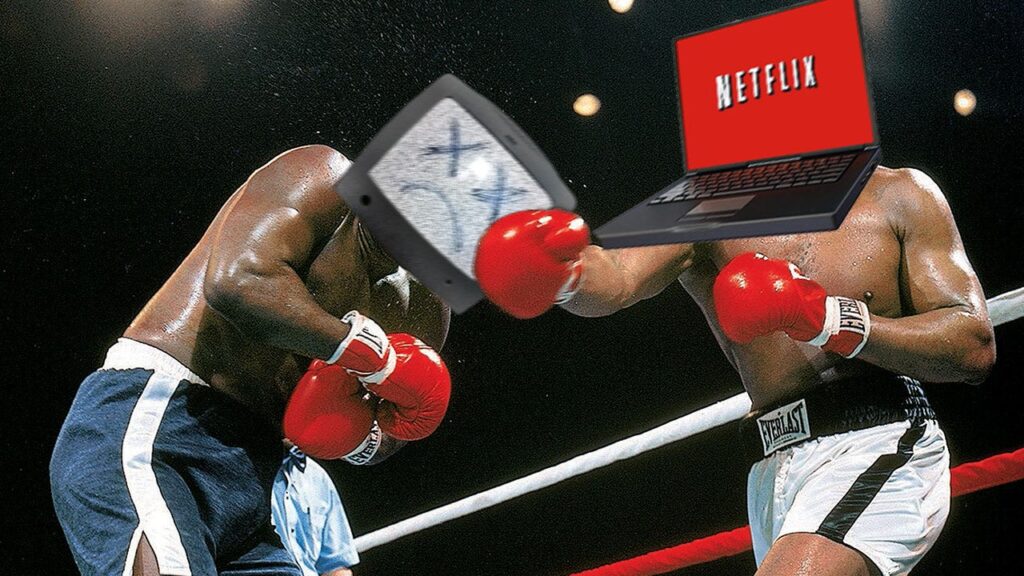
Why Cable TV Failed Against Netflix
Cable did not lose because it had bad content. HBO, ESPN, and CNN were genuinely world class.
Cable lost because it confused the pipe with the product.
It ignored how much customers hated the experience. Waiting three hours for a technician who showed up four hours late became a cultural meme. Netflix obsessed over removing every possible point of friction from the moment you opened the app. The gap between those two experiences was embarrassing.
It protected its own revenue instead of cannibalising it. Every major cable company had the money, the content library, and the technical ability to build their own streaming service in 2008. Most chose to protect their existing cable bundle instead. By the time they launched streaming, Netflix had a decade of data, habits, and brand loyalty they could not buy back.
It never understood what people actually hated about it. People did not want more channels. They wanted control. They wanted to watch without ads interrupting every eight minutes. Cable structurally could not give them that, because the bundle was its only business.
How Streaming Services Replaced Cable TV in India
India had its own version of this collapse. Just louder and faster.
At its peak, Mumbai alone had an estimated 900 cable operators.10 The whole industry was hyper local, mostly cash based, and completely unprepared for what came next.
Then Jio happened.
When Reliance launched Jio in 2016 and made mobile data essentially free,11 it did not just disrupt telecom. It handed Netflix, YouTube, and every streaming platform in the world an audience of hundreds of millions of people who suddenly had fast internet for the first time.
Indian cable operators had no answer for that. They could not match the content. They could not match the price. They could not even match the convenience of watching on a phone while commuting.
Today, Hotstar, Netflix, Amazon Prime Video, and YouTube reach more Indian viewers than cable television does.12 And that gap widens every year.
The Take Nobody In The Industry Wants To Say Out Loud
Our editors weigh in.
Netflix did not kill cable television.
Cable television killed itself. Netflix just handed it the weapon.
Think about it. Cable had everything. The content. The infrastructure. The subscribers. The brand. The capital. If any industry in history was positioned to survive disruption, it was cable television in the early 2000s.
They lost not because Netflix was smarter. They lost because they stopped giving a damn about the person sitting on the couch.
When you have a monopoly, you start running the business for your spreadsheet, not your customer. Prices go up because they can. Quality goes down because why not. And you surround yourself with people who tell you the good times will last forever.
Netflix’s real innovation was not streaming. Streaming was obvious. Everyone in that industry could see it coming.
Netflix’s innovation was deciding to actually care about the viewer. To ask what they wanted, watch what they watched, and build the product around the answer.
And that is the thing that terrifies us at TFN, because this story is not about cable television. It is about every industry that gets comfortable.
There is a Netflix being built right now for an industry near you. It probably looks harmless today. It probably does not have the content, the scale, or the revenue to be taken seriously.
But it cares about the customer more than the incumbent does.
And that, historically, has always been enough.
Frequently Asked Questions
When did Netflix start streaming?
In 2007, alongside its DVD-by-mail business.4
How many cable subscribers has the US lost?
Nearly 40 million, from 94.5 million in 2012 to under 55 million by 2023.7 8
Did cable companies try to compete with Netflix?
Yes, but too late. HBO Max, Peacock, and Paramount Plus all launched after Netflix had an insurmountable lead.
Is cable television completely dead?
Not yet. Live sports remain its last stronghold, but even that is shifting to streaming.
What happened to cable in India?
Jio made data free in 2016, OTT platforms flooded in, and hundreds of small cable operators simply shut down. The ones that survived pivoted to broadband.
Why did people stop watching cable TV?
Streaming offered more flexibility, lower prices, on-demand content, and no forced channel bundles.
What is cord-cutting?
Cancelling cable or satellite TV and switching to internet-based streaming services like Netflix or YouTube.
Is Netflix responsible for the decline of cable television?
Netflix accelerated it, but changing consumer behaviour, cheap broadband, and competing platforms all played a role.
What replaced cable television?
Netflix, YouTube, Disney+, Amazon Prime Video, and Hotstar have largely taken over for most viewers.
Stay in the Loop
For more stories, breakdowns, and unfiltered takes on what is really happening in business and tech, follow TheFounder Nation.
Instagram Handle : https://www.instagram.com/thefoundernation?igsh=MTZobDUwc2xqZWdhOA==
We cover what the mainstream business press won’t.
© TheFounder Nation | All rights reservedWord count: ~1,500 | Read time: ~6 minutesPrimary keyword: Netflix vs Cable TV | Secondary: how Netflix killed cable television, cable TV decline, streaming vs cable TV, cord cutting, Netflix streaming history, OTT platforms, why cable TV is dying, Netflix business strategy