

Sachin Bansal and Binny Bansal, founders of Flipkart, who built India's leading ecommerce platform.
Written by TFN Research Desk | covering startups, technology, digital media, and business strategy.
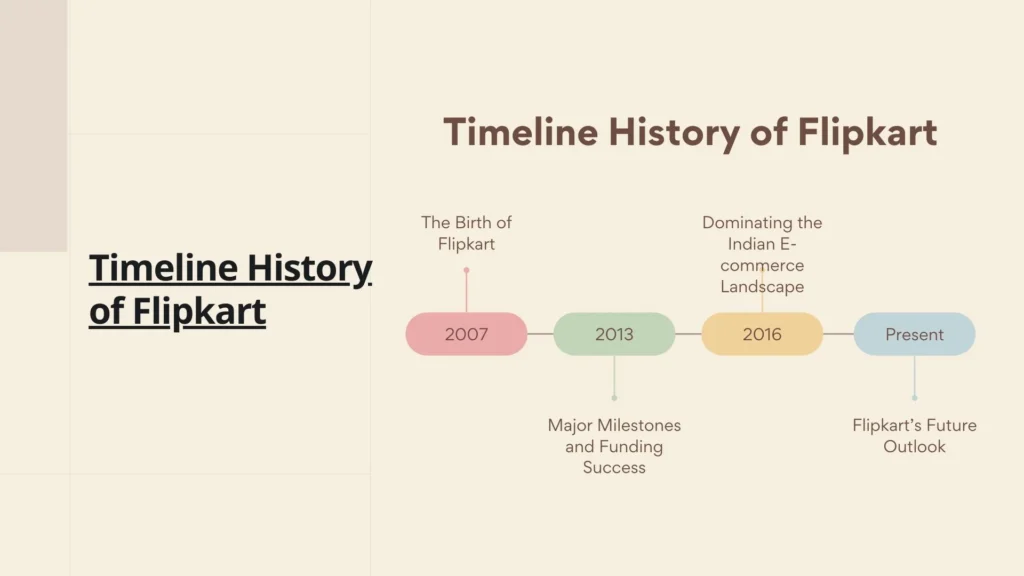
In 2007, two IIT Delhi graduates quit their jobs at Amazon.
Not to start a rival. Not to take on a global giant. Just to build something that made sense for India.
Sachin Bansal and Binny Bansal started Flipkart from a two-bedroom apartment in Koramangala, Bengaluru, with ₹4 lakh of their own money.1 They packed orders themselves. They delivered books on scooters. They answered their own customer service calls.
Six years later, the company they had left came for them.
Amazon entered India in June 2013 with a reported $10 billion war chest and a singular objective: dominate the market, not just participate.2
Every analyst predicted Flipkart was done. A homegrown startup going up against the most relentless retailer in human history.
What happened next is one of the most important business stories India has ever produced.
How Did Flipkart Beat Amazon in the Early Years?
Flipkart held off Amazon in its early India years by leveraging a six-year head start, building deep customer trust through cash on delivery, launching Big Billion Days as India’s first major shopping festival, and understanding Indian consumer behaviour in ways that Amazon’s global playbook simply could not replicate. By 2015, Flipkart commanded 44% of India’s ecommerce market while Amazon held 15%.3
The India That Amazon Did Not Understand
When Amazon launched in India in June 2013, it brought the most sophisticated ecommerce machine ever built.
World-class logistics. Cutting-edge technology. A customer obsession culture refined over two decades. And an essentially unlimited budget to deploy against any competitor.
What it did not bring was an understanding of how most Indians actually lived, shopped, and trusted.
In 2013, credit card penetration in India was under 3%.4 Millions of Indians who wanted to shop online had no way to pay. The idea of entering card details on a website felt risky to a population that had grown up being told to never share financial information with strangers.
Courier partners were unreliable. Addresses were not standardised. Rural delivery was a logistical nightmare. And the concept of returning a product you had bought online was still completely foreign to most Indian consumers.
Amazon knew how to solve ecommerce in America. It had no playbook for this.
Flipkart did. Because it had spent six years figuring it out the hard way.
The Decision That Changed Everything
Cash on delivery.
It sounds simple. It was anything but.
COD meant a customer could order online and pay in cash when the product arrived at their door. No credit card. No digital payment. No upfront risk.
For hundreds of millions of Indians who did not own a credit card and did not trust the internet with their money, COD was the only reason they would ever consider shopping online.
Flipkart embraced it early and built its entire logistics network around making it work.5
Amazon initially resisted. COD was operationally messy. It meant cash handling at every delivery point, higher fraud risk, and significantly more complex reverse logistics when customers refused to accept orders.
By the time Amazon accepted that COD was not optional in India, Flipkart had years of operational experience managing the complexity. It had trained delivery partners, fraud detection systems, and a customer base that had learned to trust the process.
That trust was not something Amazon could buy. It had to be earned through thousands of deliveries in thousands of cities over years of consistent execution.
Flipkart had those years. Amazon did not.
The Numbers That Tell the Early Story
| Year | Flipkart Market Share | Amazon India Market Share |
|---|---|---|
| 2013 (Amazon launch) | Dominant | Just entered2 |
| 2014 | 44%3 | 15%3 |
| 2015 | Leading | Gaining rapidly6 |
| 2018 (Walmart acquisition) | 31.9%2 | 31.2%2 |
The gap tells the story. In 2014, Flipkart had nearly three times Amazon’s market share in India.3 That lead was not accidental. It was the product of six years of building trust in a market that had no reason to trust ecommerce at all.
Big Billion Days: Flipkart Invents the Indian Shopping Festival

In October 2014, Flipkart did something no Indian ecommerce company had done before.
It created a national shopping event.
Big Billion Days was modelled loosely on Black Friday, designed to create a single day of massive discounts that would drive more traffic than the site had ever seen. The apartment number where the Bansals started Flipkart was 610, so they chose October 6 as the date.7
Within ten hours, Flipkart hit its target of $100 million in Gross Merchandise Value.7
It also crashed. Spectacularly.
The site went down repeatedly. Some orders were cancelled immediately after customers placed them. Allegations of fake discounts started circulating on social media. Sachin and Binny Bansal sent a public apology email to every customer.7
By every technical measure, the first Big Billion Days was a disaster.
But here is what actually happened.
Amazon watched 100 million dollars change hands on a competitor’s platform in ten hours and understood, for the first time, exactly how serious this fight was going to be.
Flipkart had put a number on the prize. And in doing so, it had forced Amazon to recalibrate its entire India strategy.
The Acquisitions Amazon Could Not Match
While Amazon was scaling up in India, Flipkart was quietly building a portfolio that would prove very difficult to replicate.
In 2014, Flipkart acquired Myntra, India’s leading fashion ecommerce platform.8 Fashion was a category where trust, curation, and brand relationships mattered enormously. Myntra had spent years building those relationships.
PhonePe, which became one of India’s largest digital payments platforms, was also incubated within the Flipkart ecosystem before becoming a standalone entity.8
These were not random acquisitions. They were Flipkart building a moat that went beyond price and logistics.
Amazon could outspend Flipkart on warehouses and delivery. It could not easily replicate the brand equity Myntra had built with Indian fashion consumers, or the payment habits that PhonePe was building among hundreds of millions of users.
Why the Story Did Not Have a Clean Ending
Here is the part the narrative skips over.
Flipkart did not defeat Amazon.
By 2016, Amazon had surpassed Flipkart as the preferred online retail destination among consumers in India’s metropolitan areas.6 It had invested relentlessly, launched Amazon Prime, and used its global infrastructure to build a delivery network that could compete with anything Flipkart had.
By 2018, when Walmart acquired a 77% stake in Flipkart for $16 billion, the market share between the two was almost even. Flipkart at 31.9% and Amazon at 31.2%.2
The early lead was real. The eventual parity was also real.
What Flipkart actually proved was something more important than a clean win. It proved that a homegrown Indian startup, with deep local knowledge and a genuine understanding of its customers, could hold off the most powerful retailer in the world for over a decade.
That is not a loss. That is a masterclass.
What Happened After Walmart
The 2018 Walmart acquisition valued Flipkart at $20.8 billion and marked the largest acquisition in Indian startup history at the time.1
Sachin Bansal sold his 5.5% stake for over $1 billion and exited the company.1 Binny Bansal stayed briefly before resigning.
But Flipkart did not disappear. It grew.
Today, Flipkart commands approximately 48% of India’s ecommerce market.2 It serves over 500 million registered users.9 Walmart’s backing gave it the resources to finally match Amazon’s infrastructure investment without burning through venture capital at the same rate.
The two IIT Delhi graduates who packed books in a Koramangala apartment built something that a $16 billion acquisition could not erase.

The Take Nobody In The Industry Wants To Say Out Loud
Our editors weigh in.
The Flipkart story is taught in business schools as a David vs Goliath narrative. Indian startup fights global giant. Scrappy founders outwit the machine.
That framing misses the actual lesson.
Flipkart did not win because it was scrappy. It won early because it understood something Amazon refused to accept for years: that India was not America with lower incomes.
India was a completely different consumer market. Different trust patterns. Different payment behaviours. Different delivery challenges. Different relationship with brands, discounts, and the entire concept of returning a product.
Amazon entered India with a global playbook and tried to make India fit it. Flipkart had no global playbook. It had to figure everything out from first principles, in the field, with real Indian customers.
That constraint turned out to be an advantage.
The founders who started in apartments and delivered books on scooters understood the Indian consumer in a way that no headquarters in Seattle ever could. And that understanding gave them a lead that took Amazon years and billions of dollars to close.
Every foreign company entering India faces this same choice. Bring the global playbook and spend years adapting it. Or start with the assumption that India requires a fundamentally different approach.
The ones who choose the second option usually win faster.
Flipkart did not beat Amazon forever. But it proved that local understanding is worth more than global infrastructure, at least in the beginning.
And in business, the beginning is when everything is decided.
Frequently Asked Questions
Who founded Flipkart?
Sachin Bansal and Binny Bansal, both IIT Delhi graduates and former Amazon employees, founded Flipkart in 2007 from a Bengaluru apartment with ₹4 lakh.1
When did Amazon enter India?
Amazon launched in India in June 2013, six years after Flipkart.2
What was Flipkart’s market share when Amazon launched?
By 2014, Flipkart held 44% of India’s ecommerce market compared to Amazon’s 15%.3
What was Big Billion Days?
India’s first major ecommerce shopping festival, launched by Flipkart in October 2014. It generated $100 million in GMV in ten hours despite significant technical problems.7
Who acquired Flipkart?
Walmart acquired a 77% stake in Flipkart in May 2018 for $16 billion, valuing the company at $20.8 billion.1
Does Flipkart still lead Amazon in India?
Yes. Flipkart currently holds approximately 48% of India’s ecommerce market compared to Amazon’s roughly 24%.2
What happened to the founders after the Walmart acquisition?
Sachin Bansal sold his stake for over $1 billion and exited to start new ventures. Binny Bansal resigned later that year.1
Stay in the Loop
For more stories, breakdowns, and unfiltered takes on what is really happening in Indian business and tech, follow TheFounder Nation.
Instagram Handle : https://www.instagram.com/thefoundernation?igsh=MTZobDUwc2xqZWdhOA==
We cover what the mainstream business press won’t.
© TheFounder Nation | All rights reservedWord count: ~1,826 | Read time: ~10 minutes | Primary keyword: How Flipkart fought Amazon and won early | Secondary: Flipkart vs Amazon India, Flipkart history, Big Billion Days, Flipkart Amazon market share, Walmart Flipkart acquisition, Indian ecommerce battle