



There is a moment in every investor’s portfolio review when they look at their HealthTech bets and feel something they rarely feel about other sectors: certainty. Not about a specific company, but about the direction. Health is not going anywhere. Neither is technology. Put them together, and the market practically builds itself.
That is the simple version. The reality is more layered, and more interesting.
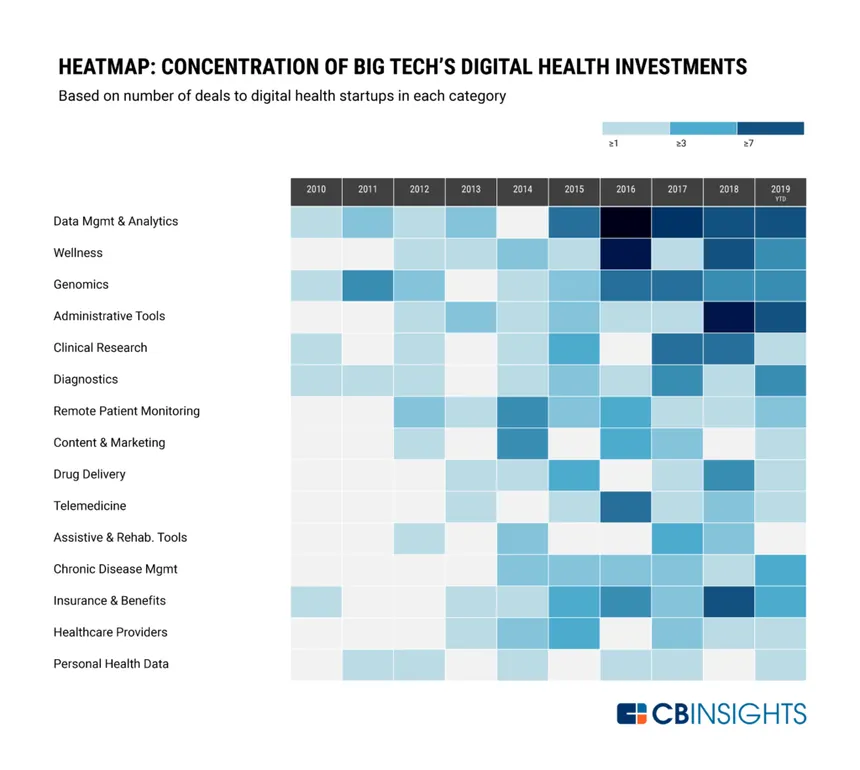
HealthTech is not a single category. It is a sprawling collection of sub-sectors, each with its own funding dynamics, regulatory walls, and user behaviour patterns. What looks like a gold rush from the outside is, on the inside, a highly selective process where investors are backing specific bets based on specific theses.
If you are a founder thinking about entering this space, or someone trying to understand why VCs are suddenly very excited about apps that remind you to take your medicine, this breakdown is for you.
What HealthTech Actually Covers
Most people hear “HealthTech” and think of teleconsultation apps. That is one slice. The full picture includes diagnostics and lab aggregators, AI-powered imaging and pathology tools, hospital management software, insurance tech (or InsurTech applied to health), wearables and remote patient monitoring, pharmacy delivery, mental health platforms, and clinical trial technology.
India has seen meaningful traction across almost all of these. Practo and PharmEasy built early awareness. Then came a wave of more focused players: MFine before it wound down, Tata 1mg after its acquisition, Niramai in AI-based cancer screening, and Heka Health in preventive care. Each of these represents a different investor thesis about where the real money is.
Understanding which sub-sector you are in matters more than understanding HealthTech broadly. Investors do not fund “HealthTech.” They fund specific models within it.
Why Investor Interest Has Risen So Sharply
The short answer: COVID-19 did for digital health what demonetisation did for UPI. It forced an entire population to try something new, and enough of them stayed.
Between 2020 and 2022, teleconsultation usage in India grew by over 500% according to estimates from Niti Aayog. Patient resistance to seeing a doctor on a screen collapsed almost overnight. That shift opened a door that would have otherwise taken a decade to pry open.
But that is the demand side. On the supply side, two things happened. First, founders with strong pedigrees started entering health, which gave institutional investors confidence. Second, global funds like Sequoia, Lightspeed, and Tiger Global started writing cheques in Indian HealthTech, which signals that the exit potential is real enough for top-tier capital.
When a sector gets that kind of attention from both domestic and international investors in the same window, it is rarely a coincidence.
How Investors Evaluate HealthTech Startups Differently
Investing in a SaaS company and investing in a HealthTech company are fundamentally different exercises. The evaluation criteria shift.
| Criteria | Standard Startup | HealthTech Startup |
| Regulatory risk | Low to moderate | High (CDSCO, DPDP, AERB for devices) |
| Unit economics timeline | 12 to 24 months | 24 to 48 months often |
| Customer trust factor | Moderate | Very high, takes longer to build |
| Clinical validation required | No | Often yes, especially for diagnostics |
| Government as stakeholder | Rarely | Frequently (Ayushman Bharat integrations) |
This does not mean investors are more reluctant. It means they ask different questions. A VC evaluating a HealthTech company will spend significant time on compliance posture, clinical outcomes data if available, and the founder’s ability to navigate both the medical establishment and the regulatory framework.
Founders who understand this going in are the ones who get the meeting. Founders who walk in thinking they are pitching a tech company with a health use case often walk out without a term sheet.
The Sub-Sectors Getting the Most Capital in India Right Now
Preventive and wellness is where a lot of early-stage money is going. The thesis is that the Indian middle class is willing to pay for staying healthy, not just for getting treated. Companies like HealthifyMe, Cure.fit, and GOQii built early proof of this.
AI diagnostics is attracting deep-tech investors and grants. Niramai’s thermal imaging approach for breast cancer screening is a globally cited example of what is possible when you combine clinical rigour with machine learning. Qure.ai, focused on AI-based radiology, has raised over $65 million and operates across multiple countries, including India.
Mental health platforms are getting attention that would have seemed impossible five years ago. The stigma is not gone, but it has weakened enough that companies like Wysa and YourDOST have been able to raise serious capital and build real user bases.
Hospital-facing B2B software is the quiet category. It is less glamorous than consumer health apps but significantly more defensible. Once a hospital management system is embedded in a 400-bed facility, it does not get replaced easily. Investors who understand SaaS love this dynamic.
What Global HealthTech Can Teach Indian Founders
The United States has a 20-year head start. The models that worked there are being studied closely here, and some are being adapted directly.
Teladoc built a multi-billion dollar business on virtual care before the pandemic made it fashionable. Veeva Systems created a SaaS vertical for life sciences that became one of the most successful enterprise software IPOs in history. Neither of these companies would have looked like obvious bets at the seed stage.
The lesson for Indian founders is not to copy these models. The regulatory environment, the doctor-to-patient ratio, the insurance penetration, and the willingness to pay are all different here. The lesson is that patient capital invested in solving a real clinical or operational problem in health tends to compound better than most other bets. Indian VCs are starting to understand this.
The 30% global reference is relevant here only as proof of direction. The 70% of the story that matters is happening in India, and it is moving fast.
What Founders Get Wrong When They Pitch HealthTech
The most common mistake is treating health as a distribution problem. It is not. You can spend aggressively on acquiring users, but if your clinical experience is weak or your follow-through is poor, churn will be brutal and word of mouth will turn negative.
The second mistake is underestimating how long it takes to build trust with both patients and doctors. Doctors in particular are a critical channel. A HealthTech product that has doctor advocacy behind it moves differently than one without it.
The third is ignoring regulation until it becomes a crisis. CDSCO classification for medical devices, compliance with the Digital Personal Data Protection Act for patient data, and integration requirements for Ayushman Bharat Digital Mission are not paperwork problems. They are business-model decisions. Investors who have been burned before will ask about these in the first meeting.
The Take Nobody Will Say Out Loud
Most HealthTech startups are not going to improve healthcare outcomes in India. They are going to improve healthcare access, which is valuable but different. The outcomes problem is harder, slower, and requires partnerships with the public health system that most founders have no interest in building.
The investor interest is real. The capital is real. But a large portion of it is chasing the same middle-class urban consumer who already has Practo on their phone and a corporate health insurance policy. That market is competitive, margin-compressed, and increasingly dominated by players who have scale.
The actual opportunity, the one that would define a generation, is in Tier 2 and Tier 3 cities, in vernacular health content, in last-mile diagnostic infrastructure, and in preventive models that work without a smartphone. Very few founders are building there. The ones who are will have a lot less competition and a lot more impact. Whether they will have a lot more funding is still an open question.
Frequently Asked Questions
What is HealthTech and why is it attracting investors now? HealthTech refers to technology-driven solutions applied to healthcare, including teleconsultation, diagnostics, hospital software, wearables, and mental health platforms. Investor interest has grown sharply because of rising digital health adoption post-pandemic, a growing middle class willing to spend on health, and proof from global markets that large exits are possible in this sector.
How much funding does the Indian HealthTech sector attract annually? Indian HealthTech startups collectively raised over $2 billion in 2021 at the peak of the post-pandemic surge. While that number moderated in 2023 and 2024, the sector continues to attract significant capital from both domestic funds like Sequoia Surge, Blume Ventures, and Healthquad, and global investors.
What makes HealthTech different from other startup categories for investors? HealthTech carries higher regulatory risk, longer timelines to unit economics, and requires clinical validation in many cases. Investors also factor in patient trust cycles, which are slower than typical consumer trust cycles. In exchange, successful HealthTech businesses tend to have stronger retention and better defensibility than average consumer apps.
Is it possible to build a HealthTech startup without a medical background? Yes, and many successful ones have been built this way. What matters is that the founding team includes clinical expertise somewhere, either as a co-founder, advisor, or early senior hire. A purely tech team building a clinical product without medical input will hit walls that are hard to see from the outside.
Which Indian HealthTech startups have raised significant funding recently? Pharmeasy, Tata 1mg, Qure.ai, Niramai, Pristyn Care, and Innovaccer are among the well-funded names. Healthquad, a dedicated health-focused fund, has also been active in identifying earlier-stage bets in diagnostics and hospital infrastructure.
What regulatory bodies should a HealthTech founder in India be aware of? CDSCO (Central Drugs Standard Control Organisation) for medical devices and software as a medical device, DPDP Act for patient data handling, IRDAI for anything touching health insurance, and the Ayushman Bharat Digital Mission framework for interoperability. Depending on the product, multiple of these will apply simultaneously.
What types of HealthTech startups are most fundable right now? AI diagnostics, preventive health and wellness, B2B hospital software, and mental health platforms are seeing consistent investor interest. Teleconsultation as a standalone model is harder to fund now because of margin pressure and competition. The most fundable pitches combine a strong clinical insight with a defensible distribution channel.
Stay in the Loop
For more stories, breakdowns, and unfiltered takes on what is really happening in Indian and global business and tech, follow TheFounder Nation.
Instagram Handle : https://www.instagram.com/thefoundernation?igsh=MTZobDUwc2xqZWdhOA==
We cover what the mainstream business press won’t.
© TheFounder Nation | All rights reserved Word count: ~1,490 | Read time: ~6 minutes Primary keyword: HealthTech startups investor interest | Secondary: HealthTech India funding, investor interest health startups, digital health investment India, HealthTech sub-sectors, AI diagnostics India, teleconsultation funding, health startup pitch, CDSCO compliance startup, mental health platform India, preventive health startup Featured image alt text: Indian HealthTech founder presenting a digital health platform to a group of venture capital investors in a modern conference room Suggested image filename: healthtech-startups-investor-interest-india.jpg