


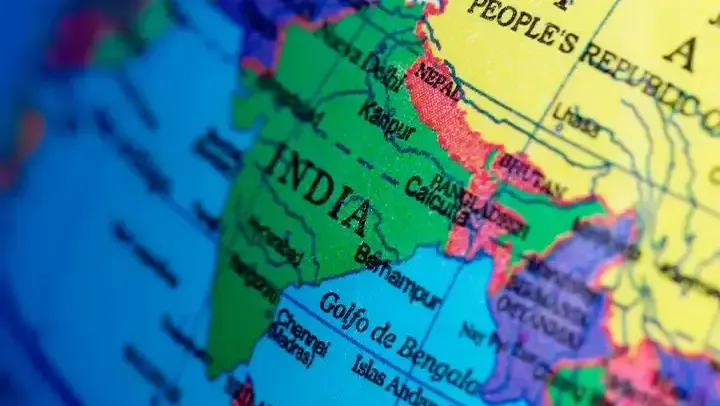
There is a version of the India startup story that most people still believe: a founder gets an idea, moves to Koramangala, finds a co-working desk near a VC partner’s office, and builds something that eventually gets funded. The geography is fixed. The ecosystem is concentrated. Success requires proximity to the cluster.
That version is becoming obsolete faster than most people have noticed.
In 2016, when Startup India launched, virtually all recognised startups were concentrated in six metros. By 2026, over 51% of new DPIIT-recognised startups are coming from Tier-2 and Tier-3 cities. More than 2.35 lakh startups now span 669 of India’s districts. Jaipur recorded over 5,000 new company incorporations in 2025 alone — the highest among all Tier-2 cities. Coimbatore’s startup count grew from 271 in 2020 to 1,350 in 2024. Rajasthan’s recognised startup base grew from 371 in 2019 to over 1,030 today, and Gujarat’s from 721 to over 10,000.
This is not an outlier trend. It is a structural shift driven by at least four forces that are not going away — and founders who understand them early will have a meaningful advantage over those who are still planning to rent a flat in Indiranagar.
The Cost Arbitrage Is Larger Than Most Founders Calculate
The most immediate reason Tier-2 cities are attracting founders is also the most obvious: it is dramatically cheaper to build there.
Office space and operational costs in cities like Jaipur, Indore, and Kochi run 60 to 70% lower than Bangalore. A lean early-stage team of ten people that burns ₹15 to 20 lakh a month in Bangalore might operate on ₹6 to 8 lakh in Jaipur. Over an eighteen-month product development cycle, that difference extends runway by more than a year without raising a single additional rupee. For a founder trying to reach product-market fit before a Series A, that time is not a convenience — it is often the difference between making it and not.
Demand for flexible coworking spaces in cities like Jaipur and Indore has increased by 45%, and the infrastructure has followed. Modern coworking facilities with reliable internet, meeting rooms, and community programming now exist in most of India’s major Tier-2 cities, removing one of the historic barriers to building outside metros. The assumption that you need a Bangalore office to build a serious company has lost most of its remaining validity.
McKinsey projections estimate that 18 Tier-2 cities could generate $2 trillion in revenues by 2030, up from $690 billion in 2023. That scale of economic activity creates both a customer base and a talent base that simply did not exist a decade ago.
Reverse Migration Created a Talent Base That No Policy Could Have Built
The second force driving the Tier-2 startup shift was unplanned and largely unrecognised until it had already happened.
During and after COVID, a significant cohort of experienced engineers, product managers, designers, and operators left the metros and returned to their home cities. Some came back to manage family situations. Some found that remote work had decoupled their income from their location. Some simply did not go back. Bangalore, Mumbai, and Delhi had spent a decade importing talent from smaller cities. That talent, now with five to eight years of experience at Flipkart, Swiggy, Ola, or Zepto, began accumulating in Jaipur, Indore, Kochi, Lucknow, and Coimbatore.
A Deloitte and NASSCOM report noted that 60% of engineering graduates reside in Tier-2 and Tier-3 cities, and that rising costs, traffic congestion, and overworked infrastructure in metro cities were actively promoting reverse migration. Cities like Visakhapatnam, Coimbatore, Indore, and Jaipur are now reporting double-digit hiring growth in IT and ITES sectors. Indore receives a fresh influx of 20,000 STEM graduates annually from its engineering colleges. Over 250 startups operate out of TIDEL Park in Coimbatore alone, supported by a workforce of over 43,000 tech professionals.
This is talent density built by migration, not by government programme. It is durable in a way that policy-created ecosystems are not, because the people are there for reasons that do not require continued state intervention.
Sector Specialisation Is Creating Defensible Local Advantages
The most underappreciated aspect of the Tier-2 startup wave is that the cities emerging as hubs are not generic. Each is developing a distinct sector identity rooted in its existing industrial base and geography — and that specialisation is creating real competitive moats for founders who build within it.
Indore is developing an agritech cluster because it sits in the heart of Madhya Pradesh’s agricultural belt. Gramophone, one of India’s best-known agritech startups, is headquartered there — a company that helps farmers access advisory, input supply, and market linkages. A founder building agritech in Indore has access to farming communities they can serve within a 50-kilometre radius of their office. That proximity accelerates product iteration in ways that no Bangalore-based competitor building the same product remotely can replicate.
Surat is becoming a hub for textiles technology, because Surat is the centre of India’s synthetic textiles industry. A founder building supply chain software, fabric inspection tools, or sustainability tracking for the textiles sector in Surat has distribution channels, customer relationships, and domain expertise on their doorstep. The same product built from Mumbai requires a founder to travel to Surat every time they need to understand a customer problem.
Kochi’s ecosystem is clustering around hardware, healthtech, and export-oriented software, partly because of the Kerala Startup Mission’s MIT-partnered Super Fab Lab and partly because the NRI diaspora in the Gulf funds and validates solutions in healthcare and logistics that serve the Keralite community globally. Genrobotics, which developed a robotic alternative to manual scavenging, was built in Kochi — a product that required deep technical hardware capability and intimate knowledge of a civic infrastructure problem. Neither of those things is easier to access from Bangalore.
Lucknow is becoming a hub for AI-enabled govtech, agritech, and drone technology, supported by Uttar Pradesh’s StartInUP policy — which provides sustenance allowances, seed funding, prototype grants, and plans for 100 incubators across the state. UP now hosts over 18,500 startups. The combination of a large state government as a potential anchor customer and a low-cost operating environment makes Lucknow specifically attractive for founders building products that eventually serve public sector buyers.
State Governments Are Competing for Founders in a Way They Never Did Before
A decade ago, state startup policies were largely cosmetic — brochure-level commitments to “promote entrepreneurship” without the budget, infrastructure, or institutional follow-through to deliver anything meaningful.
That has changed materially, and the competition between states is now real enough to affect where founders choose to build.
Rajasthan’s iStart programme has over 7,100 registered startups, runs incubators across multiple districts rather than just Jaipur, and provides matching funds of up to ₹25 lakh under the Bhamashah Techno Fund. The Rajasthan Global Capability Centre Policy 2025 is building the infrastructure to attract GCCs — the corporate R&D and technology centres that bring experienced talent into a city’s ecosystem. Madhya Pradesh’s startup policy provides seed funds of up to ₹10 crore, pre-seed prizes, and full incubator support, which is why Indore has become one of the most funded Tier-2 startup environments despite being absent from most mainstream startup conversations.
Kerala’s state startup ecosystem value surged 147% in 2025 — the highest growth rate among all established startup states — driven by KSUM’s decades of patient institution-building. Tamil Nadu launched India’s first dedicated Deep Tech Startup Policy in early 2026, created a ₹100 crore Co-creating Fund, and now counts over 12,000 startups across the state. Chandigarh’s Startup Policy 2025 specifically supports founders in the Rajiv Gandhi IT Park cluster, which houses over 500 startups.
The state competition is producing a virtuous cycle: better policy attracts founders, founders create employment and taxes, employment attracts more talent, more talent reduces the barrier for the next cohort of founders. Cities that started this cycle early — Jaipur, Kochi, Indore — now have compounding advantages that are increasingly visible in their startup density and sector depth.
The Evidence That Unicorn-Scale Outcomes Are Already Happening
Tier-2 cities are not producing early-stage experiments and then graduating to Bangalore. They are producing outcomes.
CarDekho was built in Jaipur. It became India’s leading used car platform, raised over $700 million, achieved unicorn status at a $1.2 billion valuation, and built its entire founding team and initial product from Rajasthan. CarDekho’s co-founders Amit and Anurag Jain have written publicly about the advantages of building in a Tier-2 city — the lower burn, the stronger connection to India’s actual car-buying demographic, the ability to retain talent that would have been poached immediately in Bangalore.
Zoho was built in Chennai — a city that sits in the same category as emerging Tier-2 hubs in terms of its relationship to Bangalore’s dominance. It is now one of the most profitable SaaS companies in the world with 100 million users, built entirely without venture capital for most of its history. The Coimbatore corridor is now producing multiple SaaS companies that follow a similar playbook: deep technical capability, low burn, product-led growth, and international revenue that does not require proximity to an Indian VC.
The pattern holds across sectors. Celebal Technologies, an enterprise AI company in Jaipur, raised $15 million in Series B funding in 2025. Gramophone in Indore has scaled to hundreds of thousands of farmer customers. Genrobotics in Kochi deployed its robotic solution across multiple Indian cities. These are not proofs of concept. They are businesses.
The Honest Gap: Capital Still Has Not Followed the Founders
The structural challenge that runs through every Tier-2 startup story is the same one: capital is lagging behind formation.
Startups outside India’s main hubs represent over 8% of DPIIT funding rounds but attract only 2.1% of total capital deployed. The average cheque for a Tier-2 startup remains in the ₹20 lakh to ₹2.5 crore range — enough for seed validation, not enough for the growth stage. Late-stage institutional capital — Series B and beyond — still flows overwhelmingly to founders who are based in, or have established presence in, Bangalore, Mumbai, or Delhi-NCR.
Over 250 micro-VCs with corpus below ₹300 crore were active by 2025, and established funds including Blume Ventures, Peak XV, and Accel have started sourcing deals from Tier-2 cities more systematically. But the geographic bias in late-stage institutional investing has not materially changed yet. A founder who raises a seed round in Jaipur will almost certainly need a presence in a Tier-1 city to close a Series B.
The practical playbook for founders navigating this gap is a two-phase approach: build and validate in the Tier-2 city, where the cost advantage, customer proximity, and talent retention are real; then establish an investor-facing presence in Bangalore, Mumbai, or NCR when the fundraising conversation requires it. The majority of successful Tier-2 founders who have raised growth capital have run this sequence.
The Take Nobody Will Say Out Loud
The narrative around Tier-2 startup cities has a blind spot that nobody in the ecosystem wants to name directly.
A significant portion of what is being counted as “Tier-2 startup formation” is registration, not building. Founders in smaller cities are getting DPIIT recognition — which is free, takes two working days, and unlocks tax benefits — without necessarily building companies that will reach any meaningful scale. The headline number of 51% of startups coming from non-metros includes a large cohort of registered entities that have never raised a rupee, never hired a second employee, and never shipped a product beyond a prototype.
That distinction matters because it shapes how the opportunity should be read. The genuine signal — experienced founders with specific domain knowledge building products for underserved markets from cities where they can operate efficiently — is real and growing. But it exists within a larger count that includes noise.
The Tier-2 startup story will be defined in the next five years not by how many startups register from smaller cities, but by how many of them raise Series B rounds, generate ₹50 crore in annual revenue, and create durable employment without relocating. The CarDekho and Zoho benchmarks show it is possible. The structural capital gap suggests the conditions for doing it repeatedly are still being built.
Frequently Asked Questions
What is driving the rise of startup activity in Tier-2 cities in India? Four structural forces are driving the shift: significantly lower operational costs compared to metros (60 to 70% cheaper in many cases), a reverse migration of experienced talent that returned to smaller cities during and after COVID, state governments actively competing to attract founders through policy incentives and infrastructure, and growing digital adoption that has created both a customer base and a talent base in non-metro cities that did not exist a decade ago.
Which Tier-2 cities are seeing the most startup activity in 2026? Jaipur leads among non-metro cities by most metrics, with over 5,000 new company incorporations in 2025 and the iStart programme supporting over 7,100 registered startups statewide. Indore is the strongest agritech and manufacturing tech hub. Coimbatore has grown from 271 startups in 2020 to 1,350 in 2024, primarily in hardware and SaaS. Lucknow is emerging in govtech and AI under UP’s StartInUP policy. Kochi remains the strongest Tier-2 hub by institutional support, backed by KSUM and India’s only MIT-partnered hardware prototyping lab.
Can a startup actually reach unicorn scale from a Tier-2 city? Yes, and the evidence is no longer theoretical. CarDekho was built in Jaipur and achieved a $1.2 billion valuation. Zoho was built in Chennai with no venture capital for most of its history and now serves 100 million users globally. Gramophone in Indore scaled to hundreds of thousands of farmer customers. Genrobotics in Kochi deployed robotic sanitation infrastructure across multiple Indian cities. The question is no longer whether Tier-2 cities can produce large outcomes — it is how consistently they can do so as the capital environment matures.
What is the capital access challenge for Tier-2 startups? Startups outside India’s main hubs represent over 8% of DPIIT-tracked funding rounds but receive only 2.1% of total capital deployed. Early-stage and seed funding is increasingly available through micro-VCs, angel networks, and state scheme programmes. Growth-stage capital — Series B and beyond — remains heavily concentrated in Bangalore, Mumbai, and Delhi-NCR. Most Tier-2 founders who have successfully raised institutional rounds have done so by building investor relationships in Tier-1 cities before they needed the capital, not by waiting for investors to come to them.
What sectors are thriving specifically in Tier-2 startup hubs? Sector specialisation is one of the defining features of the Tier-2 wave. Indore is developing an agritech cluster tied to the MP agricultural belt. Surat is building textiles tech around its synthetic fabrics industry. Lucknow is focusing on govtech and drones with UP government as an anchor buyer. Kochi is strong in hardware, healthtech, and export-oriented software. Jaipur has a growing SaaS and fintech cluster. Each city’s strengths trace back to its existing industrial and geographic context, not to generic tech ambition.
How is the government supporting startups in Tier-2 and Tier-3 cities? Multiple layers of support exist. At the central level, DPIIT recognition unlocks tax holidays, IPR benefits, and scheme access for founders anywhere in the country. The SISFS seed fund specifically targets pre-revenue founders across India through 300 empanelled incubators in non-metro locations. At the state level, programmes like Rajasthan’s iStart, UP’s StartInUP, Kerala’s KSUM, and Madhya Pradesh’s startup policy provide seed capital, incubation infrastructure, mentorship, and in some cases sustenance allowances for early founders. State competition for founders has become a meaningful driver of ecosystem quality in non-metro cities.
Is the shift to Tier-2 cities permanent or could founders return to metros as they scale? The honest answer is that the early-stage advantage of Tier-2 cities — lower cost, better customer proximity, talent retention — is permanent and structural. The late-stage disadvantage — capital concentration in metros — is temporary and narrowing. Most successful Tier-2 founders currently run a hybrid model: build and validate locally, establish investor presence in metros for growth fundraising. As micro-VCs and established funds build more consistent Tier-2 sourcing, that hybrid model will evolve toward founders having less reason to relocate at all.
Stay in the Loop
For more stories, breakdowns, and unfiltered takes on what is really happening in Indian and global business and tech, follow TheFounder Nation.
Instagram Handle : https://www.instagram.com/thefoundernation?igsh=MTZobDUwc2xqZWdhOA==
We cover what the mainstream business press won’t.
© TheFounder Nation | All rights reserved Word count: ~1,510 | Read time: ~6 minutes Primary keyword: tier-2 cities India startup hotspots | Secondary: tier 2 startup ecosystem India 2026, Jaipur startup hub, Indore agritech startups, Kochi startup ecosystem, reverse migration India talent, startup outside Bangalore, non-metro startup India, CarDekho Jaipur success, iStart Rajasthan, KSUM Kerala startups Featured image alt text: A vibrant map of India highlighting Tier-2 startup hubs including Jaipur, Indore, Kochi, Coimbatore, and Lucknow with startup activity indicators showing the geographic spread of entrepreneurship Suggested image filename: tier-2-cities-india-startup-hotspots-2026.jpg