

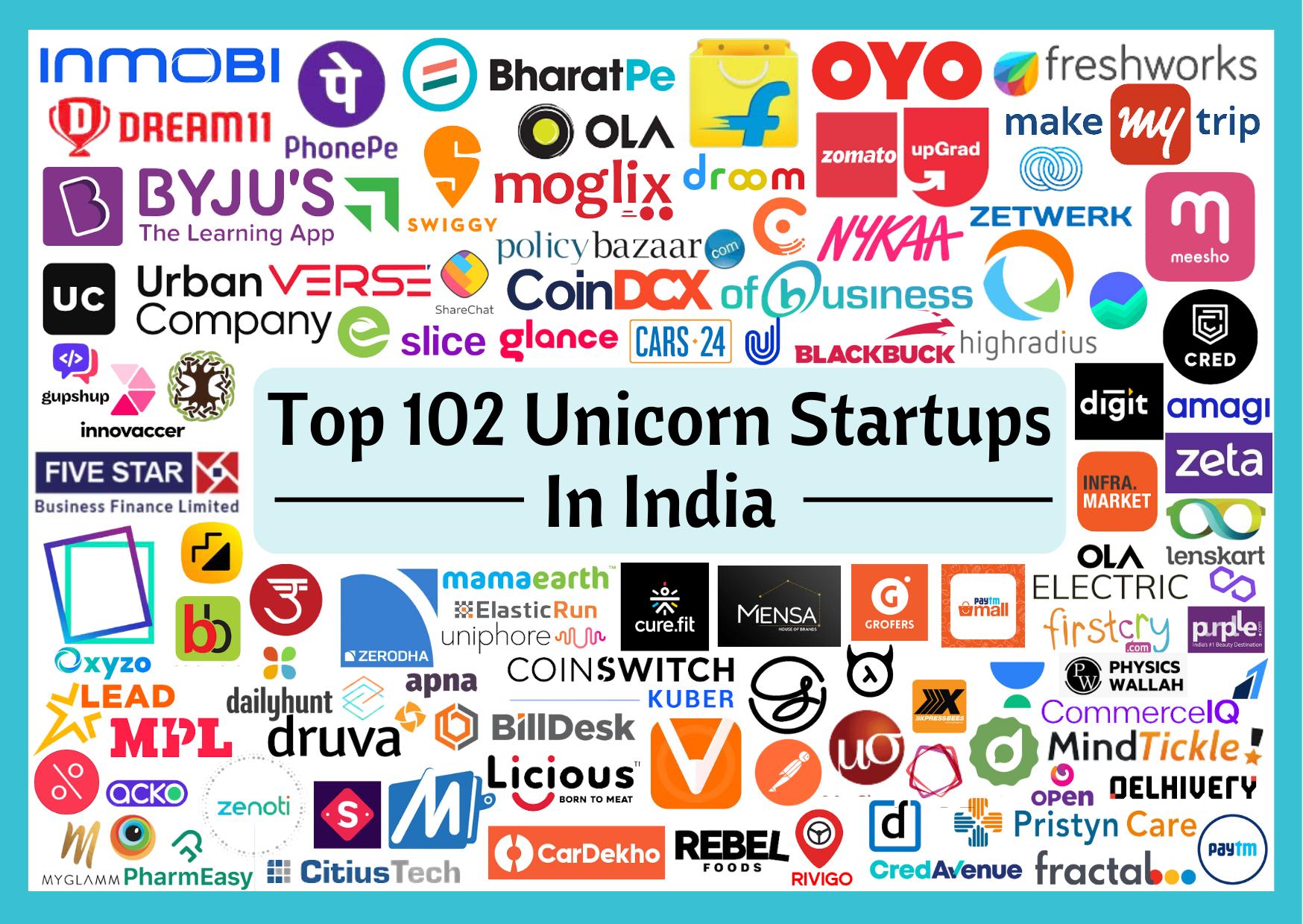
India's startup ecosystem has created over 130 unicorns, but only a fraction have demonstrated durable growth, strong governance, and sustainable business models.
By TFN Editorial Team, The Founder Nation Editorial Team
While India minted a record 44 unicorns in a single year, the decade’s reckoning has separated founders who built businesses from those who built balance sheets.
In 2021, an Indian startup was crossing the billion-dollar valuation threshold roughly every eight days. Five years later, India counts 131 unicorns (Tracxn, June 2026), but the cohort tells two very different stories: one of founders who built durable companies, and another of those whose paper valuations dissolved under the weight of poor governance, unchecked burn, and a funding environment that stopped rewarding growth-at-any-cost.
Sector Analysis • Startup Strategy • Venture Capital • Indian Ecosystem
India’s decade-long unicorn sprint
India is now the world’s third-largest startup ecosystem, trailing only the United States and China. The numbers are staggering: 131 unicorns with a combined valuation exceeding Rs 30 lakh crore, the product of over a decade of venture capital flowing into a market of 1.4 billion people, cheap data, and rapidly expanding smartphone penetration.
But the path here was anything but straight. India added 44 unicorns in 2021 alone, the single most productive year in the country’s startup history, as global capital flooded into emerging markets and valuations were determined more by total addressable market than by revenue or profitability (CNBC, March 2024). Then came the correction. Funding for Indian startups plunged 83% by 2023, from a record $41.6 billion in 2021 to $7 billion, as rising global interest rates and investor caution dried up late-stage capital (CNBC, March 2024).
The result was a brutal separation: companies with genuine unit economics survived. Companies built on the assumption of perpetual capital infusion did not.
Why this story matters
The India unicorn count is often cited as proof of ecosystem maturity. It is partly that. But the more instructive story lives inside the number, in the specific decisions, governance choices, and business model assumptions that separated the winners from the washouts. For founders raising today, understanding both sides of the ledger is more useful than the headline count. For investors, the 2021-to-2023 cycle is the clearest data set India has produced on what separates fundable growth from fatal growth.
Quick facts
| Metric | Figure | Source |
|---|---|---|
| Total Indian unicorns (June 2026) | 131 | Tracxn, June 2026 |
| Peak unicorn additions in a single year | 44 (2021) | CNBC, March 2024 |
| New unicorns added in 2024 | ~6 | Inc42, 2024 |
| New unicorns added in 2025 | 11 | Entrepreneur India, September 2025 |
| Funding peak (2021) | $41.6 billion | Tracxn via CNBC |
| Funding in 2023 (post-correction) | $7 billion | Tracxn via CNBC |
| Byju’s peak valuation | $22 billion | Bloomberg, 2024 |
| Byju’s valuation at insolvency | ~$1 billion | CNBC, March 2024 |
| Bengaluru share of 2024-25 unicorns | 8 out of 10 | Inc42, May 2026 |
Background
India’s startup ecosystem was formally recognised as a policy priority with the launch of Startup India in 2016. But the real acceleration came between 2019 and 2021, when a combination of low global interest rates, the pandemic-driven digital adoption surge, and abundant foreign venture capital produced conditions that were extraordinary by any historical measure.
During that window, companies that had been grinding for years were suddenly able to raise at valuations multiples ahead of their revenue. Categories like edtech, fintech, quick commerce, and B2B SaaS attracted hundreds of millions of dollars, often within months of each other. The logic was sound at the time: India had over 800 million internet users, a young demographic, and a rapidly expanding middle class. The error, for many companies, was treating temporary capital abundance as a permanent operating condition.
The correction that began in 2022 and deepened in 2023 exposed which companies had built businesses and which had built narratives. What followed was India’s most consequential stress-test of startup fundamentals.
Timeline
| Year | What happened |
|---|---|
| 2016 | Startup India launch; India reaches 1 unicorn |
| 2019 | Byju’s becomes most valuable Indian startup at $8 billion |
| 2020 | Pandemic drives digital adoption surge; edtech and fintech boom |
| 2021 | Record 44 new unicorns; $41.6 billion in startup funding |
| 2022 | Global interest rates rise; funding begins to slow |
| 2023 | Funding drops 83% to $7 billion; “funding winter” declared |
| 2024 | Only ~6 new unicorns; Byju’s enters insolvency proceedings (October); Koo and DealShare shut down |
| 2025 | 11 new unicorns added; Netradyne, Porter, Drools lead the class; BluSmart shuts down (April) |
| June 2026 | India reaches 131 unicorns; Juspay and KreditBee among latest entrants |
How it happened: the split in India’s unicorn story
Shift 1: The boom that created the gap
Between 2020 and 2022, India’s startup ecosystem raised more capital than it had in the previous decade combined. Investor FOMO drove pre-emptive rounds, compressed due diligence timelines, and valuations that assumed markets would be won before monetisation was attempted. For companies with genuine product-market fit, this was a gift: it let them scale distribution before competitors could catch up. For companies using capital to paper over weak unit economics, it was a delayed reckoning.
The distinction was not always visible in real time. Byju’s, which hit a $22 billion valuation to become India’s most valuable startup (Bloomberg, 2024), was running what looked like a category-defining business. Paytm completed India’s largest-ever IPO in 2021 at a valuation that implied market dominance in digital payments. Both were celebrated. Neither was stress-tested at the unit economics level in a way that mattered.
Shift 2: The correction that forced the reckoning
When global interest rates rose sharply in 2022, late-stage venture capital dried up with unusual speed. Companies that had been burning Rs 50 to Rs 100 crore per month on the assumption of the next round being 18 months away suddenly found themselves without a credible path to the next cheque.
The failures that followed fell into patterns. Byju’s, once celebrated for its founder’s personal charisma and the scale of its user base, collapsed into insolvency proceedings in October 2024. The root causes were not market forces but a combination of cash burn, unchecked global acquisition spree, opaque financials, and board oversight failures (Policy Circle, July 2025). Key investors, including Prosus and Deloitte as auditor, had already exited by 2023 citing governance failures. BluSmart, the EV ride-hailing company, abruptly shut operations across major cities in April 2025 after its affiliate Gensol Engineering was found to have diverted funds for personal use by its founders, prompting SEBI to bar the Jaggi brothers from the securities market (Policy Circle, July 2025).
Governance failures across failed startups wiped out an estimated Rs 4.2 lakh crore in startup market value during 2023 and 2024 (Karnivesh, October 2025).
Shift 3: The survivors and the 2025 class
The 2025 unicorn class looked markedly different from its 2021 predecessors. Netradyne, a deeptech AI company for fleet safety, became India’s first unicorn of 2025 after raising $90 million at a $1.34 billion valuation (Inc42, June 2025). Porter, an intra-city logistics platform with clear unit economics and strong revenue visibility, raised $200 million to cross the billion-dollar mark. Drools, a pet food brand with a fundamentally simple business, hit $1 billion after a Nestlé investment.
What these companies share is not a sector. It is a structure: each had a business model whose unit economics were visible and improving before the billion-dollar conversation happened. Across the 2025 cohort of 11 new unicorns, fintech, logistics AI, and B2B platforms dominated, sectors where transactions are measurable and margins are manageable.

By the numbers
- India had 131 unicorns as of June 2026, making it the third-largest unicorn ecosystem globally (Tracxn, June 2026).
- 8 of the 10 startups that joined the unicorn club across 2024 and 2025 are headquartered in Bengaluru (Inc42, May 2026), with Delhi NCR (40 unicorns) and Mumbai (18) the next largest hubs.
- Byju’s valuation collapsed from $22 billion to approximately $1 billion, a 95% wipeout, before insolvency proceedings began (CNBC, March 2024).
- In 2024, more than 5,000 Indian startups shut down, with Maharashtra, Karnataka, and Delhi leading closure counts (Karnivesh, October 2025).
What competitors and the market missed
The lesson the broader market missed between 2020 and 2022 was structural. Valuation multiples in India were being derived from comparable global companies, but operating contexts are materially different: India’s CAC recovery timelines, willingness to pay for software, and regulatory unpredictability are not the same as the US or even China.
Companies that treated Indian valuation benchmarks as equivalent to Silicon Valley unit economics built plans that required capital to be perpetually available. Those that built to Indian market realities, pricing for actual willingness to pay, building for retention before acquisition, and staying in categories where cash flow was visible, did not face the same cliff when capital became scarce.

Risks and challenges
- Governance remains the single greatest structural risk. The Byju’s and BluSmart collapses both stem from board and founder accountability failures, not market failures. Strong governance infrastructure remains rare in early and growth-stage Indian startups.
- The down-round stigma still suppresses honest renegotiation. Several companies that should have raised down-rounds to reset their capital structure instead cut costs too sharply and lost momentum. The stigma around down-rounds in India’s founder community costs more companies than it protects.
- Bengaluru concentration creates ecosystem fragility. With 8 of 10 recent unicorns headquartered in one city (Inc42, May 2026), talent density and investor relationships remain geographically bottlenecked.
- Public market readiness is an unsolved problem. Several unicorns that have gone public, including Paytm and Ola Electric, have underperformed significantly, creating a credibility gap that makes the IPO path harder for the next cohort.
- Gaming and real money platform risk. The Promotion and Regulation of Online Gaming Bill 2025 forced Dream11, MPL, and other gaming unicorns off the unicorn list entirely as regulatory changes compressed valuations (Entrepreneur India, September 2025).
What founders can learn
- Unit economics are the only leading indicator that matters in a tightening market. A company that can articulate its contribution margin by cohort and city will outlast one that can only quote GMV or user count.
- Board composition is a survival decision, not a governance formality. Every major Indian startup failure of this cycle had a board that either lacked the power or the will to intervene. Founders who build governance structures that can actually override them are building durable companies.
- Category dominance without profitability is not a moat. Byju’s had 150 million registered users and still failed. Scale without a path to cash generation is a liability in a capital-scarce environment.
- Geographic concentration in Bengaluru is both a strength and a risk. The city’s talent density is unmatched, but founders building businesses targeting Tier 2 and 3 India need distribution intelligence that Bengaluru offices rarely generate organically.
- Sector regulation is a valuation risk that founders chronically underprice. The gaming sector’s overnight re-rating after the 2025 bill is the clearest recent example. Any category that depends on regulatory tolerance rather than regulatory certainty is one legislative cycle away from a valuation reset.
Expert analysis
The India unicorn story is ultimately a story about capital allocation under uncertainty. The 2021 boom was not irrational in its premises: India’s market size, demographic profile, and digital infrastructure trajectory were real. The error was in the implementation, specifically in the assumption that first-mover scale could be converted into pricing power before profitability became necessary.
The 2025 cohort of 11 new unicorns reflects a different mental model. Each of the 2025 entrants, from Netradyne’s AI for fleet safety to Porter’s intra-city logistics to Drools’ consumer pet food brand, operates in a category where the revenue model is straightforward and the cash conversion cycle is visible. Ai.tech, the fastest-growing 2025 unicorn, reached $1.5 billion in valuation within three years of founding in 2022 (Entrepreneur India, September 2025), but it did so in the AI infrastructure category, where enterprise contracts provide revenue predictability.
The lesson for founders is not to avoid ambition. It is to separate the ambition from the business model: you can want to be a $10 billion company while building a $10 million ARR business with positive contribution margins at the cohort level.
Future outlook
India is tracking toward 150 unicorns by 2027, but the composition of that future cohort will look different from its predecessors. AI, deeptech, and climate tech are emerging as the next generation of fundable bets, categories where India’s engineering talent depth creates genuine competitive advantage relative to the cost base. Reliance’s announced Rs 10 lakh crore AI infrastructure investment (DD News, February 2026) signals that the largest Indian conglomerate sees AI as a decade-long infrastructure play, which will create both direct startup opportunities and competitive threats in sectors currently held by incumbent software companies.
The geographic spread of the ecosystem will also matter. Pune (8 unicorns), Chennai (5), and Hyderabad (3) are each developing distinct sector identities (Inc42, May 2026). As talent and capital start to distribute beyond Bengaluru, the next wave of unicorns may come from cities that have not produced them at scale yet.
The bottom line
India’s unicorn count is impressive. India’s unicorn survival rate is the more important number, and building for it requires choosing governance, unit economics, and market-fit clarity over the valuation headline. The companies that will define the next decade of the Indian startup ecosystem are being built today, and they are being built by founders who understand that a billion-dollar valuation is the beginning of a test, not the end of one.
Key takeaways
- India has 131 unicorns as of June 2026, the third-largest ecosystem globally, but the cohort is sharply divided between durable businesses and paper valuations that have already collapsed.
- The 2021 funding peak (44 new unicorns, $41.6 billion raised) created a generation of companies whose capital plans assumed permanent abundance. When funding fell 83% by 2023, the assumption broke.
- Byju’s collapse from $22 billion to insolvency and BluSmart’s April 2025 shutdown are the canonical case studies in Indian startup failure: both stem from governance and founder accountability failures, not market forces.
- The 2025 unicorn class of 11 companies is characterised by visible revenue models, manageable cash conversion cycles, and sectors (deeptech, logistics, consumer brands) where profitability is legible.
- Gaming and real money platforms have been wiped from the unicorn list by the 2025 regulatory changes, reinforcing that regulatory risk is a valuation input that founders chronically underprice.
- Bengaluru continues to dominate new unicorn production (8 of 10 in 2024-25), but Pune, Chennai, and Hyderabad are building distinct sector identities that will matter in the next wave.
- The best predictor of survival across this cycle has been contribution margin at the cohort level, not headline user count, GMV, or city penetration.
Conclusion
India’s unicorn story is one of the most consequential chapters in global startup history, not because of the numbers, but because of what the correction revealed. The 2021 boom was a pressure test administered in reverse: companies were stress-tested not by adversity but by abundance, and the ones that failed were those whose founders and boards could not hold discipline when capital was freely available. The ones that survived, and the 2025 class that is joining them, demonstrated something simpler: that the fundamentals of a good business, clear revenue, improving margins, honest governance, and capital deployed against real demand, are not suspended by a venture cycle. They are eventually enforced by one.
TFN LENS
India’s unicorn boom is one of the most-told stories in the country’s startup ecosystem. The less-told story is what separated the 44 companies that became unicorns in 2021 from the ones that held that status five years later. For Indian founders building today, the cycle’s most actionable lesson is this: governance is not a later-stage problem. The decisions about board composition, financial reporting discipline, and capital deployment philosophy made at Series A determine whether a company can survive a funding winter at Series D.
Building something of your own? Follow The Founder Nation and NamasteVC for curated startup funding news, grant alerts, and founder stories from India’s startup ecosystem, delivered straight to your feed, every week.
Frequently asked questions
How many unicorns does India have in 2026?
India has 131 unicorns as of June 2026, according to Tracxn’s live tracker. This makes India the world’s third-largest unicorn ecosystem after the United States and China. The count is updated as new companies cross the $1 billion valuation threshold through funding rounds.
Which Indian unicorns failed or shut down?
The highest-profile failure of the cycle is Byju’s, which entered insolvency proceedings in October 2024 after its valuation collapsed from $22 billion to approximately $1 billion due to governance failures, aggressive acquisitions, and unsustainable burn. BluSmart, the EV ride-hailing startup, shut operations in April 2025 after its affiliate Gensol Engineering was found to have diverted investor funds, leading to a SEBI ban on the Jaggi brothers. Koo, the Twitter competitor, shut down in July 2024 after failing to raise a Series C round.
Which companies became unicorns in 2025?
India added 11 new unicorns in 2025. The most notable were Netradyne (deeptech fleet AI, India’s first 2025 unicorn), Porter (intra-city logistics), Drools (pet food consumer brand), Juspay (payments infrastructure), and Ai.tech (AI platform), which became the fastest unicorn of 2025 at $1.5 billion within three years of founding.
Why did so many Indian startups fail after 2021?
The core cause was a mismatch between business models and capital environment. Companies raised at valuations that assumed continued access to cheap, abundant venture capital. When global interest rates rose and capital dried up, businesses built on continuous funding infusion had no path to sustainability. Compound failures in governance (Byju’s, BluSmart) accelerated these collapses beyond what market conditions alone would have caused.
Which city produces the most Indian unicorns?
Bengaluru dominates, with 8 of the 10 startups that joined the unicorn club in 2024 and 2025 headquartered there. Delhi NCR is home to 40 unicorns and Mumbai to 18. Emerging hubs include Pune (8 unicorns), Chennai (5), and Hyderabad (3).
Is India’s startup ecosystem still a good place to build?
Yes, with important caveats. India’s structural advantages, market size, demographic profile, digital infrastructure, and engineering talent depth, remain intact. The lesson of 2021-2024 is not that India is a difficult place to build, but that India requires founders who build for Indian market realities: realistic willingness-to-pay, visible cash conversion, and governance infrastructure that can survive scrutiny.
.©️ The Founder Nation | All rights reserved | Written by TFN Research Desk |