

NVIDIA's long-term advantage comes from CUDA, a software ecosystem that turned powerful GPUs into the foundation of modern AI.
Written by TFN Research Desk | covering startups, technology, venture capital, and business strategy.
While the AI industry debated which model would win the intelligence race, Jensen Huang quietly built the toll road that every model company in the world must cross.
When you read that an AI startup raised $500 million, you are reading the bill that Nvidia will eventually collect. Nvidia’s Data Center revenue in Q3 FY2026 was $51.2 billion in a single quarter, up 66% from a year earlier (Nvidia Q3 FY2026 Earnings). That is not annual revenue. That is one quarter. Hyperscalers including Microsoft, Google, Amazon, and Meta spent a combined $380 billion or more on AI infrastructure in 2025, and the vast majority of that spending flowed through a company that started in 1993 building graphics chips for video games. The reason is not that Nvidia builds the best hardware. It is that Nvidia built the only software ecosystem that makes the hardware useful, and it spent 20 years doing it before anyone else understood what was being built.
Topic tags: Case Study • Nvidia • AI Infrastructure • Jensen Huang • Startup Strategy
The toll road beneath the entire AI economy
Jensen Huang did not build the most valuable chip company in history. He built the infrastructure layer that every AI company in the world must use to build anything at all.
Every AI startup that wants to train a model, run inference at scale, or deploy agents in production needs Nvidia’s chips. There is no meaningful alternative at production scale. And that is not an accident of hardware quality. It is the result of a 20-year investment in a software platform called CUDA that turned hardware dominance into a near-permanent structural moat.
The numbers that followed are extraordinary. Fiscal year 2025 revenue was $130.5 billion, up 114% from a year earlier (Nvidia FY2025 Annual Report). Data Center revenue alone reached $115.2 billion, up 142% (Nvidia FY2025 Annual Report). Gross margins of 73.6% on $51 billion of quarterly revenue represent perhaps the most efficient capital-generation operation in corporate history (Nvidia Q3 FY2026 Earnings).
This is the story of how that moat was built, why it has held, and what Indian founders should understand about the infrastructure layer beneath their own AI products.
Why this story matters
Every Indian founder building an AI product in 2026 has a direct relationship with Nvidia, even if they have never spoken to anyone at the company.
If you are training a model, you are using Nvidia chips or cloud credits that someone spent to buy Nvidia chips. If you are running inference at scale, same story. If you are paying for OpenAI, Gemini, or Claude API access, a portion of that spend becomes Nvidia revenue at some point in the chain.
Nvidia is the invisible infrastructure cost underneath every AI business model. Understanding how it built and defended that position is not just a business history exercise. It is the most direct available lesson in what an infrastructure moat actually looks like when it is built correctly, and a framework for asking the right question about your own product: who collects the rent on the layer you are building on top of?
Quick facts
| Metric | Value | Source |
|---|---|---|
| CEO and founder | Jensen Huang (CEO since 1993 founding) | Nvidia |
| Founded | 1993 | Nvidia |
| Headquarters | Santa Clara, California | Nvidia |
| Revenue (FY2025) | $130.5 billion, up 114% YoY | Nvidia FY2025 Annual Report |
| Q3 FY2026 revenue | $57 billion (record), up 62% YoY | Nvidia Q3 FY2026 Earnings |
| Data Center revenue (Q3 FY26) | $51.2 billion (record) | Nvidia Q3 FY2026 Earnings |
| Gross margin | 73.6% | Nvidia Q3 FY2026 Earnings |
| AI chip market share | 70-95% | Mizuho Securities, 2025 |
| CUDA developer community | 4 million+ developers | MLQ.ai Research, 2025 |
Background
Nvidia was founded in 1993 by Jensen Huang, Chris Malachowsky, and Curtis Priem to build graphics processors for video games. For its first 13 years, that was the business. A good business, but not a strategically distinctive one.
The pivot that changed everything happened in 2006, when Nvidia released CUDA (Compute Unified Device Architecture), a software platform that allowed developers to use graphics processors for general-purpose computing tasks beyond graphics rendering. It was a technical breakthrough and, in retrospect, the most important single decision in Nvidia’s history.
CUDA made Nvidia’s GPUs programmable for researchers and engineers who were not graphics specialists. Academics discovered that the parallel processing architecture of a GPU was exceptionally well-suited for training machine learning models. Universities built courses around Nvidia hardware. A generation of AI engineers learned to write code in CUDA. By the time the deep learning revolution arrived in 2012, when AlexNet trained on Nvidia GPUs and matched human performance on image recognition benchmarks, Nvidia was not just the hardware supplier. It was the platform the entire research community had built its work on.
Switching away from Nvidia at that point did not mean switching chips. It meant rewriting years of accumulated research code that an entire field had written specifically for CUDA. That switching cost is the moat.
Timeline
| Year | Milestone |
|---|---|
| 1993 | Nvidia founded by Jensen Huang, Chris Malachowsky, and Curtis Priem; focus on GPU gaming hardware |
| 2006 | CUDA platform released; Nvidia GPUs become programmable for general-purpose computing (MLQ.ai Research, 2025) |
| 2012 | AlexNet trains on Nvidia GPUs and wins ImageNet; deep learning era begins on Nvidia hardware |
| 2016 | Nvidia releases Pascal architecture; AI researchers begin adopting GPUs as primary training infrastructure at scale |
| 2022 | ChatGPT launches; generative AI boom creates unprecedented demand for Nvidia H100 chips |
| FY2025 | Revenue reaches $130.5 billion, up 114% YoY; Data Center revenue $115.2 billion, up 142% (Nvidia FY2025 Annual Report) |
| Q3 FY2026 | Single-quarter revenue record of $57 billion; Data Center revenue $51.2 billion; gross margin 73.6% (Nvidia Q3 FY2026 Earnings) |
How it happened
Move 1: Building the software ecosystem before anyone understood why
CUDA’s 2006 launch was not positioned as a strategic moat. It was positioned as a technical expansion of what Nvidia’s hardware could do. The company did not announce it as the foundation of a 20-year competitive advantage.
That is precisely why it worked. Competitors evaluated it as a marginal product extension. Researchers evaluated it as a useful tool. Neither group understood they were participating in the construction of a switching-cost moat that would eventually be worth trillions of dollars.
Over the years that followed, Nvidia invested continuously in CUDA’s developer experience: documentation, library optimisation, framework integration, academic partnerships. TensorFlow, the dominant deep learning framework for years, was optimised for CUDA. PyTorch, which eventually replaced it, was also optimised for CUDA. Every major AI framework built its GPU acceleration on CUDA.
By the time AI research scaled from academic experiments to industry infrastructure, CUDA was not a tool. It was the assumed substrate. Writing AI code meant writing CUDA-compatible code. That assumption, embedded in millions of developer workflows and billions of lines of production code, is what AMD, Intel, and every other competitor has been unable to dislodge.
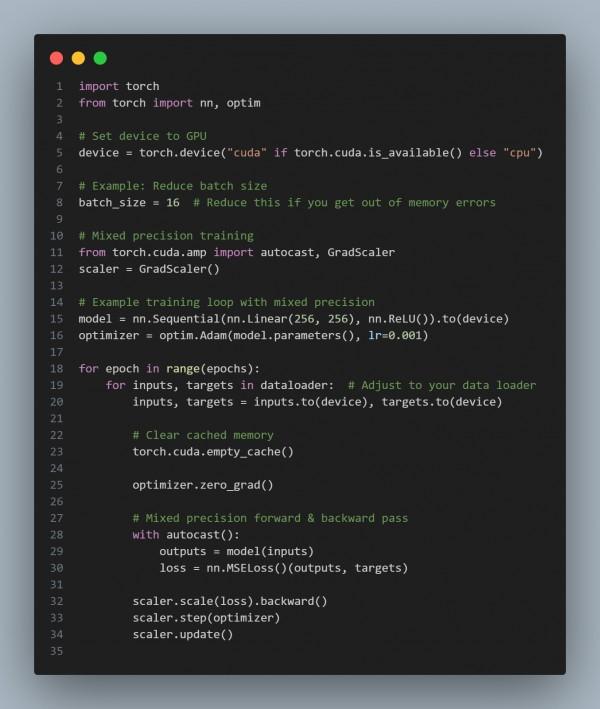
creating one of the strongest software ecosystems in technology.
Move 2: Owning the moment when demand became infinite
The generative AI boom that started with ChatGPT in late 2022 created demand for Nvidia hardware that the company could not immediately fulfil. Its H100 chips became the most coveted hardware in the world. Cloud providers waited months for allocations. Startups structured entire fundraising strategies around securing GPU access. Jensen Huang became the most important supply chain bottleneck in the global economy.
Nvidia’s response was to accelerate the product roadmap rather than sacrifice margin for volume. The H100 was followed by the H200, then the Blackwell architecture, each generation delivering capability improvements that kept customers committed to the platform rather than exploring alternatives.
As Huang described the dynamic in Nvidia’s Q3 FY2026 earnings call: “Compute demand keeps accelerating and compounding across training and inference, each growing exponentially. We’ve entered the virtuous cycle of AI.” (Nvidia Q3 FY2026 Earnings)
The virtuous cycle he described is structural. More AI applications create more inference demand. More inference demand creates more revenue for Nvidia. More revenue funds faster chip development. Faster chip development maintains the performance gap over competitors. The cycle compounds.
Move 3: Becoming indispensable to the customers trying to replace you
The most counterintuitive aspect of Nvidia’s position is that its biggest risk, customer-built custom silicon from Microsoft, Google, Amazon, and Meta, has not materialised as an existential threat.
Google has built TPUs for over a decade. Amazon has Trainium. Microsoft has Maia. Meta has MTIA. All four are serious engineering investments from companies with the resources to execute them well. None has replaced Nvidia for the majority of AI workloads at these companies, and none has created a developer ecosystem that external customers can build on.
The reason is the CUDA moat. Enterprise AI teams, startups, and research organisations do not want to rewrite their code for a custom chip architecture that only one cloud provider supports. Even if Google’s TPUs are technically competitive for certain workloads, the developer friction of adopting them outside of Google’s own infrastructure is prohibitive for most organisations.
Nvidia has made itself indispensable to the customers who are simultaneously its biggest revenue source and its most motivated potential competitors. That is a precarious position, but it has held for years because the switching cost is not just financial. It is epistemic. The world’s AI engineers think in CUDA.
By the numbers
| Metric | Value | Source | Why it matters |
|---|---|---|---|
| FY2025 revenue | $130.5 billion, up 114% YoY | Nvidia FY2025 Annual Report | Fastest revenue growth at this scale in corporate history |
| Data Center revenue (FY2025) | $115.2 billion, up 142% YoY | Nvidia FY2025 Annual Report | AI infrastructure is now almost the entire business |
| Q3 FY2026 Data Center revenue | $51.2 billion in one quarter | Nvidia Q3 FY2026 Earnings | Quarterly revenue larger than most companies’ annual revenues |
| Gross margin | 73.6% | Nvidia Q3 FY2026 Earnings | Exceptional for hardware; reflects software ecosystem pricing power |
| AI chip market share | 70-95% | Mizuho Securities, 2025 | A near-monopoly in the most critical input to the AI economy |
What competitors missed
AMD understood that Nvidia’s chips were profitable and decided to compete on hardware specifications. Its MI300X has more memory than Nvidia’s H100 and competes at lower price points. On paper, it should win deals. In practice, it has not, because AMD missed that Nvidia’s advantage was never the hardware.
Intel entered the AI chip market with its Gaudi series. Years of significant investment have produced a product that exists in the market but has not challenged Nvidia’s dominance in any meaningful deployment at scale.
Google, Meta, Amazon, and Microsoft are all building custom AI chips. These are serious engineering investments. They are also primarily deployed for internal workloads. None has created a developer ecosystem that competes with CUDA for external customers.
The shared error: everyone competed with Nvidia’s chips. Nobody successfully competed with Nvidia’s software ecosystem. The chip is the vehicle. CUDA is the network effect. A competitor that wins on chip specifications but loses on developer ecosystem has not built a moat. It has built a product.
Risks and challenges
- Geopolitical exposure. Nvidia’s H20 export restrictions to China resulted in a $4.5 billion inventory charge in Q1 FY2026 (Nvidia Q1 FY2026 Earnings). AI infrastructure is now a national security issue in multiple jurisdictions. Any further export control expansion creates direct revenue risk.
- Customer concentration. Microsoft, Google, Amazon, and Meta collectively represent approximately 50% of Nvidia’s Data Center revenue. If any of them successfully develops custom silicon good enough for the majority of their internal workloads, the revenue concentration becomes a vulnerability at scale.
- Custom silicon maturing. The hyperscaler custom chip programmes are 5 to 10 years old. Engineering investments of this scale and duration eventually produce results. The question is not whether custom silicon will improve but when it will be good enough to route a meaningful share of internal workloads away from Nvidia.
- CUDA alternative emerging. The economic incentive to build a viable CUDA alternative has never been greater. At 73.6% gross margins on $51 billion of quarterly revenue, the company funding the alternative developer ecosystem will be one of the best-financed startups in history.
- Regulatory scrutiny. A 70 to 95% market share in a category this central to the global economy (Mizuho Securities, 2025) attracts regulatory attention. Antitrust investigations in multiple jurisdictions are a plausible medium-term risk.
What founders can learn
- Build the developer ecosystem before you need the revenue it generates. Nvidia’s CUDA bet in 2006 did not pay off until the deep learning boom began around 2012. Six years of patient ecosystem building created an asset that no competitor has matched in 20 years. Developer ecosystems are the slowest-moving and most durable moats in technology.
- Invest in making your infrastructure easy to use before making it faster. CUDA succeeded because it made GPU computing accessible to researchers who were not hardware engineers. Accessibility before performance is the correct order for building developer ecosystems.
- Identify the layer below your product that controls access, and understand who controls it. Nvidia controlled the chip layer. CUDA controlled the software layer above it. Both together created a moat that compounds at the intersection of hardware and software. Every AI product has a layer below it with the same structural power. Understand it before your business depends on it.
- Do not plan your unit economics with today’s compute costs. Nvidia’s pricing power is substantial and compounding. Plan for meaningful compute cost inflation; the economics that work today may not hold at scale.
Expert analysis
Bull case. Nvidia sits at the centre of the largest capital expenditure cycle in the history of technology. Hyperscalers have signalled plans to spend $180 billion on AI infrastructure in 2026 alone. AI inference token generation grew tenfold in one year. As agentic AI systems become mainstream and physical AI enters robotics and autonomous vehicles, compute demand creates new revenue streams that Nvidia’s current valuation does not fully price. The CUDA moat compounds with each new developer trained on the platform.
Bear case. Nvidia’s customers are its most significant risk. Microsoft, Google, Amazon, and Meta each have the capital and the engineering talent to build custom silicon. If any of them develops chips good enough for their internal workloads, the revenue concentration risk becomes acute. The $4.5 billion H20 charge (Nvidia Q1 FY2026 Earnings) demonstrates that geopolitical risk is not theoretical and can materialise in a single quarter.
Contrarian view. Nvidia’s success may contain the seeds of its own disruption. At 73.6% gross margins on $51 billion in quarterly revenue, the economic incentive to fund a viable CUDA alternative has never been greater. The question is not whether someone will build one. The question is which company, with enough developer community, enough capital, and enough engineering talent, will get there first. That company will be the most consequential infrastructure startup of the next decade. It is being funded somewhere right now.
Future outlook
The medium-term trajectory for Nvidia depends on two variables: whether custom silicon from hyperscalers reaches a quality threshold sufficient to route meaningful workloads away from Nvidia hardware, and whether a viable CUDA alternative developer ecosystem emerges.
Both are slow-moving processes. Custom silicon programmes take a decade to mature. Developer ecosystem transitions take longer. Nvidia’s current position is strong enough that neither risk materialises quickly.
The more immediate variable is inference demand. AI inference token generation, the compute required to run AI models in production at scale, surged tenfold in a single year. As AI agents become mainstream, that demand compounds further. Nvidia is positioned to capture most of it on current hardware and the Blackwell generation following it.
For Indian AI startups, the medium-term implication is cost pressure. GPU compute is not getting cheaper in a world where demand is compounding and Nvidia has pricing power. The unit economics of AI products built today need to account for compute costs at higher utilisation and higher prices than current rates suggest.
The bottom line
Jensen Huang did not win the AI race by building the fastest chip. He won it by making sure you needed his software to run any chip at all. By the time you realised what he had built, it was too late to build it yourself.
Key takeaways
- Nvidia holds 70 to 95% of the AI chip market with $130.5 billion in FY2025 revenue, up 114% year-on-year (Nvidia FY2025 Annual Report, Mizuho Securities, 2025).
- The real moat is not the hardware. It is CUDA, a software ecosystem with 4 million developers and deep integration into every major AI framework, built over 20 years (MLQ.ai Research, 2025).
- Data Center revenue reached $51.2 billion in Q3 FY2026 alone, with gross margins of 73.6%, making Nvidia the most profitable infrastructure business in history at this revenue scale (Nvidia Q3 FY2026 Earnings).
- Every AI startup, every foundation model, and every hyperscaler is directly or indirectly a Nvidia customer. The company is the toll road beneath the entire AI economy.
- The biggest strategic risk to Nvidia is its own customers building custom silicon; the biggest lesson for founders is to identify which layer in their own stack has the same structural power as CUDA, and to understand who currently controls it.
Conclusion
Nvidia’s story is not a story about chip quality. It is a story about infrastructure timing.
Jensen Huang released CUDA in 2006 when deep learning was an academic curiosity. He invested in a developer ecosystem when the addressable market was a few thousand researchers. He built library integrations and framework optimisations for a category that did not yet have enterprise customers. He did all of this before anyone outside Nvidia’s research partnerships understood what was being constructed.
When the generative AI boom arrived in 2022, Nvidia was not just the best hardware supplier. It was the only infrastructure that the world’s AI engineers already knew how to use. That is not a hardware advantage. That is a software advantage built on 16 years of patient ecosystem investment.
For Indian founders building AI products, the lesson is not to build a chip company. The lesson is to understand the infrastructure layers beneath your product well enough to identify which of them has the same structural dynamic: a software ecosystem that creates switching costs durable enough to outlast competitors with better hardware.
That layer exists in every AI category. Most founders are too focused on the product layer above it to notice. Nvidia’s success is the most expensive available proof of what it costs to miss it.
TFN LENS
Nvidia’s story is directly relevant to Indian AI founders not because India will build a GPU company, but because the strategic principle it demonstrates is available in every market.
The question Huang implicitly asked in 2006 was: what software layer, if we own it, makes our hardware indispensable regardless of what competitors build? That question applies to every product built on top of infrastructure. If you are building an AI product for Indian healthcare, what is the data layer beneath your product that creates a switching cost? If you are building for Indian logistics, what is the route optimisation model that becomes the assumed substrate?
The founders who ask that question early, and invest in owning the answer before the market understands the question, are building the Nvidias of their categories. The founders who skip it are paying rent to whoever got there first.
Building something of your own? Follow The Founder Nation and NamasteVC for curated startup funding news, grant alerts, and founder stories from India’s startup ecosystem, delivered straight to your feed, every week.
Frequently asked questions
Why is Nvidia so dominant in AI chips?
Nvidia’s dominance comes primarily from CUDA, the software platform it released in 2006 that made its GPUs programmable for general-purpose computing. Over 20 years, CUDA accumulated 4 million developers, deep integration into every major AI framework including TensorFlow and PyTorch, and millions of lines of production code written specifically for it (MLQ.ai Research, 2025). Competitors can build competitive hardware but cannot replicate this ecosystem quickly.
What is Nvidia’s market share in AI chips?
Nvidia holds between 70% and 95% of the AI chip market depending on the metric measured (Mizuho Securities, 2025). Its nearest competitor, AMD, has gained some ground in specific workloads but has not threatened Nvidia’s overall market position.
How much revenue does Nvidia make from AI?
Nvidia’s Data Center segment, which primarily serves AI workloads, generated $115.2 billion in FY2025, up 142% year-on-year (Nvidia FY2025 Annual Report). In Q3 FY2026 alone, Data Center revenue was $51.2 billion (Nvidia Q3 FY2026 Earnings).
Who is trying to compete with Nvidia in AI chips?
AMD (MI300X series), Intel (Gaudi series), and the hyperscaler custom chip programmes (Google TPUs, Amazon Trainium, Microsoft Maia, Meta MTIA) are all attempting to reduce Nvidia dependence. None has created a competitive developer ecosystem for external customers, which is the primary source of Nvidia’s moat.
What is CUDA and why does it matter?
CUDA is Nvidia’s software platform for general-purpose GPU computing, released in 2006. It allows developers to write code that runs on Nvidia GPUs for tasks other than graphics rendering. Over 20 years, it has become the assumed substrate for AI research and production deployment, with 4 million developers and deep integration into every major AI framework (MLQ.ai Research, 2025). Switching away from CUDA means rewriting code that teams have built over years.
What is the biggest risk to Nvidia’s position?
The two primary risks are customer-built custom silicon and geopolitical export restrictions. Microsoft, Google, Amazon, and Meta are all building proprietary AI chips that could reduce their Nvidia dependence over time. The H20 export restrictions to China resulted in a $4.5 billion inventory charge in a single quarter (Nvidia Q1 FY2026 Earnings), demonstrating that regulatory risk is immediate and material.
©️ The Founder Nation | All rights reserved | Written by TFN Research Desk |