

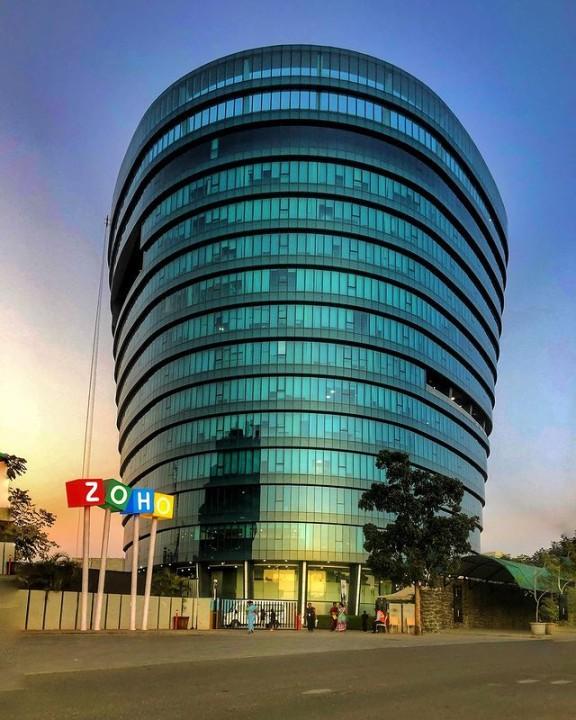
Zoho became one of the world's largest bootstrapped SaaS companies by focusing on product innovation, customer revenue, and long-term growth.
Written by TFN Research Desk | covering startups, technology, venture capital, and business strategy.
While the startup world chased funding rounds and unicorn valuations, Zoho quietly became the largest bootstrapped SaaS company in history.
In FY25, Zoho crossed Rs 12,313 crore in revenue and Rs 3,191 crore in net profit, with zero external funding, zero advertisements, and zero IPO filings (Zoho Corporation, via UpGrowth, 2026). The company had already reached 100 million users across 55 applications in 150 countries the year before (Zoho Corporation Press Release, September 2023). No TechCrunch feature celebrated it. No investor press release announced it. Just Sridhar Vembu, the founder who moved to a village in Tamil Nadu in 2020, building software that 700,000 businesses across the world pay for every month.
Topic tags: Case Study • SaaS • Indian Startup Strategy • Bootstrapped Companies • Founder Stories
The company that refused to play the startup game
The most remarkable thing about Zoho is not the revenue. It is the absence of everything the media needs to write a story.
No funding round. No IPO filing. No scandal. No acquisitions splashed across the front page of Economic Times. Zoho has given customers what they need, which is affordable, functional software, while giving the media nothing it needs to write about.
That is not accidental. It is the direct consequence of a decision made in 1996, when Sridhar Vembu and Tony Thomas founded AdventNet in Chennai and decided, from day one, to take no external funding. The consequences of that single choice compound through every strategic decision Zoho has made in the 28 years since.
Customer numbers grew 32% in 2025. Revenue grew 20% year-on-year (BW Businessworld, February 2026). EBITDA margins that have been consistently above 37% reflect a company that never learned to waste money because it never had someone else’s money to waste.
After three decades and Rs 12,000 crore in revenue, the model is still accelerating.
Why this story matters
Zoho is the most important case study in Indian tech that Indian founders almost never study. Its logic contradicts the dominant narrative of startup culture: that you must raise to grow, that you must spend to acquire customers, that you must chase valuation to prove you are serious.
Zoho did none of those things. It now serves more customers, generates more profit, and operates with more margin than most venture-backed Indian startups that raised hundreds of millions of dollars and then quietly restructured or shut down.
As Indian founders navigate a period of deliberate capital discipline, the Zoho playbook is not just a historical example. It is an operating manual.
Quick facts
| Metric | Value | Source |
|---|---|---|
| Founders | Sridhar Vembu, Tony Thomas | Zoho Corporation |
| Founded | 1996 (as AdventNet) | Zoho |
| Headquarters | Chennai and Tenkasi, Tamil Nadu | Zoho |
| Revenue (FY25) | Rs 12,313 crore (~$1.47 billion) | Zoho via UpGrowth, 2026 |
| Net profit (FY25) | Rs 3,191 crore | Zoho via UpGrowth, 2026 |
| Users | 100 million across 55+ apps | Zoho Press Release, September 2023 |
| Customers | 700,000+ businesses, 150 countries | Zoho Corporation |
| External funding raised | Zero | Zoho Corporation |
| Revenue growth (2025) | 20% YoY | BW Businessworld, February 2026 |
| Customer growth (2025) | 32% YoY | BW Businessworld, February 2026 |
Background
AdventNet began as a network management software company in Chennai in 1996. The founding team made a decision that day they have never reversed: build the company on customer revenue alone. No venture capital. No angel rounds. No strategic investors.
Not because they were ideologically opposed to capital, but because they understood what capital costs beyond money: control over timelines, strategic direction, and the freedom to build for decades instead of quarters. That decision became Zoho’s most durable competitive advantage, though it would take years for the market to understand why.
The product list grew gradually to 55 applications covering CRM, email, project management, HR, accounting, and analytics. All built in-house. All priced for small and mid-sized businesses that could not afford enterprise software. The integrated suite created a natural expansion engine: customers who came for one Zoho product discovered they needed three. Then five.
By 2023, Zoho became the first bootstrapped SaaS company in history to reach 100 million users (Zoho Corporation Press Release, September 2023). By FY25, it became the first bootstrapped Indian startup to cross Rs 12,000 crore in annual revenue (UpGrowth, 2026).
Timeline
| Year | Milestone |
|---|---|
| 1996 | Sridhar Vembu and Tony Thomas found AdventNet in Chennai; first product is network management software |
| 2005 | Company launches Zoho CRM, the first product under the Zoho brand; company eventually rebrands |
| 2009 | Zoho Office Suite launches, expanding into productivity software |
| 2020 | Sridhar Vembu moves to Tenkasi, rural Tamil Nadu; signals long-term commitment to rural hiring and operations |
| 2022 | Zoho crosses 80 million users across its application suite |
| 2023 | Zoho reaches 100 million users, becoming the first bootstrapped SaaS company in history to do so (Zoho Press Release, September 2023) |
| 2025 | Customer numbers grow 32% YoY; revenue grows 20% (BW Businessworld, February 2026) |
| FY25 | Revenue reaches Rs 12,313 crore; net profit reaches Rs 3,191 crore; first bootstrapped Indian startup to cross Rs 12,000 crore milestone (UpGrowth, 2026) |
How it happened
Move 1: Choosing the constraint before it became a strategy
Most bootstrapped companies avoid external funding because they cannot raise it. Zoho’s situation was different. Vembu was technically strong enough and the early product credible enough that capital was available had he sought it. He chose not to.
That choice forced the company into product excellence as its only growth lever. Without a marketing budget, Zoho could not buy its way to customers. Without paid acquisition, every customer had to find the product through word of mouth, search, or community recommendations. That meant the product had to be genuinely better or meaningfully cheaper than the alternative.
Zoho chose both. It invested 60% of revenue into R&D, against an industry average of 17% (UpGrowth, 2026). It priced its applications for small businesses in markets that Salesforce had written off as uneconomical.
The compound effect of high R&D spend and low customer acquisition cost took years to become visible, but it ultimately produced a product suite that 700,000 businesses pay for without ever seeing an advertisement.
Move 2: Building the integrated suite before SaaS integration was fashionable
The strategic insight that Zoho executed better than any competitor was building a genuinely integrated suite of business applications rather than a collection of separate tools.
When a small business in Coimbatore buys Zoho CRM, it discovers that Zoho Books handles accounting and that Zoho Projects manages its team workflow. The integration is native, not API-stitched. The data flows without exports. The price is a fraction of what a Salesforce-plus-QuickBooks-plus-Asana stack would cost.
This model created natural expansion revenue without a sales team. The customer who pays for one product becomes a multi-product customer through their own discovery, not through an enterprise sales process. Customer acquisition cost stays low. Revenue per customer grows organically. The economics compound without the capital expenditure.
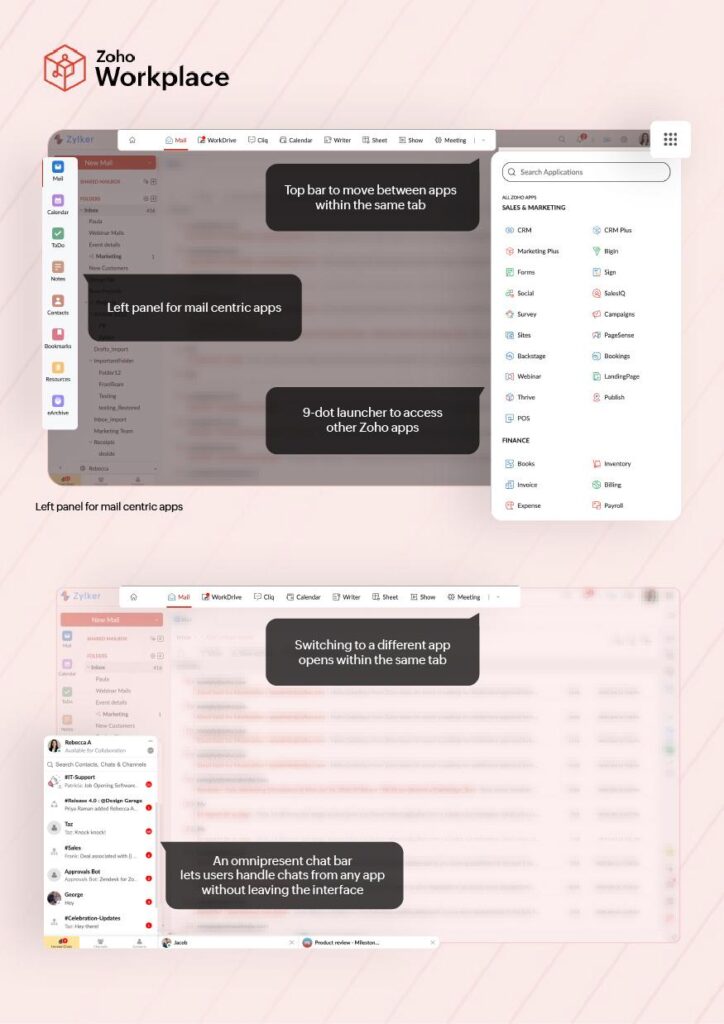
customers to adopt multiple products within one ecosystem.
Move 3: Building infrastructure instead of renting it
While every SaaS competitor was migrating to AWS and Azure, Zoho was building its own data centres. That investment looked eccentric when cloud economics seemed to favor variable cost models. It now looks like the structural source of Zoho’s pricing advantage.
A competitor with equivalent products but third-party cloud costs cannot match Zoho’s price point at scale without destroying its own margins. Zoho’s infrastructure ownership is a moat that took a decade to build and would take a decade to replicate.
Sridhar Vembu extended this philosophy to talent. By moving operations to rural Tamil Nadu and hiring from villages, Zoho reduced cost structures that urban-headquartered companies carry automatically. The rural talent pipeline also produced a loyalty and retention profile that metropolitan teams rarely achieve.
By the numbers
| Metric | Value | Source | Why it matters |
|---|---|---|---|
| Revenue (FY25) | Rs 12,313 crore | UpGrowth, 2026 | First bootstrapped Indian startup to cross Rs 12,000 crore |
| Net profit (FY25) | Rs 3,191 crore | UpGrowth, 2026 | Profitable and self-funding, entirely independent of markets |
| EBITDA margin (FY23) | 40.7% | Affluense.ai, 2025 | Class-leading profitability for any SaaS company at this scale |
| R&D spend as % of revenue | 60% | UpGrowth, 2026 | vs 17% industry average; the source of every product advantage |
| Customer growth (2025) | 32% YoY | BW Businessworld, February 2026 | Accelerating after nearly 30 years, not plateauing |
What competitors missed
Salesforce spent billions on acquisitions and advertising to own the enterprise CRM market. It never prioritised the global small business segment because the unit economics of serving a five-person company in Coimbatore or Guatemala City looked unattractive on a per-account basis.
Microsoft built a genuine enterprise suite but priced it for enterprises.
Freshworks, the other Indian SaaS giant, raised venture capital and listed on NASDAQ. It competes directly with Zoho in several categories, but carries investor expectations and quarterly reporting obligations that Zoho simply does not.
The shared blind spot across all three: the assumption that serving small businesses at low price points was not a scalable model. Zoho proved it is, provided you build your own infrastructure, own your data centres, skip the advertising budget, and let product quality compound over decades. The model only looks unscalable if you measure it over a quarter. Measured over 28 years, it produces Rs 12,000 crore in revenue and 37%+ EBITDA margins.
Risks and challenges
- Succession risk. Sridhar Vembu is simultaneously the founder, chief scientist, and cultural anchor of the company. The strategy and product philosophy are deeply personal. Scaling to 20,000 employees and beyond while preserving that culture without external accountability structures is genuinely difficult.
- AI readiness. The AI era will require Zoho to embed intelligence across 55 applications simultaneously. Its deep R&D culture and proprietary infrastructure are structural advantages here, but the company has historically avoided acquisitions that could accelerate capability development.
- Talent at scale. The rural hiring model that has been a cost and loyalty advantage may face constraints as Zoho’s global ambitions require talent profiles harder to source from Tenkasi.
- Category competition. AI-native startups are entering every category Zoho occupies: CRM, accounting, project management, HR. The integrated suite advantage holds as long as switching costs remain high, but new entrants do not carry legacy architecture.
- Replicability ceiling. The Zoho model required a founder willing to build for 28 years without the liquidity that equity would have provided. That timeline commitment is the structural prerequisite for everything else, and it is not replicable by most founding teams.
What founders can learn
- Treat investor-free operation as a product feature, not a financing gap. The freedom to build for years without a quarterly target is an enormous structural advantage that compounds in ways that are invisible in year one and obvious in year ten.
- Invest in R&D disproportionately while competitors invest in marketing. Products that genuinely solve problems acquire their own customers. Zoho spent 60% of revenue on R&D (UpGrowth, 2026) and nothing on advertising. The ratio drove every downstream advantage.
- Price for the customer you want to serve, not the customer that makes your revenue line look impressive. Zoho built a Rs 12,000 crore business serving customers that Salesforce never wanted.
- Own infrastructure that is core to your cost structure. Zoho owns its data centres. That investment pays off in pricing power that no competitor with third-party cloud costs can match at scale.
- Do not build for headlines. Zoho has been crossing milestones for 28 years without media coverage. The lack of press was never a problem because customers, not journalists, fund the business.
Expert analysis
Bull case. Zoho is positioned precisely for the next decade. As AI becomes central to enterprise software, Zoho’s deep R&D culture, proprietary infrastructure, and integrated 55-app platform mean it can embed AI across every product simultaneously without the debt load or investor pressure that constrains competitors. Its 32% customer growth in 2025 suggests the market for affordable, integrated enterprise software is far from saturated (BW Businessworld, February 2026).
Bear case. Zoho’s biggest risk is not competitive but internal. Sridhar Vembu is both founder and chief scientist. The company’s culture and strategic direction are deeply personal to him. As it scales beyond 20,000 employees, maintaining the discipline and product-first culture without external accountability structures is genuinely hard. The model does not come with a documented succession playbook.
Contrarian view. Zoho’s model, while genuinely admirable, may not be replicable as a template. It required a founder willing to build for 28 years without the liquidity that equity would have provided. Most founders in an era of FOMO-driven startup culture cannot credibly commit to that timeline. Zoho is not a template. It is an outlier that inspires templates, and the difference matters when founders try to reverse-engineer it.
Future outlook
Zoho enters the second half of the 2020s in its strongest position in 28 years. The AI transition in enterprise software plays to its structural advantages: deep R&D investment, proprietary infrastructure, and an integrated data layer across 55 applications that competitors cannot replicate quickly.
The company’s 32% customer growth rate in 2025 signals that the addressable market for affordable integrated business software is still expanding, not compressing (BW Businessworld, February 2026). As global small businesses increasingly need AI-enabled tools but cannot afford Salesforce or Microsoft pricing, Zoho’s positioning sharpens rather than erodes.
The primary unknown is succession. Every other risk at Zoho, AI readiness, category competition, talent at scale, is manageable given the company’s balance sheet and R&D culture. The founder concentration risk has no obvious resolution outside of the company’s own internal planning, which is not publicly visible.
The medium-term trajectory, assuming Vembu remains active and the R&D culture holds, points to Zoho crossing $2 billion in revenue before 2028 without changing the fundamental model.
The bottom line
Zoho did not grow without making headlines. It grew without needing them. That is the rarest thing in startup history: a company that let the product do all the talking for 28 consecutive years, and is worth Rs 12,000 crore in revenue because of it.
Key takeaways
- Zoho crossed Rs 12,313 crore in revenue in FY25 with Rs 3,191 crore in net profit, entirely bootstrapped and without a single rupee of external funding (UpGrowth, 2026).
- The company serves 100 million users across 55 applications in 150 countries, making it the largest bootstrapped SaaS company in history by user count (Zoho Press Release, September 2023).
- Zoho invests 60% of revenue in R&D against an industry average of 17%, the structural source of its product and pricing advantage (UpGrowth, 2026).
- Customer numbers grew 32% and revenue grew 20% in 2025, proving the model accelerates after three decades (BW Businessworld, February 2026).
- The Zoho story is the most complete proof available that profitability, product quality, and customer trust are a more durable growth engine than venture capital, paid acquisition, or IPO-driven valuation expansion.
Conclusion
The Indian startup ecosystem has spent the last decade producing stories about companies that raised money, scaled fast, and restructured quietly. Zoho is the counterexample that the ecosystem has not yet figured out how to study.
Its logic is not anti-VC. It is pro-product. The decision to avoid external funding was the original constraint that forced every other good decision: invest in R&D, own infrastructure, price for the underserved customer, build for decades not quarters. Each of those choices followed logically from the first.
The result is a company with Rs 3,191 crore in annual net profit, 100 million users, and 700,000 businesses in 150 countries that fund it every month simply by paying their subscriptions. No roadshow required. No quarterly earnings call. No lockup expiry.
For Indian founders building today, Zoho is not a blueprint to copy, because the timeline commitment it required is genuinely rare. But it is a proof point that every instinct the startup funding culture promotes, raise early, spend on marketing, chase valuation, is a choice and not a law. Zoho chose differently. Rs 12,000 crore later, the choice looks correct.
TFN LENS
The real lesson from Zoho is not that bootstrapping is better than raising capital. The real lesson is that Zoho made fundraising unnecessary by building something so useful, at a price so accessible, that 700,000 businesses in 150 countries funded the company simply by paying their subscriptions.
That is not a bootstrap story. That is the purest form of product-market fit ever demonstrated in Indian technology.
For Indian founders building in 2026, the question Zoho poses is simple: if you were forced to grow on customer revenue alone, what would your product need to be? Answer that question first. Then decide whether you need outside capital to build it.
Building something of your own? Follow The Founder Nation and NamasteVC for curated startup funding news, grant alerts, and founder stories from India’s startup ecosystem, delivered straight to your feed, every week.
Frequently asked questions
Is Zoho profitable?
Yes. In FY25, Zoho reported a net profit of Rs 3,191 crore on revenue of Rs 12,313 crore (UpGrowth, 2026). The company has maintained EBITDA margins above 37% consistently, a level that is rare among SaaS companies at comparable scale.
Has Zoho raised venture capital?
No. Zoho has never raised external funding of any kind since its founding in 1996 as AdventNet. It has grown entirely on customer revenue, making it the largest bootstrapped SaaS company in the world by user count (Zoho Corporation, 2023).
How many users does Zoho have?
Zoho reached 100 million users in 2023 across its 55-plus applications, serving 700,000 businesses in 150 countries (Zoho Press Release, September 2023).
What is Zoho’s growth rate?
In 2025, Zoho grew revenue by 20% year-on-year and customer numbers by 32% (BW Businessworld, February 2026), an acceleration that the company has maintained after nearly three decades of operation.
How does Zoho compete with Salesforce?
Zoho competes on price, integration, and breadth. Its applications are priced for small and mid-sized businesses that Salesforce targets only at enterprise-level pricing. Zoho’s 55-application integrated suite means customers who adopt one product naturally expand into others, creating organic revenue growth without an enterprise sales team. Zoho’s infrastructure ownership further enables pricing that cloud-hosted competitors structurally cannot match.
Is Zoho planning an IPO?
As of June 2026, Zoho has not announced any IPO plans. Sridhar Vembu has repeatedly stated publicly that remaining private is central to the company’s long-term strategy and allows Zoho to make decisions on timelines that a publicly listed company could not.
©️ The Founder Nation | All rights reserved | Written by TFN Research Desk |