


Written by TFN Research Desk | covering startups, technology, venture capital, and business strategy.
While OpenAI, Google, and Microsoft shipped AI features monthly, Apple ran television ads for a product it had not yet built.
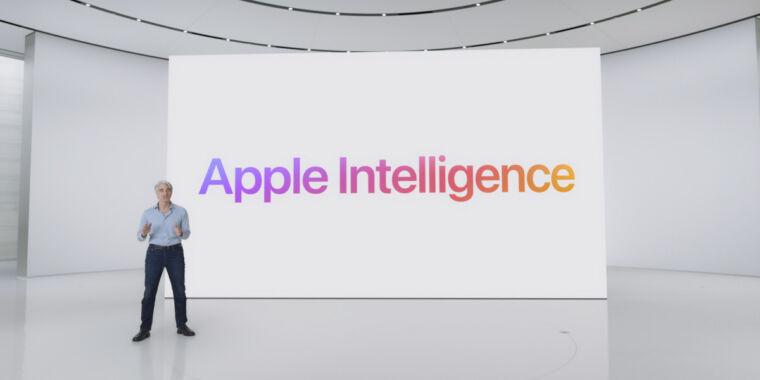
Apple has 1.8 billion active devices, a $4 trillion market cap, and more daily consumer interactions than any company in human history (Apple Q4 FY2025 Earnings). In early 2025, it ran national television advertisements featuring a smarter, more personal Siri that could understand context, take action across apps, and feel like a genuine AI assistant. Then, in March 2025, Apple delayed the entire feature set to 2026 (Bloomberg, Mark Gurman, March 2025). The ads had already aired. The promises had already been made. For the first time in a decade, Apple is visibly, publicly behind.
Topic tags: Case Study • Apple • AI Strategy • Product Failure • Founder Lessons
The company that promised an AI it had not yet built
The failure is precise and datable. Apple’s Siri was announced in 2011 as a category-defining product. Fifteen years later, it sets timers and plays songs while ChatGPT books restaurant reservations and Claude writes investor memos.
That gap is not a feature gap. It is a philosophical gap that became a strategic liability at the worst possible moment.
Apple’s approach to AI has always been on-device and privacy-first. That conviction produced real consumer trust and genuine early advantages in personal data handling. It also, in the era of large language models, created a structural disadvantage that competitors identified and exploited while Apple was still debating whether to acknowledge it publicly.
The result is the rarest thing in Apple’s history: a company that made the promise and missed the delivery. Apple has been late to categories before. It survived being late to streaming, late to cloud, and late to social. It survived because it never promised a specific date and then postponed it. Trust compounds slowly and breaks fast. Running advertisements for features that do not ship yet breaks trust in a way that lateness alone does not.
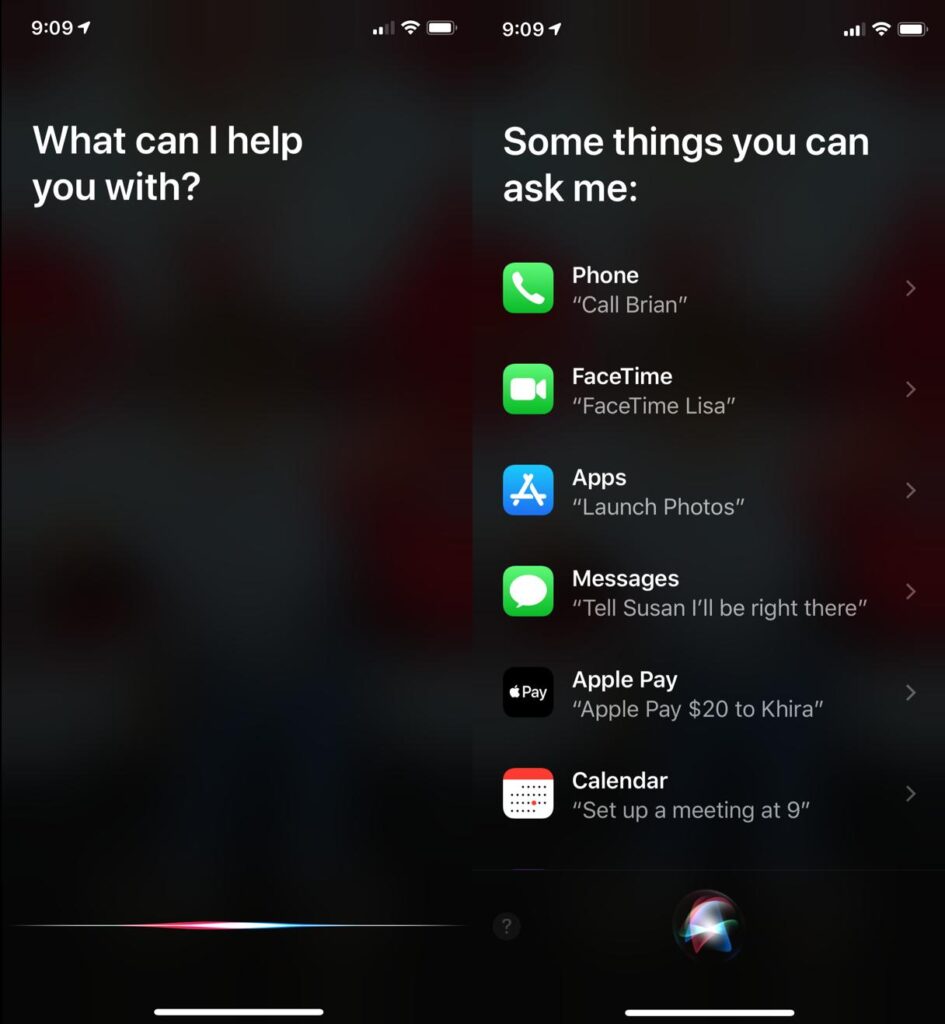
and capable of handling complex tasks across apps.
Why this story matters
Apple’s AI struggle matters beyond Apple, and it matters specifically for Indian founders building AI-enabled products.
The company controls the device in 1.5 billion people’s pockets globally. If its AI assistant falls meaningfully behind the competition, consumers have a structural reason to switch ecosystems for the first time since the original iPhone. That is a market disruption that ripples through every product built on Apple’s platform.
For founders, Apple’s situation is a case study in what happens when a culture optimised for one type of excellence, hardware perfection and supply chain mastery, encounters a challenge that requires a completely different capability: open research, iterative public deployment, and willingness to ship imperfect products in order to learn fast.
Quick facts
| Metric | Value | Source |
|---|---|---|
| CEO | Tim Cook | Apple Inc. |
| Founded | 1976 | Apple |
| Headquarters | Cupertino, California | Apple |
| Revenue (FY2025) | $416 billion | Apple Q4 FY2025 Earnings |
| Market cap | $4 trillion (surpassed in 2025) | Yahoo Finance, 2025 |
| Active devices | 1.8 billion globally | Apple |
| Services revenue (FY2025) | $109.2 billion, up 14% YoY | Apple FY2025 10-K |
| Siri feature delay | 2025 to 2026 | Bloomberg, March 2025 |
| AI chief departure | John Giannandrea retired, late 2025 | Bloomberg, 2025 |
Background
Apple hired John Giannandrea from Google in 2018 to lead its AI strategy. His central conviction was that AI should happen on the device: privacy first, no data leaving your phone, no cloud processing of your personal life. It was a principled position grounded in Apple’s brand identity. It was also, in the era of large language models requiring massive cloud infrastructure, a structural constraint that competitors did not share.
The models powering ChatGPT, Gemini, and Claude require compute that no device in your pocket can replicate. On-device AI is fast, private, and useful for simple tasks. It cannot reason across complex questions, access real-time information, or orchestrate multi-step tasks that users now expect from a modern assistant.
Apple attempted to thread the needle with Private Cloud Compute, a system that routes some queries to Apple-controlled servers while maintaining privacy guarantees. The technical ambition was genuine. The shipping speed was not competitive.
Meanwhile, OpenAI was deploying monthly product updates. Google embedded Gemini across every surface. Microsoft delivered Copilot to 220 million Office users. Meta’s AI entered WhatsApp and Instagram. Apple’s Siri was still setting timers and playing songs while every competitor it had underestimated was forming user habits at scale.
Timeline
| Year | Milestone |
|---|---|
| 2011 | Apple launches Siri; category-defining at launch, the first mainstream AI assistant on a consumer device |
| 2018 | Apple hires John Giannandrea from Google to lead AI strategy; on-device privacy philosophy becomes official direction |
| 2022 | ChatGPT launches; generative AI enters mainstream consumer awareness for the first time |
| 2023 | Google launches Gemini; Microsoft deploys Copilot to Office users; competitive gap with Siri becomes publicly visible |
| Early 2025 | Apple runs national TV advertisements for upgraded, context-aware Siri with multi-step task capability |
| March 2025 | Apple delays the advertised Siri features to 2026 (Bloomberg, March 2025) |
| Late 2025 | John Giannandrea departs; Mike Rockwell takes over Siri; Craig Federighi expands AI role (Bloomberg, 2025) |
| 2026 | Reports emerge that Siri will be powered in part by Google’s Gemini; WWDC 2026 positioned as Apple’s AI comeback moment |
How it happened
Move 1: The philosophy that worked until it didn’t
Apple’s on-device AI philosophy was not wrong. It was strategically coherent for a company whose brand rests on privacy, hardware integration, and the seamlessness of a closed ecosystem.
The problem is that large language models do not fit that philosophy. Training a frontier reasoning model requires compute at a scale that Apple’s architecture choices structurally excluded. The privacy-first constraint that protected Apple’s consumer trust became a ceiling on the capability it could deliver.
Apple’s engineers produced technically impressive work on-device. Private Cloud Compute was a genuine innovation. Neither was fast enough when OpenAI was shipping product updates on a monthly cadence and Google was embedding Gemini into search, Docs, Gmail, and Android simultaneously.
The insight Apple missed: privacy and capability are not mutually exclusive. Microsoft demonstrated this with Azure Confidential Computing. Anthropic has been building toward the same goal. Apple spent years treating them as a trade-off when the market wanted both, and was beginning to demand both.
Move 2: The advertisement that created the trust problem
The Siri delay would have been a manageable product story if Apple had handled it the way it handles most product delays: quietly, without prior public commitments.
The decision to run national television advertisements for features that were not yet working in production turned a product delay into a trust problem. When Apple says something is coming, the market assumes it is already built. Apple’s brand has been built on shipping things that work, not on announcing things that might work. The advertisements violated that implicit contract.
The delay announcement in March 2025 was not just an acknowledgment that Siri was not ready (Bloomberg, March 2025). It was confirmation that Apple had made public commitments it had not internally validated. That is a new kind of Apple mistake, and it landed during the moment when the industry’s attention to AI credibility was at its highest.
Move 3: The leadership restructuring and the Gemini admission
The internal reckoning came in stages. Senior executives held private meetings that Bloomberg’s Mark Gurman described as a turning point in the company’s AI direction (Bloomberg, 2025). Giannandrea was eventually moved out. Mike Rockwell, the creator of Vision Pro, took charge of Siri. Craig Federighi assumed a significantly expanded role in AI product direction.
The most revealing signal arrived with reports that Apple’s updated Siri would be powered, in part, by Google’s Gemini. For a company built on owning its entire technology stack, and competing with Google for every premium smartphone customer, choosing a competitor’s AI model is not a strategy. It is an admission that Apple’s internal AI capability could not meet the product requirement on the timeline the market demanded.
The admission is not fatal. Apple has navigated similar gaps before, using third-party technology as a bridge while building proprietary capability in parallel. But it is a signal about how wide the gap became.
By the numbers
| Metric | Value | Source | Why it matters |
|---|---|---|---|
| Apple revenue (FY2025) | $416 billion | Apple Q4 FY2025 Earnings | Biggest company in the world, still falling behind on its defining next product |
| Services revenue | $109.2 billion, up 14% YoY | Apple FY2025 10-K | Business is healthy but dependent on an ecosystem that AI could structurally disrupt |
| Siri feature delay | Promised 2025, delayed to 2026 | Bloomberg, March 2025 | Apple ran ads for features it had not yet built |
| Google Search market share decline | 92.9% to 89.6% (2023 to mid-2025) | Statcounter, 2025 | The search category Apple’s Safari depends on is itself under AI disruption |
| Apple AI chief departure | John Giannandrea, late 2025 | Bloomberg, 2025 | Leadership instability at the exact moment strategic clarity was most needed |
What competitors missed
This is the rare case study where Apple’s competitors did not miss anything. They understood the generative AI moment and moved on it with speed that Apple’s culture could not match.
What Apple missed is the more instructive story. Apple confused its product discipline with AI discipline. The process that produces a flawless iPhone industrial design does not produce a competitive large language model. Hardware perfection requires secrecy and private iteration over years. Frontier AI requires open research, massive public datasets, rapid external deployment for feedback, and willingness to collaborate with the broader research community.
Apple’s closed culture, its greatest hardware advantage, was its AI disadvantage. The same instinct that protects iPhone supply chain details before launch works against a company that needs to learn from user interactions at scale, in public, in real time.
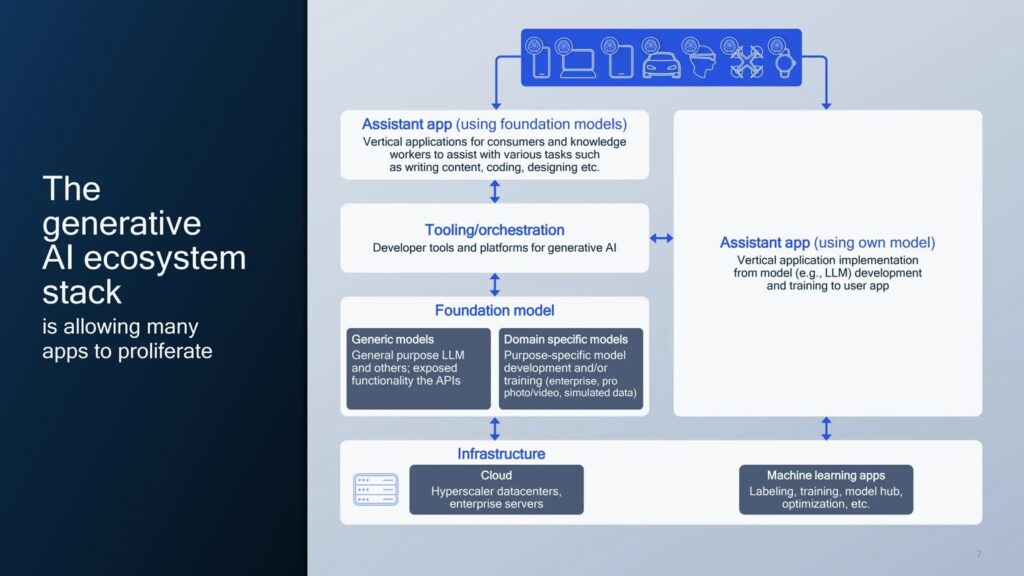
Salesforce, a company that Apple would not consider a direct competitor, understood this and moved Agentforce into enterprise workflows in 2025. Microsoft did it with 220 million Office users. Google did it across Search, Maps, Docs, and Android. The common thread was willingness to ship imperfect AI and improve it in production. Apple’s quality culture had no tolerance for that process, and the gap widened while it perfected things in private.
Risks and challenges
- WWDC 2026 as a binary moment. Apple has positioned WWDC 2026 as its AI comeback. If the announced features do not ship on time or do not work as demonstrated, the trust problem deepens into a structural credibility problem that is harder to recover from.
- Habit formation at competitors. Every month that ChatGPT, Gemini, and other assistants handle tasks that Siri cannot, consumers form habits that are difficult to dislodge even after Apple ships superior features.
- Gemini dependency risk. If Siri is powered in part by a Google model, Apple is dependent on a direct competitor for its most strategic product feature. That dependency is negotiable but not without leverage risk.
- Leadership continuity. A new AI leadership team (Rockwell, Federighi) is executing a strategy pivot under maximum competitive pressure and maximum public scrutiny simultaneously.
- On-device model ceiling. Even with cloud augmentation through Private Cloud Compute, Apple’s architecture places real constraints on the reasoning depth its AI can deliver compared to competitors with fewer self-imposed infrastructure limitations.
What founders can learn
- Do not announce contingent on features you have not yet validated in production. Apple ran national TV advertisements for features it had not shipped. The gap between announcement and delivery broke the single most important thing it had: the promise that Apple products work when they arrive.
- Do not let your strongest cultural trait become your strategic blind spot. Apple’s privacy-first philosophy created decades of consumer trust and then constrained it at the worst possible moment. Identify which of your strengths has a ceiling condition.
- Under-promise on AI timelines specifically. The field moves unpredictably, model capabilities shift quarterly, and integration complexity is routinely underestimated. A conservative public commitment consistently beats a missed ambitious one.
- Capability and values are not always in conflict. Apple treated privacy and AI capability as a zero-sum trade-off. Competitors like Anthropic and Microsoft are demonstrating they need not be. Test your assumptions about trade-offs before treating them as permanent constraints.
- Watch internal AI capability against your public commitments. The moment you cannot internally validate that a feature will ship on a publicly announced date, revise the date before the marketing begins, not after.
Expert analysis
Bull case. Apple’s 1.8 billion active device base is a distribution advantage that no AI company can manufacture. When Apple ships a credible Siri, it reaches more users in a single software update than most AI companies have reached across their entire histories. WWDC 2026 could be the moment Apple’s AI strategy becomes real at scale. The infrastructure (Private Cloud Compute, on-device models, chip capability through Apple Silicon) is more advanced than its public product history suggests.
Bear case. The delay pattern is repeating. Apple promised Siri upgrades in 2025, delayed them to 2026, and lost its most important AI executive during the transition (Bloomberg, 2025). There is no structural reason to believe the 2026 version will ship on time or perform as advertised. Meanwhile, users are forming habits with ChatGPT, Gemini, and Claude that will be hard to break even when Apple delivers something better.
Contrarian view. Apple may be playing the right long game. Its $416 billion revenue, $109.2 billion services business, and 1.8 billion active devices do not require AI leadership to win in 2026 (Apple FY2025 10-K). If the AI feature race corrects, consolidates, or produces a trust backlash before Apple ships its assistant, Apple arrives as the private, trusted, premium alternative. Patience is not always a mistake. But it requires the company to stop making promises it cannot keep on schedule.
Future outlook
WWDC 2026 is Apple’s most consequential developer conference since the original App Store launch in 2008. A revamped Siri, a dedicated AI assistant app, multi-step task completion, and more conversational responses are all promised. It is exactly what Apple promised in 2025.
If WWDC 2026 delivers, Apple’s device distribution advantage means adoption at a scale no competitor can match in a single quarter. The installed base turns from a laggard asset into an instant moat.
If WWDC 2026 delays again, or ships features that do not match the demonstration, the trust problem becomes structural. Users who have spent 12 to 18 months relying on competing AI assistants for daily tasks are not easily converted back, even by hardware quality and ecosystem lock-in.
The medium-term risk is not that Apple loses the AI race entirely. It is that Apple arrives in third or fourth position in a category where the first-mover habit advantage is stronger than it has been in any prior technology transition Apple has navigated.
The bottom line
Apple ran ads for Siri before Siri was ready. That is not an AI problem. That is a trust problem. And trust is the one thing Apple has never been able to afford to lose.
Key takeaways
- Apple delayed its flagship Siri AI upgrade from 2025 to 2026 after running national television advertisements for the unshipped features, creating a trust problem that outlasts the product delay (Bloomberg, March 2025).
- The structural challenge is Apple’s privacy-first, on-device AI philosophy, which creates fundamental constraints in competing with cloud-powered large language models at the frontier.
- Apple’s AI chief John Giannandrea departed in late 2025, triggering a leadership restructuring under maximum competitive pressure (Bloomberg, 2025).
- Apple’s business is financially strong with $416 billion in FY2025 revenue and $109.2 billion in services, making this an execution crisis, not a financial one (Apple Q4 FY2025 Earnings).
- WWDC 2026 is Apple’s make-or-break moment to demonstrate whether its AI reset can ship features that match its public commitments.
Conclusion
Apple’s AI story is not a story about a failing company. It is a story about a category-defining company encountering a challenge that its greatest strengths actively made harder to solve.
The hardware culture that produces a perfect iPhone finish is incompatible with the iterative, public, imperfect deployment culture that produces a competitive large language model. Apple has spent two years discovering that incompatibility the hard way.
The outcome at WWDC 2026 matters beyond Siri. It is a test of whether Apple can build a new capability culture fast enough to close a gap it spent years denying existed. The installed base and the financial resources to do it are both present. The culture change required to do it is the harder question.
For Indian founders building AI products in 2026, Apple’s situation offers a precise warning: the confidence that comes from being excellent at one thing can become the reason you underestimate how different the next thing will be. Identify the assumption before the market reveals it for you.
TFN LENS
Apple’s AI struggle is a more useful case study for Indian founders than its AI successes will eventually be. The lesson is not that privacy-first thinking is wrong. The lesson is that a value (privacy) became a strategy (on-device AI only), and that strategy became a constraint (cannot compete with frontier LLMs) before the company acknowledged any of it publicly.
Indian founders building AI products face a version of the same risk. The values that make your product trustworthy, privacy, safety, affordability, can become the assumptions that blind you to what the market actually needs. The question to ask is not “does our value hold?” but “at what point does our value become our ceiling?”
Building something of your own? Follow The Founder Nation and NamasteVC for curated startup funding news, grant alerts, and founder stories from India’s startup ecosystem, delivered straight to your feed, every week.
Frequently asked questions
Why is Apple’s AI strategy struggling?
Apple’s AI strategy has been structurally constrained by its commitment to on-device, privacy-first processing. Large language models require cloud-scale compute that on-device hardware cannot replicate. Apple’s attempt to bridge this with Private Cloud Compute was technically credible but not fast enough to keep pace with competitors shipping monthly updates (Bloomberg, 2025).
What happened to Apple’s Siri upgrade?
In early 2025, Apple ran national television advertisements for an upgraded Siri with context-awareness, multi-step task completion, and cross-app action. In March 2025, Apple delayed the entire feature set to 2026 (Bloomberg, Mark Gurman, March 2025).
Who replaced John Giannandrea at Apple?
After Giannandrea’s departure in late 2025, Mike Rockwell (creator of Vision Pro) took responsibility for Siri, and Craig Federighi assumed a significantly larger role in Apple’s AI product direction (Bloomberg, 2025).
Is Apple using Google Gemini for Siri?
Reports that emerged in 2026 indicated that Apple’s updated Siri would be powered in part by Google’s Gemini model, a significant departure from Apple’s preference for proprietary technology stack ownership.
How does Apple’s AI compare to ChatGPT and Gemini?
As of June 2026, Apple’s Siri lags meaningfully behind ChatGPT, Google Gemini, and Claude in reasoning ability, multi-step task completion, and real-time information access. Apple’s on-device architecture advantage in privacy and speed for simple tasks remains real, but the gap on complex reasoning tasks is significant.
What is WWDC 2026 expected to deliver for Apple AI?
WWDC 2026 is expected to showcase a revamped Siri with more conversational capability, a dedicated AI assistant application, and multi-step task completion across Apple apps. It is Apple’s second attempt to deliver the features it promised in 2025.
©️ The Founder Nation | All rights reserved | Written by TFN Research Desk | Word count: ~3238 | Read time: ~17 minutes |