
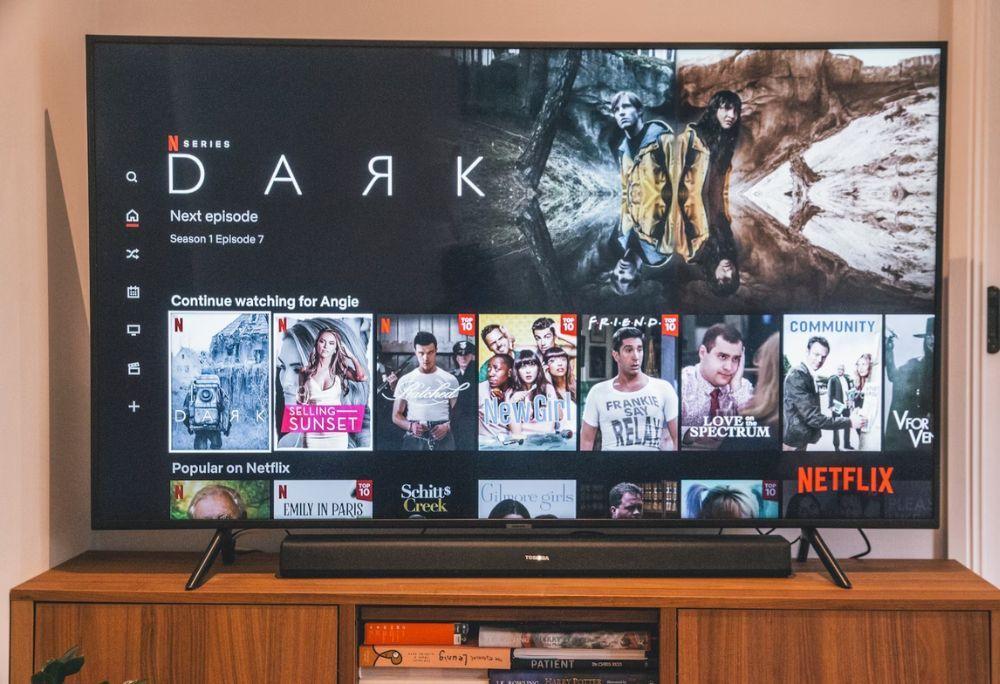
Netflix transformed from a DVD rental company into the world's leading streaming platform by disrupting its own business model.
While every other media company waited for streaming to become unavoidable, Netflix made its own cash cow obsolete before anyone forced it to.
In January 2007, Netflix was the world’s largest online movie rental service, mailing DVDs to over six million subscribers with 90% one-day delivery coverage via USPS. That same month, the company quietly launched “Watch Instantly,” a free streaming add-on bundled into existing DVD subscriptions at no extra charge. Reed Hastings called it part of pushing “into online video to lead the next generation of movie viewing.” Netflix’s streaming pivot eventually made its own legacy business obsolete: the company officially discontinued DVD-by-mail in 2023 (Netflix Form 10-K, FY2025), and by the end of 2025 had grown to more than 325 million paid subscribers worldwide, up from 301.6 million a year earlier (Netflix Q4 2025 shareholder letter, via Variety, January 2026). The decision that started it all was not a product launch. It was a quiet, free feature that cannibalized the company’s own cash cow before anyone forced it to.
Startup Strategy • Case Study • Media • Self-Disruption
The decision no one had to make
Netflix’s DVD-by-mail business was thriving in 2007 by any reasonable measure. The company posted $996.7 million in fiscal 2006 revenue, up 46% year over year (Netflix Form 8-K, FY2006). There was no external pressure to change course. Streaming technology was immature, internet speeds were inadequate for most households, and the company’s entire infrastructure, its regional shipping centers, USPS partnerships, and DVD inventory, was built around physical media.
Hastings pushed into streaming anyway, seeding it as a free perk for existing DVD subscribers rather than a new paid product. This let Netflix build streaming infrastructure, content licensing relationships, and user habits gradually, without asking customers to pay for or choose between two unproven services. The move looks obvious in hindsight. In 2007, it was a bet against a profitable and growing business with no visible reason to change.
Why this story matters
For founders, this is a case study in sequencing: the question is not whether your current product will eventually be disrupted, but whether you choose to disrupt it yourself, on your own terms, while you still have the cash flow to fund the transition. For investors, it illustrates how a company can use profitability from a legacy business as the R&D budget for its replacement. For operators, the Qwikster episode shows that even a correct long-term strategy can nearly destroy a company if the transition is executed abruptly rather than gradually.
Quick facts
| Company | Netflix, Inc. |
| Founded | 1997 (DVD-by-mail); streaming launched January 2007 |
| Key figure | Reed Hastings, co-founder and CEO |
| Pivot trigger | “Watch Instantly” bundled free into DVD subscriptions, January 2007 |
| Legacy revenue base | $996.7 million in FY2006, up 46% year over year |
| DVD-by-mail service ended | 2023 (officially discontinued, Netflix Form 10-K FY2025) |
| Paid subscribers (year-end 2025) | More than 325 million globally, up from 301.6 million in 2024 |
| Streaming vs cable (2025) | 46% of US TV viewing vs 23.4% for cable |
| Qwikster fallout | 800,000 subscribers lost in Q3 2011, stock down roughly 77% from highs |
| Industry | Media, Streaming, Consumer Technology |
Background: a profitable business with no obvious reason to change
Netflix’s DVD operation in 2006 and 2007 was not a business in decline. It was a business in growth, scaling revenue, expanding its logistics footprint, and deepening its USPS partnership to hit 90% next-day delivery. The company had no competitive threat that demanded an immediate response. Blockbuster, its primary rival, was still primarily a retail chain. Digital streaming had no proven consumer model.
What Hastings and his team saw was a longer-term trajectory: physical media was a temporary advantage, not a permanent one. The question was not if streaming would eventually replace DVDs, but how long the transition would take and whether Netflix would lead it or follow. Choosing to lead meant accepting that the new product would eventually make the old one obsolete. That acceptance, made explicitly and in advance, is what separates this case study from most corporate transformation stories, where incumbents acknowledge the shift too late and move too slowly.
How it happened: three moves that changed the company
Move 1: Bundle the new thing into the old thing for free
Streaming launched in January 2007 not as a new product with a new price, but as a free add-on to existing DVD subscriptions. This was a deliberate choice. Rather than force an either/or decision on customers who had already committed to DVD plans, Netflix let them try streaming at zero marginal cost. The friction of switching was eliminated. The discovery of what streaming could be was funded by DVD subscription revenue that was already in the bank.
Move 2: Use the profitable legacy business to fund the transition
Hastings was explicit about this in later communications. DVD profits, which he described as “a source of profits funding our international expansion,” were the financial engine behind streaming infrastructure, content licensing negotiations, and the company’s early push outside the United States. Self-disruption is expensive. Netflix could afford it because it had a healthy cash-generating business paying for the experiment.
Move 3: Learn from Qwikster and never formalize the break too early
In 2011, Netflix attempted to accelerate the transition by splitting DVD and streaming into two separate brands. DVD-by-mail would become “Qwikster.” Streaming would remain Netflix. The result was an 800,000-subscriber loss in Q3 2011, the company’s first-ever subscriber decline, and a stock collapse of roughly 77% from its highs (Stratrix, March 2026). Hastings reversed the decision within 23 days, acknowledging that “Qwikster became the symbol of Netflix not listening.” The lesson: gradual cannibalization works because customers adopt at their own pace. Sudden structural separation forces a choice customers were not ready to make.
The strategy behind the success
The core insight was not that streaming would replace DVDs. That prediction was widely shared. The insight was sequencing: cannibalize your own product gradually, as a bundled bonus, funded by your existing profitable business, before a competitor or a market shift forces you to do it under pressure and without resources.
Netflix did not ask customers to choose streaming over DVDs in 2007. It let them discover streaming while keeping their DVD subscription. It used the profits from that subscription to build something better. And when it eventually needed to move customers fully to streaming, it had years of behavioral data, content relationships, and infrastructure that no competitor had been able to build while starting from zero.
Business model breakdown
Netflix’s transition from DVD-by-mail to streaming changed the unit economics of the business through vertical integration. First, physical delivery costs, including postage, disc inventory, and regional warehouse operations, were replaced by content licensing and later content production costs, which scale differently because the same episode of a show can be delivered to a million subscribers at near-zero marginal cost. Second, the addressable market expanded globally, since streaming requires no physical logistics in each new country. Third, the shift to original content (beginning with House of Cards in 2013) moved the model from licensing other companies’ content to owning content outright, increasing both margin potential and catalogue defensibility. By Q4 2024, Netflix added 18.9 million paid subscribers in a single quarter, its largest-ever quarterly gain at the time (SQ Magazine, October 2025). The DVD business that had funded the entire transition was officially discontinued in 2023, with Netflix stating the wind-down had an immaterial impact on overall results (Netflix Form 10-K, FY2025), and by the end of 2025 the platform had surpassed 325 million paid subscribers worldwide (Netflix Q4 2025 shareholder letter, via Variety, January 2026).
What competitors missed
Blockbuster treated streaming as a future threat to be managed defensively rather than a transition to be led. By the time Blockbuster moved seriously into digital, Netflix had years of streaming infrastructure, content licensing relationships, and subscriber behavior data showing people would watch instantly if given the option. The retail chain filed for bankruptcy in 2010.
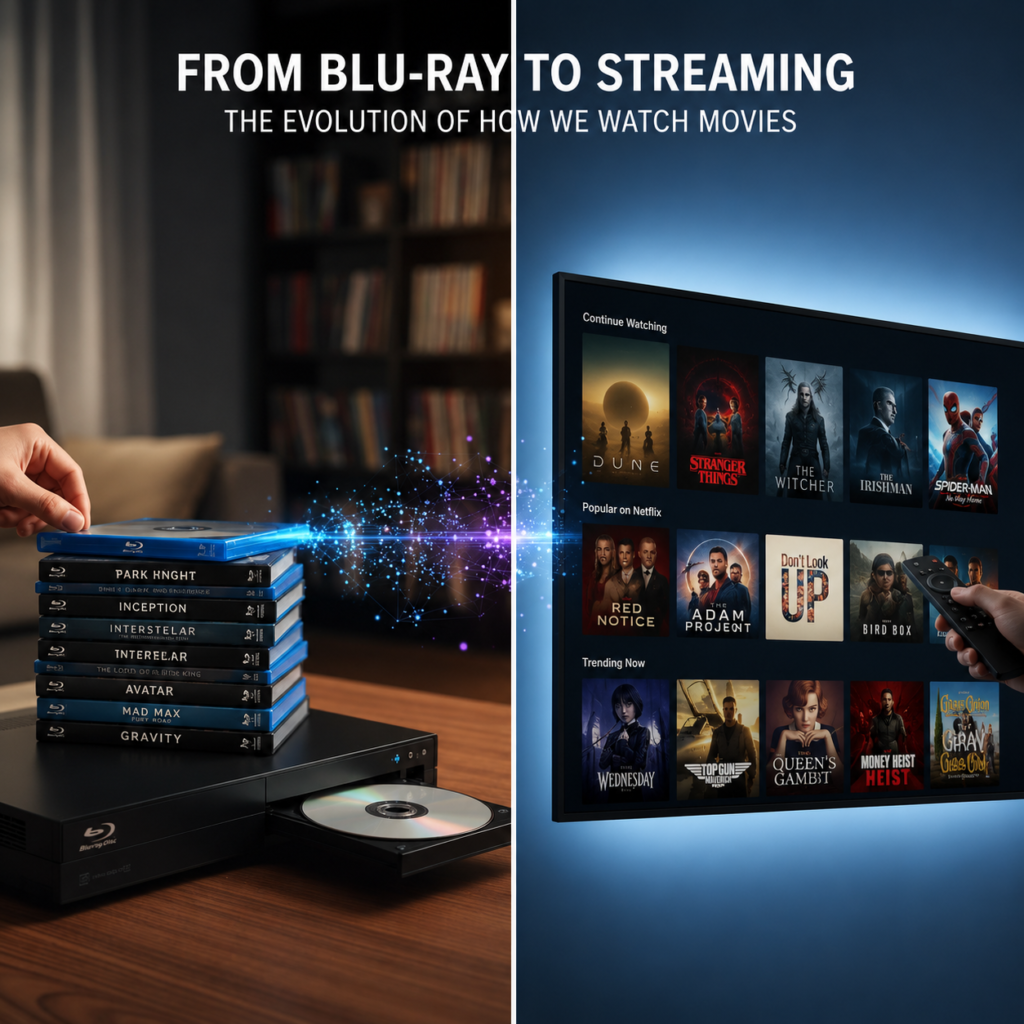
Traditional broadcast and cable networks made a similar miscalculation, treating their existing distribution model as permanent rather than as a temporary advantage to be milked while building the next one. Netflix’s 2007 bet only looks obvious in hindsight because nearly every other incumbent in the category waited for streaming to become unavoidable before acting. By that point, Netflix already had a multi-year head start in content relationships, infrastructure, and, critically, consumer habit. Streaming’s 46% share of US TV viewing versus cable’s 23.4% (SQ Magazine, October 2025) is the final score.
Risks and challenges
- Self-disruption requires accepting near-term revenue pressure in a profitable business before the replacement business has proven it can sustain the company. Not every board or investor base will tolerate that timeline.
- The Qwikster episode shows that the sequencing of formalization matters as much as the strategy itself. Moving too fast to separate or price the new product can destroy the goodwill built by offering it gradually.
- Content costs have grown substantially as Netflix moved from licensing to originals. The company now competes directly with studios and streaming rivals for the same talent and IP, driving costs higher regardless of subscriber growth.
- Password-sharing crackdowns and advertising-tier introductions in 2023 and 2024 show that even a dominant streaming business faces limits on subscriber-only revenue growth, requiring ongoing business model adaptation.
- International expansion carries regulatory, content localization, and payment infrastructure complexity that the original US streaming model did not face.
What founders can learn
- Fund your future product with your current profitable one. Netflix subsidized streaming with DVD profits for years before streaming was a standalone business. The lesson is structural: if you have a cash-generating product, it is the R&D budget for your next one.
- Cannibalize gradually and as a bonus, not abruptly as a replacement. Bundling the new product into the old one at zero extra cost lets customers adopt at their own pace, dramatically reducing backlash risk compared to forcing a choice.
- A correct long-term strategy does not excuse poor execution of the transition. Qwikster was strategically aligned with where Netflix needed to go, but the abrupt, customer-hostile rollout nearly cost the company everything regardless of the destination being right.
- Subscriber behavior data collected during the “free” phase is not just a nice-to-have. It becomes the competitive moat. Netflix knew what people watched and when before any competitor had built a streaming product.
- Original content was the moat-deepener, not the original strategy. Netflix licensed first, proved streaming worked, then used that proof to justify the far larger investment in owned content. Sequence the bets.
Expert analysis
Netflix’s pivot is widely studied but often misread. The common framing is that Hastings “saw streaming coming” and acted on that vision. The more useful framing is that he built a system for transition: use legacy profits to fund the experiment, remove customer friction from adoption, and resist formalizing the break until customer behavior data confirmed the new product had won. The Qwikster failure is the necessary counterpoint. Even with the right destination in mind, Netflix found that abrupt structural separation is more disruptive to customers than a gradual cannibalization. The recovery came not from reversing the streaming strategy, but from reversing the premature formalization of it. Founders building through platform transitions, from SaaS to AI-native, from web to mobile, from B2C to B2B, will face the same sequencing question. Netflix’s answer is the most studied example of getting it mostly right and briefly, expensively wrong.
Future outlook
Netflix’s next transition is already underway. The company introduced an advertising-supported tier in 2022 and cracked down on password sharing in 2023, both moves to convert non-paying viewers into revenue-generating subscribers without raising prices on existing members. Live sports rights and live event streaming represent a further expansion beyond on-demand content. For Indian founders watching this trajectory, the structural lesson is that platform transitions do not end. Netflix is now navigating its third major business model shift, from DVD to streaming, from licensing to originals, and from subscription-only to a hybrid subscription-plus-advertising model. Each transition has been funded by the profits of the previous one. That pattern is the enduring strategic principle, not the specific product category.
The bottom line
Netflix gave away streaming for free in 2007 because it understood that the cost of funding its own disruption was lower than the cost of being disrupted by someone else. Every founder building a product with a clear shelf life should read that sentence twice.
Key takeaways
- Netflix launched streaming in January 2007 as a free add-on to DVD subscriptions, using DVD profits to fund infrastructure before streaming had any standalone revenue model.
- The bundled, no-extra-cost approach let customers discover streaming without being forced to choose it, dramatically reducing adoption friction.
- The Qwikster split in 2011, which separated DVD and streaming into two brands with two subscriptions, caused 800,000 subscriber losses and a 77% stock decline before being reversed in 23 days.
- Gradual cannibalization worked because it matched customer readiness. Sudden structural separation failed because it forced a choice customers were not prepared for.
- House of Cards in 2013 marked the shift from licensed content to owned originals, the second major strategic move after the streaming pivot itself.
- Netflix officially discontinued its DVD-by-mail service in 2023, sixteen years after the streaming pivot began, and described the wind-down as having an immaterial impact on its financial results.
- By the end of 2025, Netflix had surpassed 325 million paid subscribers worldwide, up from 301.6 million a year earlier, and streaming commanded 46% of US TV viewing versus cable’s 23.4%.
Conclusion
Netflix did not win the streaming era by inventing it. It won by being the only major incumbent willing to use its own profitable business as the funding source for the product that would replace it, gradually enough that customers barely noticed the transition until it was complete. The Qwikster episode is the necessary counterweight to that story: even with the right destination in mind, the timing and execution of formalization matters enormously. Being right about where the industry is going does not protect you from getting the journey wrong. Netflix recovered from Qwikster because it had the subscriber base, the content, and the cash flow to absorb the mistake. Not every company gets that second chance.
TFN LENS
At The Founder Nation, we track stories like Netflix’s because they answer a question every Indian founder building in a fast-moving category will eventually face: when do you start killing your own best product? Netflix’s answer, gradually, funded by the product you are replacing, and never before the customer is ready, is the most well-documented answer to that question in startup history. The Qwikster episode is equally important. It shows that timing the formalization of a transition is as strategically critical as the transition itself, and that moving too fast can destroy the trust that makes the strategy work in the first place.
Building something of your own?
Follow The Founder Nation and NamasteVC for curated startup funding news, grant alerts, and founder stories from India’s startup ecosystem, delivered straight to your feed, every week.
Frequently asked questions
When did Netflix start streaming?
Netflix launched its streaming service, called “Watch Instantly,” in January 2007. It was offered as a free add-on to existing DVD-by-mail subscriptions rather than as a separate paid product, which allowed the company to build streaming adoption without asking customers to pay for or choose between two services.
What was the Qwikster failure?
In 2011, Netflix announced it would split its DVD and streaming businesses into two separate brands, with DVD-by-mail rebranded as “Qwikster” and streaming remaining as Netflix. The decision required customers to maintain two separate accounts and subscriptions. The backlash was immediate: Netflix lost 800,000 subscribers in Q3 2011, its first-ever subscriber decline, and the stock fell roughly 77% from its highs. Reed Hastings reversed the decision within 23 days.
How did Netflix use DVD profits to fund streaming?
Reed Hastings explicitly described Netflix’s DVD business as “a source of profits funding our international expansion” in the streaming era. The infrastructure, content licensing, and user acquisition costs of building streaming were financed by the cash flow from a DVD subscription business that was still growing at 46% year over year when streaming launched in 2007.
How many subscribers does Netflix have?
Netflix surpassed 325 million paid subscribers worldwide by the end of 2025, up from roughly 301.6 million a year earlier, according to the company’s Q4 2025 shareholder letter. Netflix discontinued routine quarterly subscriber reporting starting in 2025, shifting to revenue and operating margin as its primary reported metrics, and now shares membership figures only at milestone moments (Netflix Form 10-Q, FY2025; Variety via Comingsoon.net, January 2026).
When did Netflix shut down its DVD business?
Netflix officially discontinued its DVD-by-mail service in 2023, sixteen years after launching streaming as a free add-on to that same DVD business in 2007. The company stated in its FY2025 Form 10-K that the discontinuance had an immaterial impact on its overall operations and financial results, a sign of how completely the streaming pivot had already displaced the legacy business by the time it was formally retired.
What share of US TV viewing does streaming hold versus cable?
As of late 2025 data, streaming accounted for 46% of total US TV viewing, compared to 23.4% for cable (SQ Magazine, October 2025). Netflix is the largest single streaming service by subscriber count globally.
When did Netflix launch original content?
Netflix’s first major original series, House of Cards, launched in February 2013. This marked the beginning of the company’s shift from licensing content from studios to producing and owning content directly, which increased both margin potential and catalogue defensibility over time.
Sources
- https://www.sec.gov/edgar/search/
- https://www.sec.gov/Archives/edgar/data/1065280/000106528026000034/0001065280-26-000034-index.htm
- https://sqmagazine.co.uk/netflix-statistics/
©️ The Founder Nation | All rights reserved | Written by TFN Research Desk |