



Written by TFN Research Desk | covering startups, technology, venture capital, and business strategy.
Consumer funding is down. Enterprise multiples are up. Here’s what changed and why founders are switching sides.
In 2021, the dream was the consumer app. Build something people love, grow to a million users, figure out monetisation later. That playbook rewarded the companies that moved fastest and burned brightest. In 2026, the calculus has shifted. Investors are now favouring brands with strong unit economics and owned customer relationships language that describes B2B far more naturally than B2C. The structural reasons behind that shift are worth understanding clearly, because they are not cyclical. They are architectural.
Startup Strategy • Explainer • B2B vs B2C • Founder Fundamentals • Business Model
The short answer
B2B is attracting more founder and investor attention in 2025 and 2026 because it produces more predictable revenue, lower customer acquisition costs per dollar of revenue generated, and business models that are structurally harder for customers to exit once embedded. None of these advantages were invented recently. What changed is the cost of capital. When money was cheap, B2C’s promise of massive scale justified uncertain unit economics. Now that capital is expensive, predictability is worth more than potential.
Quick facts
| Metric | B2B | B2C |
|---|---|---|
| Revenue model | Subscriptions, contracts, seat licences | Transactions, ads, subscriptions |
| Customer count needed for $1M ARR | Tens to hundreds of customers | Thousands to millions of users |
| Average contract value | High (thousands to millions) | Low (dollars to hundreds) |
| Churn profile | Low; switching costs are real | High; consumer preferences change |
| Customer acquisition | Sales-led or product-led | Paid marketing, viral growth |
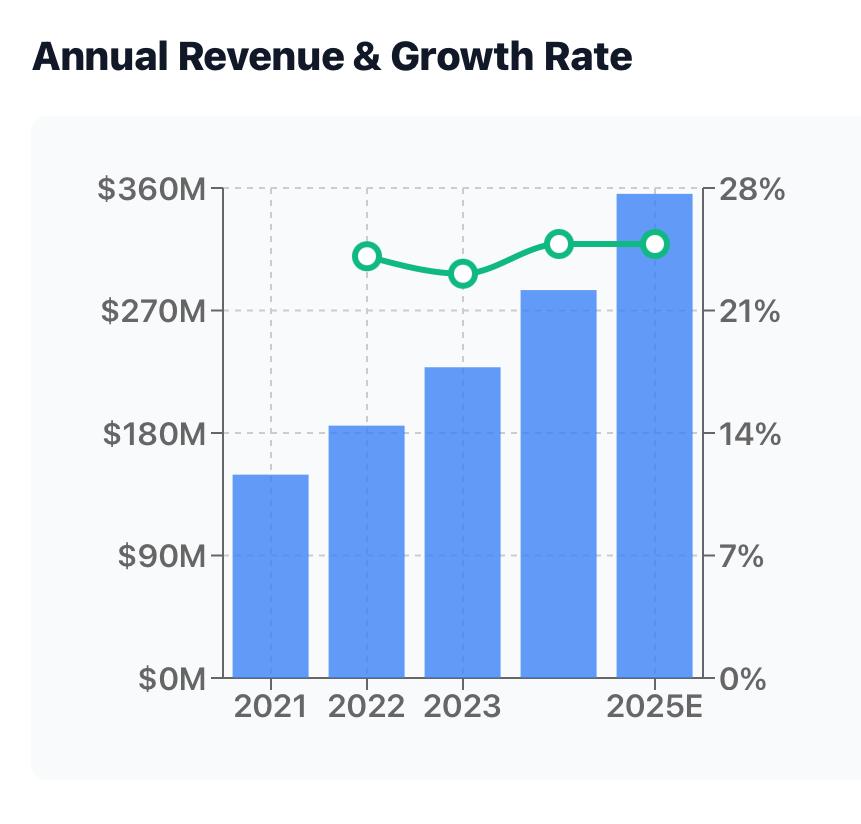
| Vertical SaaS revenue multiple (2024) | 8.6x revenue (SaaS Capital, 2024) | Lower and declining |
| B2C startup funding (H1 2025 vs H1 2024) | .. | Down 70% (Tracxn, May 2025) |
| VC preference indicator | 1 in 3 VC dollars in 2024 went to AI/B2B | B2C share declining |
Background
For most of the 2010s, the dominant startup model was consumer-first. The internet had made it possible to reach billions of people cheaply, and the largest outcomes, Facebook, Instagram, Snapchat, TikTok, were consumer products. Venture capital sized its funds and its risk tolerance around the possibility of those kinds of outcomes.
The 2022 rate cycle ended that chapter. Interest rates stabilised but remained elevated compared to the free-money era of 2020 and 2021. Investor expectations recalibrated, with profitability timelines compressed and growth-at-all-costs models largely abandoned. B2C startups, which depend on cheap capital to subsidise user acquisition costs before monetisation kicks in, were the first to feel the compression.
B2B was not immune, but it was structurally better positioned. A business with 200 enterprise customers at Rs 10 lakh a year each is a Rs 20 crore ARR business. A consumer app with 200,000 users at Rs 99 per month subscriptions generates the same revenue — but requires 1,000 times more customer relationships to manage, support, and retain.
Why B2B has structural advantages over B2C
1. Revenue predictability
B2B startups typically feature recurring revenue models through subscriptions or service contracts, making cash flows more predictable for investors. When a B2B company signs an annual enterprise contract, that revenue is locked for twelve months. The finance team can plan headcount, infrastructure, and product investment around a known number. B2C revenue is far more variable: it responds to consumer sentiment, economic conditions, seasonal trends, and competitive moves. B2C revenues often fluctuate with the economic cycle: during downturns, consumers cut discretionary spending, directly impacting sales.
Predictability matters more than it used to. In a high-interest-rate environment, a company that can demonstrate reliable ARR is worth significantly more to investors than one with the same average revenue but higher variance.
2. Switching costs and retention
There are typically high switching costs of businesses switching tools. Once a workforce is trained on a specific tool, changing its workflows can be difficult and expensive. This may create a higher customer lifetime value for B2B companies.
Consumer switching costs are close to zero. Moving from one food delivery app to another takes thirty seconds. Moving from one enterprise HR system to another takes eighteen months of data migration, retraining, and process redesign. That asymmetry means B2B churn is structurally lower than B2C churn and lower churn means a given unit of customer acquisition investment produces more cumulative revenue.
3. The investor premium for predictability
Investors are paying 25–30% valuation premiums for specialised vertical solutions over horizontal platforms. According to SaaS Capital’s 2024 industry report, vertical SaaS companies command average revenue multiples of 8.6x compared to 6.7x for horizontal solutions.
That 28% premium for vertical B2B is not about growth rate. It is about the quality of the revenue: industry-specific, deeply embedded, with high switching costs and low churn. AI-native B2B startups raised $14.2 billion in 2023 at median valuations 3.2x higher than traditional SaaS companies at similar revenue scales.
4. CAC efficiency at scale
Customer acquisition often involves longer sales cycles but results in higher lifetime values and lower churn rates. The sales process in B2B markets is more relationship-driven and less dependent on viral marketing or consumer trends.
B2C customer acquisition is almost always paid: Meta ads, Google ads, influencer marketing, app store spend. The cost is variable, volatile, and competes with every other consumer app for the same finite attention inventory. B2B acquisition, particularly at early stages, can be driven by direct outreach, product virality within organisations (as Postman demonstrated), and community. Once an enterprise contract is signed, the CAC per subsequent renewal approaches zero.
Comparison table
| Dimension | B2B | B2C |
|---|---|---|
| Revenue visibility | High; annual contracts | Low; transactional or monthly |
| Churn rate | Low; 5–10% annually in healthy SaaS | High; 20–40% monthly in consumer |
| CAC recovery time | Longer sales cycle, faster CAC recovery | Fast viral growth, slow CAC recovery |
| Market size per customer | Smaller but deeper | Massive but shallow |
| Pricing power | High; embedded in workflow | Low; price-sensitive consumers |
| Capital efficiency | High; revenue compounds with low churn | Low; must keep spending on acquisition |
| Path to profitability | More predictable | Dependent on scale assumptions |
| India-specific advantage | Large enterprise base, global SaaS expansion possible | Competitive consumer market, high CAC |
What this means for Indian founders
India is in a structurally advantageous position for B2B software for three reasons.
First, India has the engineering talent to build globally competitive software products at a fraction of the labour cost of US-based teams, which means Indian B2B companies can be profitable at revenue levels where American equivalents are still burning capital.
Second, India’s domestic enterprise market is maturing rapidly. The BFSI, logistics, manufacturing, and healthcare sectors are all undergoing digitisation, creating demand for vertical B2B software that understands Indian workflows, Indian compliance requirements, and Indian data patterns categories where a foreign software company has no advantage.
Third, India has already demonstrated the export model. Freshworks, Zoho, Postman, and BrowserStack all built globally relevant B2B products from Indian engineering bases. The playbook is proven. The question for the next wave of Indian B2B founders is whether they can build in categories where AI creates an entirely new product layer, not just a feature.
Risks and honest limitations of B2B
B2B is not without disadvantages, and any founder choosing the model should understand them clearly.
Reducing enterprise risk is a big part of selling to the enterprise: understanding the customer’s perception of risk around migration, change, and costs. If you’ve never worked in the enterprise, you’ll have difficulty imagining the complexity going into purchasing new technology. In enterprise, the bar is much higher for the product.
Enterprise sales cycles are long. A mid-market B2B deal that takes six months to close requires significant working capital and founder time before any revenue is recognised. Early B2B startups often underestimate how expensive the enterprise sale is, not just in marketing spend, but in founder attention.
Vertical SaaS is narrow. A B2B company built for one industry’s workflow can achieve very high penetration within that industry and then face a hard ceiling. The market is deep but not wide, which means the ceiling on revenue is lower than a consumer TAM — though the quality of revenue inside that ceiling is meaningfully better.
The TFN lens: Why the shift is structural, not cyclical
The move toward B2B in 2025 and 2026 is being driven by interest rates, but it will not reverse when rates fall. The deeper reason is that the B2C model was built on an assumption, cheap and abundant consumer attention, that no longer holds. Consumer attention is now the most competed-for resource in the economy. The cost of acquiring it keeps rising. The duration of holding it keeps falling.
B2B attention is different. When an enterprise makes a software decision, the attention is committed for years, not minutes. The switching cost creates duration. Duration creates compound value. Compound value is what investors and founders are now optimising for, because the era of growth-as-a-substitute-for-value is over.
For Indian founders, the implication is specific: building for businesses, whether Indian enterprises or global ones accessed through product-led channels, is a more capital-efficient path to a durable company than building for consumers in a market where every CAC rupee faces more competition than it did five years ago.
The Founder Nation take
India’s most globally impactful software companies have all been B2B. The next wave will not be different. What will change is the layer they operate on: not workflow software, but intelligence software, AI-native products that are embedded in enterprise decision-making the way Salesforce was embedded in sales pipelines and SAP was embedded in supply chains. The founders who understand that the enterprise will pay for predictable, embedded intelligence at a multiple that consumer products cannot command are the ones who will build the next generation of Indian software companies that the world depends on.
Key takeaways
- B2C startup funding dropped 70% in H1 2025 year over year, while B2B and AI-native B2B saw sustained investment.
- B2B generates more predictable revenue through annual contracts, has structurally lower churn due to switching costs, and is valued at higher multiples 8.6x revenue for vertical SaaS versus lower for consumer models.
- AI-native B2B startups commanded median valuations 3.2x higher than traditional SaaS at similar revenue scales in 2023.
- Indian founders have structural advantages in B2B: engineering talent cost, a maturing domestic enterprise market, and a proven global export model.
- B2B’s limitations are real: longer sales cycles, complex enterprise procurement, and narrower TAMs but the quality of revenue inside those constraints is fundamentally better.
- The shift toward B2B is structural, not cyclical. It reflects a permanent increase in the cost of consumer attention relative to the cost of enterprise retention.
Frequently asked questions
Why are investors preferring B2B over B2C in 2025?
Because high interest rates have raised the cost of capital, which changes how investors value future cash flows. B2B produces more predictable, visible revenue through annual contracts, has lower churn due to switching costs, and is therefore worth more in a discounted cash flow model under high interest rates. B2C revenue is variable, consumer-sentiment-dependent, and requires ongoing marketing spend to sustain, making its future cash flows harder to model and less valuable when capital is expensive.
Is B2C dying as a startup model?
No. Consumer products still generate the largest outcomes in absolute terms when they work. B2C consumer AI was among the fastest-growing categories in 2024 and 2025. What has changed is the risk-adjusted expectation: B2B delivers more predictable returns for the same amount of capital deployed, which makes it the preferred model for most institutional VC funds in the current environment.
Can Indian founders build successful B2B companies that sell globally?
Yes, and there is substantial evidence they can. Freshworks, Zoho, Postman, and BrowserStack all built globally competitive B2B products from India. The model requires strong engineering, a genuine understanding of enterprise buyer behaviour, and a product that solves a workflow problem rather than just a feature request. The Indian engineering cost advantage makes the economics of global B2B particularly attractive.
What is vertical SaaS and why does it attract a premium?
Vertical SaaS is enterprise software built specifically for one industry’s workflows, data structures, and compliance requirements. Because it is deeply embedded in how a specific industry operates, it is harder to replace than horizontal tools. SaaS Capital’s 2024 industry report found that vertical SaaS companies command average revenue multiples of 8.6x versus 6.7x for horizontal solutions, a 28% premium that reflects the higher quality and lower churn of industry-specific revenue.
What are the main risks of building a B2B startup?
Enterprise sales cycles are long, often six to eighteen months, requiring working capital before revenue is recognised. Enterprise buyers have complex procurement processes, security reviews, and compliance requirements that small startups must navigate. Vertical B2B markets have lower TAMs than consumer markets, capping the maximum revenue opportunity. And building for enterprises requires product sophistication and reliability standards that are harder and more expensive to achieve than consumer product quality bars.
Sources
- Golden Egg Check, “Do investors prefer B2B or B2C startups?” December 2025. goldeneggcheck.com
- SaaS Capital, 2024 Industry Report, cited in Big Moves Marketing, October 2025. bigmoves.marketing
- Tracxn, “B2C Startups Funding Trends 2025,” May 2025. tracxn.com
- MicroVentures, “Building a Portfolio: B2B vs B2C Investing,” October 2025. microventures.com
- Lean B2B Book, “B2C vs B2B Startups: What the Differences Are,” December 2025. leanb2bbook.com
- PitchBook, “AI-Native B2B Startup Funding Data 2023,” cited in Big Moves Marketing, October 2025.
©️ The Founder Nation | All rights reserved | Written by TFN Research Desk | Word count: ~2233 | Read time: ~12 minutes