


Written by TFN Research Desk | covering startups, technology, venture capital, and business strategy.
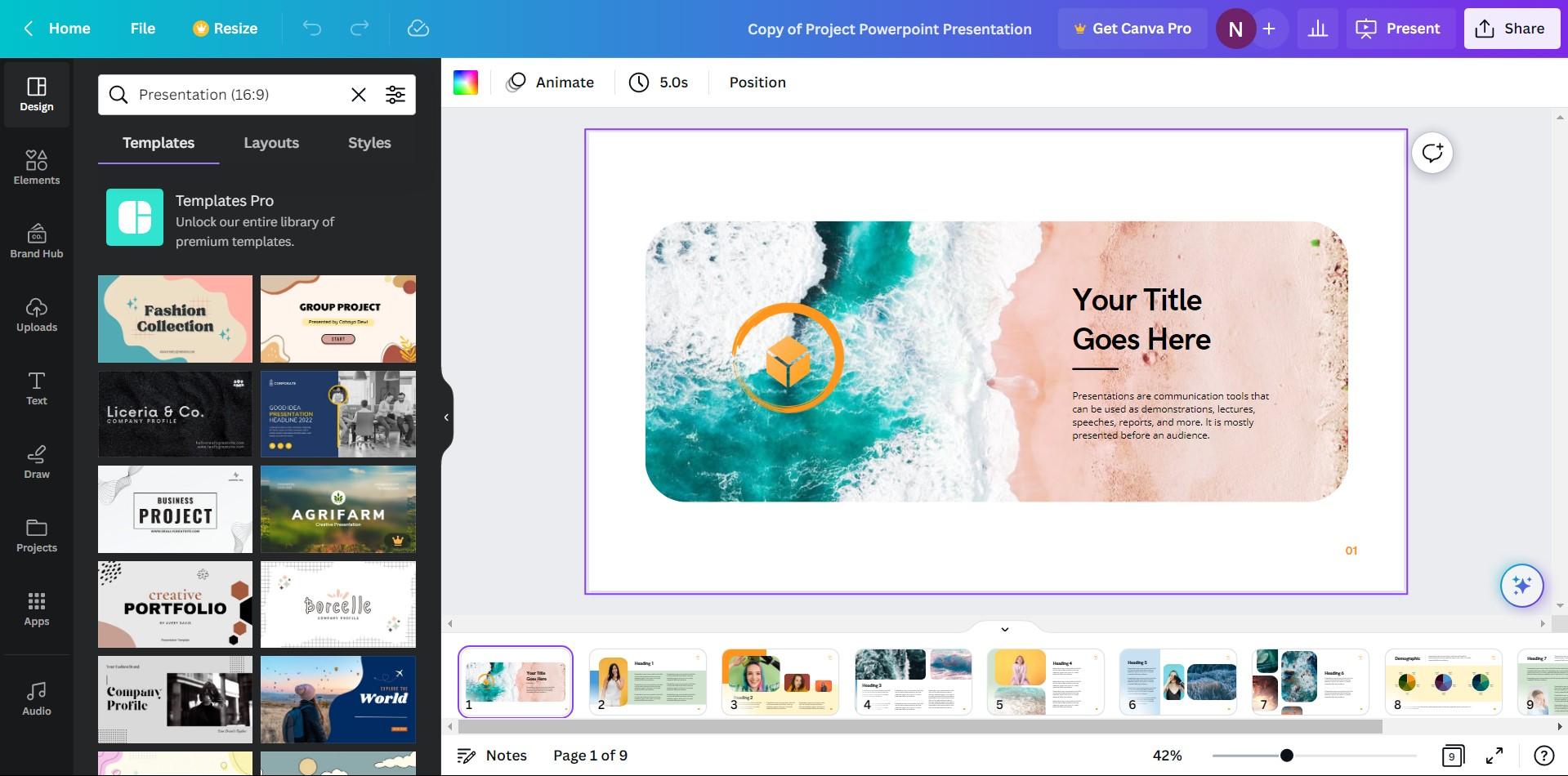
While Adobe built increasingly powerful tools for professionals, a design tutor in Sydney built for the 265 million people who were never going to become professionals.
In 2011, Melanie Perkins was sitting across from investors in Sydney getting told, politely and repeatedly, that the idea would not work. She had been pitching for years, having already proven the concept worked at small scale with a yearbook design tool used in over 100 countries. Most founders facing that wall of rejection would either give up or move to San Francisco. Perkins did neither. By August 2025, an employee share sale valued Canva at $42 billion, and within the same month Blackbird Ventures revalued its stake to imply a figure closer to $65 billion following Figma’s Nasdaq listing (Startup Daily, August 2025). Both numbers were built almost entirely from Sydney, on under $1 billion in lifetime funding. What did Sydney’s investor class miss that Sequoia eventually did not?
Startup Strategy • Case Study • SaaS • Design • Founder Story
The population Adobe never built for
Adobe did not have a product gap. It had a population gap. Professional design software was built for professionals. That is not a flaw; it is a coherent strategy that made Adobe an enormously valuable company. But it meant an entire population of people, small business owners, students, marketers, social media managers, event coordinators, and teachers, were locked out of design tools not because they did not need them, but because the tools assumed years of professional training that most of them would never get.
Perkins did not see this as a feature opportunity (“let’s add a simplified mode”). She saw it as a population that had been treated as out-of-market entirely. That framing is what made Canva’s eventual scale, 265 million monthly active users by end of 2025 according to Sacra, possible. The addressable population was never the same as Adobe’s. It was several times larger.
Why this story matters
For founders, Canva is a case study in validating a big, generalizable thesis with a narrow, already-working product before betting the company on the broad version. Fusion Books, the yearbook design tool Perkins built before Canva, was not a side project. It was the controlled experiment that proved the thesis at small scale. For investors, Canva’s capital efficiency is the headline: a valuation in the $42 billion to $65 billion range on under $1 billion raised is an unusually favorable ratio for a company at this scale. For operators, the AI integration story, more than 24 billion Magic Studio uses in 2025, up roughly 700% year over year according to Sacra, shows what happens when you fold new capabilities into an existing daily-use habit loop rather than launching them as separate products.
Quick facts
| Founders | Melanie Perkins, Cliff Obrecht, Cameron Adams |
| Founded | 2012 to 2013, public launch 2013 |
| Pre-Canva proof point | Fusion Books, a yearbook design tool used in 100+ countries |
| Headquarters | Sydney, Australia |
| Revenue (2025) | $3.5 billion reported, with some sources citing $3.3 billion annualized recurring revenue (Getlatka; SaaStr, August 2025) |
| Valuation trajectory (2025) | $32 billion (October 2024), $42 billion (August 2025 tender offer), implied $65 billion (Blackbird Ventures revaluation, August 2025) |
| Monthly active users (end-2025) | 265 million, per Sacra; some sources cite 240 million as of August 2025 |
| Paid users (end-2025) | 27 million to 31 million plus, depending on source and date |
| Total funding raised | Approximately $612 million to $979 million lifetime, depending on tracker (PitchBook; CB Insights) |
| Industry | Graphic design, SaaS, visual communication |
Background: A thesis proven at small scale before the big bet
Before Canva, Perkins co-ran Fusion Books, a tool that let high school students design their own yearbooks online using drag-and-drop functionality. It worked. It scaled to over 100 countries. It was also, in Perkins’ own framing, proof of a much larger problem: if professional design software was too hard for a yearbook project, it was too hard for everything that was not done by trained designers.
That is the part most retellings of the Canva story skip. Canva was not a sudden insight or a pivot from a failed idea. It was a narrow product that worked, scaled up into a thesis about an entire industry. Perkins had spent years watching university students open InDesign and Photoshop and immediately struggle. Fusion Books was the controlled experiment that proved simpler tools generated real usage. Canva was the bet that the experiment generalized to a much larger population.
Raising money for that bet from Australia in the early 2010s was difficult. Perkins has spoken publicly about pitching to over 100 investors with limited traction, a number that sounds extreme until you account for the fact that Sydney’s venture ecosystem in 2011 lacked the design-software comparables that exist today. A personal connection eventually got her in front of Silicon Valley investors. Canva launched publicly in 2013 with Cliff Obrecht and Cameron Adams as co-founders.
How it happened: three moves that built the platform
Move 1: The sepia filter unlock
The feature that broke Canva into mainstream adoption was not a workflow tool or an enterprise integration. It was the ability to drop text on top of an image and have it look intentional rather than amateur. Sacra’s research refers to this as Canva’s “sepia filter,” the Instagram-style unlock that took the product from interesting to indispensable. It drove Canva to 5 million users within two years, using nothing but free, browser-based tools with no paid acquisition. The lesson: in consumer-adjacent SaaS, a single feature that produces a “wow” moment in the first session can replace an entire marketing budget.
Move 2: Build for daily use, not project use
Canva’s growth compounded in a way that most design tools do not because its users were not doing design projects. They were making a Tuesday Instagram post, a quick flyer for a weekend event, a presentation slide due in an hour. That is daily-use behavior, not project-based behavior. Daily-use behavior produces retention in a way that project-based tools never do, because the user comes back before they have had time to forget the product. By the time competitors attempted to build simpler alternatives, Canva had already built a habit loop that was extremely difficult to interrupt.
Move 3: Fold AI into the existing habit loop
Rather than launching AI tools as a separate product requiring its own adoption curve, Canva integrated Magic Studio into the existing platform interface that hundreds of millions of people were already using. The result: more than 24 billion Magic Studio uses in 2025, up roughly 700% year over year (Sacra). This compares favorably to AI tools launched as standalone products, which must solve both the adoption problem and the utility problem simultaneously. Canva only had to solve the utility problem because the adoption was already there.
The strategy behind the success
Three convictions explain Canva’s trajectory. First, validate the big thesis with a narrow product before betting the company on the broad version. Fusion Books was not a warmup; it was the evidence base. Second, identify populations a category has implicitly excluded rather than features a category is missing. The size of the opportunity is in the excluded population, and that population was several times larger than Adobe’s existing market. Third, integrate new capabilities into existing behavior rather than launching them as separate products. Each of these principles held from the founding decision through to the AI integration in 2024 and 2025.
Business model breakdown
Canva’s primary revenue model is a freemium subscription: the free tier is functionally useful enough to build a large user base, and the paid tier (Canva Pro, Canva Teams) adds features including brand kits, premium assets, and advanced export options that professional and business users convert to over time. By the second half of 2025, reported figures put Canva’s paid user base in the range of 27 million to 31 million, against a free monthly active user base several multiples larger, a conversion profile that reflects the breadth of the free tier and the strength of the upsell triggers for users who hit its limits.
The B2B segment is now a significant and fast-growing layer. Multiple sources place Canva’s enterprise (25-plus seat) revenue at roughly $500 million in annual recurring revenue by 2025, with enterprise overall representing around 20% of total revenue and growing on the order of 100% year over year (Sacra; SaaStr, August 2025). This is the consumer-habit-to-enterprise-procurement pathway: employees who use Canva personally advocate for it internally, driving procurement decisions that produce much larger contracts than individual subscriptions.
What competitors missed
Adobe’s blind spot was structural rather than technical. The company’s entire business model, pricing, and go-to-market motion were built around selling to professionals who already understood design workflows. Building a genuinely simple alternative was not a roadmap item. It was a different company, requiring different infrastructure, different distribution, and different success metrics.
By the time Adobe and others responded with simplified tools, Canva had already built something that competitors could not quickly replicate: a daily-use habit loop. Tracxn counts dozens of active competitors in Canva’s space as of 2026, with only a small fraction funded at meaningful scale. None have matched its scale. The core reason is that none built for the daily-habit population first. They built for the design project, which produces occasional use. Canva built for the social post and the quick presentation, which produces daily use. The retention math is categorically different.

Risks and challenges
- Canva’s move into enterprise puts it in direct competition with Adobe, Microsoft, and Google on territory where Canva’s “simplicity for non-experts” positioning matters less, because enterprise buyers evaluate tools on different criteria than individual consumers.
- At well over 200 million monthly active users, user growth will eventually plateau. The company’s next growth chapter is revenue-per-user expansion, which requires successful upsell and B2B penetration rather than continued user acquisition.
- AI tools from competitors, particularly those integrated natively into Microsoft 365 and Google Workspace, are attempting to replicate Canva’s accessibility positioning inside platforms where users already spend most of their workday.
- Canva’s valuation has shown real volatility even within a single year, moving from $32 billion to $42 billion to an implied $65 billion across roughly twelve months of 2024 to 2025, which reflects how sensitive private SaaS valuations are to comparable public listings like Figma’s, rather than purely to Canva’s own fundamentals.
- Canva remained privately held as of mid-2026, with strong signals of IPO preparation, including the 2024 hiring of former Zoom CFO Kelly Steckelberg, but no confirmed filing date. Any IPO would immediately reset every valuation figure in this piece.
What founders can learn
- Validate your big, generalizable thesis with a narrow, already-working product first. Fusion Books was not a side project. It was the evidence that made Canva fundable once Perkins got in front of the right investors.
- Look for populations a category has implicitly excluded rather than features a category is missing. The size of the opportunity is in the population, not the feature gap.
- Build new capabilities, including AI, into existing habit loops rather than launching them as separate products. The adoption curve for a feature is far shorter than the adoption curve for a standalone product.
- Local investor market rejection does not mean the idea is wrong. It may mean the local market lacks the comparables needed to evaluate it. Perkins faced 100-plus rejections in Sydney before reaching investors who had seen design-software businesses before.
- Private company valuations can move sharply based on comparable public listings in adjacent categories, not just internal performance. Founders and employees holding equity should understand that a headline valuation number is a snapshot, not a fixed fact.
Expert analysis
Bull case: Canva has proven a population-gap thesis at three layers simultaneously: consumer (265 million MAU), B2B (roughly $500 million ARR growing near 100% year over year), and AI (24 billion-plus Magic Studio uses). A company winning at all three layers on well under $1 billion of lifetime funding has unusually efficient capital deployment, with international pricing tiers, deeper AI integration, and further M&A as plausible expansion vectors.
Bear case: As Canva moves further into enterprise and AI, it increasingly competes directly with Adobe, Microsoft, and Google on their own turf, categories where Canva’s “simplicity for non-experts” positioning matters less, because enterprise and AI-tool buyers evaluate vendors on different criteria than the original consumer base. The thing that made Canva different, serving the excluded population, may matter less as it climbs upmarket.
Contrarian view: The valuation swings of 2024 and 2025 may say more about private SaaS pricing mechanics than about Canva itself. The jump from a $26 billion tender offer in January 2024 to an implied $65 billion just eighteen months later, driven partly by Figma’s public listing rather than by any single Canva announcement, suggests that a chunk of the headline number reflects market sentiment toward comparable companies rather than Canva’s own fundamentals shifting that fast.
Future outlook
Canva’s next competitive frontier is the enterprise layer. The company’s B2B revenue is growing fast, but enterprise penetration also brings it into direct competition with incumbents who have decades of procurement relationships, IT department integrations, and security certifications. The AI integration trajectory is the stronger growth signal: more than 24 billion Magic Studio uses in 2025 on a roughly 700% growth rate means Canva’s AI tools are not a feature people occasionally remember to try. They are part of the daily workflow. The hiring of former Zoom CFO Kelly Steckelberg in late 2024, combined with the August 2025 employee tender offer, are widely read as signals that Canva is preparing for a future IPO, though no filing has been confirmed as of mid-2026. For Indian founders watching this space, the Canva story is a reminder that SaaS companies built outside Silicon Valley, in markets with different cost structures and different talent pools, can reach global scale by identifying population gaps that US-based investors and founders systematically overlook.
The bottom line
Canva did not simplify design. It made not being a designer irrelevant. That distinction is the entire business.
Key takeaways
- Canva’s founding thesis was validated at small scale through Fusion Books, a yearbook design tool operating in 100-plus countries, before the broader bet on Canva was made.
- Perkins faced over 100 investor rejections, largely a function of geography: Sydney’s venture ecosystem in the early 2010s lacked design-software comparables.
- A single feature, the ability to place text on images in a way that looked intentional, drove Canva to 5 million users in two years through free, browser-based tools with no paid acquisition.
- Canva’s valuation moved sharply through 2024 and 2025, from $32 billion to a $42 billion tender offer to an implied $65 billion following Figma’s IPO, all on well under $1 billion in lifetime funding raised.
- B2B revenue (roughly $500 million ARR, growing near 100% year over year) and AI usage (24 billion-plus Magic Studio uses in 2025) show the original consumer habit loop successfully expanding into enterprise and AI layers.
- The addressable market was never Adobe’s market made simpler. It was a population Adobe had never served, which is why the scale numbers look the way they do.
Conclusion
Canva did not win by making design software easier. It won by identifying that an entire population had been implicitly excluded from design tools entirely, and that serving that population well would produce a business that incumbents could not replicate because they had never tried to reach those users in the first place. Fusion Books proved the thesis was real. Canva executed it at scale. The AI integration in 2024 and 2025 showed that the same population-gap logic applies to new capabilities: fold them into the workflow people already use daily, and adoption follows automatically. For founders building in any category where professional tools dominate and large populations remain underserved, Canva’s trajectory is the clearest recent example of what that opportunity looks like when it is fully realized.
TFN LENS
At The Founder Nation, we track stories like Canva’s because the population-gap thesis is directly applicable to Indian founders in a way that the Silicon Valley playbook often is not. India has enormous professional populations in fields including law, finance, education, healthcare, and agriculture where the tools built for Western professional markets do not fit, are priced incorrectly, or assume workflows that simply do not exist in the Indian context. The Canva playbook, identify the excluded population, validate the thesis at narrow scale first, build for daily use rather than occasional projects, is a framework that travels well. The question for Indian founders is not whether the population gap exists in their category. It almost certainly does. The question is whether they are building for the gap or for the professionals who already have tools.
Building something of your own?
Follow The Founder Nation and NamasteVC for curated startup funding news, grant alerts, and founder stories from India’s startup ecosystem, delivered straight to your feed, every week.
Frequently asked questions
Who founded Canva?
Canva was founded by Melanie Perkins, Cliff Obrecht, and Cameron Adams. Perkins and Obrecht, who are married, had previously co-founded Fusion Books, a yearbook design tool, before launching Canva publicly in 2013.
What is Canva’s valuation in 2026?
Canva’s valuation moved sharply during 2025. An August 2025 employee tender offer set it at $42 billion, up from $32 billion in October 2024. Within the same month, Blackbird Ventures revalued its own stake to imply a figure closer to $65 billion following Figma’s Nasdaq listing. As of April 2026, other estimates placed the range between $32 billion and $49 billion depending on the pricing input used, reflecting how actively the figure has been debated heading into a possible IPO.
How many users does Canva have?
Estimates for 2025 vary by source and exact date, ranging from roughly 240 million to 265 million monthly active users, with 27 million to 31 million paying users. Sacra’s end-2025 estimate of 265 million represents a substantial year-over-year increase at a scale where most consumer software products plateau.
How does Canva make money?
Canva’s primary revenue model is freemium subscription: a free tier builds the user base, and paid tiers (Canva Pro, Canva Teams) add professional features. B2B enterprise accounts generated roughly $500 million in annual recurring revenue in 2025 by some estimates, representing around 20% of total revenue and growing near 100% year over year. Total company revenue was reported at $3.5 billion for 2025, with some sources citing a $3.3 billion annualized run rate.
Is Canva publicly listed?
No. Canva remained privately held as of mid-2026. The company has shown strong signals of IPO preparation, including hiring former Zoom CFO Kelly Steckelberg in late 2024 and conducting an employee tender offer in August 2025, but had not confirmed a filing date or timeline.
What was Fusion Books?
Fusion Books was a yearbook design tool co-founded by Melanie Perkins and Cliff Obrecht before Canva. It allowed high school students to design their own yearbooks using drag-and-drop tools online. The product scaled to over 100 countries and served as the proof of concept for the thesis that became Canva: that non-professional users would adopt simpler design tools if those tools were genuinely easy to use.
Sources
Official Sources
- Canva Newsroom & Company Information
https://www.canva.com/newsroom/ - Canva About Page
https://www.canva.com/about/ - Canva Careers & Company Facts
https://www.canva.com/careers/
Company Intelligence
- Tracxn – Canva Company Profile, Team, Funding & Competitors
https://tracxn.com/d/companies/canva/__zHdlJ4Yh2GJ6V5eM6w9K8m1qfB8VQJ2j7N5t5w0VJmQ - Sacra – Canva Revenue, Valuation & Funding Analysis
https://www.sacra.com/c/canva/ - Crunchbase – Canva Company Profile
https://www.crunchbase.com/organization/canva
Financial & Market Coverage
- Fortune – Canva’s Billionaire Founders Are Minting Overnight Millionaires With Employee Share Sale
https://fortune.com/2025/08/26/canva-employee-share-sale-melanie-perkins-cliff-obrecht-cameron-adams/ - Startup Daily – Canva Gives Itself a $65 Billion Valuation
https://www.startupdaily.net/topic/funding/canva-65-billion-valuation-secondary-share-sale/ - SaaStr – Canva Crosses $3.3B ARR at a $42B Valuation
https://www.saastr.com/the-next-great-b2b-ipo-canva-crosses-3-3b-arr-at-a-42b-valuation/
Founder & Industry Analysis
- TechCrunch – Canva Coverage
https://techcrunch.com/tag/canva/ - Forbes – Melanie Perkins Profile
https://www.forbes.com/profile/melanie-perkins/ - BBN Times – Meet Melanie Perkins: The CEO of Canva
https://www.bbntimes.com/technology/meet-melanie-perkins-the-ceo-of-canva
Additional References
- Wikipedia – Canva
https://en.wikipedia.org/wiki/Canva - TSG Invest – Canva Stock Analysis & Valuation
https://tsginvest.com/stock/canva
©️ The Founder Nation | All rights reserved | Written by TFN Research Desk | Word count: ~3316 | Read time: ~18 minutes |