



Written by TFN Research Desk — covering startups, technology, digital media, and business strategy.
While every Indian SaaS founder was being told to move to San Francisco before building for the world, a Yahoo intern in Bangalore quietly uploaded a Chrome extension that 98% of the Fortune 500 would eventually depend on.
In 2012, Abhinav Asthana was a frustrated intern at Yahoo’s Bangalore office. His daily problem was specific and unglamorous: testing APIs was slow, manual, and required writing custom scripts every time. He built a small Chrome extension to make his own work less painful, named it Postman after the HTTP POST method, and uploaded it to the Chrome Web Store without a product announcement, a launch event, or a marketing budget. Within weeks, thousands of developers had downloaded it. They had all been struggling with the same problem.
That is the entire founding insight. The rest is compounding.
Startup Strategy • Case Study • Indian SaaS • Developer Tools • Product-Led Growth
The most consequential Indian software product you have never thought about
Postman is not a household name. It is a developer name. And that is precisely why it reached $313 million in annual revenue in 2024, up 82% from $171.7 million in 2023 (GetLatka, November 2025), with 98% of Fortune 500 companies as customers, 30 million developers as users, and 500,000 organisations on its platform. By every measure of developer-tool penetration, Postman is the most widely used software product ever built and launched from India. It did not get there through enterprise sales cycles, advertising, or a Silicon Valley address. It got there because the product solved a problem every software developer in the world had, and it solved it better than anything else available.
Why this story matters
Postman is the proof of concept every Indian developer-tool founder needs. Before Postman, the consensus was that enterprise software had to be sold through relationships, events, and American offices. Postman proved that a developer tool built for developer needs, distributed through developer channels, and priced to match developer adoption curves could penetrate the world’s largest enterprises through their own engineering teams, without a single enterprise sales call in the early years. [INTERNAL LINK: Indian SaaS global cluster — India unicorn sector analysis] That bottom-up model is now the standard template for Indian B2B SaaS going global. Postman was the first company to demonstrate it at scale from India.
Quick facts
| Metric | Detail |
|---|---|
| Founded | 2012 (Chrome extension); 2014 (incorporated) |
| Founders | Abhinav Asthana (CEO), Ankit Sobti (CTO), Abhijit Kane |
| Origin | Bangalore, India |
| HQ (current) | San Francisco, USA (Bangalore office retained) |
| Revenue (2024) | $313.1 million ARR, up 82% YoY (GetLatka, November 2025) |
| Revenue (2023) | $171.7 million (GetLatka, November 2025) |
| Revenue growth 2018 to 2024 | 37x, from $8.4 million to $313 million |
| Registered developers | 30 million+ globally (Deccan Founders, July 2025) |
| Organisations on platform | 500,000+ (TechCrunch, August 2021; confirmed 2025) |
| Fortune 500 penetration | 98% (Abhinav Asthana, TechCrunch, August 2021) |
| Total funding raised | $433 million across 5 rounds |
| Last valuation | $5.6 billion (Series D, August 2021) |
| Public API Network | 100,000+ public APIs listed (businessmodelcanvastemplate.com, March 2026) |
Background
The origin of Postman is inseparable from the texture of Indian developer life in the early 2010s. Abhinav Asthana was not an IIT graduate with a startup ambition. He was a software engineer doing real work at a real company, encountering a real friction that real developers all over the world shared but nobody had solved cleanly. APIs were the connective tissue of software, but working with them required command-line tools, custom scripts, and a high tolerance for friction. Every new API integration was a small archaeology project.
Asthana initially built the Chrome extension for himself and his team, not for distribution. The Chrome Web Store was the path of least resistance, not a calculated go-to-market move. What he discovered, within weeks of uploading, was that the problem was not specific to Yahoo Bangalore. It was the same problem faced by every developer at every company building anything that talked to an external service — which, by 2012, was nearly every company in software.
After graduating from NIT Nagpur, Asthana met Abhijit Kane and reconnected with Ankit Sobti, both ex-Yahoo engineers. The Chrome extension already had millions of users by the time they incorporated Postman Inc. in Bangalore in 2014. They were not starting a company from zero. They were building a company around a product that had already found its market.
Timeline
| Year | Milestone |
|---|---|
| 2009 | Abhinav Asthana interns at Yahoo Bangalore; experiences API testing friction |
| 2012 | Builds Chrome extension “Postman” as a side project; uploads it to the Chrome Web Store |
| 2013 | Extension goes viral among developers; reaches hundreds of thousands of users with zero marketing |
| 2014 | Postman Inc. incorporated in Bangalore by Asthana, Sobti, and Kane |
| 2015 | Nexus Venture Partners leads $1 million seed round — first institutional cheque into an Indian developer tools company |
| 2016 | Postman Cloud (now Enterprise) launched; shared collections and team workspaces enable subscription revenue |
| 2017 | Company headquarters moves from Bangalore to San Francisco; Bangalore engineering office retained |
| 2018 | Revenue reaches $8.4 million; standalone desktop app replaces Chrome extension |
| 2019 | $50 million Series C at $2 billion valuation |
| 2021 | $225 million Series D at $5.6 billion valuation, led by Insight Partners |
| 2023 | Revenue crosses $171.7 million; acquires Akita (API observability) |
| 2024 | Revenue reaches $313.1 million, up 82% YoY; acquires Orbit (developer communities) |
| November 2025 | Acquires liblab (SDK generation) |
| December 2025 | Acquires Fern (SDK tooling) |
| March 2026 | Launches fully rebuilt AI-native platform with Git-native workspaces and AI intelligence layer |
How it happened
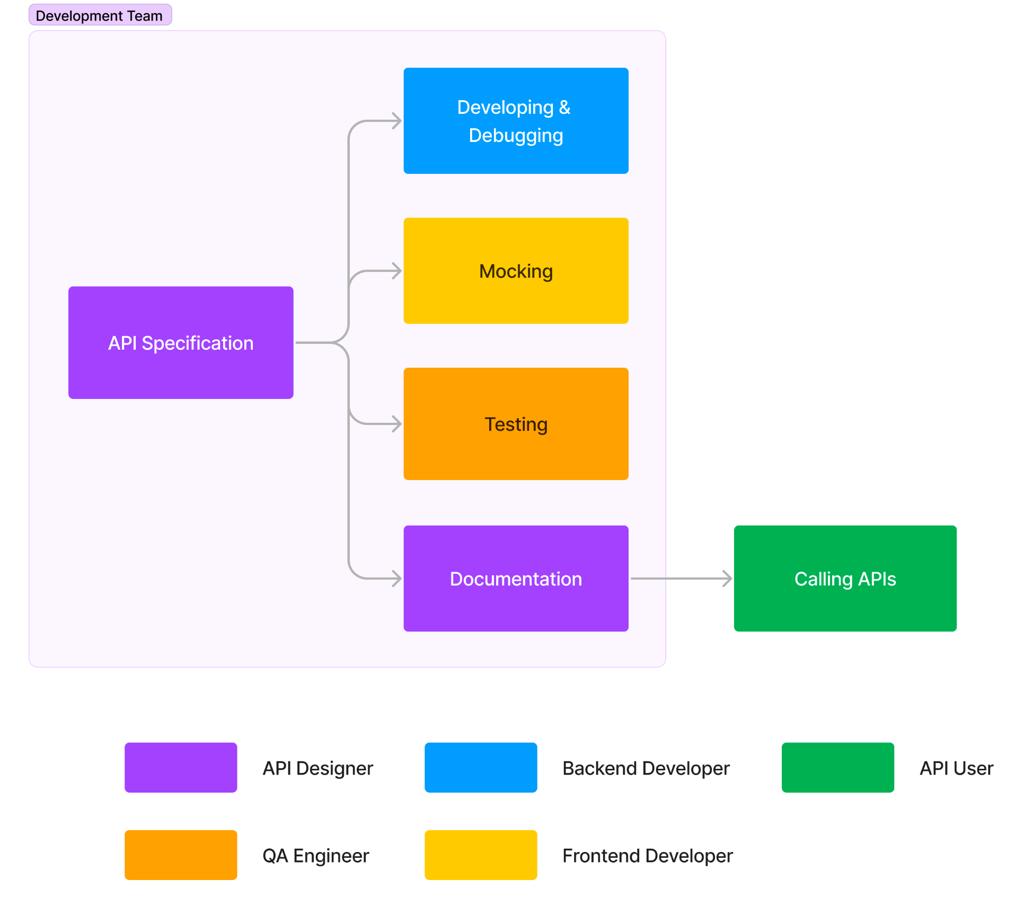
Move 1: The Chrome Web Store as accidental distribution engine
Postman’s first and most important growth decision was not a decision. It was the Chrome Web Store. When Asthana uploaded the extension in 2012, the Web Store was where developers looked for tools. A developer who needed to test an API searched for “REST client,” found Postman, downloaded it in 30 seconds, and started using it immediately. There was no sales process, no demo request, no procurement cycle.
By the time the company raised its first cheque, it already had millions of users — an unassailable distribution advantage that no competitor could replicate through marketing spend. The Chrome Web Store distribution was the original growth hack: developers discovered Postman through search, downloaded it in 30 seconds, and started using it immediately. That initial distribution flywheel, search-find-download-use, seeded the bottom-up enterprise motion that would eventually put Postman in 98% of Fortune 500 companies.
Move 2: The team collaboration pivot that turned a tool into a platform
For its first few years, Postman was a single-developer utility. You used it to test your own API calls. The pivot that changed the company’s trajectory was the introduction of shared collections and team workspaces in 2016. When Postman became collaborative, it became viral within engineering teams. A developer who used Postman individually would share a collection with a colleague. That colleague would share it with their team. The team would standardise on Postman. The company would discover it was already paying for it de facto through employee devices, and the path to a formal enterprise subscription became a formalisation of existing usage rather than a new adoption decision.
This is the defining characteristic of successful developer tools that become enterprise software: individual adoption, team standardisation, company contract. Postman executed this sequence without ever designing a traditional enterprise sales motion in its early years. “Developers adopted Postman at work, recommended it to peers, and carried it across companies — creating organic, bottom-up growth inside enterprises,” as described by PurshoLOGY in its May 2026 analysis of Postman’s go-to-market model.
Move 3: The Public API Network as community moat
Postman’s third strategic move was building the Public API Network, a directory of over 100,000 public APIs where companies publish their interactive API documentation in Postman format (businessmodelcanvastemplate.com, March 2026). This was not a product feature. It was a network effect. Companies listed on the network exposed their APIs to Postman’s entire developer user base. Developers who needed to integrate with Stripe, Salesforce, or Shopify found their APIs on the Postman network, used Postman to explore and test them, and embedded Postman further into their daily workflow.
The network also inverted the normal enterprise sales dynamic. Instead of Postman selling to enterprises, enterprises were listing on Postman to reach developers. The supplier became the buyer, and the developer community became the product’s most powerful distribution channel.
The strategy behind the success
Postman’s strategy, in retrospect, has three consistent principles. First: solve a developer’s actual problem better than they could solve it themselves. Second: make sharing the natural next step after using. Third: let enterprise contracts follow individual and team adoption, not precede it.
“Every company in every industry in the world today uses APIs and needs an API platform. This trend is only growing with the move to cloud and digital experiences,” Abhinav Asthana told TechCrunch in August 2021. That observation frames Postman’s product strategy precisely: it did not create a new need. It served the need that the entire software industry was already generating through its own architectural decisions.
“APIs have quickly become the fundamental building blocks of software used by developers in every industry, in every country across the globe — and Postman has firmly established itself as the preferred platform for developers,” said Jeff Horing, Managing Director of Insight Partners, at the Series D close in August 2021 (Insight Partners press release, August 2021). That “preferred platform” position was earned, not bought.
Business model breakdown
Postman runs a tiered model: free for individual developers, paid for teams, and enterprise contracts for organisations that need governance, security, and compliance features at scale. The free tier does not cripple the product. Individual developers get the full API testing experience at no cost. Teams unlock collaboration features, shared collections, and access controls. Enterprise plans add API governance, SSO, advanced monitoring, and SLA guarantees.
The business model logic is the same as Cloudflare’s: make the free experience so good that teams want to pay for a managed version, and let enterprise contracts arrive as a consequence of team adoption, not as the first sales motion. [INTERNAL LINK: Cloudflare case study — developer-first free tier strategy]
By the numbers
| Metric | Figure | Why it matters |
|---|---|---|
| Revenue 2018 | $8.4 million | Starting point of the 37x growth that followed |
| Revenue 2023 | $171.7 million (GetLatka, November 2025) | Crossed $100M with no traditional enterprise sales engine |
| Revenue 2024 | $313.1 million, +82% YoY (GetLatka, November 2025) | 82% growth at $300M+ scale is exceptional for developer tools |
| Developer users | 30 million+ (Deccan Founders, July 2025) | Scale of reach that makes the Public API Network a real marketplace |
| Fortune 500 penetration | 98% (Abhinav Asthana, TechCrunch, August 2021) | Bottom-up adoption reaching every major enterprise without top-down sales |
| Public APIs on network | 100,000+ (businessmodelcanvastemplate.com, March 2026) | Network effect that compounds distribution without marketing spend |
| Total funding | $433 million across 5 rounds | Capital deployed after product-market fit, not before |
What competitors missed
The API testing tools that preceded Postman, primarily command-line utilities like cURL and bespoke internal scripts, were functional but required technical sophistication to use effectively. The opportunity Postman identified was not to build a better command-line tool. It was to build a graphical interface that made API testing approachable enough for every developer on a team, not just the most senior ones. The surface area of the product was designed to match the surface area of the problem, which was an every-developer problem, not a specialist-developer problem.
SaaS Apigee, which Google acquired in 2016 for $625 million, addressed the enterprise API management problem from the top down: sell to the CTO, deploy company-wide, manage APIs centrally. Postman inverted the motion. It addressed the individual developer’s problem first and let the enterprise management layer follow. By the time enterprise buyers were evaluating API platforms, their developers had already made the decision. [INTERNAL LINK: Stripe case study — API infrastructure at scale]
Risks and challenges
- In 2023, Postman introduced a requirement that developers must create an account to use the tool, reversing the frictionless onboarding that had driven organic adoption for a decade. The developer community responded with significant criticism, and some users migrated to open-source alternatives like Hoppscotch. The incident is a cautionary note on how quickly PLG companies can damage the community trust that their growth depends on.
- At $5.6 billion, Postman’s last disclosed valuation is from 2021. Public SaaS multiples have compressed significantly since then, and the company has not raised fresh capital or gone public. An IPO at current public market multiples could represent a significant step down from 2021 peak valuations.
- Open-source competitors, particularly Hoppscotch and the acquired-and-repositioned Insomnia (now under Kong), are capturing developer mindshare among teams that are wary of vendor lock-in. The product-led model that built Postman’s moat is now being used against it by open-source alternatives.
- The March 2026 AI-native platform rebuild is the largest product bet in Postman’s history. Rebuilding a platform used by 30 million developers without disrupting existing workflows is an execution risk of the highest order.
What founders can learn
Solve your own problem first, then look around. Postman’s origin story is not the story of a founder who identified a market opportunity and built a product to address it. It is the story of a developer who solved his own problem well enough that other people wanted the solution. The Chrome extension was not a product strategy. It was a personal tool that went public. Indian founders under pressure to identify large market opportunities before building should note that the largest developer-tools company built from India started as a side project. The market was identified retrospectively, not prospectively.
Distribution is a product decision, not a marketing decision. The Chrome Web Store was not Postman’s marketing channel. It was where developers looked for tools, and uploading there was the equivalent of putting a physical product in the store where its customers already shopped. For Indian founders building developer tools today, the equivalent decisions are: is your tool available through the package managers, IDE plugins, and community channels where developers discover tools? Distribution that requires a developer to leave their workflow is distribution that will not work. Distribution that sits inside the workflow compounds silently.
The free tier is not a loss leader. It is the product. Postman’s free tier is not a limited version of the real product. It is the real product, made available to individual developers without cost, because individual developers are the distribution mechanism for the team and enterprise tiers. Every developer who uses Postman individually and joins a new company brings Postman with them. Every team that standardises on Postman becomes a source of enterprise revenue. If the free product is limited, the distribution mechanism breaks. [INTERNAL LINK: Micro-SaaS sector analysis — bottom-up enterprise adoption]
Community is a moat, not a marketing tactic. The Public API Network, with 100,000+ listed APIs, is not a product feature. It is a network effect that makes Postman more valuable to every new developer who joins, because the APIs they need to integrate with are already there in Postman format. Indian founders building platforms where third-party integrations matter should ask: what is my equivalent of the API Network? What is the asset that grows in value as my community grows, and that a competitor cannot replicate without the community itself?
Move the headquarters, keep the engineering. Postman’s 2017 decision to move its corporate headquarters from Bangalore to San Francisco while retaining the Bangalore engineering team is the model that most Indian SaaS companies have since adopted. It put the company inside the enterprise buyer’s timezone and relationship network while preserving the cost and talent advantages of Indian engineering. The question Indian SaaS founders should ask is not whether to maintain a US presence, but how to do it without losing the operating discipline that Indian engineering culture produces.
Expert analysis
Postman’s 82% year-over-year revenue growth in 2024, reaching $313 million from $171 million, at a scale where most developer-tools companies see growth flatten, suggests that the enterprise upsell motion — converting teams and organisations to paid plans — is accelerating faster than individual developer adoption, which is already near saturation.
Bull case: The March 2026 AI-native platform rebuild positions Postman as infrastructure for the agentic web. Every AI agent that needs to call an external API — which will eventually be most of them — requires the kind of API documentation, testing, and governance that Postman provides. If Postman becomes the control plane for AI-to-API interactions, its addressable market expands beyond the 30 million developers currently on the platform to every organisation deploying AI systems.
Bear case: The 2023 account-requirement controversy revealed that Postman’s developer community trust is more fragile than its enterprise revenue might suggest. If open-source alternatives continue to improve and the community migrates, the enterprise pipeline dries up because the bottom-up adoption motion that fills it depends entirely on developer goodwill. A PLG company that loses its developers loses its enterprise pipeline.
Contrarian view: Postman’s most underleveraged asset is the Public API Network itself. With 100,000+ public APIs and 30 million developers using the platform, Postman is sitting on what is effectively the world’s largest B2B marketplace for API integrations. A direct monetisation of that network, as a two-sided marketplace where API providers pay for discovery, would add a revenue stream that compounds with developer adoption rather than depending on it.
The TFN lens: The Itch-to-Infrastructure Framework
Postman’s growth path follows a pattern that TFN has identified across the most durable developer-tools companies built from India: what begins as a personal itch becomes a team tool, the team tool becomes a company standard, and the company standard becomes infrastructure that nobody can remove without breaking their software.
The Itch-to-Infrastructure Framework describes four stages: (1) a developer builds something for themselves; (2) the tool spreads within a team because sharing is the natural next step; (3) the team’s usage makes the tool a de facto standard at the company; (4) removing the tool would require rewriting workflows, tests, and documentation, making it infrastructure rather than software.
Each stage is harder to reach than the last, but each stage also makes the next stage more likely because the product is already embedded in real workflows. The key insight is that infrastructure status cannot be purchased or marketed. It has to be earned through repeated daily use. Postman earned it over twelve years of being the tool developers reached for first. Indian founders building in developer tools, productivity, or data infrastructure should map their product against this framework before raising capital for growth: which stage are you at, and what is the specific product decision that enables the next stage? [INTERNAL LINK: India unicorn sector analysis]
Future outlook
Postman’s March 2026 AI-native platform rebuild is the most consequential bet in the company’s history. The thesis is straightforward: as AI agents become the primary consumers of APIs — calling services, reading data, taking actions — the platform that manages those APIs becomes AI infrastructure, not just developer tooling. The acquisitions of liblab and Fern in late 2025 (both focused on SDK generation) point toward a world where Postman not only helps humans work with APIs but generates the code that AI systems use to call them.
If that bet pays off, Postman’s current $313 million revenue base is a starting point, not a ceiling. The API management market it already dominates is growing — 74% of organisations already generate at least 10% of their total revenue from APIs, and 46% plan to spend more on APIs in the next 12 months (Postman State of the API Report 2025). The AI layer multiplies both the volume of API calls and the complexity of governing them.
For India’s startup ecosystem, the question Postman’s future raises is whether the next phase of Indian SaaS global expansion will be built on the same PLG foundation that Postman proved works. The answer is increasingly yes. [INTERNAL LINK: Indian SaaS global cluster — India unicorn sector analysis]
The bottom line
A Yahoo intern in Bangalore built a Chrome extension to make his own work easier. Twelve years later, it is the API platform that 98% of Fortune 500 companies depend on, generating $313 million in annual revenue and used by 30 million developers across every country where software is written. The mechanism was not clever marketing, Silicon Valley relationships, or an unusually large funding round. It was a product that solved a real problem better than anything else, distributed through the channel where its users already lived, priced to make individual adoption frictionless.
Key takeaways
- Postman started in 2012 as a Chrome extension built by Abhinav Asthana at Yahoo Bangalore to solve his own API testing frustration. It was incorporated as a company only in 2014, after millions of developers had already adopted it.
- Revenue grew 37x from $8.4 million in 2018 to $313 million in 2024, with 82% year-on-year growth in 2024 alone.
- 98% of Fortune 500 companies use Postman, reached entirely through bottom-up developer adoption, not top-down enterprise sales.
- The Chrome Web Store was Postman’s first distribution channel: zero marketing, zero sales, zero cost. Search-find-download-use was the entire funnel.
- The Public API Network, with 100,000+ listed APIs, is Postman’s most defensible moat. It is a network effect that grows more valuable as more developers and API providers join.
- The March 2026 AI-native platform rebuild is Postman’s bet on becoming infrastructure for the agentic web, where AI systems are the primary consumers of APIs.
Conclusion
Postman is the most important Indian software product most people outside software have never heard of. That invisibility is not a failure of brand-building. It is the natural condition of infrastructure: the things that matter most are the things you notice only when they break. When Postman had an outage, developer teams stopped working. When Postman added an account requirement, developers switched tools. Both reactions demonstrate the same underlying fact: the product is embedded in how software gets built, not just how software gets bought.
That embedding was not accidental. It was built through twelve years of product decisions that consistently prioritised developer experience over enterprise sales metrics, community trust over short-term revenue, and free access over artificial friction. Indian founders who want to build the next global product from India would do well to understand not just what Postman built, but the sequence of decisions that made what it built unavoidable.
TFN Lens
Postman is the case study that Indian SaaS founders cite most often and understand least well. The surface lesson is “build a good product and growth follows.” The deeper lesson is structural: Postman distributed through a channel (the Chrome Web Store) where developers were already looking; priced to remove friction from the highest-value part of the funnel (individual developer adoption); and built a network effect (the Public API Network) that made every new developer more valuable to existing ones. None of those decisions required a Silicon Valley address or a Series A. They required understanding that the developer is not the buyer in enterprise software — the developer is the distribution mechanism. Build for the person, and the company will follow. India has produced exactly one Postman. The question for the next generation of Indian developer-tool founders is whether they are building for the developer or the enterprise. The order matters. [INTERNAL LINK: India unicorn sector analysis]
For more breakdowns of the Indian and global startups reshaping the founder playbook, subscribe to The Founder Nation. thefoundernation.in
Frequently asked questions
How did Postman start in India? Postman started in 2012 as a side project by Abhinav Asthana, a software engineer interning at Yahoo’s Bangalore office. Frustrated by the complexity of testing APIs, he built a Chrome extension for his own use and uploaded it to the Chrome Web Store. Within weeks, thousands of developers had discovered and downloaded it, without any marketing or promotion. The company was formally incorporated in Bangalore in 2014 by Asthana, Ankit Sobti, and Abhijit Kane, all former Yahoo engineers.
How many users does Postman have? As of 2025, Postman has over 30 million registered developers globally and more than 500,000 organisations using the platform. The company also reports that 98% of Fortune 500 companies are customers, reached through bottom-up individual developer adoption rather than enterprise sales (Abhinav Asthana, TechCrunch, August 2021; Deccan Founders, July 2025).
How does Postman make money? Postman runs a freemium model. Individual developers use the product for free with full API testing functionality. Teams and organisations pay for collaboration features, shared workspaces, and API governance tools. Enterprise contracts add security, compliance, SSO, and SLA guarantees. Revenue reached $313.1 million in 2024, up 82% from $171.7 million in 2023 (GetLatka, November 2025).
Is Postman an Indian company? Postman was founded in Bangalore, India in 2012 and incorporated there in 2014. In 2017, the company moved its corporate headquarters to San Francisco to be closer to enterprise customers and investors, while retaining its Bangalore engineering office. It is widely considered the most successful developer tools company of Indian origin in the world.
What is Postman’s valuation? Postman’s last disclosed valuation was $5.6 billion, set during its $225 million Series D round in August 2021. The round was led by Insight Partners, with participation from Nexus Venture Partners, CRV, Coatue, Battery Ventures, and BOND. Total funding raised across all rounds is $433 million. The company has not raised capital or gone public since 2021.
What is the Postman API Network? The Postman Public API Network is a directory of over 100,000 public APIs where companies publish their interactive API documentation in Postman format (businessmodelcanvastemplate.com, March 2026). It is the world’s largest public API hub. Companies list their APIs to reach Postman’s developer community, and developers use it to discover and test integrations. It functions as a network effect: more listed APIs make Postman more valuable to developers, and more developers make the network more valuable to API providers.
What can Indian SaaS founders learn from Postman? Four lessons apply directly. First, solve your own problem well before identifying a market: the product-market fit will be genuine rather than hypothetical. Second, distribute through channels where developers already live, not through marketing campaigns. Third, the free tier must be the full product, because individual developers are the distribution mechanism for team and enterprise revenue. Fourth, community assets, such as the Public API Network, create network effects that compound with user growth and cannot be replicated by competitors without the community itself.
What is Postman building in 2026? In March 2026, Postman launched a fully rebuilt AI-native platform with Git-native workspaces and an AI intelligence layer, described as the biggest product bet in the company’s history. The rebuild reflects a strategic thesis that AI agents will become major consumers of APIs, and that the platform managing those APIs needs to be designed for machine-to-API interactions as much as human-to-API ones. Supporting this direction, Postman acquired liblab (SDK generation) in November 2025 and Fern (SDK tooling) in December 2025.
Sources
- GetLatka, “Postman Revenue 2024: $313.1M ARR, $5.6B Valuation,” November 28, 2025. getlatka.com/companies/postman
- TechCrunch, “API platform Postman valued at $5.6 billion in $225 million fundraise,” August 18, 2021. techcrunch.com
- Insight Partners, “Postman Closes $225 Million Series D Round at a $5.6 Billion Valuation,” August 2021. insightpartners.com
- Value for Startups, “Postman Investor Report 2026: $5.6B Valuation and 33M Developers,” May 2026. valueforstartups.in/postman_report
- Deccan Founders, “Postman: The Indian Startup Powering 98% of Fortune 500 Companies,” July 2025. deccanfounders.com
- Postman, “2025 State of the API Report.” postman.com/state-of-api/2025
- businessmodelcanvastemplate.com, “What is the Brief History of Postman Company?” March 2026. businessmodelcanvastemplate.com
© 2026 The Founder Nation. All rights reserved.