



Agriculture is the sector that every investor has an opinion about and almost none want to be first into. The farmers are hard to reach. The margins are thin. The government is everywhere. The weather does not care about your growth projections.
And yet, something is shifting.
In the last four years, Indian Agritech startups have collectively raised over $2 billion. Names like DeHaat, Ninjacart, Waycool, Jai Kisan, and Gramophone have moved from being interesting experiments to being portfolio anchors for serious funds. Sequoia, Omnivore, Accel, and Lightspeed have all written meaningful cheques into this space. Even SoftBank, which tends to chase scale at all costs, has made Agritech bets in India.
This is not charity. VCs do not do charity. Something about the math finally started making sense, and understanding what changed is useful whether you are a founder thinking about entering agriculture, an investor trying to calibrate your thesis, or someone trying to understand why a drone startup is now considered a hot investment.
What Agritech Actually Covers
The word gets used loosely. Agritech in India spans at least six distinct models, each with different unit economics, different risk profiles, and different relationships with the farmer.
Input supply platforms connect farmers to seeds, fertilisers, and crop protection products, often with credit attached. Gramophone and DeHaat operate partly in this model. Output aggregation platforms help farmers sell their produce at better prices by bypassing middlemen. Ninjacart built its early business here. Precision farming tools use sensors, satellite data, and AI to help farmers make better decisions about irrigation, pest management, and harvest timing. Farm-to-fork supply chains compress the distance between the field and the consumer or processor. Credit and insurance tech for farmers addresses the chronic underfinancing of Indian agriculture. And agri-drones and mechanisation-as-a-service are the newest entrant, building rental models around expensive equipment.
A founder needs to know which of these they are building before walking into any investor meeting. An investor treating all of these as interchangeable is going to make bad bets.
Why VC Attention Has Increased Now
The honest answer is that the infrastructure finally caught up with the ambition.
Five years ago, building in Agritech meant fighting on multiple fronts simultaneously. Digital payments in rural India were sparse. Smartphone penetration among farmers was low. Cold chain logistics barely existed outside of a few metro corridors. And trusted last-mile networks, the kind needed to reach a farmer in Vidarbha or a smallholder in Bihar, did not exist at scale.
All of that has changed materially. UPI works in villages. Jio made data cheap enough that farmers in Tier 3 districts are watching YouTube to learn about new crop varieties. India Post and private logistics players have extended reach into geographies that were genuinely inaccessible a decade ago. The PM-KISAN database gave the government, and indirectly the private sector, a usable record of over 110 million farmer identities.
When infrastructure catches up, capital follows. That is the simple explanation for why Agritech is getting funded now after years of being treated as too hard.
The Models That Are Getting Funded
Not all Agritech is equal in investor eyes. The models that are attracting the most capital share a few common characteristics: they are asset-light where possible, they have a clear path to repeat transactions, and they touch the farmer at a high-frequency touchpoint rather than once a season.
Input supply with embedded credit is perhaps the most fundable model right now. When a platform sells a farmer seeds and fertiliser on credit, then recovers the loan after harvest, it creates a relationship that spans the entire crop cycle. DeHaat has built a version of this across Bihar, Uttar Pradesh, Odisha, and other states, and has raised over $140 million as of its last disclosed round.
Output aggregation with cold chain integration is attracting supply chain-focused investors. Ninjacart, backed by Walmart and Tiger Global, processes thousands of tonnes of fresh produce daily by connecting farmers directly to kiranas, hotels, and modern retail. The model works because it removes four to five layers of intermediaries, each taking a margin cut that previously came out of either the farmer’s income or the end consumer’s wallet.
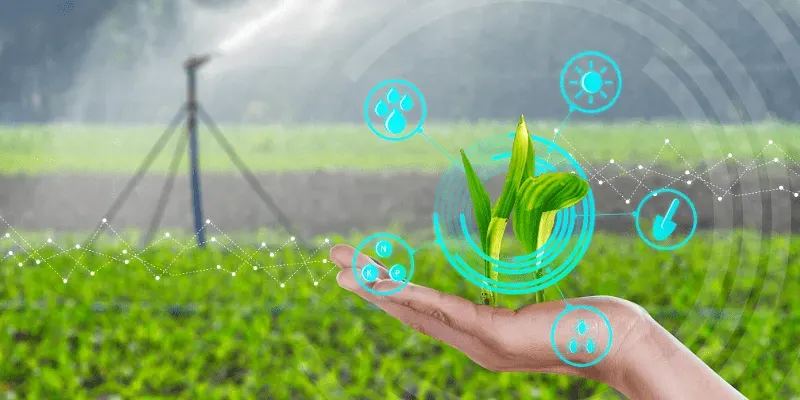
Agri-drones are the newest category to attract serious capital. The Indian government’s push to subsidise drone adoption in agriculture through schemes under the Agriculture Infrastructure Fund has created a policy tailwind that investors find hard to ignore. Garuda Aerospace, IOTech World Avigation, and others are building rental and service models that make drone technology accessible to farmers who could never afford to own one.
What Investors Look for in an Agritech Pitch
The evaluation criteria in Agritech are different from standard SaaS or consumer startup metrics. An investor experienced in this sector will ask questions that a general-purpose VC might not think to ask.
| Evaluation Area | What Investors Ask | Why It Matters |
| Farmer trust | How do you acquire and retain farmers? | Trust cycles in agriculture are long and fragile |
| Crop cycle alignment | Is your revenue model tied to harvest timing? | Cash flow in Agritech is seasonal by default |
| Government dependency | How exposed are you to policy changes? | MSP changes, subsidy shifts can reshape unit economics overnight |
| Last-mile infrastructure | Who actually reaches the farmer? | Most Agritech failures happen at the last mile |
| Credit and collections | What is your repayment rate on farm credit? | Embedded credit is powerful but risky if collections are weak |
| Scalability across geographies | Does this work in one crop, one state, or everywhere? | Many models are hyper-local and do not travel well |
Founders who have clear, data-backed answers to all six of these are rare. The ones who do tend to close rounds faster and at better valuations.
The Indian Agritech Landscape: Who Has Built What
India’s Agritech story has a few chapters worth knowing.
The first chapter was the input e-commerce wave, roughly 2015 to 2019. Startups tried to sell seeds and pesticides online to farmers. Most failed because farmer trust was not there and logistics were not ready.
The second chapter, from 2019 onwards, was the integrated platform wave. Companies stopped trying to do one thing and started building full-stack models that touched the farmer at multiple points across the crop cycle. DeHaat is the clearest example: it provides inputs, advisory, output buying, and credit in one platform. This stickiness is what justified its valuation.
The third chapter, which is still unfolding, is the data and precision farming layer. Cropin, a Bengaluru-based company backed by Google and others, has built what it calls the world’s largest agricultural dataset, covering millions of acres across multiple countries. It is now positioning as a B2B platform selling intelligence to agribusinesses, insurers, and governments. This model is closer to enterprise SaaS than traditional Agritech, and it commands SaaS-style valuations.
What Global Agritech Tells Us
The 30% global picture is instructive here. In the United States, John Deere has spent billions acquiring precision farming technology and building connectivity into its equipment. The bet is that data from the field, combined with autonomous machinery, will be the next competitive moat in agriculture. Indigo Agriculture raised over $650 million trying to build a carbon credit and sustainable farming marketplace before facing significant headwinds.
The global lesson is that Agritech models that try to change farmer behaviour without changing farmer economics tend to fail. The ones that work, in the US, Brazil, Israel, and now India, are the ones that put more money in the farmer’s pocket first and build everything else on top of that relationship.
Indian founders who have internalised this are building differently from the first generation. They are not selling technology to farmers. They are using technology to make farmers more profitable, and then monetising that relationship.
What Founders Building in Agritech Need to Know
The first thing is that patience is not optional. A consumer app can iterate weekly. An Agritech product often gets one real test per crop season, which means one test every four to six months. Founders who come from fast-moving software backgrounds find this genuinely difficult to adjust to.
The second is that the farmer is not the only stakeholder. The input dealer, the mandi trader, the FPO aggregator, the state agriculture department, and sometimes the bank are all part of the system. Building without understanding all of these relationships leads to products that make sense in a pitch deck and fail in the field.
The third is that government schemes, while useful as tailwinds, are dangerous to depend on. The PMFBY crop insurance scheme, the e-NAM trading platform, and the Agriculture Infrastructure Fund have all created opportunities that startups have leveraged. But policy changes in India move faster than product roadmaps. A business model built entirely on a government subsidy or mandate is a business model with a single point of failure.
The Take Nobody Will Say Out Loud
The VC excitement about Agritech in India has a quiet assumption buried inside it: that the Indian farmer is a customer waiting to be unlocked by the right product. That assumption is partially right and significantly wrong.
The Indian farmer, especially the smallholder with two acres of land, is not underserved because nobody tried. They are underserved because serving them is genuinely hard, the unit economics are genuinely difficult, and the trust required to change their behaviour is genuinely expensive to build. The startups that are succeeding are the ones that accepted this reality and built for it, not around it.
The ones that are going to fail, and some will, are the ones raising money on the promise that technology alone will solve a problem that is fundamentally about trust, infrastructure, and economics. Investors who cannot tell the difference between those two types of companies are going to have a difficult time in their Agritech portfolios over the next five years.
The opportunity is real. So is the graveyard of well-funded startups that discovered the gap between a farmer’s interest and a farmer’s behaviour change too late.
Frequently Asked Questions
What is Agritech and why are VCs interested in it now? Agritech refers to technology-driven solutions applied to agriculture, including input supply platforms, output aggregation, precision farming tools, farm credit, and agri-drones. VC interest has grown because rural digital infrastructure has matured significantly in India, government schemes have created policy tailwinds, and a few large successful companies have proven that the market can produce real returns.
Which Indian Agritech startups have raised significant VC funding? DeHaat has raised over $140 million and operates across multiple states with a full-stack farmer platform. Ninjacart is backed by Walmart and Tiger Global and processes large volumes of fresh produce daily. Waycool has raised significant capital for its farm-to-fork supply chain model. Jai Kisan focuses on rural credit and has attracted fintech-focused investors. Cropin is building an enterprise data platform for agribusinesses and has backing from Google.
What makes Agritech a difficult sector to invest in? The challenges are structural. Revenue is seasonal because it follows crop cycles. Farmer trust takes a long time to build and is easily lost. Last-mile infrastructure is expensive and often needs to be built from scratch. Government policy can reshape unit economics quickly. And models that work in one geography or one crop often do not transfer easily to another.
What types of Agritech models are most fundable right now? Integrated platforms that touch the farmer at multiple points across the crop cycle, embedded credit models with strong repayment data, precision farming and data platforms selling to agribusinesses rather than directly to farmers, and drone-as-a-service models benefiting from government subsidies are the four categories attracting the most capital currently.
How does Agritech differ from other startup sectors when it comes to growth metrics? Standard SaaS metrics like MRR and churn do not map cleanly onto Agritech. Investors look at farmer retention across seasons, repayment rates on embedded credit, gross merchandise value on input or output transactions, and unit economics at the farmer level. Revenue seasonality is normal and expected. Month-on-month growth comparisons without accounting for crop cycles can be misleading.
What role does the Indian government play in Agritech investment decisions? The government is both a tailwind and a risk factor. Schemes like PM-KISAN, PMFBY, e-NAM, and the Agriculture Infrastructure Fund have created real opportunities that Agritech startups have built on. However, investor diligence always includes an assessment of how much of a company’s business model depends on government schemes, because policy changes can be sudden and significant.
Can a founder without an agricultural background build successfully in Agritech? Yes, but with an important condition: the team needs agricultural expertise somewhere, either as a co-founder, a senior hire, or through deeply embedded field operations. Founders who try to build Agritech products from a city office without sustained presence in farming communities tend to build products that make sense on paper and fail in practice.
Stay in the Loop
For more stories, breakdowns, and unfiltered takes on what is really happening in Indian and global business and tech, follow TheFounder Nation.
Instagram Handle : https://www.instagram.com/thefoundernation?igsh=MTZobDUwc2xqZWdhOA==
We cover what the mainstream business press won’t.
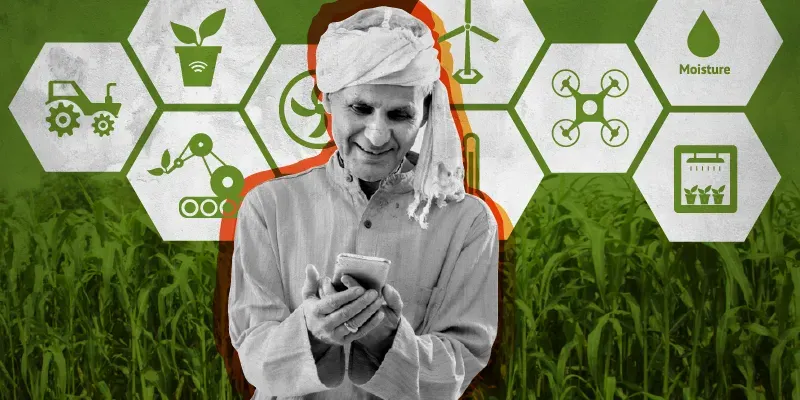
© TheFounder Nation | All rights reserved Word count: ~1,500 | Read time: ~6 minutes Primary keyword: Agritech startups VC attention | Secondary: Agritech funding India, VC investment agriculture startups, DeHaat Ninjacart funding, Indian Agritech models, farm tech investment India, precision farming startups, agri-drone startups India, Agritech Series A India, farmer platform startup, Omnivore Agritech fund Featured image alt text: A farmer using a smartphone in a field while a drone flies overhead, representing the intersection of agriculture and technology in India Suggested image filename: agritech-startups-vc-attention-india.jpg