


Written by TFN Research Desk — covering startups, technology, digital media, and business strategy.
While the world was debating whether remote work was sustainable, GitLab had already been running a fully distributed company for seven years — and was preparing to list on Nasdaq.
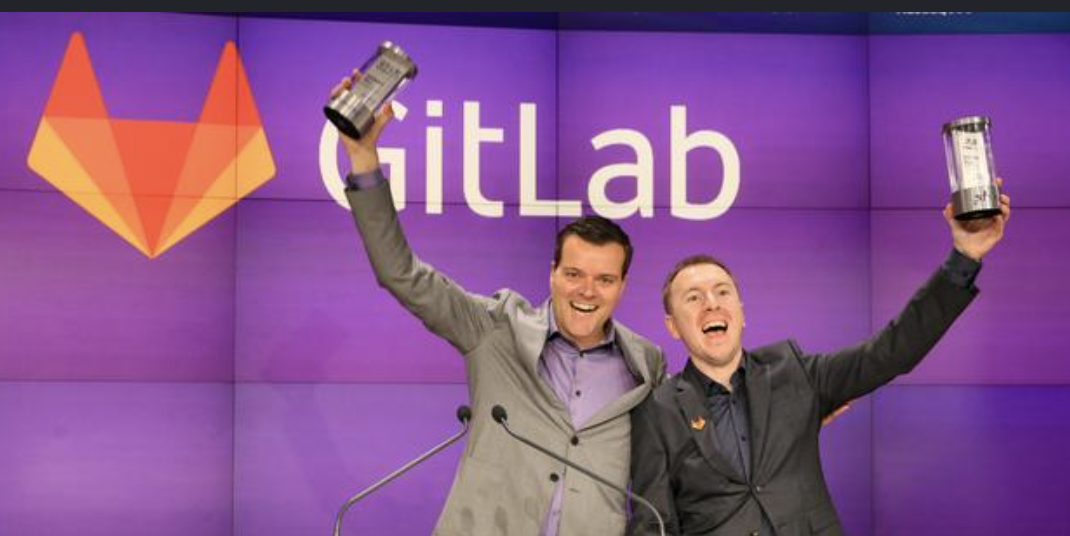
On October 14, 2021, GitLab became a public company on the Nasdaq under the ticker GTLB. Its IPO raised approximately $800 million at an $11 billion valuation (Forge Global, 2023), and in the first two days of trading, its stock rose 49%, pushing its market cap to $16.5 billion — more than double what Microsoft had paid for GitHub three years earlier (CNBC, October 2021). The story that made this possible is not a product story. It is an operating model story. GitLab had never had a single office. Every one of its 1,300 employees, spread across 65 countries, worked remotely — not because of COVID-19, but by founding design.
Case Study • DevOps • Remote Work • Tech Infrastructure
The company that had no offices before remote work was cool
Most companies discovered remote work in March 2020. GitLab had been running it since 2014. When the pandemic forced every knowledge-work company to scramble, GitLab published its Remote Work Playbook, a comprehensive public guide drawn from seven years of operating a fully distributed organisation. The handbook section on all-remote work alone, authored by Darren Murph, GitLab’s Head of Remote, contained dozens of guides covering async communication, remote hiring, remote compensation, and how to run a company meeting when everyone is in a different timezone.
Murph described it plainly: “We do that to better the world; we put it all out there, it’s open source. We want other companies to read it, implement it and use it. We never saw COVID coming, but I kind of knew that down the road this handbook would be necessary. Thankfully, I started working on it in advance.” (TechCrunch, 2021)
That quote captures something important. GitLab did not build a remote culture because it was trendy. It built one because its co-founders, Sid Sijbrandij in the Netherlands and Dmitriy Zaporozhets in Ukraine, could not be in the same building. The structure was necessity. The genius was treating necessity as product.
Why this story matters
GitLab’s IPO matters to founders on two levels. First, it proved that a fully distributed company can scale to public-market standards: financial controls, investor relations, board governance, and all-hands communication, without a physical headquarters. Second, it demonstrated that “remote-first” is not a perk policy but an architectural choice that changes how you hire, document, communicate, and grow. As Indian startups increasingly hire from Tier 2 and Tier 3 cities, and as post-COVID hybrid culture normalises distributed teams, GitLab’s operating model is a direct blueprint. The documentation, the async defaults, the handbook-first culture: these are not soft culture elements. They are the systems that let a company operate across 65 countries without a single office. [INTERNAL LINK: India’s unicorn boom — who made it and who did not]
Quick facts
| Metric | Figure | Source |
|---|---|---|
| Founded | 2011 (open-source project), 2014 (company incorporated) | Wikipedia |
| Founders | Sid Sijbrandij, Dmitriy Zaporozhets | GitLab |
| IPO date | October 14, 2021 | Nasdaq |
| IPO ticker | GTLB (Nasdaq) | Nasdaq |
| IPO raise | ~$800 million | Forge Global, 2023 |
| IPO valuation | $11 billion | Forge Global, 2023 |
| Post-IPO market cap (Day 2) | $16.5 billion | CNBC, October 2021 |
| Employees at IPO | ~1,300 in 65 countries | GitLab |
| Employees (March 2025) | 2,300+ in 60+ countries | GitLab careers page, March 2025 |
| Offices | Zero, all-remote since inception | GitLab |
| FY2025 revenue (ended Jan 31, 2025) | $759.2 million (up 31% YoY) | GitLab SEC 8-K, March 2025 |
| FY2026 Q3 revenue (ended Oct 31, 2025) | $244.4 million (up 25% YoY) | GitLab SEC 8-K, December 2025 |
| Public handbook size | 2,000+ pages | RemoteJobs.co.in, April 2026 |
| Registered GitLab users | 50 million+ | GitLab careers page, March 2025 |
Background
GitLab began as an open-source project in 2011, created by Dmitriy Zaporozhets as a self-hosted alternative to GitHub. Sid Sijbrandij, then a Dutch entrepreneur, discovered the project, contacted Zaporozhets, and the two began collaborating despite being in different countries. When they decided to build a company around it in 2014, there was no obvious answer to the question of where headquarters should be. Sijbrandij was in the Netherlands. Zaporozhets was in Ukraine. Rather than resolving the question by picking a city, they dissolved it by building a company with no city at all.
GitLab was accepted into Y Combinator’s Winter 2015 batch, which gave it early credibility and a network, but not a mandate to open offices. Sijbrandij moved to San Francisco briefly but the company’s operating model stayed distributed. By 2017, GitLab had a $200 million valuation and a growing team spread across dozens of countries. By 2020, it had 1,300 employees in 65 countries and had become one of the most-watched examples of remote-work at scale before remote work became the default conversation topic in every boardroom.
The company’s strategy was to build an all-in-one DevOps platform covering the entire software development lifecycle: planning, source code management, CI/CD, security, monitoring, and more. This “single application for DevOps” positioning was a direct competitive challenge to the fragmented toolchains most engineering teams used, where GitLab itself, Jenkins, Jira, and several other tools were all separate products requiring separate logins and integrations.
When Microsoft acquired GitHub in 2018 for $7.5 billion, many assumed the game was over for independent DevOps players. GitLab’s subsequent growth, 143% revenue growth the year after the GitHub acquisition (CNBC, October 2021), proved that assumption wrong.
Timeline
| Year | Milestone |
|---|---|
| 2011 | Dmitriy Zaporozhets creates GitLab as an open-source project |
| 2014 | GitLab Inc. formally incorporated; Sijbrandij and Zaporozhets establish the company with zero offices |
| 2015 | Accepted into Y Combinator Winter 2015 batch |
| 2017 | Valued at $200 million in private funding round |
| 2018 | Microsoft acquires GitHub for $7.5 billion; GitLab accelerates competitive push |
| 2019 | GitLab revenue up 143% YoY; $268 million Series E at $2.75 billion valuation |
| 2020 | 1,300 employees in 65+ countries; COVID validates GitLab’s remote model to the world; Remote Work Playbook published |
| October 14, 2021 | GitLab lists on Nasdaq (GTLB) at $11 billion; stock rises 49% in first two days to $16.5 billion market cap |
| December 2021 | Q3 FY2022 revenue up 58% YoY to $66.8 million; strong dollar-based net retention rate above 130% |
| FY2025 (ended Jan 2025) | Annual revenue reaches $759.2 million, up 31% YoY |
| December 2024 | Sid Sijbrandij steps down as CEO due to health reasons; Bill Staples appointed CEO |
| March 2025 | 2,300+ team members across 60+ countries; 50 million+ registered users |
| December 2025 | Q3 FY2026 revenue of $244.4 million, up 25% YoY; non-GAAP operating margin of 18% |
How it happened: the three moves that took an open-source project to Nasdaq
Move 1: Treating the handbook as infrastructure, not documentation
Most companies write a handbook after they have a culture. GitLab built its handbook before it had a company. From the earliest days, the rule was simple: if something is not in the handbook, it does not exist as policy. Every process, every decision-making framework, every expectation about communication and working hours, was written down, versioned like code, and made publicly accessible.
This created a structural advantage that was invisible to competitors until it was too late to replicate. New hires in Nairobi and Vancouver and Bangalore had identical access to the same institutional knowledge. There was no “water cooler” information that only San Francisco employees had. The 2,000-page public handbook became a self-updating operations manual for a company with no physical centre of gravity.
Darren Murph, GitLab’s Head of Remote, described the philosophy as “public by default”: information is accessible to everyone unless it is specifically designated as private, with clear reasoning for why (Tidaro, May 2025). For a distributed company, this is not a nice-to-have. It is the operating system.
Move 2: Building async communication as a competitive hiring advantage
GitLab’s async-first culture was not about eliminating meetings as a productivity hack. It was about making time zones irrelevant as a hiring constraint. When you default to asynchronous communication — meaning proposals, decisions, and discussions happen in writing before any meeting is called — you can hire engineers in Pune and designers in Porto without requiring them to overlap with a San Francisco team for eight hours a day.
The practical mechanics: everything begins as a merge request or issue. Meetings require a documented agenda and produce documented outcomes. Video recordings replace live meetings where possible. There is no expectation of immediate response. The result is a hiring funnel that is genuinely global, not nominally global. GitLab regularly hired engineers in countries where its competitors had never recruited, because the async model made timezone misalignment a non-issue rather than a daily friction source.
By the time of the IPO, this had produced a talent density that no office-bound competitor could have assembled at the same cost structure. Hiring globally at competitive but not San Francisco-level salaries, with a transparent compensation model that adjusted for location, allowed GitLab to scale its engineering headcount faster than its cost base.
Move 3: Competing with GitHub by going broader, not faster
When Microsoft acquired GitHub in June 2018, the conventional wisdom in venture capital was that GitHub’s ownership by a $1 trillion company would make the competitive space untenable for independent players. GitLab ran the opposite play. Rather than trying to win on repository hosting, the feature GitHub was built around, GitLab accelerated its push toward an all-in-one DevOps platform covering everything from source control through CI/CD, security scanning, monitoring, and incident management.
The strategy was explicitly stated by Sid Sijbrandij in GitLab’s Q3 FY2022 earnings call: “Customers use GitLab for their most immediate needs and then expand usage over time. This enables them to quickly modernize their software development to meet the demands of digital acceleration.” (GitLab SEC 8-K, December 2021)
That expand-over-time model was the engine of GitLab’s dollar-based net retention rate staying above 130% through its early public company quarters, meaning existing customers were spending 30% more year-over-year. A tool that starts as a code repository but grows into the entire engineering workflow is a stickier product than a best-in-class point solution.

The strategy behind the success
GitLab’s path to IPO is a case study in what happens when you turn an operational constraint into a structural advantage. Remote-first was not a strategic choice in the conventional sense. It was a founding reality that Sijbrandij and Zaporozhets chose to optimise rather than work around.
The optimisation produced three durable assets: a public handbook that served as free marketing to engineers who wanted to understand the culture before applying; an async communication model that eliminated the geographic hiring ceiling most companies hit when they try to go global; and a compensation philosophy that was transparent and location-adjusted, which reduced turnover friction in a market where competing offers from FAANG companies were a constant competitive threat.
What made these assets compound over time was GitLab’s decision to make them open source. The handbook is publicly accessible. The Remote Playbook is free to download. GitLab actively encouraged other companies to copy its model, which is counterintuitive strategy for a company in a competitive market, but it produced a steady stream of engineers who had self-selected into GitLab’s culture before they ever applied.
Business model breakdown
GitLab operates on a freemium model with three commercial tiers: Free, Premium (approximately $29 per user per month), and Ultimate (approximately $99 per user per month). The free tier covers basic repository and CI/CD functionality. Premium adds advanced DevOps features including enhanced CI/CD, merge request approval workflows, and project management tooling. Ultimate adds security scanning, compliance management, and advanced governance, which is where most enterprise customers land.
Revenue growth has been consistent: FY2025 revenue reached $759.2 million, up 31% year-over-year (GitLab SEC 8-K, March 2025). Q3 FY2026 (ended October 31, 2025) revenue was $244.4 million, up 25% YoY, with a non-GAAP operating margin of 18% (GitLab SEC 8-K, December 2025).
The company’s dollar-based net retention rate staying above 130% at IPO reflected the land-and-expand motion: customers who started with source code management typically expanded into CI/CD, then security, then compliance, each of which is a higher-priced feature set. GitLab now positions itself as an “AI-native DevSecOps platform” under CEO Bill Staples, with its Duo Agent Platform representing the next layer of product expansion into AI-assisted software development.
Comparison: GitLab vs GitHub vs Bitbucket
| Dimension | GitLab | GitHub | Bitbucket |
|---|---|---|---|
| Owner | Public (Nasdaq: GTLB) | Microsoft (acquired $7.5B, 2018) | Atlassian |
| Business model | Freemium; Premium $29/user/mo; Ultimate $99/user/mo | Freemium; Teams from $4/user/mo | Freemium; bundled with Atlassian suite |
| Platform scope | All-in-one DevSecOps (plan to deploy to monitor) | Source control + Actions CI/CD + Copilot | Source control + Jira integration |
| AI product | GitLab Duo Agent Platform | GitHub Copilot | Atlassian Intelligence |
| Self-hosted option | Yes (GitLab CE/EE) | GitHub Enterprise Server | Yes |
| Remote users | 50 million+ registered users | 100 million+ developers (GitHub, 2023) | Not disclosed |
| Key enterprise differentiator | Built-in security scanning and compliance | Microsoft ecosystem integration | Atlassian Jira and Confluence integration |
| Company structure | Fully remote, 2,300+ employees, 60+ countries | Microsoft subsidiary | Atlassian subsidiary |
What competitors missed
GitHub missed one thing above all others after the Microsoft acquisition: the trust gap. Enterprise engineering teams in regulated industries, and in markets outside the United States, had legitimate concerns about their source code being hosted on infrastructure owned by a company with deep US government and defense contracts. GitLab’s self-hosted deployment option, where the entire platform runs on the customer’s own infrastructure, addressed that concern directly.
The second thing competitors missed was the all-in-one value proposition. Most engineering teams in 2018 used GitLab or GitHub for source control, Jenkins or CircleCI for CI/CD, Jira for project management, and Snyk or Veracode for security scanning. Each of these is a separate contract, a separate integration, a separate set of credentials, and a separate engineering team maintaining the glue. GitLab’s pitch was radical consolidation: one platform, one login, one vendor contract. For mid-market and enterprise buyers managing procurement complexity, this was a compelling argument even when individual point solutions were technically superior in their category. [INTERNAL LINK: Datadog: the rise of observability]
Risks and challenges
- GitHub’s distribution moat is enormous. With 100 million-plus registered developers and deep integration with Microsoft’s enterprise sales machine, GitHub has a distribution advantage that GitLab cannot replicate through product alone. GitHub Copilot’s rapid enterprise adoption adds an AI layer that threatens GitLab’s differentiation.
- The all-in-one bet cuts both ways. A platform that does everything but nothing exceptionally can lose to focused best-in-class tools as customers become more sophisticated buyers. GitLab’s risk is that as DevSecOps matures as a category, enterprises disaggregate back to the best tool for each function.
- Remote culture at scale requires constant maintenance. GitLab’s 61% Glassdoor “recommend to a friend” rate, while not terrible, is lower than companies of comparable profile and reflects friction in its handbook-heavy culture as the company has grown. Frequent restructuring and leadership transitions, including Sijbrandij’s December 2024 departure, add organisational complexity (JobsByCulture, April 2026).
- CEO transition risk. Sid Sijbrandij, the architect of GitLab’s remote culture and strategic vision, stepped down in December 2024. Bill Staples brings credibility from New Relic and Microsoft, but the cultural continuity of the founding model under new leadership is untested at this scale.
- AI in DevOps is compressing the competitive advantage window. GitHub Copilot, Amazon Q Developer, Google Gemini Code Assist, and Cursor are all adding AI-native coding capabilities. GitLab’s Duo Agent Platform enters a crowded field where the advantage window is narrowing faster than most traditional software markets.
What founders can learn
- Treat your operating model as a product. GitLab’s handbook is not HR documentation. It is a publicly accessible product that recruits engineers, builds brand trust, and demonstrates operational discipline to prospective investors. Every founder building a distributed team should ask: what would our handbook tell a prospective hire about what it is actually like to work here?
- Async-first is a hiring strategy, not a productivity preference. When your default communication mode is written and asynchronous, your hiring pool is every city in the world, not just the cities within commuting distance of your office. GitLab scaled to 65 countries partly because timezone overlap was never a constraint. Indian founders building distributed teams across Tier 1, Tier 2, and Tier 3 cities have the same opportunity.
- “Public by default” is an SEO and trust strategy disguised as a culture value. GitLab’s handbook is indexed by search engines. Engineers searching for “how does GitLab handle promotions” or “what is GitLab’s remote compensation model” find the answer on GitLab’s own domain. That is thousands of pages of authentic, high-intent content that builds employer brand at zero marginal cost.
- Competing against a well-funded acquirer by going broader is underrated. When Microsoft bought GitHub, the rational competitive response was to pick a different category. GitLab chose instead to build around GitHub, adding every adjacent function the GitHub acquirer would be slower to build. This “expand the platform” counter-move has a strong track record in enterprise software: Salesforce, ServiceNow, and Atlassian all won by making their platform the connective tissue between best-of-breed point solutions.
- Dollar-based net retention rate is the most honest metric for a B2B SaaS company. GitLab’s 130%-plus DBNRR at IPO meant that even without acquiring a single new customer, revenue would grow 30% from existing accounts. Founders building B2B products should track this metric from the earliest cohorts, because it tells you whether you are solving a problem customers want to solve more of, or whether you have hit a ceiling on what they need.
- Founder health and succession planning are not optional governance items. Sijbrandij’s health-driven departure in December 2024 was handled with dignity, but it underscores that even the most values-aligned founding CEOs are human. Distributed companies with a single cultural architect face a specific version of key-person risk: the handbook documents the processes, but it cannot document the judgement that built those processes.
Expert analysis
GitLab’s IPO is structurally one of the most instructive events in enterprise software history, not because of what it achieved but because of what it disproved. It disproved that a fully distributed company could not build the operational discipline required of a public company. It disproved that remote culture was incompatible with financial controls, investor relations, and the governance structures public markets require. It disproved that you need San Francisco talent density to compete with companies that have it.
The company that comes closest to GitLab’s founding condition in the Indian startup context is any startup whose founding team is distributed across cities, a common reality given that India’s engineering talent is in Bengaluru, Chennai, Hyderabad, and Pune, not all in one city. GitLab’s playbook is not a Silicon Valley model adapted for India. It is a distributed-team model that was always more compatible with India’s geographic talent distribution than the office-first model that most Indian startups have tried to copy from their US peers. [INTERNAL LINK: India’s unicorn boom — who made it and who did not]
Future outlook
GitLab’s next chapter is being written by Bill Staples, whose background at New Relic and Microsoft puts him closer to the enterprise sales motion than to the remote-culture founding story. The company’s FY2026 results, running at roughly $950 million in annualised revenue as of Q3 FY2026 (GitLab SEC 8-K, December 2025), suggest the product is still growing at meaningful scale despite the leadership transition.
The more important question for the next three years is whether GitLab’s AI layer, the Duo Agent Platform, can compete with GitHub Copilot and the emerging crop of AI-native developer tools including Cursor and Claude Code. The DevSecOps platform category is undergoing a generational shift: the question is no longer whether developers can write code faster with AI, but which platform becomes the default environment in which AI-assisted code is written, reviewed, secured, and deployed. GitLab’s integrated platform is a credible answer to that question. Whether its go-to-market can outpace GitHub’s distribution advantage is the defining challenge of its next decade. [INTERNAL LINK: Cursor: the fastest-growing tool in software development]
The bottom line
GitLab proved that you do not need a headquarters to build a public company. You need documentation, discipline, and a platform that grows with its customers. Every founder building a distributed team is operating in a world that GitLab’s handbook helped create.
Key takeaways
- GitLab listed on Nasdaq on October 14, 2021, raising approximately $800 million at an $11 billion valuation, with 1,300 employees in 65 countries and zero offices.
- The company’s all-remote model was a founding condition, not a COVID response, and predates the pandemic by seven years.
- GitLab’s public handbook, over 2,000 pages and accessible to anyone, is the operational infrastructure behind its distributed culture and a self-sustaining employer brand asset.
- The competitive response to Microsoft’s $7.5 billion GitHub acquisition was to build a broader platform, not a better repository. It worked: GitLab revenue grew 143% the year after the acquisition.
- FY2025 revenue reached $759.2 million (up 31% YoY), with Q3 FY2026 revenue of $244.4 million (up 25% YoY) and a non-GAAP operating margin of 18%.
- Sid Sijbrandij stepped down as CEO in December 2024 due to health reasons; Bill Staples now leads the company’s AI-native DevSecOps platform strategy.
- GitLab’s async-first, documentation-first culture is a replicable operating model, not a company-specific quirk, and is directly applicable to Indian startups building distributed teams across Tier 1, 2, and 3 cities.
Conclusion
GitLab did not go public despite being fully remote. It went public because of the operating discipline that full remoteness demanded. When every process must be written down to function, you end up with an organisation that is unusually transparent, unusually consistent, and unusually legible to outside scrutiny. Those are exactly the qualities public markets reward.
The more practical lesson for founders is this: the friction of building a distributed team is real, but the ceiling on talent access in an office-bound model is also real. GitLab chose the friction and got 65 countries worth of engineers. The companies that chose the office got the engineers who happened to be within commuting distance. A decade later, the results are on a Nasdaq ticker.
The TFN lens
The Documentation-First Moat
Most founders think of documentation as something that happens after a company is successful. GitLab’s story demonstrates the opposite: documentation built before scale is an infrastructure asset that compounds over time in ways that capital cannot easily replicate.
When GitLab’s handbook became 2,000 pages publicly accessible, it stopped being internal documentation and became an inbound recruiting surface, a trust signal for enterprise buyers evaluating a vendor, and a competitive advantage in every country where GitLab hired before its competitors thought to look. No amount of Series B capital could have replicated what seven years of handbook-first culture produced.
For Indian founders building distributed teams, the pattern is particularly relevant. India’s engineering talent is not concentrated in one city, and the async communication skills that GitLab’s culture requires are increasingly native to a generation of Indian engineers who have been collaborating across time zones in global tech companies for years. The opportunity to build India’s version of a handbook-first, documentation-driven distributed company has never been more accessible.
Building something of your own? Follow The Founder Nation and NamasteVC for curated startup funding news, grant alerts, and founder stories from India’s startup ecosystem, delivered straight to your feed, every week. [INTERNAL LINK: Cursor: the fastest-growing tool in software development]
Frequently asked questions
When did GitLab go public? GitLab listed on the Nasdaq under the ticker GTLB on October 14, 2021. The IPO raised approximately $800 million at a valuation of $11 billion, and after the stock rose 49% in its first two days of trading, GitLab’s market capitalisation reached $16.5 billion, more than double what Microsoft had paid for GitHub in 2018.
Is GitLab profitable? GitLab is not yet profitable on a GAAP basis. Its FY2025 GAAP operating margin was negative 18%, but its non-GAAP operating margin reached positive 10%. In Q3 FY2026 (ended October 31, 2025), the non-GAAP operating margin expanded to 18%, reflecting improving unit economics as the company scales. Profitability on a GAAP basis remains a stated goal but has not yet been achieved.
Who founded GitLab? GitLab was co-founded by Sid Sijbrandij, a Dutch entrepreneur, and Dmitriy Zaporozhets, a Ukrainian developer who created the original open-source project in 2011. The company was formally incorporated in 2014. Sijbrandij served as CEO until December 2024, when he stepped down due to health reasons and transitioned to executive chair. Bill Staples, formerly CEO of New Relic, took over as CEO.
How does GitLab make money? GitLab operates on a freemium SaaS model with three commercial tiers: Free, Premium (approximately $29 per user per month), and Ultimate (approximately $99 per user per month). Enterprise customers typically start with source code management and expand into CI/CD, security scanning, and compliance, which are higher-priced features. This land-and-expand motion produced a dollar-based net retention rate above 130% at IPO, meaning existing customers spent 30% more year-over-year.
How is GitLab different from GitHub? GitLab and GitHub both offer source code management, but their product scope and ownership differ significantly. GitLab is an independent public company building an all-in-one DevSecOps platform covering the full software development lifecycle. GitHub, acquired by Microsoft for $7.5 billion in 2018, focuses on source control and CI/CD with strong integration into the Microsoft ecosystem. GitLab’s self-hosted option is a key differentiator for enterprises with strict data sovereignty requirements.
How many employees does GitLab have? As of March 2025, GitLab had 2,300-plus team members across 60-plus countries and zero offices. At the time of its October 2021 IPO, it had approximately 1,300 employees in 65 countries. The company has been fully remote since its founding in 2014.
What is GitLab’s revenue in 2025? GitLab’s FY2025 revenue (for the year ended January 31, 2025) was $759.2 million, up 31% year-over-year. In Q3 FY2026 (ended October 31, 2025), quarterly revenue was $244.4 million, up 25% year-over-year, implying an annualised run rate approaching approximately $1 billion. The company reports under the fiscal year ending January 31.
What can founders learn from GitLab’s all-remote model? GitLab’s founding lesson for distributed-team builders is that async communication is not a productivity hack but a global-hiring strategy. When your default mode of work does not require timezone overlap, your hiring pool is the entire world. GitLab built its culture before it had scale, which meant the operating systems, handbook, async defaults, transparent compensation, were in place before the complexity arrived. Founders who build the documentation infrastructure early end up with companies that scale more predictably than those that try to retrofit culture onto a large, fast-moving organisation.
Sources
- GitLab SEC 8-K, Q3 FY2026 Results, December 2, 2025
- GitLab SEC 8-K, FY2025 Full Year Results, March 3, 2025
- GitLab SEC 8-K, Q3 FY2022 Results, December 6, 2021
- CNBC, GitLab Now Worth Twice What Microsoft Paid for GitHub, October 17, 2021
- Forge Global, GitLab IPO Investment Profile, 2023
- Tidaro, The GitLab Remote Work Experiment: What We’ve Learned, May 2025
- RemoteJobs.co.in, Inside GitLab: How 2,000 Employees Built a World-Class Remote Culture, April 2026
- JobsByCulture, Working at GitLab in 2026, April 2026
- GitLab, Remote Work Playbook Press Release, April 20, 2021
- GitLab Careers Page, Team Stats, March 2025
- TechCrunch, Darren Murph, Head of Remote, GitLab, 2021
© 2026 The Founder Nation. All rights reserved.