

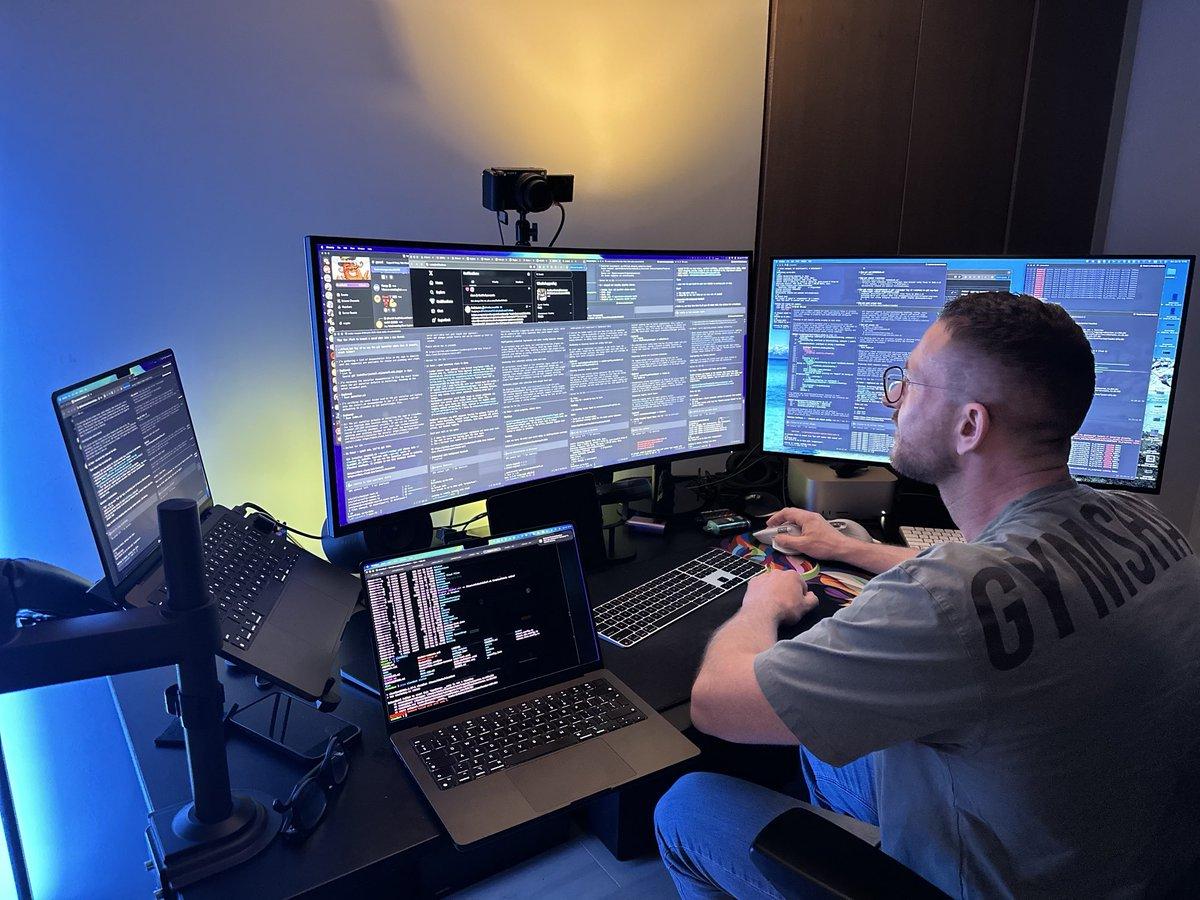
AI tools are enabling solo founders to build profitable software businesses without large engineering teams.
Written by TFN Research Desk | covering startups, technology, venture capital, and business strategy.
While venture capital chased billion-dollar markets, a quiet category of one-person software companies started generating $4,000 to $10,000 in monthly recurring revenue with no team, no funding, and no sales force.
Three years ago, building a SaaS company alone was considered either brave or delusional. You needed a team. You needed capital. You needed a sales force to break into enterprise. You needed years of experience across the full technology stack before shipping anything worth paying for. Then AI coding assistants arrived. No-code platforms matured. The cost of building software collapsed. Now a single founder in a Tier-2 Indian city can ship a functional SaaS product in weeks, reach a global audience through organic communities, and earn $4,000 to $10,000 in monthly recurring revenue without ever speaking to a venture capitalist. The trend has a name: Micro-SaaS. Micro-niche SaaS products grew 340% compared to broad market platforms in 2025 (Gartner Q4 2025 SaaS Market Report). It came out of nowhere. It is now one of the most structurally important shifts in startup history.
Startup Strategy • Sector Analysis • SaaS • AI • Solo Founders • India
The shift that venture capital was not watching
The Micro-SaaS wave did not begin with a funding announcement or a product launch. It began on forums. Indie Hackers, Reddit, and Product Hunt communities of solo builders started sharing something unusual: revenue screenshots. Not pitch decks. Not cap tables. Monthly recurring revenue from software products built by one person, often solving problems so specific that no venture-backed company had ever bothered with them.
A tool that helps independent insurance brokers manage renewals. A niche scheduling app for mobile tattoo artists. An AI-powered compliance checklist for solopreneurs operating in specific legal jurisdictions. None of these are billion-dollar markets. That is precisely the point.
The logic of venture capital requires enormous addressable markets. A $50 million market is not interesting to a VC managing a $500 million fund. It is extremely interesting to a solo founder who wants to own 100% of a profitable software business generating $500,000 per year. AI changed the economics of building that business in three specific ways, and the result is a structural shift: for the first time, a software business can be bootstrapped, profitable, and global in under a year by a single person.
Why this story matters
For Indian founders specifically, this trend is structurally advantageous in a way that most global startup trends are not. A founder in Pune or Coimbatore has a cost structure that a founder in San Francisco cannot match. With AI as a force multiplier, that cost advantage translates directly into sustainable margins at revenue levels that would feel small to a VC but transformative to an individual. The new generation of Indian software entrepreneurs may not build the next Zoho. They may build fifty micro-Zohos, each profitable and independent, collectively representing a new category of technology wealth that never shows up in funding databases.
Quick facts
| Category | Micro-SaaS: software companies built and run by solo founders targeting highly specific markets |
| Micro-niche SaaS growth (2025) | 340% versus broad market platforms (Gartner Q4 2025) |
| Solo founders targeting micro-segments | 73% of successful Micro-SaaS founders (Indie Hackers, November 2025) |
| Median profitable Micro-SaaS MRR | Approximately $4,200 per month (Freemius, 2025) |
| Sustainable pricing window | $29 to $199 per month |
| Vertical SaaS market size (2025) | $157 billion (Qubit Capital, 2026) |
| Vertical SaaS CAGR | 18 to 22%, roughly two to three times the growth rate of broad horizontal SaaS (Qubit Capital, 2026) |
| Global SaaS market by 2030 | Estimates range from approximately $702 billion to $908 billion depending on the research firm and methodology used (Fortune Business Insights, 2023; Grand View Research, 2025) |
| AI wrapper startups expected to fail | 90% by 2026 (Market Clarity, 2025) |
Background: why the VC funnel was never designed for this
Micro-SaaS exists in the gap between two well-established categories. On one side: venture-backed SaaS companies targeting large markets, requiring capital for sales teams, marketing budgets, and enterprise-grade infrastructure. On the other: freelancers and consultants selling their time. The Micro-SaaS founder is neither. They are building software, not selling services. But they are doing it in markets so specific that the venture math never worked, which meant no one had ever built a funded company to serve those markets.
The professions that generate Micro-SaaS opportunities are the ones that every enterprise software company has implicitly written off as too small. Solo accountants. Independent freight brokers. Regional real estate agents. Mobile aestheticians. Each of these professional categories has workflows, compliance requirements, scheduling needs, and reporting obligations that generic software handles poorly. Micro-SaaS founders who understand those workflows, often because they have lived them, can build targeted tools that those professionals are willing to pay for every month without requiring a sales call or a procurement process.
How it happened: three shifts that created the category
Shift 1: AI collapsed the cost of building
Tools like GitHub Copilot and large language models now allow a founder without formal engineering training to ship a working product in days rather than months. This is not a marginal improvement. For a solo founder, the difference between a three-month build and a two-week build is the difference between running out of money before launch and having runway to iterate after it. AI coding tools did not make building software easy. They made it fast enough that a solo founder’s time, rather than a hired engineering team’s time, became a viable production input.
Shift 2: AI created entirely new categories of Micro-SaaS product
AI-powered tools for specific professional workflows, legal document review for small firms, automated content briefs for niche publishers, predictive inventory for regional retailers, are legitimate products with paying customers. Before large language models, many of these tools required either a large dataset and a specialized engineering team or simply did not work well enough to sell. Both of those barriers dropped simultaneously in 2023 and 2024. The result is that categories of professional software that did not exist two years ago now have paying customers and solo founders earning sustainable MRR from them.
Shift 3: Distribution became a product
A founder who writes clearly about a specific problem, in the communities where that problem is actively felt, now has a marketing strategy that costs nothing but time. Indie Hackers, LinkedIn, niche subreddits, vertical Discord communities, and domain-specific newsletters have created distribution channels that reach exactly the professional audiences Micro-SaaS products serve, without the cost of paid acquisition. For 73% of successful Micro-SaaS founders (Indie Hackers, November 2025), the community where they build credibility is also the community where they find their first hundred paying customers.
The strategy behind the category
The Micro-SaaS playbook has three non-negotiable elements. First, target a market too small for VCs but large enough for one founder. The less competition from funded companies, the more pricing power and the longer the runway to profitability. Second, build for a specific professional community and distribute inside that community. The founder is not acquiring customers; they are joining a conversation that was already happening. Third, use AI for development velocity, not just as the product. The real leverage is in collapsing build time, not in building another AI chatbot that a competitor can replicate in a weekend.
By the numbers
- 340% Growth rate of micro-niche SaaS products versus broad market platforms in 2025 (Gartner Q4 2025 SaaS Market Report). This is the clearest evidence that the category is real and measurable, not just an indie hacker narrative.
- $4,200 Median monthly recurring revenue of profitable Micro-SaaS businesses (Freemius, 2025). In most Indian cities, this is a liveable income for a solo founder with low fixed costs. In a Tier-2 city, it represents strong financial independence.
- $29 to $199 per month The sustainable pricing window for Micro-SaaS products. High enough to support a solo business. Low enough to be bought by a professional without a procurement process or budget approval.
- 90% Percentage of AI wrapper startups expected to fail by 2026 (Market Clarity, 2025). This is the warning number. Distribution and defensibility matter more than AI integration. A wrapper with no moat is not a Micro-SaaS business. It is a feature.
- Above 130% Vertical SaaS net revenue retention (Qubit Capital, 2026). Customers who stay expand their usage over time, meaning the business compounds without requiring a sales team to generate growth from the existing customer base.
What competitors missed
Venture-backed startups missed this trend because their model demands scale. A product serving 500 paying customers at $99 per month is a $594,000 annual business. It is not interesting to a firm managing a $500 million fund. The fund math requires billion-dollar outcomes, not half-million-dollar ones.
Enterprise software companies missed it because their sales cycles assume buyers with procurement departments, IT security reviews, and multi-quarter evaluation processes. The independent insurance broker or the mobile tattoo artist does not have a procurement department. They have a credit card and a problem they need solved this week.
What both groups missed is the mass of underserved professionals who need software that fits their specific workflow, not a general platform they have to customize themselves and pay a consultant to configure. Micro-SaaS founders who serve those professionals directly, often because they have been that professional themselves, have a distribution and product-understanding advantage that neither a VC-backed startup nor an enterprise vendor can easily replicate.
Risks and challenges
- AI agents may make some Micro-SaaS tools obsolete faster than they can achieve profitability. If an AI agent can perform the same workflow automation that a Micro-SaaS tool provides, without a subscription, the category faces existential pressure from the same technology that created it.
- AI wrapper businesses with no defensible moat face margin pressure: gross margins of 25 to 35% versus 70 to 85% for traditional SaaS is unsustainable at micro-scale where there is no venture subsidy covering the gap.
- Early revenue is not the same as product-market fit. Micro-SaaS requires retention, not just acquisition. A product that loses customers in month two collapses the model regardless of how strong month-one revenue looked.
- Distribution through community is slower and less predictable than paid acquisition. Building credibility in a professional niche community takes time, and there is no budget lever to accelerate it if growth stalls.
- The target market’s smallness is both the opportunity and the ceiling. A market too small for VCs is also a market that caps out at a certain revenue level, which means the founder must plan for that ceiling from the beginning or build adjacencies deliberately.
- Market-size projections for the broader SaaS category vary widely by research methodology, from roughly $702 billion to $908 billion by 2030 depending on the firm. Founders should treat any single headline projection as directional rather than precise.
What founders can learn
- Target markets too small for VCs but large enough for you. The absence of funded competition is a feature, not a warning sign. It means pricing power, lower customer acquisition costs, and a longer runway to profitability.
- Build for a specific professional community, then distribute inside it. You are not acquiring customers. You are joining a conversation that was already happening, and participating credibly in that conversation is both the marketing strategy and the product research strategy.
- Use AI for development velocity, not just as the product feature. The real leverage is in collapsing build time so that solo-founder capacity becomes a viable production input, not in building another AI wrapper with no defensible layer below it.
- Retention is the business model. A Micro-SaaS with 95% monthly retention compounds into a real business. A Micro-SaaS with 70% monthly retention is a treadmill. Build the retention case before optimizing for acquisition.
- The $29 to $199 pricing window is not a constraint. It is a feature. Pricing in this range eliminates procurement friction entirely and positions the tool as an individual professional decision rather than a company budget decision.
- Do not try to boil the ocean. The word “micro” is doing real work. Founders who win resist expanding beyond their core niche before that niche is profitable and loyal.
Expert analysis
Bull case: AI has permanently collapsed the cost of software development. This releases an enormous amount of latent entrepreneurial energy from professionals who had ideas but not engineering skills. Micro-SaaS becomes the dominant form of bootstrapped entrepreneurship in the next decade.
Bear case: AI agents may make many Micro-SaaS tools obsolete faster than they can achieve profitability. If an AI agent can do what a Micro-SaaS tool does without a subscription, the category faces existential pressure from the same technology that created it.
Contrarian view: The real winners of the Micro-SaaS wave may not be the individual founders. They may be the platforms that aggregate and distribute Micro-SaaS products, the AppSumos and Product Hunts that sit between builders and buyers. Distribution is still the hardest problem, even when building is easy, and platform intermediaries capture significant value from the category regardless of which individual products win.
The 340% growth rate (Gartner, Q4 2025) measures micro-niche growth relative to broad-platform growth. It does not mean every solo founder launching a niche tool will succeed; it means the category is growing faster than the alternatives, which is a favorable structural environment, not a guarantee. The 90% failure rate for AI wrapper startups (Market Clarity, 2025) is the necessary counterweight to enthusiasm around AI-powered solo building. The technology lowered the cost of building. It did not lower the requirement for distribution, retention, and genuine workflow fit.
Future outlook
For Indian founders, the Micro-SaaS opportunity in 2026 and beyond is most concentrated in three areas. First, professional tools for Indian-specific workflows: GST compliance, SEBI reporting, Indian labor law documentation, vernacular language content tools, and industry-specific requirements that global SaaS companies have not localized effectively. Second, vertical tools for India’s enormous population of self-employed professionals, who represent a significant share of the working population and who are almost entirely underserved by both enterprise SaaS and consumer apps. Third, AI-powered workflow tools for professional services firms of two to fifteen people, which are too large to use generic tools comfortably and too small to justify enterprise software costs. Each of these areas has the population-gap characteristic that produces Micro-SaaS opportunities: large numbers of professionals with specific needs that no adequately funded company has ever bothered to serve.
The bottom line
A company that makes $600,000 per year in profit with one employee and zero investors used to be called a lifestyle business, a polite insult in startup culture. In 2026, it is a strategy.
Key takeaways
- Micro-SaaS, software companies built and run by solo founders targeting highly specific markets, has emerged as a legitimate and growing startup category with measurable market data behind it.
- AI development tools collapsed the time and cost required to build functional software, making solo building commercially viable for the first time at meaningful scale.
- Micro-niche SaaS products grew 340% compared to broad market platforms in 2025 (Gartner Q4 2025).
- The sustainable pricing window of $29 to $199 per month eliminates procurement friction while generating revenue sufficient to sustain a solo business, particularly in markets with lower fixed costs.
- The biggest structural risk is AI agents making some Micro-SaaS tools redundant before those businesses reach profitability, meaning defensibility through workflow depth, community relationships, and data advantages matters more than AI feature differentiation.
- For Indian founders, the cost structure advantage of building from a Tier-2 city is a genuine competitive advantage at Micro-SaaS margins, not just a constraint to work around.
Conclusion
Micro-SaaS did not emerge from a venture fund’s thesis or a corporate R&D lab. It emerged from the intersection of three simultaneous changes: AI making building fast enough for a solo founder, communities making distribution possible without a marketing budget, and a generation of professionals discovering that their specific workflow problems would never be solved by the companies building for everyone. The result is a category that was structurally impossible five years ago and is now producing real revenue for thousands of solo founders globally. For Indian founders, the opportunity is more direct than it appears: the cost advantage of building from India, combined with AI development velocity, makes the Micro-SaaS margin math work at revenue levels that would not be viable for a US-based solo founder. The question is not whether the category is real. The question is whether Indian founders will build for the Indian professional niches that global SaaS has never reached, or spend their time competing with US-based founders for the same English-language professional markets.
TFN LENS
At The Founder Nation, we track the Micro-SaaS trend because it represents the first startup category in years where the structural advantages favor Indian founders rather than requiring them to compensate for geographic disadvantage. Lower burn rates, a deep pool of AI-augmented engineering talent, and enormous populations of underserved Indian professionals in every vertical represent a combination that is genuinely difficult for US or European founders to match. The open question is whether Indian founders will build for those Indian professional niches or continue targeting the English-language global markets where they compete against better-funded, better-networked opponents. The Micro-SaaS category rewards the former. It punishes the latter.
Building something of your own?
Follow The Founder Nation and NamasteVC for curated startup funding news, grant alerts, and founder stories from India’s startup ecosystem, delivered straight to your feed, every week.
Frequently asked questions
What is Micro-SaaS?
Micro-SaaS refers to software-as-a-service businesses built and operated by solo founders or very small teams, targeting highly specific professional niches or workflow problems. Unlike venture-backed SaaS companies targeting large markets, Micro-SaaS businesses are designed to be profitable at modest revenue levels, typically $3,000 to $20,000 in monthly recurring revenue, without external funding.
Is Micro-SaaS viable in India?
The structural case for Micro-SaaS in India is stronger than in most markets. Lower fixed costs mean the revenue levels required for sustainability are achievable faster. India also has enormous populations of underserved professionals in sectors including accountancy, logistics, legal services, and healthcare where Indian-specific compliance, language, and workflow requirements have not been addressed by global SaaS companies.
What is the difference between Micro-SaaS and an AI wrapper?
An AI wrapper is a product built on top of a large language model API with minimal proprietary logic. Micro-SaaS is a targeted software product that may or may not use AI but which solves a specific workflow problem for a defined professional audience. The distinction matters because AI wrappers typically have poor defensibility and low margins, 25 to 35% gross margin versus 70 to 85% for traditional SaaS, while genuine Micro-SaaS products built around deep workflow understanding can sustain healthy margins and strong retention.
How much can a Micro-SaaS founder earn?
The median monthly recurring revenue of a profitable Micro-SaaS business is approximately $4,200 per month (Freemius, 2025). Successful Micro-SaaS businesses in the upper range generate $10,000 to $30,000 monthly recurring revenue. At Indian cost structures, the lower end of this range is sufficient for financial independence, which is part of why the model is particularly attractive for Indian solo founders.
How big is the global SaaS market expected to be by 2030?
Estimates vary meaningfully by research firm and methodology. Fortune Business Insights projected the global SaaS market would reach approximately $908 billion by 2030, while Grand View Research’s more recent estimate places the figure closer to $819 billion, and Allied Market Research projects roughly $702 billion. The wide range reflects differing assumptions about market scope and growth rate rather than a single agreed-upon consensus figure.
What are the biggest risks in Micro-SaaS?
The three most significant risks are AI agents making the tool’s core functionality redundant before the business reaches profitability, poor retention causing the revenue base to erode faster than new customers can replace churned ones, and the market ceiling being lower than expected once the most obvious professional niche has been captured.
Sources
Official Research & Market Reports
- Gartner – Worldwide Public Cloud End-User Spending Forecast (2025)
https://www.gartner.com/en/newsroom/press-releases/2024-11-19-gartner-forecasts-worldwide-public-cloud-end-user-spending-to-total-723-billion-dollars-in-2025 - Gartner – Forecast: Public Cloud Services by Vertical Industry Market (2025)
https://www.gartner.com/en/documents/6215987 - Fortune Business Insights – Software as a Service (SaaS) Market
https://www.fortunebusinessinsights.com/software-as-a-service-saas-market-102222 - Grand View Research – Software as a Service Market Size, Share & Trends Report
https://www.grandviewresearch.com/industry-analysis/saas-market-report
Industry Analysis
- Freemius – AI-Powered Micro-SaaS Ideas You Can Ship and Monetize
https://freemius.com/blog/micro-saas-ideas-ai/ - BetterCloud – SaaS Statistics 2026
https://www.bettercloud.com/monitor/saas-statistics/ - SaaStr – Gartner: SaaS Spend Is Accelerating Toward $300B
https://www.saastr.com/gartner-saas-spend-is-actually-accelerating-will-hit-300-billion-in-2025/
©️ The Founder Nation | All rights reserved | Written by TFN Research Desk | Word count: ~3421 | Read time: ~18 minutes |