



Written by TFN Research Desk | covering startups, technology, venture capital, and business strategy.
If you’re a founder raising money, understanding VC incentives is as important as understanding your own unit economics. Here’s how the system actually works.
The venture capital model is misunderstood by almost everyone who is not inside it. Founders think VCs are getting rich from your startup’s success. LPs think VCs are taking a percentage of their money. Most everyone thinks the relationship is more aligned than it actually is.
The real mechanics are weirder and more important to understand than either group realises. VCs make money through two mechanisms that create different incentives: management fees and carried interest. One is steady. One requires exceptional outcomes. And understanding the gap between them explains why your VC is pushing growth metrics you do not believe in, and why some VCs are happy with a single breakout outcome while others pursue volume.
Startup Fundraising • Explainer • VC Economics • Founder Fundamentals • Startup Strategy
The short answer
VCs make money through management fees and carried interest. Management fees are 2% of committed capital per year, used to cover the fund’s operating expenses. Carried interest is 20% of the fund’s profits after the LPs get back their invested capital. This 2-and-20 structure is the industry standard. The separation of these two income streams creates a fundamental misalignment: management fees incentivize fund size and portfolio volume, while carried interest incentivizes exceptional returns. For founders, understanding which incentive is driving your VC’s behaviour is essential to predicting what they will ask you to do.
Quick facts
| Metric | Detail |
|---|---|
| Standard fee structure | 2% management fee + 20% carried interest (Carta Fund Economics Report, 2025) |
| Median first-time VC fund size (2024–2025) | $7 million (Carta, December 2025) |
| Management fee as % of $50M fund | $1 million per year for 5 years = $5M total (Qubit Capital, April 2026) |
| Carry (20% of $50M fund with 10x return) | $100 million ($5B total return – $500M LP capital = $4.5B profit × 20%) (Seraf, 2025) |
| VC fund time to market (fundraising time) | 15.6 months in 2025, up from 9.8 months in 2022 (Carta, 2025) |
| Capital call fulfilment rate | At least 75% of capital calls to LPs fulfilled on time or early (Carta, 2025) |
| Clawback provision | Carry paid early can be “clawed back” if fund underperforms hurdle rate later (industry standard) |
| Power law distribution | 1–2 unicorn exits typically fund the entire rest of the fund (Qubit Capital, April 2026) |
Background
The LP/GP (Limited Partner/General Partner) model originated in oil and gas and real estate partnerships. LPs are the investors pension funds, family offices, endowments, other institutions who provide capital. GPs are the fund managers the venture capitalists who make investment decisions and manage the portfolio.
The 2-and-20 structure was designed to align GP incentives with LP returns. The 2% management fee covers the cost of running the fund. The 20% carry incentivizes the GP to pursue exceptional returns. If the GP is good at picking winners, they get rich. If the GP is not good at it, they still have the management fee to cover their costs, but they do not get rich from carry.
That structure has been in place since the 1980s and has barely changed, which tells you something important: it works, and both sides have gotten used to it.
The mechanics: how a VC fund actually makes money
The management fee (2%)
A VC fund raises $50 million in commitments from LPs. The GP takes 2% of that committed capital per year to cover operating expenses: salaries, office rent, legal fees, travel, infrastructure. For a $50M fund, that is $1 million per year. Over a five-year investment period, that is $5 million total.
This fee is called “management fee” but it is really operational expense budget. It funds the GP’s own company, which is the investment firm. If the GP has five partners and staff, the management fee has to cover their salaries, the office, the systems, the diligence process.
The management fee is an income stream that is predictable and independent of returns. A GP raising a $50M fund knows they will have $1M per year to spend, regardless of whether their portfolio companies succeed or fail.
This creates an interesting incentive: larger funds = larger management fees. A GP who raises a $500M fund has $10M per year in management fees, which can support a team of 50 people doing deals. A GP who raises a $50M fund has $1M per year, which can support maybe 3–4 people.
This is why larger funds tend to do more deals and larger cheques per deal. Not because larger funds are better at picking winners, but because they need to deploy more capital to justify the overhead the management fee has to cover.
Carried interest (20%)
Carried interest is the real money. It is the 20% of profits that go to the GP after LPs get back their invested capital plus a baseline return.
Here is how it works: The fund raises $50M. The GP invests that $50M across 15–25 companies. Some fail. Some succeed. After 5–8 years, the companies exit. Some sell for $5M. Some sell for $500M. The total returns to the fund might be $500M (a 10x return).
All of that $500M goes first to the LPs to return their $50M. Once the LPs are made whole, the profits are split: 80% to the LPs, 20% to the GP. So on a $500M return, the GP gets $100 million in carry.
But here is the critical detail: the GP only gets that $100 million if the fund delivers exceptional returns. If the fund only doubles the LP capital (2x return), the GP gets 20% of $100M in profit, which is $20 million. If the fund returns the capital but generates no profit (1x return), the GP gets zero carry.
This structure creates an enormous incentive to pick companies that will have exceptional outcomes, because the GP’s wealth is entirely dependent on the fund’s most successful companies. A VC partner at a firm that returns 3x might make $5–10M in carry from a $500M fund over five years. A VC partner at a firm that returns 10x might make $50M from the same fund size.
That is the gap that drives founder experience with VCs.
The power law in action
Most venture funds follow a power law distribution, where only a small fraction of investments yield outsized returns. This dynamic means that VC firms often depend on one or two “unicorn” deals to drive the majority of their profits.
Imagine a $50M fund that makes 20 investments of $2.5M each:
- 10 companies fail to $0.
- 5 companies return 3x ($7.5M).
- 4 companies return 5x ($12.5M).
- 1 company returns 100x ($250M).
The total return is approximately $500M. The carry is $100M. But $80M of that carry (80%) came from a single company that was probably not obviously the best when funded.
This is why VCs ask founders about their “TAM” (total addressable market). They do not need the company to be medium-sized. They need it to have the potential to be huge, because the fund’s returns are entirely driven by whether that one company that hits 100x exists in their portfolio.
The different incentives this creates
Management fee incentives: bigger is better
The 2% management fee means a larger fund is economically better for the GP. A $100M fund generates $2M per year. A $1B fund generates $20M per year. This incentive leads to:
- Larger cheques: A GP who needs to deploy $100M per year is more likely to write large cheques than one who needs to deploy $10M per year.
- More concentrated portfolios: Instead of 30 small bets, write 10 large bets that need less diligence per dollar deployed.
- Focus on deploying capital fast: Management fees are based on committed capital, not deployed capital. So a GP that raises a $1B fund has five years to deploy it. The faster they deploy, the faster they can start fundraising for the next fund.
Carry incentives: exceptional outcomes only
The 20% carry means a GP only gets rich if the portfolio has exceptional returns. This incentive leads to:
- Betting on hypergrowth: Because the fund needs one or two 100x outcomes to be successful, GPs push portfolio companies toward aggressive growth.
- Longer time horizons: A VC who needs a 10x outcome is willing to wait longer for the payoff than someone optimising for near-term milestones.
- Founder replacement: If a founder is not pushing toward the hypergrowth that the VC needs, the VC has an incentive to replace them. This is why VC-funded companies see founder turnover more often than bootstrapped companies.
The misalignment
The problem is that management fees and carry incentivise different behaviour, and they can come into conflict. A GP might be happy to collect $2M per year in management fees from a larger, slower-growing fund, but that is not compatible with the venture capital model, which requires unicorn-scale outcomes.
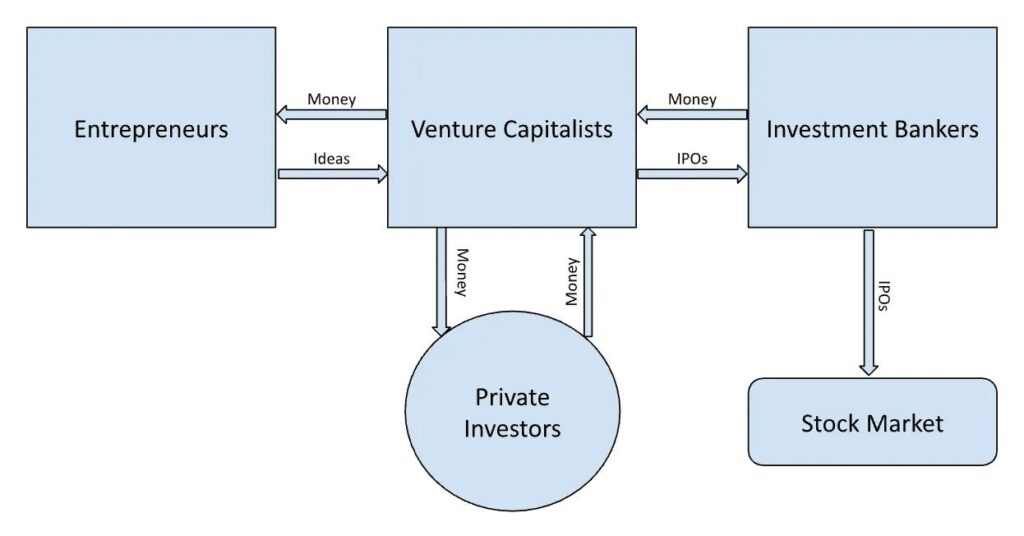
This misalignment is invisible to founders but drives a lot of founder frustration with VCs. The VC is not personally motivated to help you build a profitable company. They are motivated to help you build a hypergrowth company that might be a unicorn. If you want to build a profitable, slow-growth software company, the VC is the wrong capital source.
What this means for fundraising
If you are raising money, understanding these incentives helps you predict what your VC will ask you to do:
- Your VC will push for market share over profitability. Because the carry only comes from hypergrowth, your VC is incentivized to push you to grow faster and raise larger rounds, even if that path is less profitable.
- Your VC will want you to raise bigger than you think you need. Larger rounds mean larger follow-ons, which means more deployment opportunity, which means you stay longer in the VC’s fund.
- Your VC will be happiest if you either become a unicorn or fail cleanly. The worst outcome for a VC is a company that sustains at $10–50M revenue with good margins and low growth. That outcome produces minimal carry but consumes management attention. VCs would rather see you fail fast (freeing up their mental bandwidth) or scale fast (producing the 10x outcome they need).
- Your VC’s best incentive for you is aligned only if your company is unicorn-scale. If your business is not plausibly a 10x outcome, your VC’s carry is zero. They still collect management fees, but they have no personal incentive to help you beyond what they have already committed.
The TFN lens: Capital source misalignment
The venture capital model is optimised for one specific outcome: companies that grow to unicorn scale and produce 10x+ returns. If your business is not in that category if you are building a profitable, sustainable company that serves India’s enterprises, or a capital-light SaaS business that will never raise Series D VC capital is a mismatched source.
This is not a moral judgment. It is a structural one. The VC wants exceptional outcomes. If you are not targeting exceptional outcomes, the VC’s incentives and your incentives will diverge. When they diverge, the VC wins, because they control the board seat and the information flow.
For Indian founders, understanding this misalignment is critical. India’s next generation of durable software companies will be built by founders who either (1) bootstrapped and never took VC, or (2) took VC early and were genuinely targeting hypergrowth, or (3) are very clear about when they want VC and when they do not. The middle ground taking VC and hoping to build a sustainable business often produces disappointment.
Key takeaways
- VCs make money through management fees (2% of committed capital per year) and carried interest (20% of profits after LPs are made whole).
- Management fees incentivize larger funds, larger cheques, and faster capital deployment.
- Carried interest incentivizes exceptional returns (10x+), which drives focus on hypergrowth rather than profitability.
- These two incentives can conflict: a VC would rather see you fail fast than sustain at $20M revenue with good margins.
- The power law means 80% of carry typically comes from 1–2 companies in a 20-company fund. Everything else is secondary.
- VC capital is optimised for unicorn-scale outcomes. If that is not your goal, VC capital is often a mismatched source.
- Clawback provisions mean carry paid early can be returned if the fund underperforms later, incentivizing GPs to manage the entire portfolio’s performance, not individual deals.
Frequently asked questions
What is the difference between management fees and carry?
Management fees are 2% of committed capital per year, paid to cover the fund’s operating expenses. Carry is 20% of the fund’s profits after LPs get back their invested capital. Management fees are guaranteed income. Carry depends on exceptional returns.
How much money does a VC actually make?
On a $50M fund with 5x returns, the carry is approximately $20M (20% of $100M in profit, assuming the full return stays within the carry pool). Split among 3–5 partners, each partner might make $4–7M. But that carry comes in years 5–8, not immediately. Until then, they live on salary funded by management fees.
Why do VCs push for growth over profitability?
Because carry only comes from exceptional returns, which typically require hypergrowth. A $50M company growing 20% per year will never generate the 10x return that drives carry. A $50M company growing 100% per year toward a $1B+ valuation will. So VCs are incentivized to push growth over profitability, because their personal wealth depends on it.
What happens if my company underperforms?
The VC still collected management fees for years, so they did not lose money. But they get zero carry on your investment. If you are one of 20 investments and you are a loss, that is fine the VC is betting on the power law, where 1–2 investments fund the whole fund. But if you are in the category of “sustainable but not exceptional,” you are the worst outcome for a VC because you consume their attention but produce no carry.
Can VCs lose money on a fund?
Yes, but typically not from management fees. A VC can lose money on carry if the fund underperforms. For example, if the LPs are only returned 1x, there is no carry at all. If the fund returns 2x, the LP gets all $100M back, and the VC only gets carry on the $50M profit, which is $10M. But the VC has already made $5M from management fees, so even a 2x fund is acceptable.
What is a hurdle rate?
The hurdle rate is the baseline return LPs must receive before carry begins. Typically, a VC must return 100% of LP capital before getting any carry. Sometimes the hurdle is set higher, like 8% per year, meaning the VC must generate that annual return before carry is available.
Why does my VC want me to raise more money than I think I need?
Because a larger Series A or Series B means a larger followon opportunity in Series C and D, which means more deployment opportunity, which keeps you in the fund longer. Also, larger rounds allow the VC to prove they can syndicate and build winning companies, which helps them raise the next fund.
Can I negotiate the 2-and-20 fee structure?
Yes, but typically only if you have a strong track record. First-time funds have little negotiating power and accept 2-and-20. Established funds sometimes negotiate to 1.5-and-20 or 2-and-20 with step-downs after the investment period (e.g., 1-and-20 after year 5). Mega-funds sometimes negotiate lower carry, like 15%, in exchange for lower management fees, like 1%.
Sources
- Carta Fund Economics Report 2025, “How Venture Capital Fund Economics Work,” December 2025. carta.com/data/fund-economics-report-2025/
- AngelList Education Center, “Venture Capital Fee Economics,” 2022. angellist.com/learn/management-fees
- Seraf, “Dividing the Pie: How Venture Fund Economics Work,” 2025. seraf.io/compass
- Skalata VC, “Inside a Venture Capital Fund: How It’s Structured,” 2025. skalata.vc/blog
- Black Investor 360, “VC Fund Mechanics: Management Fees and Carry Explained,” July 2025. blackinvestor360.com
©️ The Founder Nation | All rights reserved | Written by TFN Research Desk | Word count: ~2776 | Read time: ~15 minutes |