


Written by TFN Research Desk – covering startups, technology, digital media, and business strategy.
While venture capital got more cautious about funding factories, it got far more comfortable funding the brands that never had to own one.
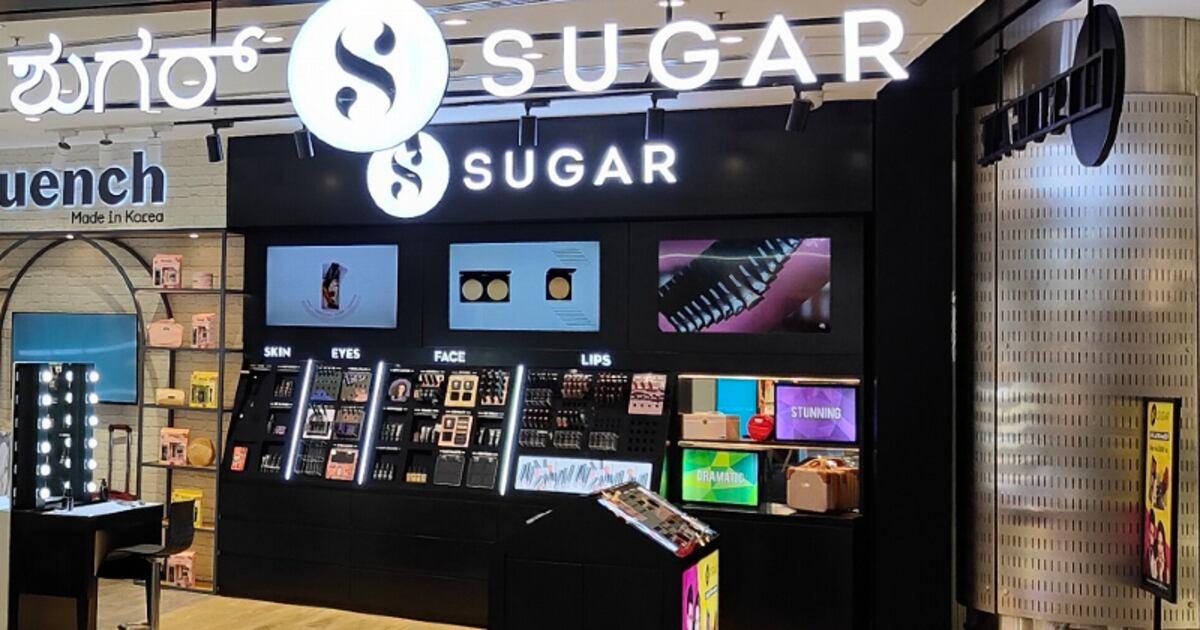
India’s direct-to-consumer e-commerce market is worth roughly USD 87.5 billion in 2025 and is projected to reach USD 108.76 billion in 2026, on its way to USD 322.1 billion by 2031 (Mordor Intelligence, January 2026). Almost none of the brands driving that growth, from Mamaearth to Sugar Cosmetics to boAt, own the factories that make their products. They design, market, and sell. Someone else manufactures.
Topic tags: Startup Strategy • Sector Analysis • D2C • Manufacturing • Consumer Brands
Brands without factories, growing faster than the ones with them
Asset-light manufacturing means a brand controls product design, formulation, quality specifications, and the customer relationship, while outsourcing the capital-heavy part, the actual factory floor, to third-party contract manufacturers. It sounds like a footnote in a supply chain textbook. In India, it has become the default operating model for an entire generation of consumer brands, and the reason a handful of D2C companies have reached unicorn status on a fraction of the capital a traditional FMCG manufacturer would need to build the same scale.
The model is not new globally, but its adoption speed in India is. Beauty and personal care brands that took Revlon and Lotus roughly two decades to scale to Rs 100 crore in revenue, Mamaearth and Sugar Cosmetics reached in about four years (Inc42, November 2021).
Why this story matters
For founders, asset-light manufacturing changes the entire fundraising conversation. A brand that does not need to build a factory does not need the Rs 50 to Rs 100 crore in capital expenditure that factory construction demands before the first unit ships, which means seed and Series A rounds in India’s D2C sector can be sized for marketing and inventory rather than plant and machinery. That shift is part of why the broader Indian D2C market has been able to scale as fast as it has, a dynamic this publication has also examined in [INTERNAL LINK: suggested topic, “India’s micro-SaaS and capital-efficient sector analysis”].
Quick facts
| India D2C market size (2025) | USD 87.5 billion (Mordor Intelligence, January 2026) |
| Projected 2026 size | USD 108.76 billion (Mordor Intelligence, January 2026) |
| CAGR through 2031 | 24.3 percent (Mordor Intelligence, January 2026) |
| Beauty and personal care sub-segment by 2027 | USD 30 billion, per a Redseer and Peak XV Partners report (Inc42, April 2024) |
| Active D2C brands in India | Roughly 11,000, with about 800 having raised institutional funding as of 2024 (D2CStory, October 2025) |
| Dominant manufacturing model | Third-party contract manufacturers and private-label factories, not brand-owned plants |
| Notable asset-light scale-ups | Mamaearth (listed), Sugar Cosmetics, boAt, Plum |
| Key investors active in the space | Peak XV Partners, Fireside Ventures, Unilever Ventures |
Background
The asset-light model became viable in India because a parallel ecosystem of contract manufacturers, white-label cosmetics and personal care factories, electronics assembly partners, and packaging specialists had already matured to serve export and private-label demand. A founder with a strong formulation or product idea could approach one of these manufacturers, place a minimum order, and have inventory within weeks rather than the years it would take to build and certify a factory from scratch. Mamaearth used exactly this approach to launch its first toxin-free baby care products, scaling past Rs 100 crore in revenue within four years of launch by combining outsourced manufacturing with aggressive digital-first marketing (Inc42, November 2021).
The model’s India-specific advantage is timing. As internet and smartphone penetration expanded rapidly through the 2010s, founders who did not have to wait on factory construction could launch, test, and iterate on products at the speed of a digital ad campaign rather than the speed of an industrial supply chain. That speed advantage compounded into market share before slower-moving, factory-owning incumbents like Hindustan Unilever and Marico could respond.
How it happened
Shift 1: Outsource the factory, keep the brand and the data
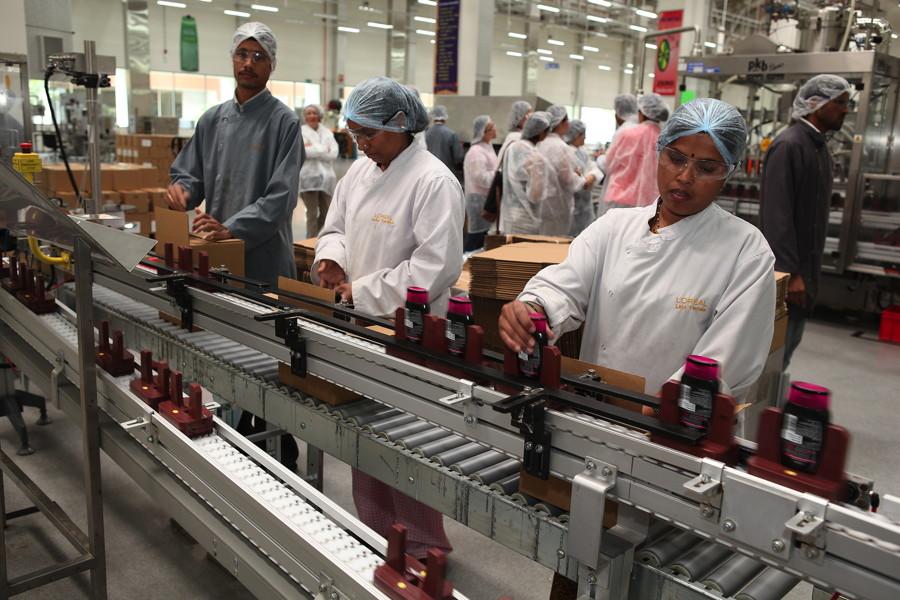
The first and most fundamental shift was founders treating manufacturing as a service to be procured, not a capability to be built. This let a two- or three-person founding team launch a full product line without ever touching a production line, while retaining full control over formulation, packaging, and, critically, the customer data generated through direct online sales.
Shift 2: Treat the marketplace and the D2C site as the only required infrastructure
The second shift was distribution. Rather than negotiating shelf space with traditional retail, asset-light D2C brands built their entire go-to-market around their own website plus marketplaces like Amazon, Flipkart, and Nykaa. This meant the only infrastructure investment required beyond manufacturing was a functioning e-commerce stack, which by the mid-2010s could be assembled cheaply using platforms like Shopify.
Shift 3: Build owned manufacturing only once scale justifies it
The most capital-efficient brands did not stay permanently asset-light. boAt entered a joint venture with Dixon Technologies to build owned manufacturing capacity in India only after its revenue had already crossed Rs 3,400 crore in FY23, treating the move to partial vertical integration as a scale-stage decision rather than a starting condition (Inc42, November 2023). This sequencing, asset-light first, selectively asset-heavy later, is now the playbook other scaled D2C brands are following.
The strategy behind the success
The strategic logic behind asset-light manufacturing is risk transfer combined with speed. A founder who outsources manufacturing transfers the capital risk of a factory, and the operational risk of running one, to a partner who is already amortizing that cost across multiple client brands. In exchange, the founder gives up some margin to the contract manufacturer and accepts less control over production timelines during demand spikes. For a brand still discovering product-market fit, that trade is almost always worth it, since the bigger risk early on is building the wrong product at scale, not paying a manufacturing premium on the right one.
By the numbers
- India’s D2C market is forecast to grow at a 24.3 percent CAGR through 2031, more than three times the growth rate of most traditional FMCG categories, which means the asset-light cohort still has years of runway ahead of it (Mordor Intelligence, January 2026).
- The beauty and personal care D2C sub-segment alone is projected to reach USD 30 billion by 2027, a category almost entirely built on outsourced manufacturing (Inc42, April 2024). This signals that asset-light is not a transitional phase but the durable structure of an entire category.
- Mamaearth and Sugar Cosmetics reached Rs 100 crore in revenue in roughly four years, compared with the two decades it took legacy brands like Revlon and Lotus to hit the same mark in India (Inc42, November 2021), showing the speed advantage is measured in years, not quarters.
- Of the roughly 11,000 active D2C brands in India, only about 800 have raised institutional funding (D2CStory, October 2025), which means low manufacturing barriers to entry have also created intense, low-differentiation competition for capital.
- Wow Skin Science’s operational income fell 24.1 percent to Rs 258 crore in FY23 from Rs 340 crore in FY22 even as rivals Mamaearth and Minimalist doubled their scale in the same period (Entrackr, October 2023), a reminder that low manufacturing barriers cut both ways: easy entry also means an easy path to losing share.
Comparison table
| Model | Capital required upfront | Speed to market | Margin control | Example |
|---|---|---|---|---|
| Asset-light (outsourced) | Low | Fast, weeks to months | Moderate, shared with manufacturer | Mamaearth at launch, Sugar Cosmetics |
| Asset-heavy (owned factory) | High | Slow, often a year or more | High once scaled | Traditional FMCG incumbents |
| Hybrid (asset-light then selective ownership) | Low at launch, rising with scale | Fast early, deliberate later | Improves as owned capacity comes online | boAt and Dixon Technologies joint venture |
What competitors missed
Legacy FMCG incumbents like Hindustan Unilever and Marico spent decades building owned manufacturing as a competitive moat, on the assumption that scale and quality control required vertical integration. What they missed was that India’s contract manufacturing ecosystem had matured enough by the 2010s to deliver comparable quality without the capital lock-in, which meant a founder with a sharper formulation and faster digital distribution could out-compete an incumbent’s factory advantage entirely. As covered in our look at how Meesho and boAt found India in places nobody was looking, the structural advantage in this market increasingly belongs to whoever moves fastest on distribution and trust, not whoever owns the most physical infrastructure.
Risks and challenges
- Quality control is harder to guarantee when a brand does not own the production line, and a single contract manufacturer’s failure can damage multiple client brands simultaneously.
- Margins are structurally thinner than a fully vertically integrated competitor’s, since the contract manufacturer takes a cut that a brand-owned factory would not.
- Low barriers to entry mean intense competition, as the Wow Skin Science slowdown alongside Mamaearth and Minimalist’s growth shows within the same category and same year.
- Supply chain dependency on a small number of contract manufacturers creates concentration risk if a key partner raises prices or takes on a competing brand.
- Brands that delay the move to partial vertical integration too long can find themselves margin-constrained right as they need profitability to satisfy public market or late-stage investor expectations.
- Counterfeiting and IP leakage risk rises when formulations and designs are shared with third-party manufacturers who may also serve adjacent brands.
What founders can learn
- Treat manufacturing as a procurement decision in the early years, not an identity decision, and revisit that choice only once scale justifies the capital expenditure.
- Speed to market is a genuine competitive advantage in categories where incumbents are slow-moving, and asset-light manufacturing is what makes that speed possible.
- Differentiate on formulation, brand, and distribution rather than manufacturing, since manufacturing capability is increasingly a commodity available to any well-funded competitor.
- Plan the transition to partial or full vertical integration deliberately, as boAt did with its Dixon Technologies joint venture, rather than reactively under margin pressure.
- Low entry barriers cut both ways: building a defensible brand matters more, not less, when manufacturing alone cannot be a moat.
Expert analysis
The bull case for asset-light manufacturing in India is straightforward: it has let a generation of founders build billion-dollar brands on a fraction of the capital legacy manufacturers required, and the underlying contract manufacturing ecosystem keeps maturing in quality and capacity. The bear case is that the same low barriers that let new brands launch quickly also let competitors copy a winning formulation or aesthetic within a single product cycle, which is part of why marketing spend and brand-building have become as capital-intensive as manufacturing once was. The contrarian view worth watching is that as more brands hit scale, several may follow boAt’s path toward partial ownership, meaning the asset-light era may prove to be a launch-stage strategy rather than a permanent structural choice for the category’s eventual winners.
Future outlook
Expect the next phase of India’s D2C sector to bifurcate. A wave of newer, smaller brands will keep launching asset-light, using the same contract manufacturing ecosystem to test products quickly and cheaply. Meanwhile, the category’s current leaders, having proven demand, will increasingly move toward the hybrid model boAt has already adopted, building selective owned capacity to protect margins as public market and late-stage investor scrutiny intensifies. The contract manufacturers themselves are likely to become a more strategically important layer of India’s startup ecosystem as a result, since they are now the infrastructure multiple competing brands depend on simultaneously.
The bottom line
Asset-light manufacturing did not just lower the cost of starting a consumer brand in India, it rewrote who gets to compete with FMCG incumbents in the first place. The brands that win next will be the ones that know exactly when to stop being asset-light.
Key takeaways
- Asset-light manufacturing lets D2C founders outsource the capital-heavy factory layer while retaining brand, formulation, and customer data control.
- India’s D2C e-commerce market is projected to grow from USD 87.5 billion in 2025 to USD 322.1 billion by 2031.
- Mamaearth and Sugar Cosmetics reached Rs 100 crore in revenue in about four years, versus roughly twenty years for legacy brands like Revlon and Lotus.
- Low manufacturing barriers create both opportunity and intense competition, as Wow Skin Science’s FY23 slowdown shows.
- boAt’s joint venture with Dixon Technologies illustrates the hybrid model: asset-light at launch, selectively asset-heavy at scale.
- The next phase of competition in Indian D2C will likely be won on brand and distribution, since manufacturing capability is now widely accessible.
Conclusion
Asset-light manufacturing is not a workaround or a temporary funding constraint, it is the operating system that built modern Indian D2C. By removing the capital and time barriers that once protected legacy FMCG incumbents, it let founders compete on formulation, design, and distribution speed instead, and an entire generation of billion-dollar brands emerged within a single decade as a result. The model’s next test is whether today’s leaders can transition deliberately toward selective ownership, as boAt has, without losing the speed and capital efficiency that built them in the first place.
Building something of your own? If you are launching a consumer brand in India today, the manufacturing decision is rarely the hardest one anymore, the ecosystem to outsource it well already exists. The harder decision is what you do with the capital and speed advantage that asset-light manufacturing hands you, and whether you build a defensible brand fast enough before a dozen other founders discover the same contract manufacturer. As we explored in our case study on how Meesho and boAt found India in places nobody was looking, the real moat in this market is increasingly distribution and trust, not the factory floor.
Frequently asked questions
What is asset-light manufacturing?
Asset-light manufacturing is a business model where a brand controls product design, formulation, and the customer relationship, while outsourcing actual production to third-party contract manufacturers rather than owning factories itself.
Why do Indian D2C brands prefer asset-light manufacturing?
It lowers the upfront capital required to launch, shortens time to market, and lets founders focus capital on marketing and distribution rather than factory construction, which matters in a market growing as fast as India’s D2C sector.
Is asset-light manufacturing risky?
It carries quality control and supply chain concentration risks, since the brand does not directly control the production line, and low entry barriers also invite intense competition, as seen in categories like beauty and personal care.
Do successful D2C brands stay asset-light forever?
Not always. boAt, for example, entered a joint venture with Dixon Technologies to build owned manufacturing capacity once its revenue had scaled past Rs 3,400 crore, suggesting many brands shift toward partial vertical integration after proving demand.
How big is India’s D2C market?
India’s D2C e-commerce market was valued at roughly USD 87.5 billion in 2025 and is projected to grow to USD 108.76 billion in 2026, reaching USD 322.1 billion by 2031.
Which Indian brands are examples of the asset-light model?
Mamaearth, Sugar Cosmetics, Plum, and boAt are frequently cited examples of Indian D2C brands that scaled significantly using outsourced, contract-based manufacturing rather than owned factories.
Sources
- India D2C e-commerce market analysis, Mordor Intelligence, January 2026
- How D2C brand Minimalist built an INR 100 Cr business, Inc42, April 2024
- India’s D2C beauty segment is a beast, Inc42, November 2021
- boAt clocks Rs 3,400+ crore revenue in FY23, Inc42, November 2023
- Wow Skin Science’s financial report card in FY23, Entrackr, October 2023
- The complete guide to Indian D2C brands, D2CStory, October 2025
© 2026 The Founder Nation. All rights reserved.