
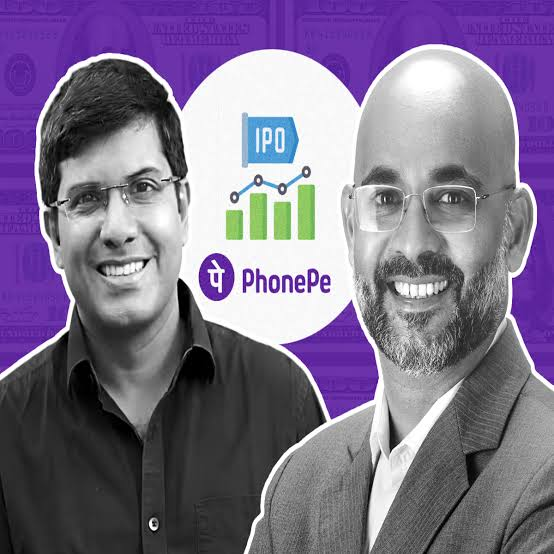
Sameer Nigam and his co-founders transformed PhonePe into India's largest UPI platform, serving millions of users and merchants.
Written by TFN Research Desk | covering startups, technology, venture capital, and business strategy.
Quick Facts
Sameer Nigam: Born in Delhi, raised in Noida. Alma mater: University of Mumbai (B.Sc Computer Science), University of Arizona (M.S. Computer Science), Wharton School (MBA). Occupation: Co-founder and CEO, PhonePe; founded Mime360, acquired by Flipkart. Years active: 2001 to present. (StartupTalky)
Rahul Chari: Studied at University of Mumbai with Nigam. Occupation: Co-founder and CTO, PhonePe; former Flipkart principal engineer. (Contrary Research)
Burzin Engineer: Alma mater: University of Mumbai, University of Southern California (M.S. Computer Science). Occupation: Co-founder and Chief Reliability Officer, PhonePe. (StartupTalky)
Table of Contents
- Introduction
- The PhonePe Story
- Business Model
- Funding History
- Revenue and IPO Journey
- PhonePe vs Competitors
- Key Takeaways
- FAQs
Introduction
Sameer Nigam, Rahul Chari, and Burzin Engineer, three Flipkart alumni bound by nearly two decades of friendship, built PhonePe into India’s most-used digital payments platform. A decade after its 2015 founding, PhonePe commands roughly 46 to 48 percent of UPI transactions and is now navigating one of India’s most closely watched fintech IPOs.
The PhonePe Story
Nigam and Chari met at the University of Mumbai; Nigam and Engineer met later in Los Angeles. The trio reunited in 2009 to found Mime360, acquired by Flipkart in 2011, where Nigam and Chari stayed on as senior engineering and marketing executives. (Contrary Research) In December 2015, they launched PhonePe as a UPI-based payments app, and Flipkart acquired it in 2016. When Walmart bought a majority stake in Flipkart in 2018, it gained control of PhonePe by extension. (Buildd) In 2022, PhonePe shifted its domicile from Singapore to India ahead of IPO plans, a move that cost Walmart and other investors nearly $1 billion in capital gains tax. (Reuters via Investing.com)
Business Model
PhonePe operates as a financial services super app spanning Payments, Digital Distribution, and Financial Services, covering UPI transfers, insurance, mutual funds, lending, and stockbroking through its Share.Market platform, alongside Indus Appstore. (PL Capital) It covers roughly 98.6 percent of India’s pin codes and serves 44.87 million registered merchants, about 77 to 80 percent of India’s estimated merchant base. (PL Capital)
Funding History
| Round | Year | Amount | Lead Investors |
|---|---|---|---|
| Growth round | Oct 2022-Mar 2023 | $850M+ (at $12B valuation) | General Atlantic, Walmart, Ribbit Capital, Tiger Global, TVS Capital |
| Secondary sale | Sep 2025 | ₹3,937 crore (founder shares) | General Atlantic |
| IPO (planned) | 2026 | Targeting $9-10.5B valuation | Offer for Sale by Walmart, Tiger Global, Microsoft |
(Sourced from Business Standard and Kotak)
PhonePe has attracted over ₹18,000 crore in cumulative investment from Walmart, General Atlantic, Microsoft, Tencent, and Qatar Investment Authority. (Zerodha)
Revenue and IPO Journey
Revenue for the six months ended September 2025 rose about 22 percent year-over-year to Rs 3,918 crore, though losses widened to Rs 1,444 crore from Rs 1,203 crore, reflecting UPI’s near-zero-margin economics under India’s zero-MDR rule. (Reuters via Yahoo Finance) SEBI approved PhonePe’s IPO on January 20, 2026, structured entirely as an Offer for Sale with no fresh capital raised, but the company postponed listing in March 2026 citing geopolitical volatility, with Nigam reaffirming commitment to a domestic listing once markets stabilize. (mStock)
PhonePe vs Competitors
PhonePe’s closest rivals are Google Pay, which holds a similar UPI share without separately disclosed India financials, and Paytm, which trails on UPI volume but reached full-year profitability first. PhonePe’s scale advantage sits close to the NPCI’s proposed 30 percent UPI market-share cap, deferred to December 2026, a regulatory overhang that could eventually force volume-limiting changes regardless of its lead. (Jainam)
Key Takeaways
- Three Flipkart alumni built PhonePe from a 2015 startup into India’s UPI market leader for 58 consecutive months.
- Walmart’s 2018 Flipkart stake gave it majority control of PhonePe, which it retains at roughly 71-85 percent today.
- Cumulative investor funding exceeds ₹18,000 crore, with revenue growing 22 percent in the most recent half-year reported.
- PhonePe’s 2026 IPO, an Offer for Sale worth up to ₹12,000 crore, was approved by SEBI but paused amid market volatility.
- A pending NPCI cap on UPI market share remains the biggest regulatory risk to PhonePe’s dominant position.
FAQs
Who founded PhonePe?
Sameer Nigam, Rahul Chari, and Burzin Engineer, all ex-Flipkart executives, in December 2015.
Who owns PhonePe?
Walmart holds a majority stake, alongside General Atlantic, Microsoft, Tencent, and Qatar Investment Authority.
Is PhonePe going public?
Yes, SEBI approved its IPO in January 2026, though the listing was paused in March 2026 pending market stability.
Is PhonePe profitable?
No, losses widened to Rs 1,444 crore in the six months to September 2025 despite revenue growth.
Who are PhonePe’s competitors?
Google Pay and Paytm, its closest rivals in India’s UPI ecosystem.
© The Founder Nation | Written by TFN Research Desk