

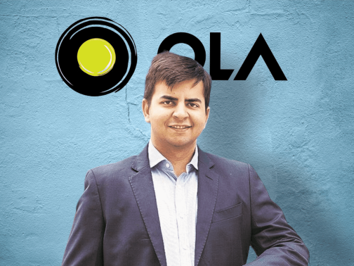
Bhavish Aggarwal co-founded Ola in 2010, later expanding into electric vehicles with Ola Electric and artificial intelligence through Krutrim.
From Microsoft Research engineer to one of India’s most ambitious entrepreneurs, explore Bhavish Aggarwal’s journey of building Ola, Ola Electric, and Krutrim.
Written by TFN Research Desk | covering startups, technology, venture capital, and business strategy.
Table of Contents
- Who is Bhavish Aggarwal?
- Early Life and Education
- Career Before Ola
- How Ola Started
- Funding History
- Revenue Growth and Recent Challenges
- Public Recognition
- Ola vs Competitors
- Investor Perspective
- Founder Timeline
- Key Takeaways
- FAQs
- Sources
Who is Bhavish Aggarwal?
Bhavish Aggarwal co-founded Ola with Ankit Bhati in 2010, building it into one of India’s largest ride-hailing platforms before expanding into electric vehicles with Ola Electric and, more recently, into artificial intelligence with Krutrim. An IIT Bombay graduate, he was named to Time’s 100 Most Influential People list in 2018, though 2025-26 have tested his ambitions across all three ventures.
Early Life and Education
Aggarwal was born on 28 August 1985 in Ludhiana, Punjab, to a family running a small manufacturing business. He earned a B.Tech in Computer Science and Engineering from IIT Bombay, graduating in 2008. Not publicly disclosed is detail on his schooling before IIT.
Career Before Ola
After graduating, Aggarwal joined Microsoft Research India as a research engineer, where he co-authored several papers before leaving in 2010. The founding trigger came that year: a frustrating road trip to Bandipur where he was overcharged and abandoned midway by a taxi operator. Rather than complain, he decided to build a better system for booking cabs, bringing in Ankit Bhati, an IIT Roorkee-trained engineer, as co-founder.
How Ola Started
Aggarwal and Bhati launched Ola (originally OlaCabs) in December 2010 in Mumbai, connecting riders with taxi drivers through a simple booking model before pivoting to a broader aggregator platform and moving headquarters to Bengaluru. Early traction came from onboarding independent drivers directly rather than relying on fleet operators, giving Ola a scale advantage as it expanded city by city. The company later diversified into electric two-wheelers through Ola Electric in 2017, and in 2024 launched Krutrim, betting on India needing its own large language models and AI infrastructure.
Funding History
| Round | Year | Amount | Lead Investor(s) |
| Ola Cabs (multiple rounds) | 2011-2019 | $4+ billion cumulative | SoftBank, Tiger Global, Tencent, Hyundai-Kia |
| Ola Electric Series A | 2019 | $57 million | Existing and new investors |
| Ola Electric IPO | Aug 2024 | Rs 6,145 crore | Public markets (NSE, BSE listing) |
| Krutrim Seed | Jan 2024 | $50 million | Matrix Partners India |
Ola Electric has raised $1 billion across 14 rounds, per Tracxn, and remains the most-funded company among its competitors. Krutrim crossed a $1 billion valuation within months of its first round, becoming India’s fastest unicorn and first AI startup to hit that mark.
Revenue Growth and Recent Challenges
| Entity / Fiscal Year | Revenue | Net Loss |
| Ola Consumer FY25 | Rs 1,170.9 crore | Rs 662.4 crore (standalone) |
| Ola Electric FY25 | Rs 4,645 crore | Widened losses, Q4 loss of Rs 870 crore |
| Krutrim FY26 | ~Rs 300 crore | First annual net profit |
Why this happened:
Ola’s core cab business lost significant ground to Uber and Rapido, with mobility revenue nearly halving in FY25 despite doubled marketing spend. Ola Electric’s revenue fell as pricing pressure and discounting eroded margins, even as unit deliveries grew, though its auto segment turned EBITDA-positive by June 2025 under a cost-cutting push called Project Lakshya. Krutrim, by contrast, pivoted from consumer AI toward enterprise cloud services after heavy layoffs, and posted its first profitable year in FY26, though a large share of that revenue reportedly came from Ola Group entities rather than external customers.
Public Recognition
Aggarwal was named to Time’s 100 Most Influential People list in 2018 and Fortune India’s 40 Under 40. He committed Rs 2,000 crore of personal capital to Krutrim in February 2025, alongside a pledge of Rs 10,000 crore more, underscoring his personal stake in India’s AI ambitions.
Ola vs Competitors
| Brand | Founded | Latest Revenue | Positioning |
| Ola | 2010 | Rs 1,170.9 crore (FY25) | Ride-hailing, losing share to Uber and Rapido |
| Uber India | 2013 | Not publicly disclosed | Global-backed ride-hailing rival |
| Rapido | 2015 | Not publicly disclosed | Fast-growing bike-taxi and auto aggregator |
Ola’s core ride-hailing business has ceded ground on both revenue and growth to Uber and a rapidly scaling Rapido, a shift reflected directly in its FY25 numbers.
Investor Perspective
Aggarwal’s strength has always been ambition, entering ride-hailing, EVs, and AI in quick succession with real capital behind each bet. The risk is that spreading personal and company resources across three capital-intensive businesses simultaneously has strained execution in all of them, as seen in Ola Consumer’s revenue collapse, Ola Electric’s margin pressure, and Krutrim’s dramatic pivot after major layoffs. If Ola Electric’s cost discipline holds and Krutrim’s enterprise pivot proves durable, Aggarwal’s willingness to make contrarian, capital-heavy bets could still pay off, though 2025-26 has been the toughest stretch yet across his portfolio.
Founder Timeline
- 2008 — Graduates IIT Bombay; joins Microsoft Research India
- 2010 — Co-founds Ola with Ankit Bhati
- 2017 — Launches Ola Electric
- 2019 — Ola Electric raises $57M Series A
- 2024 (Jan) — Launches Krutrim; raises $50M seed at $1B valuation
- 2024 (Aug) — Ola Electric lists via Rs 6,145 crore IPO
- 2025 — Commits Rs 2,000 crore personally to Krutrim
- 2025-26 — Ola Consumer revenue falls 42%; Krutrim undergoes major layoffs and pivot
- 2026 — Krutrim posts first annual profit on enterprise cloud pivot
Key Takeaways
- A single bad taxi ride gave Aggarwal the founding insight behind a company that would reshape Indian urban mobility.
- Expanding into EVs and AI shows a founder willing to bet repeatedly on capital-intensive, unproven categories.
- Ola’s core ride-hailing business has lost meaningful ground to better-focused rivals like Rapido.
- Personal capital commitments to Krutrim show unusually high founder conviction, and risk, in a single venture.
- Krutrim’s pivot from consumer AI to enterprise cloud after layoffs illustrates how quickly ambitious AI bets can be forced to change course.
FAQs
Who founded Ola?
Bhavish Aggarwal and Ankit Bhati, in December 2010.
What did Aggarwal do before Ola?
Worked as a research engineer at Microsoft Research India after graduating from IIT Bombay.
Is Ola profitable?
No, Ola Consumer’s standalone net loss widened to Rs 662.4 crore in FY25 as revenue fell 42%.
What is Krutrim?
India’s first AI unicorn, founded by Aggarwal in 2024, now focused on enterprise AI cloud services after a major 2025-26 pivot.
Is Ola Electric publicly listed?
Yes, it listed on the NSE and BSE in August 2024 via a Rs 6,145 crore IPO.
What makes Ola different from Uber and Rapido?
Ola combines ride-hailing with in-house EV manufacturing through Ola Electric, though its core mobility business has lost share to both rivals recently.
Sources
- Ola Consumer revenue falls 42% to ₹1,171 crore in FY25
- Ola Electric – 2026 Company Profile, Funding & Financials
- Krutrim Company Profile: India’s AI Unicorn Pivots to Cloud
- OLA – ELECTRIC Portfolio Analysis
© The Founder Nation | All rights reserved | Written by TFN Research Desk