
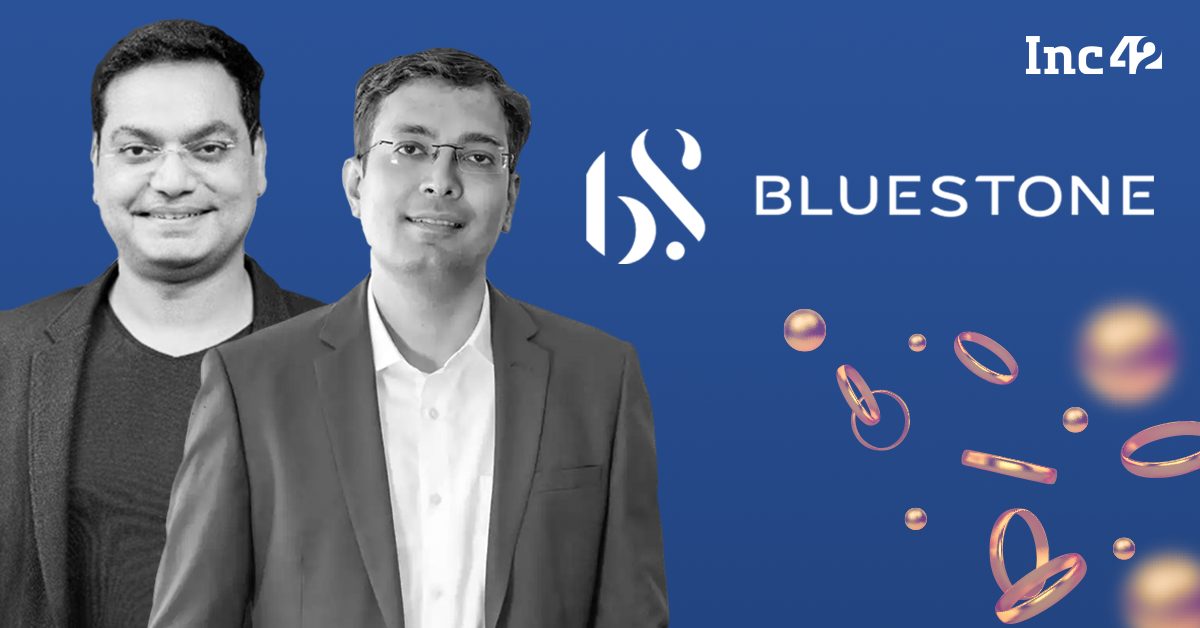
Gaurav Singh Kushwaha founded BlueStone in 2011 and transformed it into one of India's leading digital-first jewellery brands with a strong omnichannel presence.
Written by TFN Research Desk | covering startups, technology, venture capital, and business strategy.
Quick-Facts Bio Box
Gaurav Singh Kushwaha: B.Tech, Computer Science, IIT Delhi; Occupation: Founder and CEO, BlueStone; Years active: 2011-present; prior career: senior software engineer, Amazon (US and India), then founder of movie portal Chakpak (2007-2011) (Ascendants); co-founder: Vidya Nataraj, a retail veteran (Business Model Canvas).
Table of Contents
- Introduction
- The BlueStone Story
- Business Model
- How BlueStone Makes Money
- Funding History
- Revenue and Recent Challenges
- BlueStone vs Competitors
- Current Role and Recent Moves
- Key Takeaways
- FAQs
Introduction
Gaurav Singh Kushwaha left a comfortable engineering career at Amazon and a failed first startup to found BlueStone in 2011, betting that India’s opaque, store-bound jewellery market could be rebuilt around design transparency and technology. BlueStone listed on the NSE and BSE in August 2025 and turned its first full-year profit in FY26. This profile covers its founding, business model, funding, financials, and competitive standing.
The BlueStone Story
Kushwaha graduated in computer science from IIT Delhi and worked as a senior software engineer at Amazon in both the US and India before leaving after 18 months to launch Chakpak, an online movie portal, in 2007 (Ascendants). Chakpak ran for four years but failed to scale, since monetisation was weak and smartphone adoption in India hadn’t yet caught up (Ascendants). The setback pointed him toward a bigger gap: India’s roughly $55 billion fine-jewellery market was barely online, even as categories like travel and retail were digitizing fast.
In mid-2011, Kushwaha teamed up with retail veteran Vidya Nataraj to incorporate BlueStone in Bengaluru, launching operations in early 2012 with an inventory-light, made-to-order manufacturing model to minimize working-capital strain (Business Model Canvas). To build trust for high-value online purchases, BlueStone attached hallmark and gemological certificates to every listing and introduced an early “Home Try-On” service in 2015 that reportedly lifted conversion rates by nearly 30 percent over pure online browsing (Business Model Canvas). Ratan Tata invested personally in 2014, after Kushwaha sought him out for both capital and mentorship; BlueStone opened its first physical store in New Delhi in 2018, and by FY25 operated 275 stores across 117 cities (Chittorgarh).
Business Model
BlueStone runs a vertically integrated omnichannel model, combining in-house design, manufacturing across three facilities, and sales through its website, app, and a mix of company-owned and franchise stores (Chittorgarh). Studded jewellery, its highest-margin category, makes up roughly 67-68 percent of sales, and while most customer journeys start online, only 6-7 percent of actual invoicing happens purely online, since high-value jewellery purchases still convert better in-store (IPOandMore).
How BlueStone Makes Money
Revenue comes almost entirely from direct sales of gold, diamond, platinum, and studded jewellery across its own stores, franchise outlets, website, and app (Chittorgarh).
Funding History
| Round | Year | Amount | Lead Investors |
|---|---|---|---|
| Angel/Seed | 2011 | ₹60 crore (cumulative early rounds) | Accel Partners, Kalaari Capital, Saama Capital (Ascendants) |
| Growth | 2014 | ₹100 crore | Accel, IvyCap, Ratan Tata (personal investment) (Ascendants) |
| Growth | 2022 | $30 million ($410M valuation) | Hero Enterprise (Sunil Kant Munjal) (DNA India) |
| Growth | 2024 | $65 million ($450M valuation) | Prosus, Peak XV Partners (Business Model Canvas) |
| Pre-IPO | Early 2025 | ₹900 crore ($970M valuation) | Undisclosed (Business Upturn) |
| IPO | Aug 2025 | ₹1,540.65 crore | Amansa Holdings, Goldman Sachs, SBI Life, HDFC Life (IPOandMore) |
BlueStone has raised a total of $255 million across 16 rounds before its IPO (Tracxn).
Revenue and Recent Challenges
Revenue from operations grew 64 percent to ₹1,266 crore in FY24, then rose further to ₹1,770 crore in FY25, a roughly 50 percent three-year CAGR, though the company posted a net loss of ₹222 crore that year (IPOandMore). Losses persisted through FY26’s first three quarters as the company invested heavily in store expansion, but BlueStone turned its first full-year profit in FY26, with revenue up 38 percent to ₹2,436 crore and net profit of ₹13 crore, reversing FY25’s loss (Indian Retailer). Q4 FY26 alone brought a ₹31 crore profit on ₹681 crore revenue, up 48 percent year-on-year (Indian Retailer).
BlueStone vs Competitors
| Company | FY25/26 Revenue | Positioning |
|---|---|---|
| Titan (Tanishq, CaratLane, Mia) | ₹50,362 crore (jewellery segment, FY25) | Dominant legacy conglomerate, vastly larger scale |
| Kalyan Jewellers | ₹35,743 crore (FY26) | Franchise-led national chain, faster revenue growth |
| CaratLane | ₹3,583 crore (FY25) | Closest direct peer, also omnichannel, Titan-owned |
BlueStone remains a small fraction of the size of Titan’s jewellery business or Kalyan Jewellers, both of which benefit from far lower costs of capital and deeper supplier relationships (MarketsMojo). CaratLane is BlueStone’s most comparable rival given its similar digital-first, studded-jewellery-heavy model, though CaratLane’s Titan backing gives it a scale and cost advantage BlueStone still lacks.
Current Role and Recent Moves
Kushwaha continues as founder and CEO, holding a 17.7 percent stake that grew substantially in value through the IPO (StartUpTalky). Early investors Accel and Kalaari Capital exited fully at listing, while Prosus and Peak XV retained their positions (Tracxn). The company has continued expanding its store network and international shipping to diaspora markets in the US and UAE through FY26.
Key Takeaways
- Kushwaha left Amazon and a failed movie-portal startup to found BlueStone in 2011 after spotting India’s underdeveloped online jewellery market.
- Ratan Tata personally invested in 2014, lending early credibility to the young company.
- BlueStone listed on the NSE and BSE in August 2025, raising ₹1,540.65 crore, after years of losses tied to aggressive store expansion.
- The company posted its first full-year profit in FY26, with revenue up 38 percent to ₹2,436 crore.
- Titan’s jewellery business (Tanishq, CaratLane) and Kalyan Jewellers dwarf BlueStone in scale, though CaratLane is its closest model-for-model rival.
FAQs
Who founded BlueStone?
Gaurav Singh Kushwaha, along with retail veteran Vidya Nataraj, in 2011.
Has BlueStone gone public?
Yes, it listed on the NSE and BSE on August 19, 2025.
Is BlueStone profitable?
It turned its first full-year profit in FY26, after years of losses tied to store expansion.
How much funding did BlueStone raise before its IPO?
About $255 million across 16 rounds.
Who are BlueStone’s key investors?
Accel Partners, Kalaari Capital, Ratan Tata, Hero Enterprise, Prosus, and Peak XV Partners.
Who are BlueStone’s main competitors?
Titan’s jewellery brands (Tanishq, CaratLane), Kalyan Jewellers, GIVA, and Melorra.
Is Gaurav Singh Kushwaha still CEO?
Yes, he continues to lead BlueStone as founder and CEO.
What makes BlueStone different from CaratLane?
Both are digital-first omnichannel jewellery brands, but CaratLane is fully owned by Titan, giving it greater scale and cost advantages that BlueStone, as an independent listed company, still lacks.
© The Founder Nation | Written by TFN Research Desk