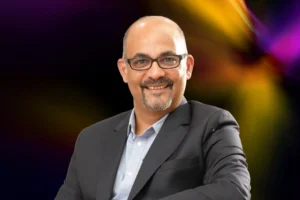

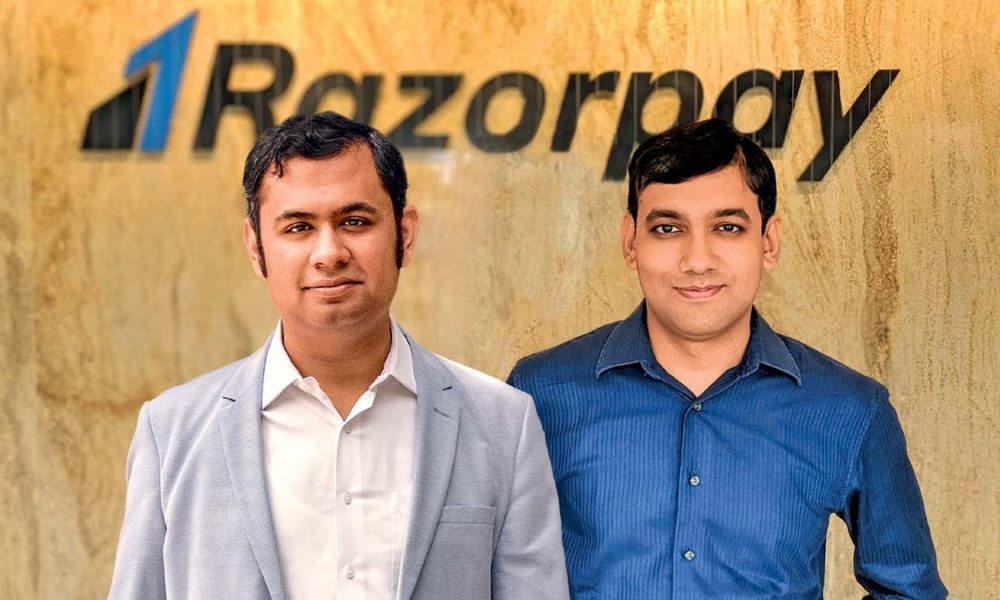
Harshil Mathur and Shashank Kumar built Razorpay into one of India's largest fintech companies, powering payments for millions of businesses.
Written by TFN Research Desk | covering startups, technology, venture capital, and business strategy.
Quick Facts
Harshil Mathur: Born 1991 in Jaipur, Rajasthan. Alma mater: IIT Roorkee, B.Tech in Metallurgical Engineering (2013). Occupation: Co-founder and CEO, Razorpay; former wireline field engineer at Schlumberger. Years active: 2014 to present. (Analytics Insight)
Shashank Kumar: Alma mater: IIT Roorkee, B.Tech. Occupation: Co-founder and Managing Director, Razorpay; former software engineer at Microsoft. Years active: 2014 to present. (Tvisha)
Table of Contents
- Introduction
- The Razorpay Story
- Business Model
- Funding History
- Revenue and IPO Journey
- Razorpay vs Competitors
- Key Takeaways
- FAQs
Introduction
Harshil Mathur and Shashank Kumar, two IIT Roorkee classmates who first built things together at the campus coding club SDSLabs, turned Razorpay into India’s most valuable fintech infrastructure company. Twelve years after quitting stable corporate jobs, both faced rejection from over a hundred banks and VCs before Razorpay became the payment backbone behind millions of Indian businesses, and it is now preparing for a confidential IPO filing.
The Razorpay Story
Mathur worked briefly as a wireline field engineer at Schlumberger, while Kumar was a software engineer at Microsoft, before the two reunited to solve a problem they had both hit firsthand: setting up online payments for Indian businesses was painfully hard. (5paisa) They founded Razorpay in December 2014 and joined Y Combinator’s Winter 2015 batch, becoming one of only two India-focused companies selected for the accelerator at the time. (Razorpay newsroom) The early years required convincing banks and merchants alike to trust a developer-first, API-based payment gateway in a market still dominated by clunky legacy processors. (Business Outreach)
Business Model
Razorpay has expanded well beyond its original payment gateway into a full financial operating system for businesses: RazorpayX for business banking and payroll, Razorpay Capital for lending, and an international payments gateway supporting over 90 currencies. (AOL/AFP) The company now serves more than 12 million businesses, including Zomato, Swiggy, CRED, and Ola, and processes an annualized total payment volume of over $180 billion. (Analytics Insight; Value For Startups)
Funding History
| Round | Year | Amount | Lead Investors |
|---|---|---|---|
| Series C | 2020 | $100 million | GIC, Sequoia Capital India |
| Series E | Apr 2021 | Undisclosed (to $3B valuation) | Sequoia, Ribbit Capital, GIC |
| Series F | Dec 2021 | $375 million | Lone Pine Capital, Alkeon Capital, TCV |
(Sourced from Bloomberg and Marketfeed)
Razorpay has raised approximately $741.5 million in primary funding since 2014, reaching a $7.5 billion valuation in its December 2021 Series F round. (Bloomberg)
Revenue and IPO Journey
Razorpay posted its first fully profitable year in FY24, followed by FY25 revenue of ₹3,930 crore, up 57 percent year-over-year. (Value For Startups) In June 2026, the company confidentially filed a Draft Red Herring Prospectus with SEBI, targeting a public listing valued at $5 to $6 billion, a notable step down from its last private valuation, reflecting broader recalibration across India’s fintech IPO market. (Analytics Insight)
Razorpay vs Competitors
Razorpay’s biggest emerging threat is Stripe’s entry into India, bringing a globally proven product directly into Razorpay’s core enterprise segment. Domestically, it competes with Cashfree Payments and PayU, though Razorpay’s developer-led growth strategy, winning early-stage startups that later scale into large enterprises, has kept it as the payment processor for 34 of the 42 Indian startups that turned unicorn in a recent year. (AOL/AFP)
Key Takeaways
- Harshil Mathur and Shashank Kumar built Razorpay from a 2014 Y Combinator startup into India’s most valuable fintech infrastructure company.
- The company has raised roughly $741.5 million, reaching a $7.5 billion valuation in 2021.
- FY25 revenue grew 57 percent to ₹3,930 crore, following Razorpay’s first profitable year in FY24.
- A confidential DRHP filed in June 2026 targets a $5-6 billion IPO valuation.
- Stripe’s India entry is Razorpay’s most significant emerging competitive threat.
FAQs
Who founded Razorpay?
Harshil Mathur and Shashank Kumar, IIT Roorkee classmates, in December 2014.
How much has Razorpay raised?
Approximately $741.5 million, reaching a $7.5 billion valuation in 2021.
Is Razorpay profitable?
Yes, FY24 was its first fully profitable year.
Is Razorpay going public?
It confidentially filed a DRHP with SEBI in June 2026, targeting a $5-6 billion valuation.
Who are Razorpay’s competitors?
Stripe, Cashfree Payments, and PayU.
© The Founder Nation | Written by TFN Research Desk