
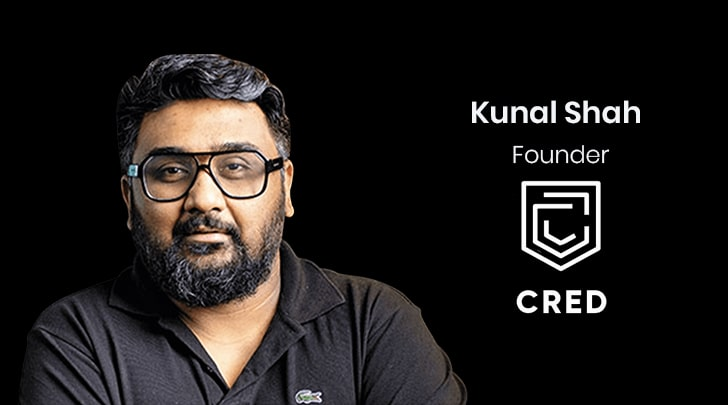
Kunal Shah built CRED after his successful FreeCharge exit, creating one of India's leading premium fintech platforms.
From selling FreeCharge for $400 million to building CRED, here’s the inspiring journey of one of India’s most influential fintech entrepreneurs.
Written by TFN Research Desk | covering startups, technology, venture capital, and business strategy.
Quick Facts
Kunal Shah: Born May 30, 1979, in Mumbai, Maharashtra. Alma mater: BA in Philosophy, Wilson College, Mumbai; briefly pursued an MBA at NMIMS before dropping out. Occupation: Founder and CEO, CRED; co-founder of FreeCharge; angel investor in over 200 startups including Razorpay and Unacademy. Years active: 2000 to present. Spouse: Bhavna Shah.
Table of Contents
- Introduction
- The CRED Story
- Business Model
- Funding History
- Revenue and Recent Challenges
- CRED vs Competitors
- Key Takeaways
- FAQs
Introduction
Kunal Shah built CRED into one of India’s most recognizable fintech brands by betting that creditworthy, high-trust customers, not the mass market, were the more valuable segment to serve. It was his second major bet after FreeCharge, the digital payments company he sold years earlier, and CRED has since grown into a diversified financial super app processing lakhs of crores in payment value each year.
The CRED Story
Shah started working at 15 to help support his family, later studying philosophy at Wilson College before briefly attempting an MBA and dropping out. (Wikipedia) In 2009 he founded PaisaBack, a cashback platform that evolved into FreeCharge, a digital recharge and bill-payment company he co-founded with Sandeep Tandon in 2010. (Wikipedia) Snapdeal acquired FreeCharge in 2015 for roughly $400 million, one of India’s largest startup exits at the time; Snapdeal later sold FreeCharge on to Axis Bank in 2017. (Arisepedia; StarsUnfolded)
Rather than chase scale again, Shah founded CRED in 2018 around a narrower insight: reward the small segment of Indians who reliably paid credit card bills on time, a group with outsized purchasing power that most fintech products ignored. (Clay) That premium positioning, and Shah’s reputation from FreeCharge, let CRED raise capital and attention quickly even before its business model had a clear path to profitability. (Value For Startups)
Business Model
CRED began as a credit card bill payment and rewards platform and has since expanded into a broader financial ecosystem spanning UPI payments, personal lending through CRED Cash, vehicle management via CRED Garage, an insurance marketplace, and wealth products like CRED Money. (Elets BFSI) The company still monetizes only about a third of its highly engaged monthly transacting users, a gap Shah has called CRED’s most important growth statistic. (Value For Startups)
Funding History
| Round | Year | Amount | Lead Investors |
|---|---|---|---|
| Series D | 2021 | Undisclosed | Tiger Global, Falcon Edge |
| Series E | 2022 | $140 million (at $6.4B valuation) | Tiger Global |
| Down round | May 2025 | $72 million (at $3.64B valuation) | GIC |
(Sourced from Investing.com and Entrackr)
CRED has raised more than $1 billion across nine funding rounds since 2018, though its most recent round marked a steep valuation reset from $6.4 billion in 2022 to $3.64 billion in 2025. (Entrackr)
Revenue and Recent Challenges
CRED’s revenue grew from Rs 1,400 crore in FY23 to Rs 2,397 crore in FY24, a 71 percent jump, and reached Rs 2,735 crore in FY25, up 16 percent. (Elets BFSI; Entrackr) Operating losses fell 51 percent to Rs 298 crore in FY25, though the company remained net loss-making at Rs 1,457 crore once ESOP costs and depreciation are included. (Entrackr) Total payment value processed grew 23 percent to Rs 8.5 lakh crore, with CRED targeting full profitability in FY26. (Entrackr)
CRED vs Competitors
CRED competes with credit-focused fintech players like Slice, OneCard, and LazyPay, though its premium, invite-based positioning has kept it distinct from mass-market rivals. The 2025 valuation cut, echoing similar resets at global fintechs like Klarna and Stripe, reflects investor caution toward growth-stage fintech broadly rather than a CRED-specific setback. (Elets BFSI)
Key Takeaways
- Kunal Shah founded CRED in 2018 after selling FreeCharge to Snapdeal for roughly $400 million in 2015.
- CRED has raised over $1 billion across nine rounds, though its valuation was cut to $3.64 billion in 2025 from $6.4 billion in 2022.
- FY25 revenue reached Rs 2,735 crore, with operating losses down 51 percent year-over-year.
- The company still monetizes only a third of its user base, a key lever for future growth.
- CRED is targeting full profitability in FY26.
FAQs
Who founded CRED?
Kunal Shah founded it in 2018 after exiting FreeCharge.
How much funding has CRED raised?
Over $1 billion across nine rounds, most recently at a $3.64 billion valuation.
Is CRED profitable?
Not yet on a net basis, though operating losses fell 51 percent in FY25 and full profitability is targeted for FY26.
Who are CRED’s competitors?
Slice, OneCard, and LazyPay in India’s credit-focused fintech space.
© The Founder Nation | Written by TFN Research Desk