

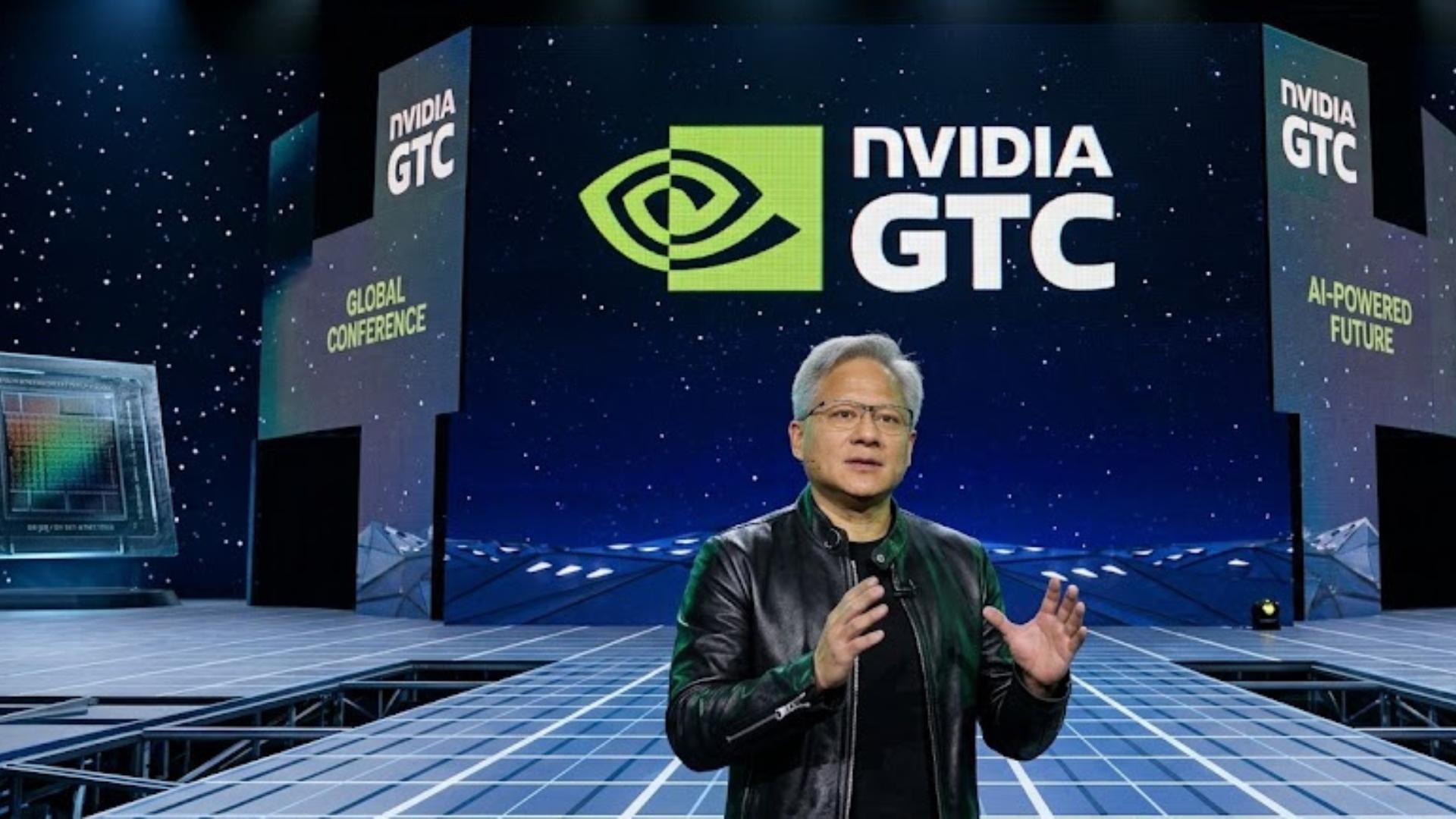
Jensen Huang transformed NVIDIA from a gaming graphics company into the world's leading AI infrastructure provider.
While most commodity markets took decades to produce a shortage, GPUs went from gaming peripherals to the most fought-over asset in global technology in under three years.
Topic tags: AI Infrastructure • NVIDIA • GPU Economy • Deep Tech • Founder Strategy
Spending on GPUs jumped from 30 billion dollars in 2022 to 50 billion dollars in 2023, a 67 percent increase in a single year (PatentPC, May 2026). The global data centre GPU market, valued at 36.59 billion dollars in 2025, is projected to reach 48.39 billion dollars in 2026 and an extraordinary 1,026 billion dollars by 2040 (Silicon Data). No commodity in modern history has attracted capital at this velocity for this long without either a supply correction or a demand collapse, and so far, neither has arrived.
Why this story matters
GPUs matter to founders building on AI because access to GPUs determines what you can build, when you can build it, and at what cost. A startup training a foundation model, fine-tuning a large language model, or running inference at scale is not primarily constrained by talent or ideas. It is constrained by compute. The economics of that compute, who owns it, who rents it, and what price they charge, now shape the competitive landscape of AI more directly than any other single input.
Understanding why GPUs became this valuable, and why the pricing dynamics are what they are, gives founders a better frame for deciding whether to rent, own, or design around the constraint entirely.
Background
A GPU, or graphics processing unit, was originally designed for rendering video game graphics. Its defining architectural feature is massively parallel processing: rather than executing a few complex instructions sequentially, as a CPU does, a GPU executes thousands of simpler instructions simultaneously. Training a neural network turns out to be exactly the kind of workload this architecture handles with extraordinary efficiency, since neural network training consists of billions of matrix multiplications that benefit directly from parallel processing rather than sequential speed.
NVIDIA understood this opportunity earlier than anyone else and built its software layer, the CUDA computing platform, specifically to make GPU programming accessible to researchers and eventually to commercial AI developers. By the time the large language model era arrived with the release of ChatGPT in late 2022, NVIDIA had a decade-long head start in both hardware capability and developer ecosystem that no competitor has yet been able to close.
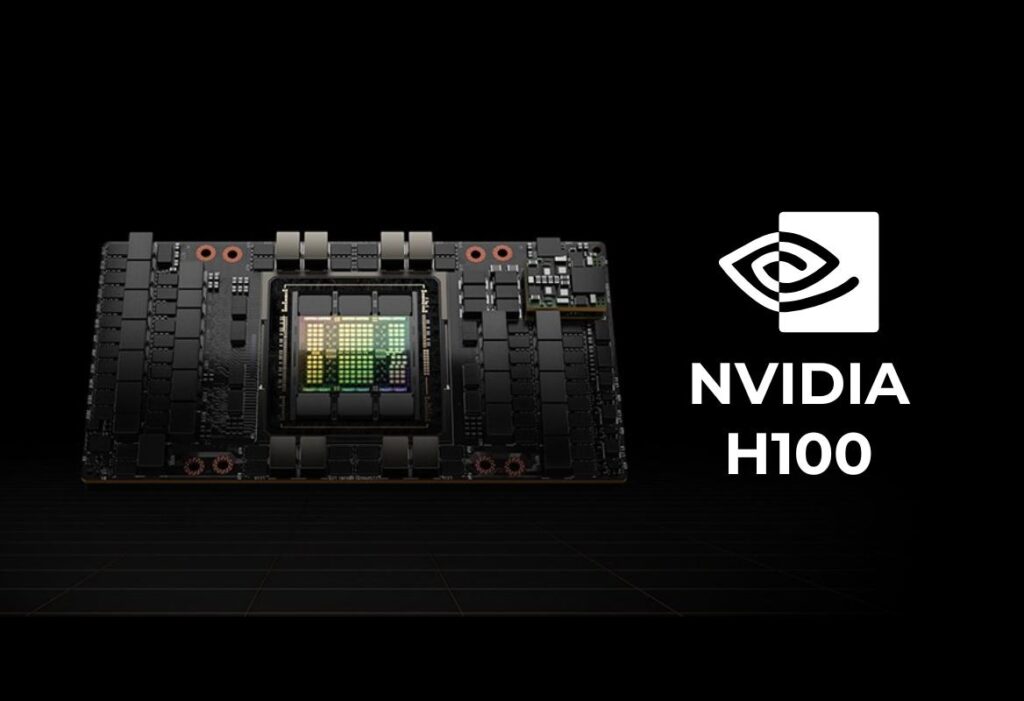
The NVIDIA H100, introduced in 2022, became the GPU that set the standard for AI training and inference, priced at $40,000 per unit at launch (World Economic Forum, February 2026). By late 2023, secondary market prices on some H100 variants exceeded $40,000 as demand from cloud providers, AI labs, and enterprises immediately outstripped supply (AI Tool Discovery, 2026).
How it happened
Move 1: NVIDIA built the ecosystem, not just the chip
NVIDIA’s dominance is not primarily about chip performance, though the H100’s 3 to 5 times throughput advantage over its predecessor the A100 for transformer model training is genuine (AI Tool Discovery, 2026). It is about the software ecosystem built on top of the chip. CUDA, NVIDIA’s developer platform, has hundreds of thousands of trained users, libraries, frameworks, and integrations that make switching to a competitor GPU meaningfully more expensive than the hardware price differential suggests. A startup that has trained its team on PyTorch and CUDA workflows faces real re-tooling costs if it migrates to AMD or Intel accelerators, even if those accelerators offer better performance per dollar on a benchmark. The moat is the ecosystem, and the chip is the gateway to it.
Move 2: Hyperscalers committed to the largest capital spending cycle in corporate history
The demand side of the GPU market is anchored by a capital spending commitment from hyperscalers, the technology giants running cloud infrastructure, that analysts are describing as the largest in corporate history (Investing.com, June 2026). When Microsoft, Amazon, Google, and Meta collectively commit tens of billions of dollars per quarter to AI infrastructure buildout, the GPU supply chain faces a structural, sustained demand that cannot be filled quickly because building advanced semiconductor fabrication capacity takes years and tens of billions of dollars in its own right. This is not a temporary demand spike. It is a multi-year infrastructure build-out where demand is explicitly pre-committed by the largest technology companies in the world.
Move 3: GPUs started generating contractual income, behaving like infrastructure assets
What transformed GPUs from expensive hardware into a distinct asset class is that they can generate predictable rental income. An H100 bought for roughly 25,000 to 40,000 dollars can generate 2.00 to 3.50 dollars per GPU-hour in rental income, implying roughly 17,500 to 30,000 dollars of annual revenue at high utilisation before operating costs (Investing.com, June 2026). Equipment lenders have extended GPU-backed loans at 8 to 12 percent interest, and structured neocloud financings have been marketed at net internal rates of return in the mid-teens to mid-twenties over three to five year horizons. The cash-flow profile is closer to energy or transport infrastructure than to venture capital, which is precisely why institutional capital has begun treating GPU clusters as infrastructure assets rather than depreciating technology investments.
The H100’s rental prices rose 20 percent in the first half of 2026, while older A100 GPU rental prices climbed 15 percent in the same period, a pricing behaviour normally associated with commodity shortages rather than ageing semiconductor hardware (247 Wall St, May 2026). The fact that a GPU launched in 2022 was still appreciating in rental value in 2026, even as newer Blackwell generation GPUs arrived, illustrates how severe the underlying demand imbalance has become.
What competitors missed
AMD and Intel both moved aggressively into AI accelerator hardware. AMD’s MI300X has received positive benchmark comparisons to the H100 in certain workloads. Neither has displaced NVIDIA’s market position, because the hardware gap, while real in earlier generations, has narrowed significantly, but the ecosystem gap has not. Switching from NVIDIA to AMD is not a hardware procurement decision, it is a developer retraining and software migration project, and most AI teams have neither the time nor the incentive to undertake it while they are also trying to ship products.
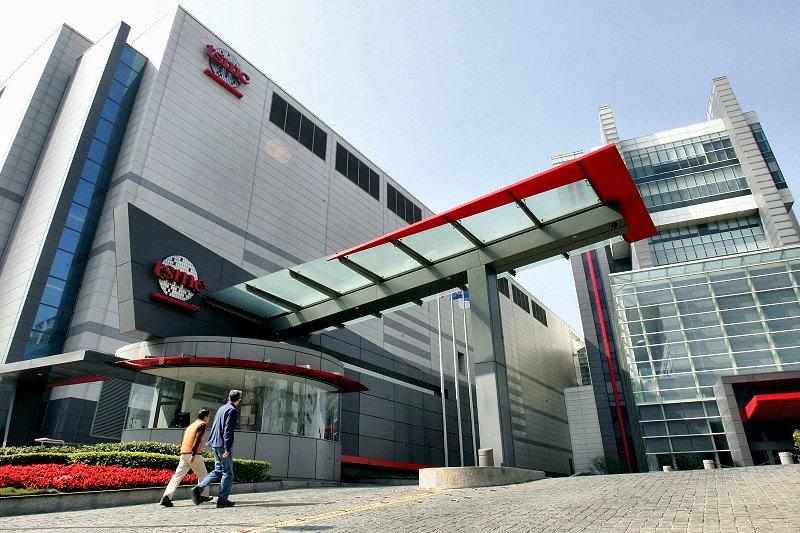
The broader miss among cloud providers and AI startups entering 2023 and 2024 was treating GPU availability as a temporary constraint that would resolve itself within a year as supply chains caught up. It has not resolved on that timeline. TSMC, which manufactures NVIDIA’s most advanced GPUs, operates at capacity levels where adding meaningful new production takes years, not quarters. The supply chain bottleneck is structural, not cyclical.
Risks and challenges
Depreciation risk is real and accelerating. The H100, which commanded 40,000 dollars per unit in late 2023, had secondary market prices fall to 12,000 to 18,000 dollars by April 2026 as newer Blackwell generation GPUs arrived and H100 supply constraints eased (Silicon Analysts, January 2026). Founders or investors who bought H100s at peak pricing for rental income are experiencing real depreciation even as overall GPU demand continues to rise. The asset class generates contractual income but does not hold value the way physical infrastructure like buildings or energy facilities does.
Regulatory and geopolitical risk is material. The United States government has restricted export of advanced AI chips to China and certain other markets, which compresses NVIDIA’s addressable market and creates regulatory uncertainty for cloud providers building global GPU infrastructure.
Concentration risk is extreme. NVIDIA’s 80-plus percent market share in AI training GPUs means the entire AI infrastructure buildout is dependent on a single company’s supply chain, product roadmap, and pricing decisions. Any manufacturing disruption at TSMC or any significant NVIDIA product delay creates ripple effects across the entire ecosystem simultaneously.
What founders can learn
The GPU shortage has created a genuine arbitrage for founders who can build AI products that achieve useful results with less compute than the current state of the art requires. Models that run efficiently on inference rather than requiring continuous retraining, architectures that achieve strong results with smaller parameter counts, and products that use retrieval augmentation to substitute cheap database lookups for expensive model calls are all strategies that reduce GPU dependency and therefore reduce the exposure to a volatile and expensive input market.
For founders considering owning rather than renting GPU infrastructure, the income generation potential is real but the depreciation profile is steep and accelerating. The H100’s value trajectory from 2023 to 2026 shows that GPU hardware does not hold value like physical infrastructure even when the demand environment remains strong, because the technology generations cycle faster than the economics of a long-duration infrastructure asset.
The ecosystem moat around CUDA and NVIDIA’s developer tools is not going away quickly. Building on NVIDIA’s platform is the path of least resistance, and for most early-stage AI founders, the decision between providers is primarily a cost and availability decision rather than a performance decision.
Expert analysis
Bull case. The demand side of the GPU market is anchored by capital commitments so large and multi-year in nature that supply is structurally unlikely to catch up before 2028 at the earliest. For founders building AI products, the cost of compute will remain a significant input, but the compute itself will remain available at cloud rental rates that most product-stage startups can absorb. The infrastructure buildout is ultimately deflationary for AI product development costs over a multi-year horizon, even as the hardware assets themselves remain expensive.
Bear case. A faster-than-expected shift to alternative AI hardware, either through AMD gaining software ecosystem parity or through the emergence of purpose-built AI inference chips from startups like Groq or Cerebras, could fragment the market and compress NVIDIA’s pricing power more quickly than current consensus assumes. If inference costs fall faster than training costs, the GPU as a premium asset class becomes a smaller piece of the AI infrastructure economy.
Contrarian view. The framing of GPUs as “the world’s most valuable asset” may reflect the 2023 to 2026 window more than a durable long-term status. The most valuable asset in any supply-constrained period is always the bottleneck, and bottlenecks eventually clear. What makes the current GPU moment interesting is not that it is permanent but that it is structural enough to shape the competitive landscape of the AI era’s early years, which are the years in which the AI product winners and losers are being determined.
TFN LENS
The GPU story is, at its foundation, a compute scarcity story. And scarcity, as every economics student learns and every founder eventually discovers, allocates resources toward those who value them most and can afford to pay for them. The consequence in AI is that the current generation of foundation models was built by the handful of organizations that could deploy tens of thousands of GPUs simultaneously, and those organizations now have a head start in model capability that smaller, capital-constrained competitors are trying to close through architectural cleverness rather than raw compute.
For Indian founders building AI products in 2026, the GPU shortage is both a constraint and, counterintuitively, an opportunity. A startup that builds useful AI products without requiring access to a large GPU cluster occupies a competitive position that the well-funded incumbents cannot easily attack, because their entire strategy is built around having more compute than anyone else. The most interesting AI companies built out of India in the next few years are likely to be the ones that found ways to make compute scarcity irrelevant to their business model, not the ones that competed with hyperscalers for the same GPUs at the same prices.
Building something of your own? Follow The Founder Nation and NamasteVC for curated startup funding news, grant alerts, and founder stories from India’s startup ecosystem, delivered straight to your feed, every week.
Frequently asked questions
Why are GPUs so expensive for AI?
GPUs are expensive because training large neural networks requires massive parallel processing that only high-end GPU hardware provides efficiently, and demand from AI labs, cloud providers, and enterprises has dramatically outpaced TSMC’s manufacturing capacity for advanced chips. Spending on GPUs jumped 67 percent in a single year from 2022 to 2023 (PatentPC, May 2026).
How much does an NVIDIA H100 GPU cost?
An H100 was priced at up to 40,000 dollars per unit at peak demand in late 2023. By April 2026, secondary market prices had fallen to approximately 12,000 to 18,000 dollars as newer Blackwell generation GPUs arrived, while cloud rental rates for H100s sit at 2.00 to 3.50 dollars per GPU-hour (Silicon Analysts, January 2026; Investing.com, June 2026).
Can GPU ownership generate rental income?
Yes. An H100 bought for 25,000 to 40,000 dollars can generate 17,500 to 30,000 dollars in annual rental revenue at high utilisation, before operating costs, giving the asset class a cash-flow profile more similar to infrastructure than venture equity (Investing.com, June 2026).
Why can’t competitors like AMD challenge NVIDIA’s dominance?
AMD’s hardware performance has narrowed the gap with NVIDIA in certain workloads, but switching from NVIDIA to AMD requires retraining developer teams and migrating from NVIDIA’s CUDA software ecosystem, a significant cost that most AI teams avoid while they are simultaneously trying to ship products. The moat is ecosystem depth, not hardware performance alone (PatentPC, May 2026).
How big is the global GPU market expected to get?
The global data centre GPU market, valued at 36.59 billion dollars in 2025, is projected to reach 48.39 billion dollars in 2026 and 1,026 billion dollars by 2040 at a 24.38 percent compound annual growth rate (Silicon Data).
©️ The Founder Nation | All rights reserved | Written by TFN Research Desk |