
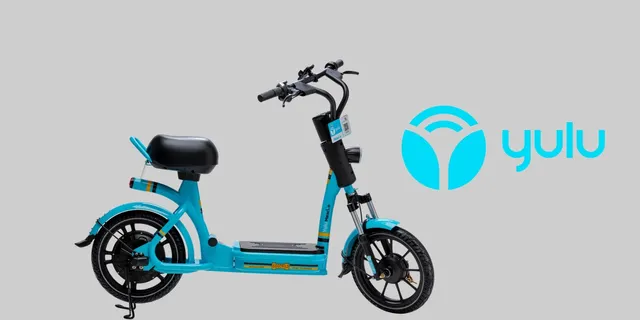
Yulu's electric two-wheelers are designed for shared urban mobility and last-mile delivery across Indian cities.
Discover how Amit Gupta and his co-founders built Yulu from a bicycle-sharing startup into India’s leading shared micro-mobility platform, with a major focus on electric vehicles and last-mile delivery.
Written by TFN Research Desk | covering startups, technology, venture capital, and business strategy
Quick Facts
| Founders | Amit Gupta, R.K. Misra, Naveen Dachuri, Hemant Gupta |
| Education | R.K. Misra – IIT Kanpur; Master’s in Urban Planning and Transport, University of Tokyo; Harvard Kennedy School of Government |
| Prior Ventures | Amit Gupta – Co-Founder, InMobi (India’s first profitable unicorn); Founder, Analyticsworks |
| Role | Co-Founder and CEO, Yulu (Amit Gupta) |
| Founded | 2017 |
| Sector | Micro-mobility |
Introduction
Amit Gupta had already helped build one of India’s defining internet success stories, InMobi, before deciding his next venture would tackle something far more mundane: Bengaluru traffic. What used to be a seven-minute commute had stretched into a half-hour ordeal, and Gupta, alongside R.K. Misra, Naveen Dachuri, and Hemant Gupta, founded Yulu in 2017 to fix exactly that problem. (Inc42) Nine years later, Yulu has become India’s largest shared micro-mobility platform and one of the few companies globally in the category to reach EBITDA profitability. (Micromobility.io)
The Yulu Story
Before founding Yulu, Gupta spent twelve years building InMobi into a global mobile advertising platform operating across China, the US, and Western Europe, after first founding Analyticsworks, a business intelligence startup. (Innovations of the World) Co-founder R.K. Misra brought a different kind of expertise: an IIT Kanpur graduate with a master’s in urban planning and transport from the University of Tokyo and training at Harvard Kennedy School, Misra had already retired from two successful businesses by 40 before deciding to apply his urban-planning background to India’s mobility crisis. (Next Billion Podcast)
Yulu launched in December 2017 with a fleet of pedal bicycles, before adding its first electric two-wheeler, the Yulu Miracle, in early 2019. (Innovations of the World) A pivotal early partnership with Bajaj Auto in November 2019 gave Yulu access to established EV research, development, and manufacturing capabilities, and Bajaj remained a strategic backer for years afterward. (Inc42)
The company’s real inflection point, however, came from an unglamorous pivot: shifting focus toward gig-economy delivery workers rather than casual daily commuters. Yulu’s purpose-built DeX model, a license-exempt electric scooter with a 60-kilometre range, a goods carrier, and a phone holder, was designed specifically to cut delivery riders’ operating costs by up to 40%. (Outlook Business) That focus on last-mile delivery, rather than general urban commuting, proved to be the durable use case the category needed, and Yulu has said its revenue grew sevenfold between FY23 and FY26. (Business Today)
Business Model
Yulu earns revenue primarily through pay-per-use and subscription rentals of its shared electric vehicle fleet:
| Revenue Stream | How It Works |
|---|---|
| Pay-per-use rentals | Short-duration rentals of e-bikes and scooters for last-mile trips |
| Gig-worker subscriptions | Daily/weekly plans for delivery riders using the Yulu DeX model |
| Enterprise and B2B partnerships | Fleet arrangements with e-commerce, food delivery, and logistics companies |
| Franchise operations | Regional markets operated through franchise partners |
(Sourced from Entrackr)
Funding History
| Round | Year | Amount | Key Investors |
|---|---|---|---|
| Series B | Sep 2022 | $82 million | Magna International (lead), Bajaj Auto |
| Series B extension | Feb 2024 | $19.25 million | Magna International, Bajaj Auto |
| Series B3 (rights issue) | Jul 2025 | ₹25 crore (~$3 million) | Magna International, founders |
| Series C | Aug 2026 | $93 million ($63M equity + $30M debt) | GEF Capital Partners (lead) |
(Sourced from Inc42 and Entrackr)
Overall, Yulu has raised more than $228 million since inception. Its August 2026 Series C values the company at roughly $170 million post-money, and notably, existing strategic backers Bajaj Auto and Magna International waived their pre-emptive rights to let new investor GEF Capital take its full target stake. (Laffaz)
Revenue and Growth
| Metric | FY24 | FY25 |
|---|---|---|
| Operating Revenue | ₹119.9 crore | ₹237.4 crore (up 98%) |
| Net Loss | ₹143 crore (approx.) | ₹126 crore (down 12%) |
(Sourced from Inc42)
Notably, Yulu says it has remained EBITDA-positive every month since April 2025, a rare milestone in the capital-intensive micro-mobility category globally. (Entrackr) CEO Amit Gupta has said the company would consider itself a credible IPO candidate once it reaches ₹1,000-1,200 crore in annual revenue alongside stronger profitability. (Business Today)
Yulu vs Competitors
Yulu competes with Zypp Electric, Alt Mobility, and Baaz in India’s shared electric two-wheeler and last-mile mobility space. (Tracxn) Unlike several rivals still chasing scale, Yulu’s early transition to sustained EBITDA profitability has positioned it as a relative front-runner in a sector where most competitors remain deeply unprofitable.
Key Takeaways
- Amit Gupta, R.K. Misra, Naveen Dachuri, and Hemant Gupta founded Yulu in 2017 to address urban traffic congestion and air pollution.
- The company pivoted from casual bicycle sharing toward gig-economy delivery riders, a shift that became central to its growth.
- Yulu has raised more than $228 million to date, most recently an $93 million Series C in August 2026 led by GEF Capital.
- FY25 revenue nearly doubled to ₹237.4 crore, and the company has remained EBITDA-positive every month since April 2025.
- The company is targeting a future IPO once it reaches ₹1,000-1,200 crore in annual revenue.
FAQs
Who founded Yulu?
Amit Gupta, R.K. Misra, Naveen Dachuri, and Hemant Gupta founded Yulu in 2017.
Is Yulu profitable?
It has been EBITDA-positive every month since April 2025, though it still posted a net loss on a full-year basis in FY25.
How much funding has Yulu raised?
More than $228 million to date, most recently through a $93 million Series C round in August 2026.
Who are Yulu’s competitors?
Zypp Electric, Alt Mobility, and Baaz in India’s shared electric mobility market.
© The Founder Nation | Written by TFN Research Desk