

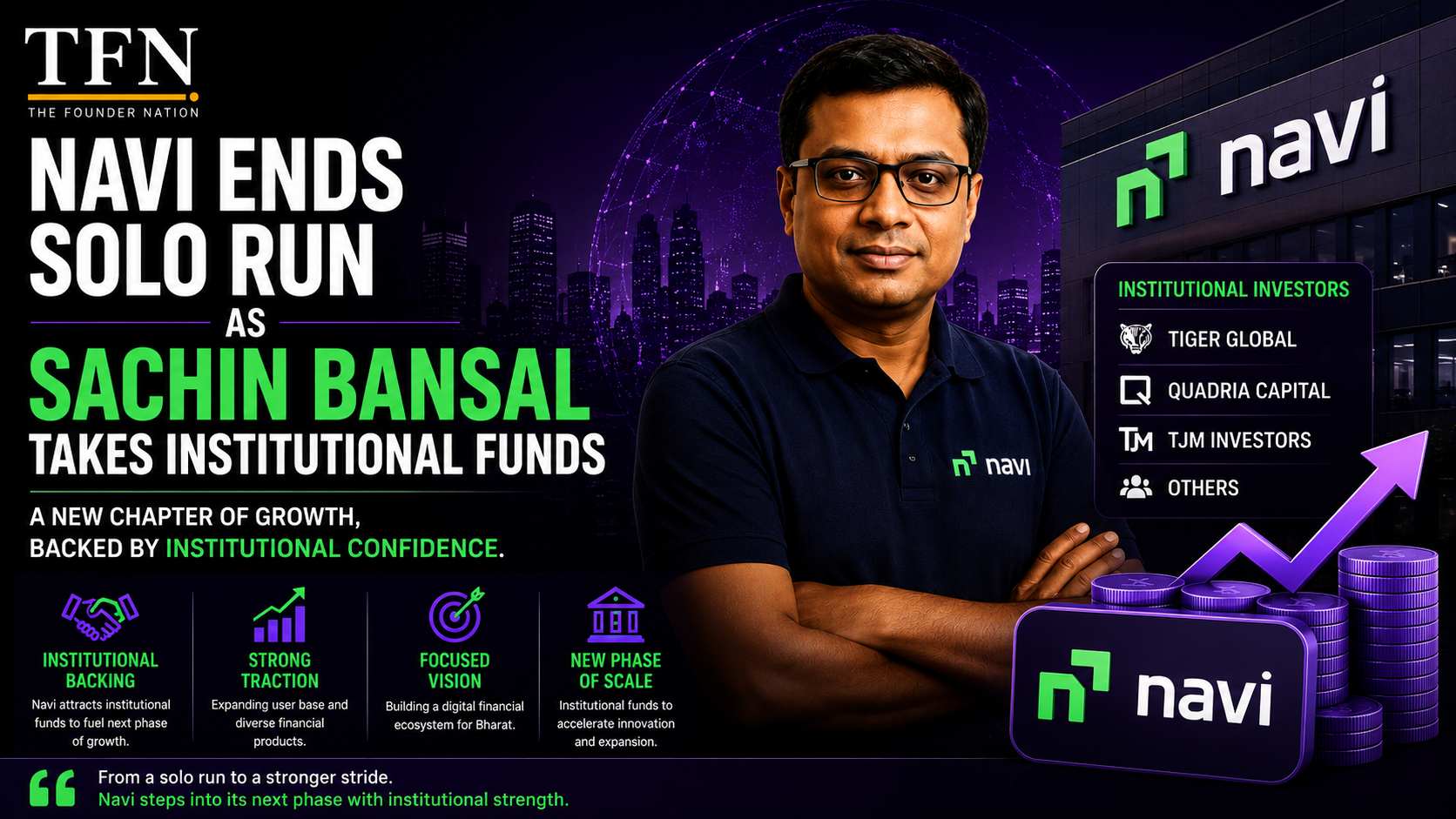
Navi ends its solo run as Sachin Bansal brings institutional capital into the fintech company's next phase of growth.
Sachin Bansal shifts strategy after nearly eight years of self-funded operations at Navi, opening the door to outside capital.
Flipkart cofounder Sachin Bansal has brought an end to nearly eight years of self-funded operations at Navi by deciding to take institutional money. 1 For almost eight years, Bansal successfully built and operated the financial services company without having to answer to external institutional investors, maintaining absolute control over the company’s strategic vision and execution trajectory.
The transition marks a pivotal shift for Navi as it moves away from its strictly solo run into a phase of corporate evolution backed by professional funding partners. Operating in the competitive Indian fintech and financial services sector, Navi has scaled its operations across lending, digital insurance, and mutual funds, building a comprehensive digital-first ecosystem designed to cater to modern retail consumers.
The strategic pivot addresses the growing scale of capital requirements needed to compete aggressively in India’s expanding financial technology landscape. While the company initially relied heavily on self-funding and personal capital deployment by its founder to establish its core technology infrastructure and regulatory footholds, market dynamics necessitate broader financial backing.
The fresh capital and opening to institutional investors will enable Navi to accelerate its next phase of market penetration, scale its product offerings, and strengthen its competitive positioning against legacy institutions and heavily funded fintech rivals.
Navi’s shift reflects the evolving realities of building large-scale financial institutions in India, where even seasoned founders ultimately leverage institutional expertise and capital reserves to capture massive market share.