
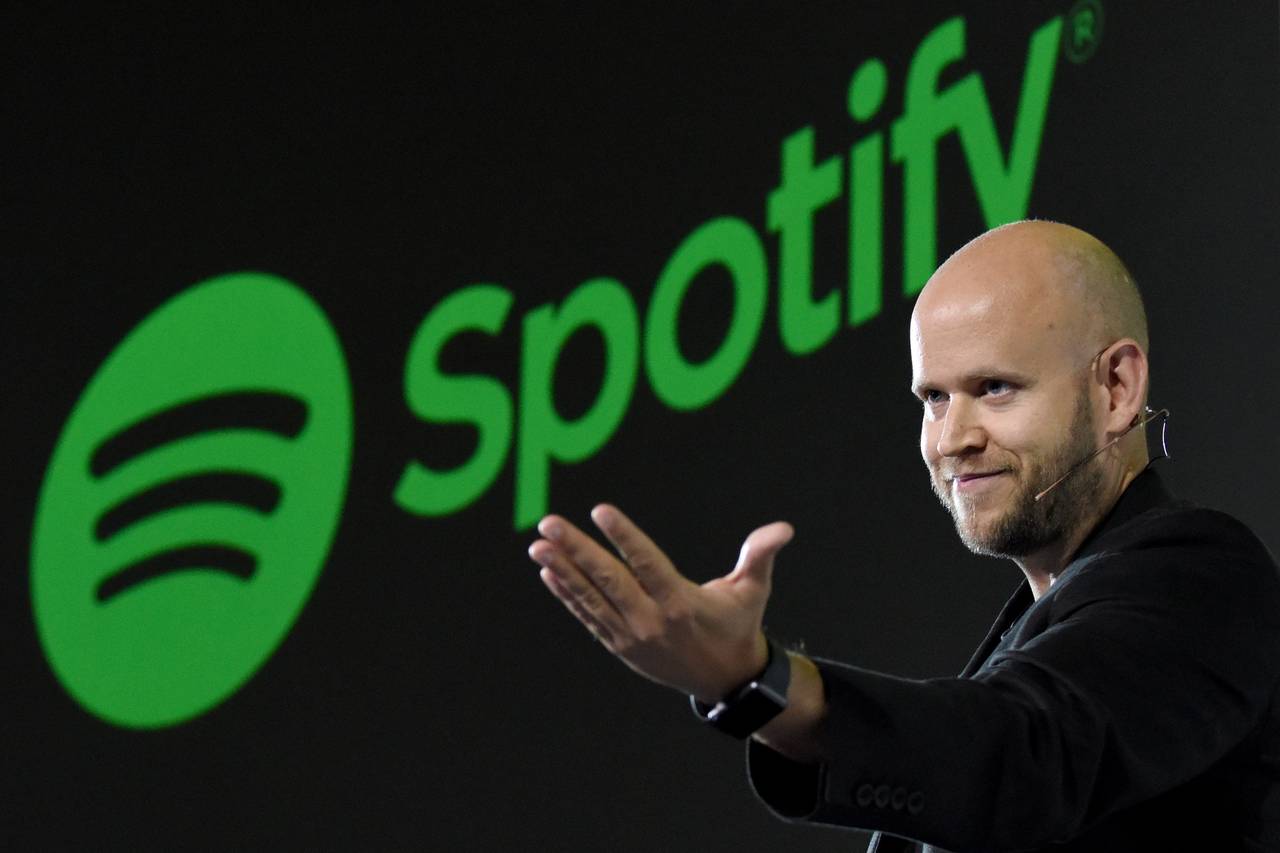
Daniel Ek built Spotify into the world's leading music streaming platform by turning user listening data into personalized experiences.
Written by TFN Research Desk | covering startups, technology, venture capital, and business strategy.
In 2011, Daniel Ek, Spotify’s founder, realized something important.
Most people did not care about owning music. They cared about accessing music.
The reason people pirated music was not because they wanted to own it. It was because piracy was the easiest way to access unlimited music.
If Spotify could make accessing music easier and cheaper than piracy, people would switch.
But there was a problem. Spotify had to pay the music industry to license music. Licensing was expensive.
Spotify’s business model had to work on thin margins.
How could Spotify survive on thin margins?
Daniel Ek realized the answer: data.
If Spotify could collect detailed data on what people listened to, Spotify could build recommendation algorithms.
Good recommendations would keep people on the platform.
Longer engagement would mean more ad impressions (for free users) and longer subscription life (for paid users).
Data-driven recommendations would be the moat that allowed Spotify to sustain its business.
He was right.1
The Music Industry Before Spotify
The Piracy Problem
By 2008, the music industry was in crisis.
Piracy had destroyed the physical music business. CDs were dying.
Digital downloads (iTunes) were growing, but not fast enough to replace CD revenue.
The industry was in decline. Record labels were losing money.
Artists were losing income. Music production was being cut.
The music industry needed a solution.2
Why Artists Did Not Just Stream
Artists and labels resisted streaming initially because the margins were terrible.
Spotify paid roughly $0.003 to $0.005 per stream.
A song needs 200 to 300 streams to earn $1.
Compare this to a digital download at $0.99, which earned $0.30 per download to the label (after fees).
Streaming required 10x to 20x more plays to earn equivalent revenue.
But artists and labels had a choice: make money from streaming or make nothing from piracy.
Eventually, they chose streaming.1
How Spotify Turned Data Into Competitive Advantage
Collect Every Data Point
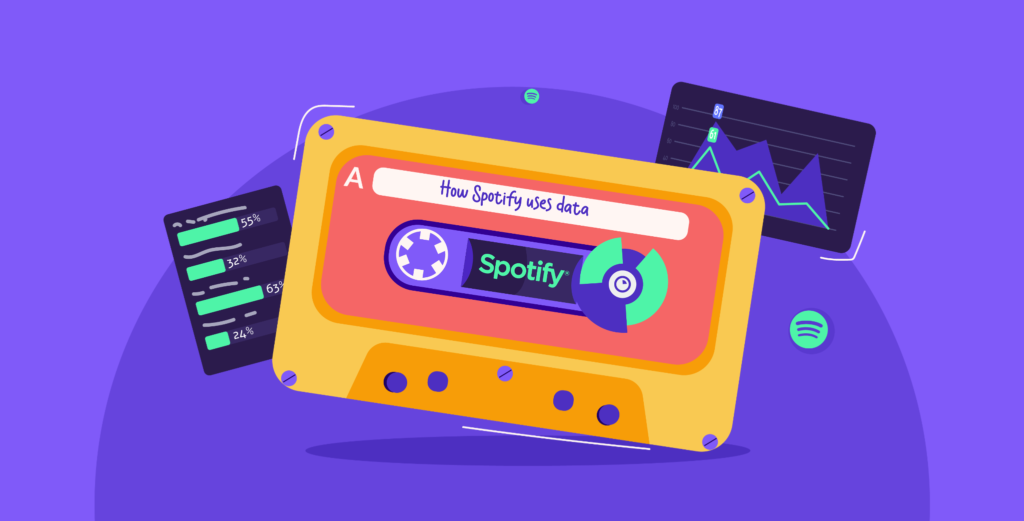
Spotify’s first innovation was to collect data on every interaction.
When you play a song, Spotify records it.
When you skip a song, Spotify records it.
When you rewind a song, Spotify records it.
When you pause and come back, Spotify records it.
When you add a song to a playlist, Spotify records it.
Over years, Spotify accumulated billions of data points on listening behavior.
This data revealed patterns. Which songs get skipped. Which songs get replayed. Which songs get added to playlists. Which songs cause people to stop listening entirely.
This data was gold.2
What matters: Data collection at scale requires intentional infrastructure design.
Build Recommendation Algorithms
Using this data, Spotify built recommendation algorithms.
These algorithms analyze:
- Your listening history
- Songs you skipped
- Playlists you created
- Songs similar listeners enjoyed
- Audio features of songs (tempo, key, instrumentation)
The algorithm learns your taste over time.
It gets better at predicting what you want to hear.
Over time, Spotify’s recommendations become so accurate that users trust Spotify’s playlists more than they trust themselves.3
What matters: Recommendation algorithms are only as good as the data they are trained on.
Create Playlists as a Product
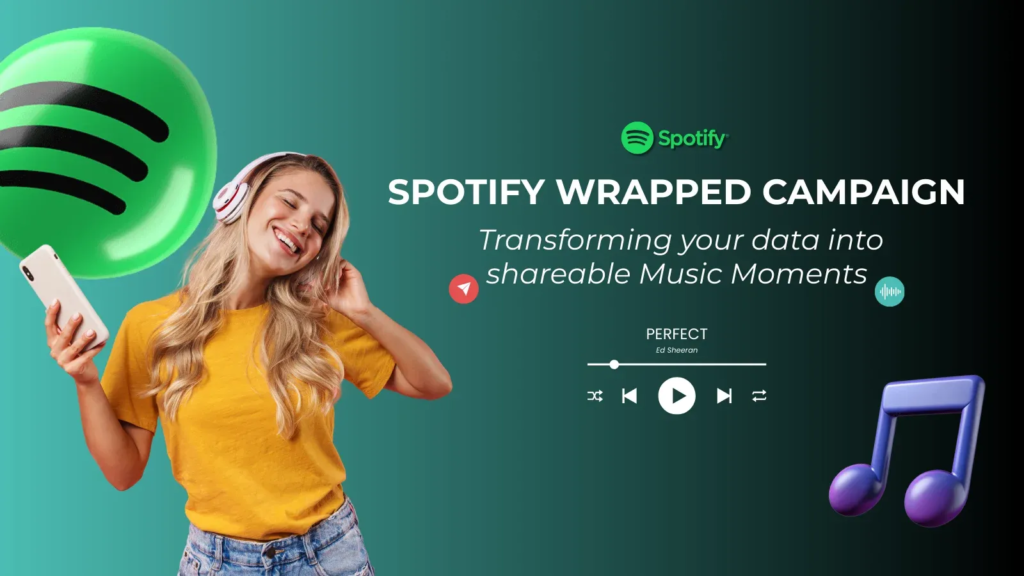
Spotify realized that curated playlists could be a product in themselves.
Spotify created editorial playlists (made by humans) and algorithmic playlists (made by AI).
Playlists like “Today’s Top Hits” became cultural touchstones.
Artists wanted to be on these playlists because being featured drove billions of streams.
Spotify’s playlists became more important than radio as a way to discover music.
What matters: Data-driven products can become more valuable than the underlying service.1
The Value of Data-Driven Music Discovery
Removed the Burden of Choice
Before streaming, discovering music was hard.
You had to buy CDs. You had to listen to radio. You had to ask friends.
The burden of discovering good music was on you.
Spotify removed this burden.
You could tell Spotify your taste, and it would fill your library with music you would love.
This removal of burden increased engagement.
Users spent more time on Spotify because Spotify made music discovery easy.
What matters: Removing friction from user experience increases engagement.2
Made Radio Obsolete
Radio was the primary way people discovered music.
Radio DJs would play new music, and listeners would discover songs.
Spotify’s recommendation algorithm made radio obsolete.
The algorithm was better at predicting what users wanted to hear than radio DJs were.
Spotify’s playlists became the new radio.
What matters: Data-driven discovery can replace human curation at scale.3
Became a Discovery Channel for Artists
Artists used Spotify as a distribution channel.
Instead of hoping to get on radio, artists could track which playlists they were on.
Artists could see which listeners liked their music.
Artists could reach listeners directly through Spotify.
Spotify’s data platform became as valuable to artists as it was to listeners.
What matters: Two-sided platforms create value for both sides.1
How Spotify’s Data Advantage Became Defensible
Network Effects From Data
The more data Spotify collected, the better its recommendations became.
Better recommendations meant more engagement.
More engagement meant more data.
More data meant even better recommendations.
This was a virtuous cycle.
Competitors could not easily match this because they did not have years of user data.
What matters: Data advantages compound over time, creating defensibility.2
Switching Costs From Personalization
Once Spotify had learned your taste, switching to another service meant losing that personalized experience.
You would have to start over with a new service’s algorithm.
This switching cost kept users on Spotify.
Even if another service offered better features, users stayed because of the personalization.
What matters: Personalization creates switching costs that increase customer lifetime value.3
Data as Moat Against Competitors
Spotify’s data advantage made it nearly impossible for competitors to catch up.
Apple Music had more money but fewer users and less data.
Amazon Music had more money but fewer users and less data.
YouTube Music had access to different data (search behavior) but not music listening behavior.
Spotify’s data moat was defensible.
What matters: Data advantages are defensible if the data is proprietary and hard to replicate.1
The Artist and Label Perspective
How Spotify Changed Music Distribution
Before Spotify, artists had to go through labels to reach listeners.
Labels controlled distribution. Labels controlled radio play. Labels controlled which songs got promoted.
Spotify gave artists direct access to listeners.
Artists could see exactly who was listening to their music.
Artists could build direct relationships with fans through Spotify’s artist tools.
This disintermediation reduced labels’ power.
What matters: Data platforms can shift power from gatekeepers to creators.2
The Payment Problem
Artists complain that Spotify does not pay enough.
The complaint is valid. Spotify pays roughly $0.003 to $0.005 per stream.
A one-million-stream hit earns the artist $3,000 to $5,000.
For independent artists, this is significant money. For major artists, this is insufficient.
But the alternative (piracy and declining sales) was worse.
Eventually, artists accepted Spotify’s economics because the alternative was worse.
What matters: Network economics force acceptance of imperfect terms.3
The Business Model That Worked
Free Tier Supported by Ads
Spotify’s free tier generated revenue through ads.
Users heard ads between songs.
Advertisers paid to reach Spotify’s engaged audience.
The free tier was valuable because it created huge user base.
The huge user base was valuable to advertisers.
What matters: Free tiers are valuable if they generate sufficient ad revenue.1
Premium Tier With High Margins
Spotify’s premium tier ($9.99 per month or higher) had high margins.
With hundreds of millions of premium subscribers, the recurring revenue was massive.
Premium subscribers also generated better data (since they were more engaged) and were less price-sensitive.
What matters: Freemium models only work if the premium tier is valuable enough to drive conversion.2
Path to Profitability
Spotify reached profitability in 2019, over a decade after launch.
This was important because it proved the business model worked.
By 2023, Spotify’s annual profit was over $1 billion.
The profitability came from premium subscriber growth and improved licensing terms.
What matters: Profitability matters. Indefinite losses are not a business model.3
Frequently Asked Questions
How much data does Spotify collect? Spotify collects data on every interaction: plays, skips, pauses, playlist additions, follows, etc. Over a billion users, this amounts to hundreds of billions of data points per day.1
How good are Spotify’s recommendations? Spotify’s recommendations are remarkably accurate. Many users trust Spotify’s recommendations over their own taste. This accuracy is built on years of data and continuous algorithm improvements.2
Why does Spotify pay so little per stream? Spotify’s revenue per stream is low because music licensing costs are high and competition from free piracy is intense. Spotify’s margin on each stream is roughly $0.001 to $0.002.3
How much does Spotify pay artists? Spotify does not pay artists directly. It pays labels, which pay artists. The exact amount varies but is roughly $0.003 to $0.005 per stream to labels (not to artists).1
Why do artists stay on Spotify if they pay so little? Artists stay on Spotify because piracy is the alternative. Piracy pays $0. Spotify pays something. Additionally, Spotify provides distribution to a global audience.2
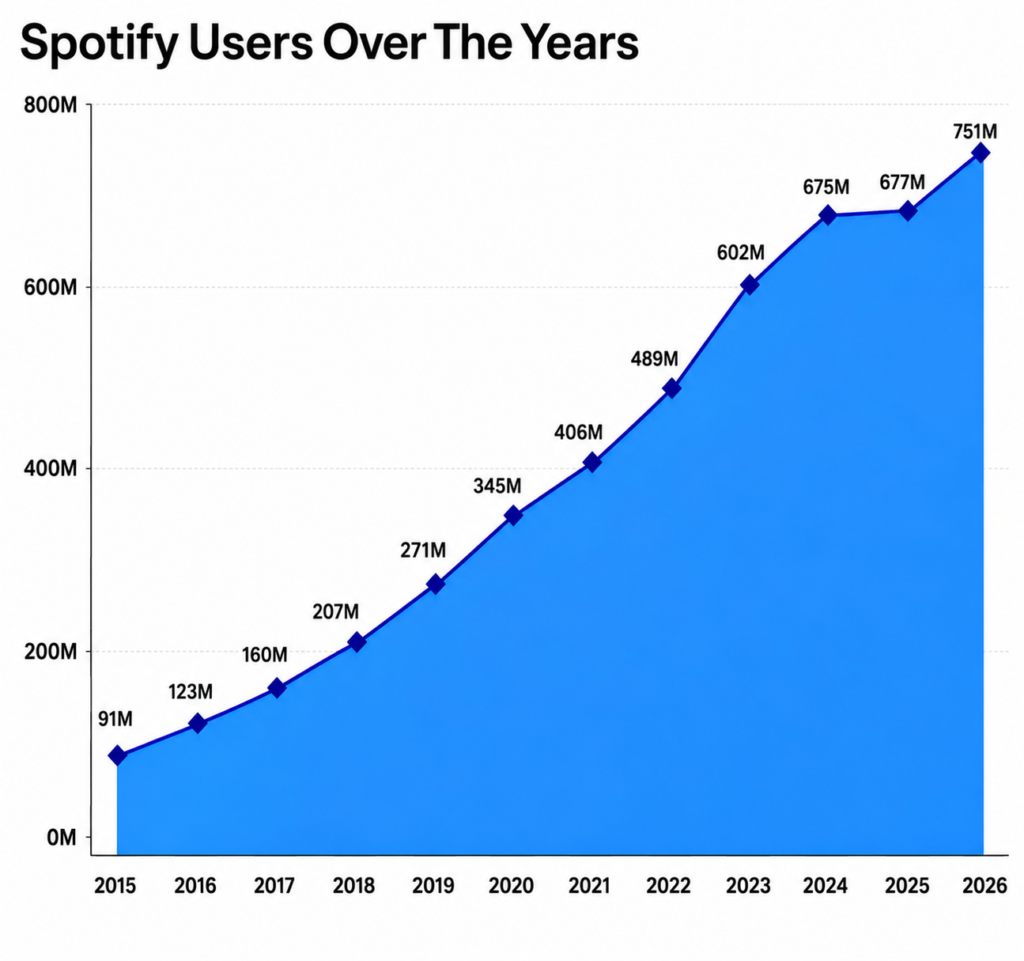
How many subscribers does Spotify have? As of 2024, Spotify has over 500 million users and over 200 million premium subscribers.3
What is Spotify’s competition? Spotify’s main competitors are Apple Music, Amazon Music, and YouTube Music. But Spotify’s data advantage keeps it ahead in recommendation quality.1
Stay in the Loop
For more stories, breakdowns, and unfiltered takes on what is really happening in business and tech, follow TheFounder Nation.
Instagram Handle : https://www.instagram.com/thefoundernation?igsh=MTZobDUwc2xqZWdhOA==
We cover what the mainstream business press won’t.
© The Founder Nation | All rights reserved |Written by TFN Research Desk |