
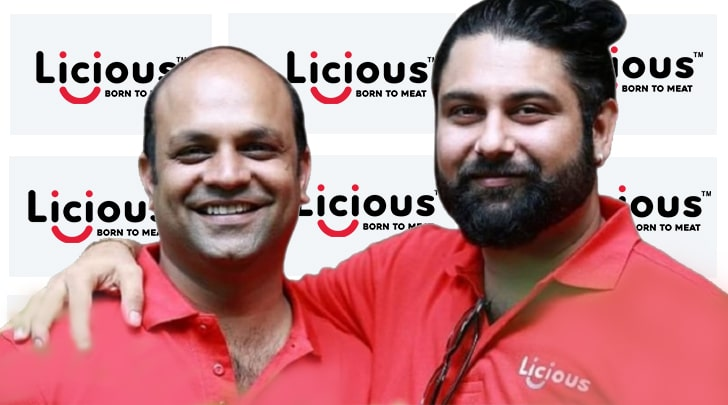
Abhay Hanjura and Vivek Gupta founded Licious and transformed it into India's leading D2C meat and seafood platform through a vertically integrated supply chain.
Written by TFN Research Desk | covering startups, technology, venture capital, and business strategy.
Quick-Facts Bio Box
Abhay Hanjura: B.Sc, Biotechnology, Bengaluru; business management coursework, Indian Institute of Insurance; Occupation: Co-founder, Licious (Delightful Gourmet); Years active: 2015-present; prior career: insurance risk management, BFSI sector (The Weekend Leader).
Vivek Gupta: Chartered Accountant, rank-holder, Punjab University; Occupation: Co-founder, Managing Director and Chief Executive Officer, Licious; Years active: 2015-present; prior career: McKinsey, Rocket Internet (VFS).
Table of Contents
- Introduction
- The Licious Story
- Business Model
- How Licious Makes Money
- Funding History
- Revenue and Recent Challenges
- Licious vs Competitors
- Current Role and Recent Moves
- Key Takeaways
- FAQs
Introduction
Abhay Hanjura and Vivek Gupta, frustrated by the lack of hygienic, quality meat in Bengaluru, quit their corporate careers to found Licious in 2015. The Bengaluru company, run under parent Delightful Gourmet, became India’s first D2C meat and seafood unicorn and is now targeting an IPO after years of narrowing losses.
The Licious Story
Hanjura, a biotechnology graduate who had built a career in insurance risk management, and Gupta, a chartered accountant with McKinsey and Rocket Internet experience, bonded over a shared frustration: neither could reliably buy clean, trustworthy meat despite being educated, urban professionals with money to spend (VFS). That realization convinced them that if they, with all their advantages, couldn’t solve the problem, hundreds of millions of other Indians certainly couldn’t either.
They quit their jobs and launched Licious in Bengaluru in July 2015, doing their first sale in the Whitefield area with a five-person team (The Weekend Leader). Early funding came from a half-million-dollar round backed by Helion Ventures’ Kanwaljit Singh, former Infosys CFO Mohandas Pai, and Amadeus Capital’s Kaushal Agarwal. Word-of-mouth, driven by apartment-complex tasting events, generated 70-75 percent of new customer acquisition in the early years. Revenue grew from ₹3 crore in FY16 to over ₹1,000 crore by FY21, and Licious reached unicorn status the same year at a valuation exceeding $1 billion.
Business Model
Licious operates a fully vertically integrated farm-to-fork supply chain, controlling procurement, cold-chain storage, processing, and last-mile delivery rather than relying on third-party sourcing (IPO Central). It sells through its own app and website, quick commerce platforms like Blinkit, Swiggy Instamart, and Zepto, and a growing network of over 50 offline stores, including its 2024 acquisition of Bengaluru retailer My Chicken and More (Business Standard).
How Licious Makes Money
Revenue comes from direct sales of fresh chicken, mutton, seafood, eggs, and higher-margin ready-to-cook and ready-to-eat products across its D2C, quick commerce, and offline channels (VFS).
Funding History
| Round | Year | Amount | Investors |
|---|---|---|---|
| Seed | 2015 | $1 million | Helion Ventures, Mohandas Pai, Amadeus Capital |
| Series A | 2016 | Undisclosed | Mayfield, 3one4 Capital |
| Series E-F | 2021 | $150 million | Temasek, existing investors |
| Series G | 2021-22 | Undisclosed | Multiples PE, Vertex Ventures, Bertelsmann India |
Licious has raised approximately $490 million across 12 rounds, with a current valuation of roughly ₹12,100 crore (Tracxn).
Revenue and Recent Challenges
FY24 revenue contracted 8 percent to ₹685 crore with a loss of ₹294 crore, but FY25 revenue recovered 16 percent to ₹795 crore while EBITDA losses shrank 45 percent to ₹163 crore and net loss narrowed 27 percent to ₹218 crore (VFS). H1 FY26 revenue grew 42 percent year-on-year, the company’s strongest growth stretch to date, and Licious shut its plant-based meat platform UnCrave in September 2025 to concentrate resources on core profitability (Tracxn).
Licious vs Competitors
| Company | Position | Notes |
|---|---|---|
| FreshToHome | D2C fresh meat and seafood | Closest direct rival, similar farm-to-fork model |
| TenderCuts | Meat delivery chain | Regional competitor with offline focus |
| Blinkit, Zepto (private label) | Quick commerce meat verticals | Emerging disintermediation threat |
Licious’s most pressing competitive risk is not FreshToHome or TenderCuts but quick commerce platforms themselves, which are developing their own private-label fresh meat offerings that could bypass Licious entirely on the delivery layer it once pioneered.
Current Role and Recent Moves
Vivek Gupta continues as CEO and Managing Director, with Hanjura remaining a co-founder and board member. The founders deferred their planned 2026 IPO to 2027-28 at the ET Soonicorns Summit in 2025, prioritizing sustainable profitability over a rushed listing, with a target valuation above $2 billion once they do go public (IPO Central).
Key Takeaways
- Hanjura and Gupta founded Licious in 2015 after struggling to find hygienic meat despite being well-resourced urban professionals.
- The company built full vertical control over its supply chain, from farm sourcing to last-mile delivery.
- Licious has raised roughly $490 million and reached unicorn status in 2021.
- FY25 revenue recovered 16 percent to ₹795 crore with losses narrowing sharply, ahead of a planned 2027-28 IPO.
- Quick commerce platforms developing private-label meat products represent Licious’s sharpest emerging competitive threat.
FAQs
Who founded Licious?
Abhay Hanjura and Vivek Gupta, in July 2015.
Who is Licious’s current CEO?
Vivek Gupta, who is also Managing Director and co-founder.
Has Licious gone public?
Not yet; its IPO has been deferred to 2027-28.
Is Licious profitable?
Not fully, though EBITDA losses narrowed 45 percent in FY25 with profitability targeted soon after.
How much funding has Licious raised?
Approximately $490 million across 12 rounds.
Who are Licious’s main competitors?
FreshToHome, TenderCuts, and increasingly quick commerce platforms building their own meat verticals.
What is Licious’s business model?
A vertically integrated farm-to-fork supply chain sold through its app, quick commerce, and offline stores.
© The Founder Nation | Written by TFN Research Desk