

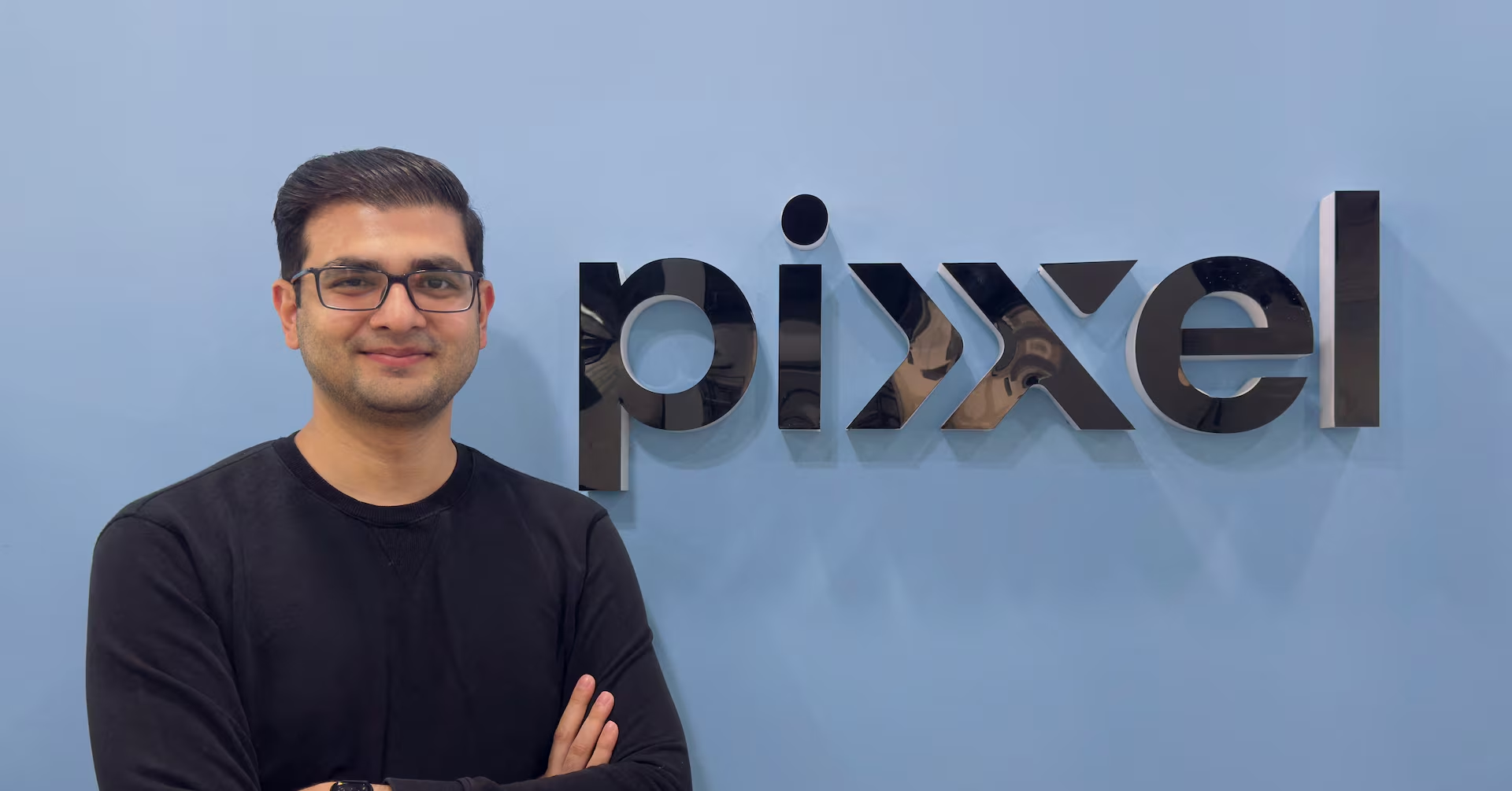
Awais Ahmed co-founded Pixxel in 2019 with Kshitij Khandelwal to build one of the world's most advanced commercial hyperspectral satellite constellations for Earth observation.
Written by TFN Research Desk | covering startups, technology, venture capital, and business strategy.
Table of Contents
- Quick Facts
- Introduction
- The Pixxel Story
- Business Model
- How Pixxel Makes Money
- Funding History
- Revenue and Performance
- Key Takeaways
- FAQs
- Sources
Quick Facts
Awais Ahmed: Founder and CEO, BITS Pilani alumnus, village background. Kshitij Khandelwal: Co-founder and CTO. Founded: 2019. Company type: Hyperspectral Earth observation satellite constellation. Status: Most-funded hyperspectral imaging startup globally. Total funding: $95 million+. Headquarters: Bengaluru, India.
Introduction
Awais Ahmed and Kshitij Khandelwal founded Pixxel in 2019 with mission to build world’s highest-resolution commercial hyperspectral satellite constellation. Raised from village background without internet access, Ahmed developed passion for space through encyclopedias. Starting with borrowed funds and personal savings, the pair created technology capturing data across 250+ spectral bands at 5-meter resolution—unprecedented for commercial hyperspectral imaging. Pixxel raised $95 million across 11 funding rounds, becoming most-funded hyperspectral imaging startup globally. The company successfully deployed Firefly constellation of six commercial hyperspectral satellites in 2025. Pixxel secured NASA contracts and strategic government partnerships. This profile covers Ahmed’s journey from village background to space entrepreneur and Pixxel’s hyperspectral technology innovation.
The Pixxel Story
Awais Ahmed grew up in Aldur village in Karnataka without internet access or smartphones, developing passion for space through encyclopedias. Ahmed pursued mathematics at BITS Pilani and led Team Anant satellite initiative collaborating with ISRO. He also led Team Hyperloop India advancing to SpaceX competition finals.
In 2018, during IBM Watson AI Challenge, Ahmed and Kshitij Khandelwal identified critical gap: hyperspectral satellite data was unavailable commercially at required resolution and spectral richness. This realization sparked Pixxel’s founding vision: create commercial hyperspectral constellation providing Earth observation data at unprecedented detail and spectral fidelity.
In 2019, Ahmed and Khandelwal launched Pixxel with borrowed funds and personal savings. The mission was audacious: build constellation capturing data across 250+ spectral bands (versus conventional satellites with 3-4 bands) at 5-meter spatial resolution. This would enable detection of subtle vegetation health, water quality, mineral composition, and atmospheric condition changes invisible to conventional systems.
Early funding came from Lightspeed India Partners, Blume Ventures, and others providing $8 million seed round in August 2020. This capital enabled expansion and satellite development. The company established MegaPixxel 350,000+ sq ft facility for integrated spacecraft assembly and testing.
In 2021 and 2022, Pixxel launched technology demonstration satellites (TD-1 Anand, TD-2 Shakuntala) proving hyperspectral capabilities. The demo satellites demonstrated core technology, returning unprecedented hyperspectral imagery establishing market traction. Series A in March 2022 brought $27 million from Radical Ventures and Seraphim Space Investment enabling Firefly constellation development.
In 2024, Pixxel achieved strategic validation. NASA selected Pixxel for $476 million Commercial SmallSat Data Acquisition Program awarding contract for hyperspectral Earth observation data. US National Reconnaissance Office (NRO) also awarded contract under Strategic Commercial Enhancements program.
In January 2025, Pixxel launched first three Firefly satellites aboard SpaceX Transporter-12 rideshare from Vandenberg Space Force Base. The satellites entered operational service delivering commercial hyperspectral data. Additional Firefly satellites launched throughout 2025 completing six-satellite constellation deployment.
Series B funding reached $60 million cumulative. In late 2024, M&G Catalyst and Glade Brook Capital Partners invested $24 million extending Series B. This positioned Pixxel as one of highest-funded space-tech startups globally and world’s most-funded hyperspectral imaging company.
Business Mode
- Satellite constellation operations (6 Firefly satellites)
- Raw hyperspectral imagery data sales
- Processed analysis-ready datasets
- Aurora AI analytics platform subscriptions
- Custom imagery processing services
- Data licensing to resellers (90+ partners)
- NASA and government contracts
How Pixxel Makes Money
- Data subscription revenue
- Government contracts (NASA, NRO)
- Aurora platform subscriptions
- Custom analysis and professional services
- Data licensing to resellers
- White-label analytics solutions
- API licensing and platform integration
Funding History
| Round | Year | Amount | Lead Investors |
|---|---|---|---|
| Seed | 2020 | $8M | Lightspeed, Blume |
| Series A | 2022 | $27M | Radical Ventures |
| Series B | 2023-2024 | $60M | Google, M&G Catalyst |
Pixxel raised $95 million becoming most-funded hyperspectral imaging startup globally.
Revenue and Performance
- Firefly constellation: 6 operational satellites (2025)
- Spectral bands: 250+ (versus 3-4 conventional)
- Spatial resolution: 5-meter (world’s highest hyperspectral)
- Global coverage: 24-hour revisit frequency
- Customers: 50+ direct, 90+ resellers
- NASA contract: $476 million program
- Manufacturing facility: 350,000+ sq ft MegaPixxel
Key Takeaways
- Awais Ahmed and Kshitij Khandelwal founded Pixxel in 2019
- Raised $95 million becoming most-funded hyperspectral startup
- Deployed Firefly constellation of 6 satellites (2025)
- Secured NASA and NRO government contracts
- 5-meter hyperspectral resolution (world’s highest commercially)
- 50+ customers with 90+ reseller partnerships
- Aurora AI analytics platform simplifying data access
- Applications: agriculture, mining, energy, environment, disaster response
FAQs
Who founded Pixxel?
Awais Ahmed (CEO) and Kshitij Khandelwal (CTO) founded Pixxel in 2019.
When was Pixxel founded?
Pixxel was founded in 2019 to build world’s first commercial hyperspectral constellation.
What makes Pixxel unique?
Pixxel pioneered world’s first 5-meter resolution commercial hyperspectral satellite constellation capturing 250+ spectral bands.
How much funding has Pixxel raised?
$95 million across 11 funding rounds making it most-funded hyperspectral company globally.
When did Firefly launch?
Firefly constellation deployment began January 2025 with SpaceX Transporter-12 rideshare launch.
What is Aurora?
Aurora is AI-powered Earth observation analytics platform with no-code interface simplifying hyperspectral data access.
How many customers does Pixxel have?
50+ direct customers with 90+ reseller partners across major geographies.
Did Pixxel secure government contracts?
Yes. NASA $476 million Commercial SmallSat program and US NRO contracts.
Why did Awais Ahmed start Pixxel?
Identified market gap for hyperspectral satellite data while working on crop-monitoring project during IBM Watson Challenge.
What applications does Pixxel serve?
Agriculture, mining, energy, environment, disaster response, urban planning.
Sources
- Wikipedia: https://en.wikipedia.org/wiki/Pixxel
- Pixxel Official: https://www.pixxel.space/
- Tracxn: https://tracxn.com/d/companies/pixxel/
©️ The Founder Nation | Written by TFN Research Desk