

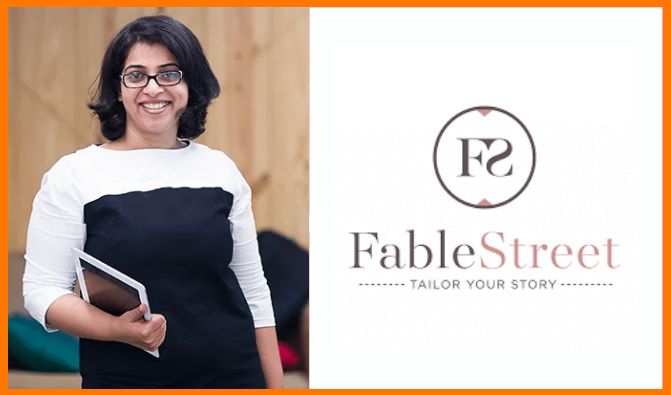
Ayushi Gudwani, founder and CEO of FableStreet, built the fashion brand around better-fitting workwear designed for Indian women.
Ayushi Gudwani founded FableStreet to solve India’s women’s workwear fit problem. Explore her journey, FS Life, funding, growth and fashion strategy.
Written by TFN Research Desk | covering startups, technology, venture capital, and business strategy.
Table of Contents
- Who is Ayushi Gudwani?
- Early Life and Education
- Career Before FableStreet
- How FableStreet Started
- Funding History
- Revenue Growth and Recent Developments
- Public Recognition
- FableStreet vs Competitors
- Investor Perspective
- Founder Timeline
- Key Takeaways
- FAQs
- The Take Nobody In The Industry Wants To Say Out Loud
- Sources
- SEO Metadata Block
Who is Ayushi Gudwani?
Ayushi Gudwani is the founder and CEO of FableStreet and the founder of its parent organisation, FS Life. She launched FableStreet in 2016 after identifying a gap in India’s women’s workwear market, particularly around fit, comfort and quality. The company has since expanded from a workwear-focused brand into a broader multi-brand fashion organisation serving modern Indian women.
Early Life and Education
Gudwani studied engineering at NSIT Delhi and later completed an MBA from IIM Calcutta, where she graduated as a silver medallist. Her education combined technical training with business and management skills, which later became useful in building FableStreet around data, customer research and technology.
Before becoming an entrepreneur, she spent several years working in consulting. That experience gave her exposure to strategy, growth and business transformation across different industries.
Career Before FableStreet
Gudwani joined McKinsey & Company in 2008 and spent around seven years working on strategy, growth and scale across sectors. During her consulting career, she encountered a problem that would eventually become the foundation for FableStreet.
She found it difficult to source professional clothing that combined international design standards with fits suited to Indian women. The problem was not simply about fashion. Many products available in India were either poorly fitted or lacked the quality and construction she expected.
Instead of treating the issue as a personal shopping problem, Gudwani began researching whether there was a broader market opportunity.
How FableStreet Started
Gudwani founded FableStreet in 2016 after more than a year of research and development. The company initially focused on premium western workwear for Indian women.
One of its early differentiators was its approach to sizing. FableStreet measured more than 10,000 Indian women while developing its proprietary Tailored Fit methodology. The company used three body measurements from customers to generate a personalised fit, attempting to reduce one of the biggest problems in online apparel, uncertainty around sizing.
The business initially operated online and later moved toward an omnichannel model. It opened its first physical store in Gurgaon in January 2020, shortly before the pandemic disrupted retail.
FableStreet eventually expanded beyond workwear. FS Life was created as a house of brands, with FableStreet focused on western wear, Pink Fort on modern Indian wear and March on silver jewellery.
Funding History
| Round | Year | Amount | Lead Investor |
|---|---|---|---|
| Seed Round | 2017 | Undisclosed | Angel investors, Fusiontech Ventures |
| Series A | 2019 | ₹21 crore | Fireside Ventures |
| Pre-Series B | 2022 | ₹50 crore | Fireside Ventures |
| Series B | 2025 | ₹50 crore | Colossa Ventures, Rahul Garg |
FableStreet initially raised an undisclosed seed round from angel investors and Fusiontech Ventures. In 2019, it raised ₹21 crore in a Series A led by Fireside Ventures. The company then raised ₹50 crore in a pre-Series B round in 2022, also led by Fireside Ventures.
In October 2025, FS Life raised another ₹50 crore from Colossa Ventures and Rahul Garg, with participation from existing investors Fireside Ventures and Mirabilis Investment Trust. The latest funding was primarily aimed at expanding the company’s offline retail footprint.
Revenue Growth and Recent Developments
| Fiscal Year | Revenue | Net Loss |
|---|---|---|
| FY24 | ₹86.9 crore | Not publicly disclosed |
| FY25 | ₹98 crore | ₹22.1 crore |
FS Life reported revenue of approximately ₹98 crore in FY25, up from ₹86.9 crore the previous year. The company remained loss-making, reporting a net loss of approximately ₹22.1 crore.
The financial picture shows the challenge facing the business. Revenue continues to grow, but expansion into physical stores requires additional investment in rent, inventory, employees and operations.
The company has increasingly focused on an omnichannel model. In 2025, FS Life said it was operating five stores and planned to double that footprint within six months, with a longer-term ambition of more than 100 stores.
Public Recognition
Gudwani was recognised by Fortune India in its 40 Under 40 list in 2021. She has also been featured among notable Indian women entrepreneurs for her work in building FableStreet around the specific needs of Indian women.
Her story has attracted attention because the company emerged from a practical consumer problem rather than a technology-first thesis.
FableStreet vs Competitors
| Company | Founded | Positioning |
|---|---|---|
| FableStreet | 2016 | Western wear designed around Indian women’s fits |
| AND | 1999 | Contemporary women’s fashion |
| FabAlley | 2014 | Trend-led women’s fashion |
| Aurelia | 2001 | Contemporary Indian ethnic wear |
FableStreet’s positioning is more specific than many mainstream women’s fashion brands. Its emphasis on fit, data and customer measurements gives it a distinct proposition, while the expansion into Pink Fort and March allows FS Life to address more categories.
Investor Perspective
Gudwani’s strongest advantage is the depth of customer research behind FableStreet. She spent years in consulting before launching the company and used that analytical background to study an everyday problem in women’s fashion.
The company’s fit-focused approach also addresses a genuine weakness in online apparel. Better sizing can potentially reduce returns, improve customer satisfaction and increase repeat purchases.
The bigger challenge is scale. Fashion is crowded, customer preferences change quickly and inventory mistakes can become expensive. FS Life is also moving from an online-first model into physical retail, which can increase brand visibility but puts pressure on margins and capital efficiency.
The opportunity is substantial if the company can make its fit expertise transferable across multiple categories. The question is whether FS Life can build several successful brands without losing the data-led customer understanding that made FableStreet distinctive.
Founder Timeline
- 2008: Begins career at McKinsey & Company.
- 2015: Completes several years of consulting experience.
- 2016: Founds FableStreet.
- 2017: Raises its first disclosed seed funding.
- 2019: Raises ₹21 crore Series A led by Fireside Ventures.
- 2020: Opens its first physical store and begins its omnichannel journey.
- 2021: Named to Fortune India’s 40 Under 40.
- 2022: Raises ₹50 crore in pre-Series B funding.
- 2022: FS Life expands into brands including Pink Fort and March.
- 2025: FS Life raises ₹50 crore for offline expansion.
Key Takeaways
- Ayushi Gudwani founded FableStreet in 2016 after identifying a gap in women’s workwear.
- She used research and Indian body measurements to develop a fit-focused approach.
- FableStreet evolved into FS Life, a multi-brand fashion organisation.
- The company has raised institutional funding from investors including Fireside Ventures and Colossa Ventures.
- FS Life reported ₹98 crore revenue and a ₹22.1 crore net loss in FY25.
FAQs
Who founded FableStreet?
Ayushi Gudwani founded FableStreet in 2016.
What is Ayushi Gudwani’s current role?
She is the Founder and CEO of FableStreet and the founder of FS Life.
Where did Ayushi Gudwani study?
She studied engineering at NSIT Delhi and completed her MBA at IIM Calcutta as a silver medallist.
What did Ayushi Gudwani do before FableStreet?
She worked at McKinsey & Company for around seven years, focusing on strategy, growth and scale.
Why did Ayushi Gudwani start FableStreet?
She identified a lack of well-fitting, comfortable and high-quality professional clothing designed specifically for Indian women.
What brands are part of FS Life?
FS Life includes FableStreet, Pink Fort and March.
How much funding has FS Life raised?
The company has raised multiple rounds, including ₹21 crore in 2019, ₹50 crore in 2022 and ₹50 crore in 2025, alongside earlier seed funding.
Is FS Life profitable?
No. FS Life reported a net loss of approximately ₹22.1 crore in FY25.
What is Ayushi Gudwani’s net worth?
Her current personal net worth is not publicly disclosed.
What makes FableStreet different?
Its focus on fit for Indian women, customer measurements and data-driven product development has been central to its positioning.
Sources
FableStreet, Our Story
https://www.fablestreet.com/
FS Life, Company Profile
https://www.fslife.co/
Fortune India, Ayushi Gudwani 40 Under 40
https://www.fortuneindia.com/people/ayushi-gudwani
YourStory, FableStreet Founder Profile and Funding
https://yourstory.com/
Economic Times, FableStreet Series A Funding
https://economictimes.indiatimes.com/
Livemint, FS Life Pre-Series B Funding
https://www.livemint.com/
YourStory, FS Life 2025 Funding
https://yourstory.com/
Inc42, FS Life Financials
https://inc42.com/company/fs-life/financials/
© The Founder Nation | All rights reserved | Written by TFN Research Desk