

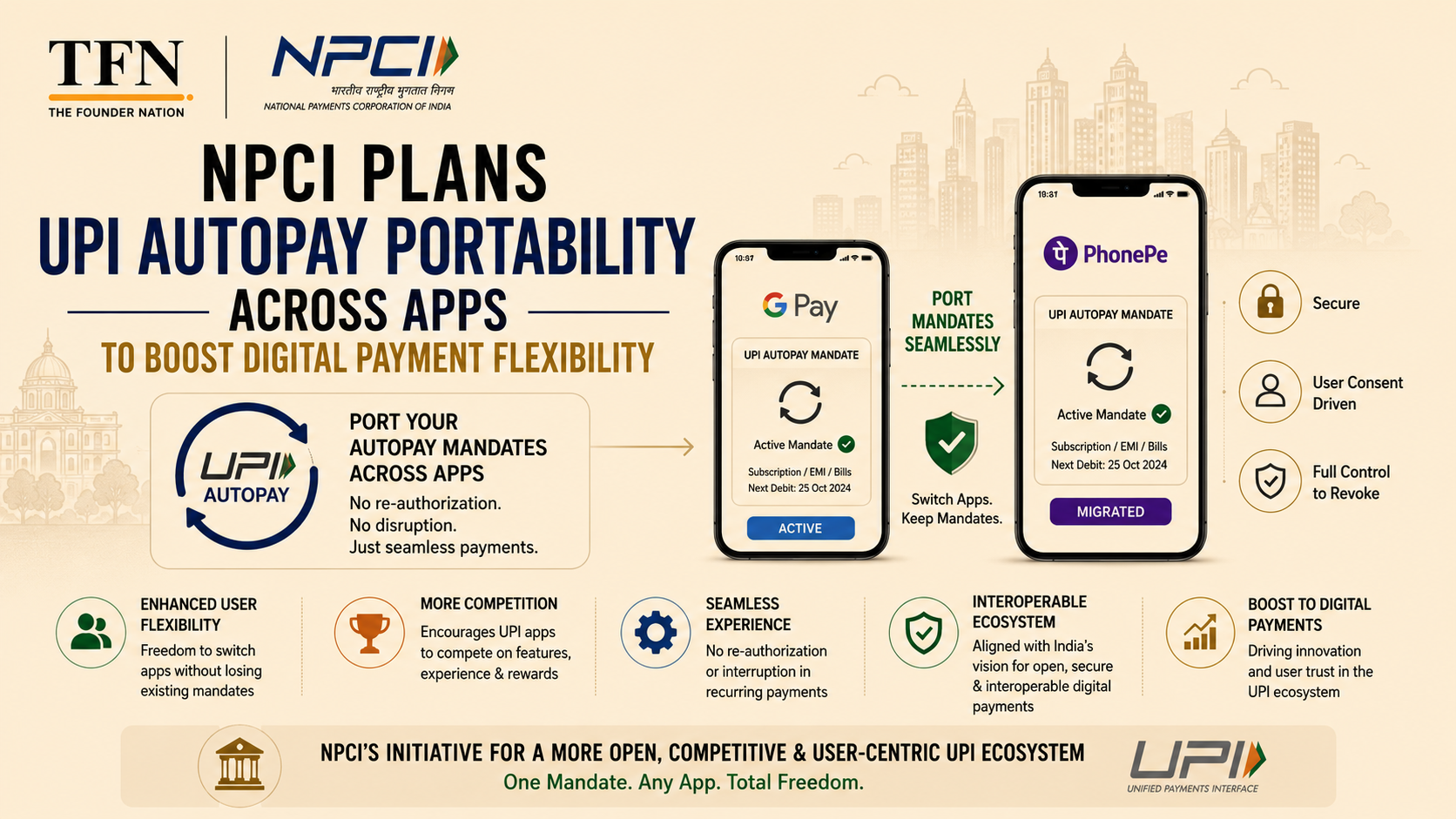
NPCI plans to enable UPI AutoPay mandate portability across payment apps, allowing users to switch platforms more seamlessly.
The National Payments Corporation of India (NPCI), the statutory body governing India’s digital payments infrastructure, is developing mechanisms to enable users to port Unilateral Payment Systems (UPI) AutoPay mandates across different banking and payment applications without requiring re-authorization from billers or merchants. The initiative aims to reduce user friction and enhance competition in India’s digital payments ecosystem by enabling seamless mandate migration.1
UPI AutoPay, launched in 2018, allows merchants and service providers to debit users’ bank accounts automatically for recurring payments including subscriptions, loan EMIs, insurance premiums, and utility bills. Currently, if users switch between UPI-enabled apps like Google Pay, PhonePe, or Paytm, they must re-authorize existing AutoPay mandates with each app transition, creating friction and reducing user mobility across payment platforms.1
NPCI’s portability initiative would eliminate this friction by enabling users to port existing AutoPay mandates to alternative UPI apps without biller re-authorization or transaction interruption.1 The mechanism requires technical standardization across UPI service providers, regulatory clarity, and consumer consent management protocols ensuring users retain control over mandate authorization and can revoke access at any time.1
The portability feature addresses a critical competitive bottleneck: users remain locked into specific payment apps because switching implies disrupted recurring payments and administrative overhead, reducing platform switching and limiting competition among UPI service providers. Enhanced portability increases competitive pressure on UPI apps to differentiate through features, user experience, and rewards rather than merchant lock-in through mandate stickiness.1
NPCI’s initiative aligns with broader regulatory push toward interoperability and consumer protection in digital payments, including Account Aggregator frameworks and Open API standards enabling seamless financial data and transaction portability. The mechanism could increase user switching velocity across UPI apps, consolidate market share around best-in-class providers, and drive innovation in payment app features and merchant integration capabilities.1