

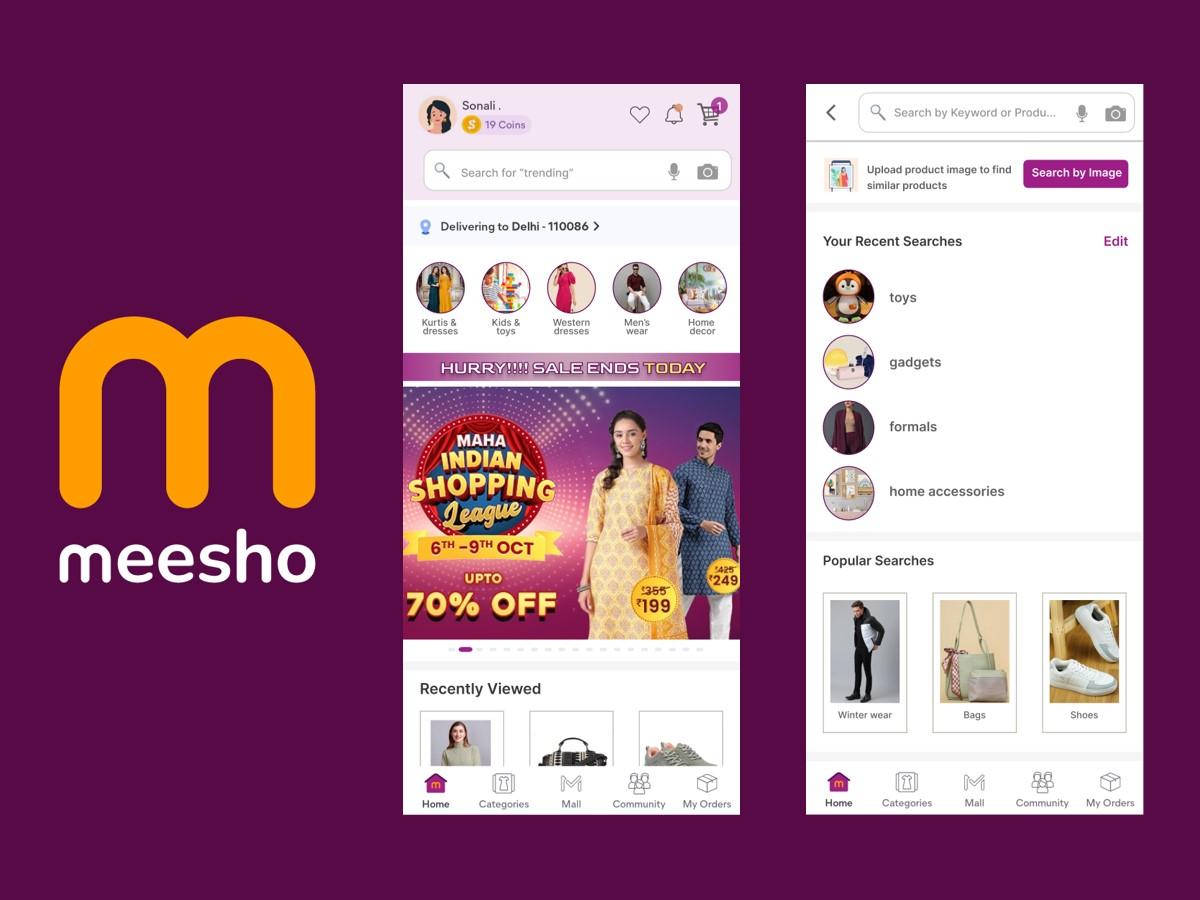
Meesho and boAt built billion-dollar businesses by focusing on India's underserved Tier 2 and Tier 3 consumers instead of competing only in major metro cities.
Written by TFN Research Desk – covering startups, technology, digital media, and business strategy.
While most Indian startups chased the same 50 million metro shoppers, two very different founders went looking for the other 1.3 billion.
Meesho listed on the NSE and BSE on December 10, 2025, debuting at Rs 162.5 a share, a 46 percent premium over its Rs 111 issue price, after a Rs 5,421.20 crore IPO that was subscribed roughly nine times over (Business Standard, PL Capital, December 2025). In the same window, boAt’s parent Imagine Marketing posted a consolidated FY25 net profit of more than Rs 60 crore on revenue of Rs 3,097.8 crore, a sharp reversal from a Rs 79.7 crore loss the year before (Entrepreneur, October 2025). Neither company got there by fighting Flipkart and Amazon for the same urban, English-speaking, card-carrying customer that every pitch deck in Bengaluru was built around.
Topic tags: Startup Strategy • Case Study • E-Commerce • Consumer Electronics • Tier 2 and Tier 3 India
Two bets on the same overlooked customer
Vidit Aatrey and Sanjeev Barnwal built Meesho on a wager that a Tier 2 or Tier 3 Indian shopper did not need a famous brand name, just a price they could trust and a seller they could relate to. Aman Gupta and Sameer Mehta built boAt on a different wager about the same customer: that a 19-year-old in Indore did not want a boring, beige earphone with a five-year warranty, he wanted a bass-heavy, neon-colored one he could show off, at a price his allowance could cover. Both bets sounded niche in 2015 and 2016. Both are now multi-billion-dollar businesses, one public, one preparing to follow.
The two companies are not direct competitors. One is a marketplace, the other a consumer electronics brand. But they are the cleanest available pairing for a single structural lesson: in a country where the top eight cities hold a shrinking share of new internet users, the founders who designed for everyone else won before the ones who designed for the metros even noticed the race had moved.
Why this story matters
India’s D2C e-commerce market is valued at roughly USD 87.5 billion in 2025 and is projected to grow to USD 108.76 billion in 2026 (Mordor Intelligence, January 2026), and almost none of that growth is coming from the customer most Series A decks still describe. Meesho and boAt scaled by treating that shift as the entire strategy, not a footnote, a pattern this publication has also tracked in [INTERNAL LINK: suggested topic, “India’s Tier 2/3 e-commerce boom”] and in coverage of asset-light D2C manufacturing more broadly.
Quick facts
| Meesho | boAt | |
|---|---|---|
| Founders | Vidit Aatrey and Sanjeev Barnwal | Aman Gupta and Sameer Mehta |
| Founded | 2015, Bengaluru | 2016, Gurugram |
| Core insight | Tier 2/3 shoppers will buy unbranded goods online if price beats distrust (Zerodha IPO note, 2025) | Tier 2/3 buyers will pay for design and bass over spec sheets |
| Scale metric | Rs 5,421.20 crore IPO, listed at 46% premium on Dec 10, 2025 (PL Capital, December 2025) | Rs 3,097.8 crore consolidated FY25 revenue (Entrepreneur, October 2025) |
| Funding raised | $1.36 billion across 12 rounds (Tracxn, 2026) | About $176 million across 9 rounds (Tracxn, 2026) |
| Distribution model | Marketplace app, zero-commission seller onboarding | D2C website, marketplace listings, retail partner network |
| Industry tags | Social commerce, value e-commerce | Consumer electronics, audio and wearables |
Background
Meesho launched in 2015 as a tool for small resellers, mostly women running businesses from home, to source products and sell them through WhatsApp and Facebook. It pivoted into a full marketplace once the founders realized the resellers were a distribution channel, not the whole business. The model that emerged charged sellers no listing commission and let them undercut branded competitors on categories like apparel, kitchenware, and accessories. By the time the company filed for its IPO, it reported 213 million annual transacting users and roughly 2 billion orders in the twelve months to June 30, 2025 (Zerodha IPO note, 2025).
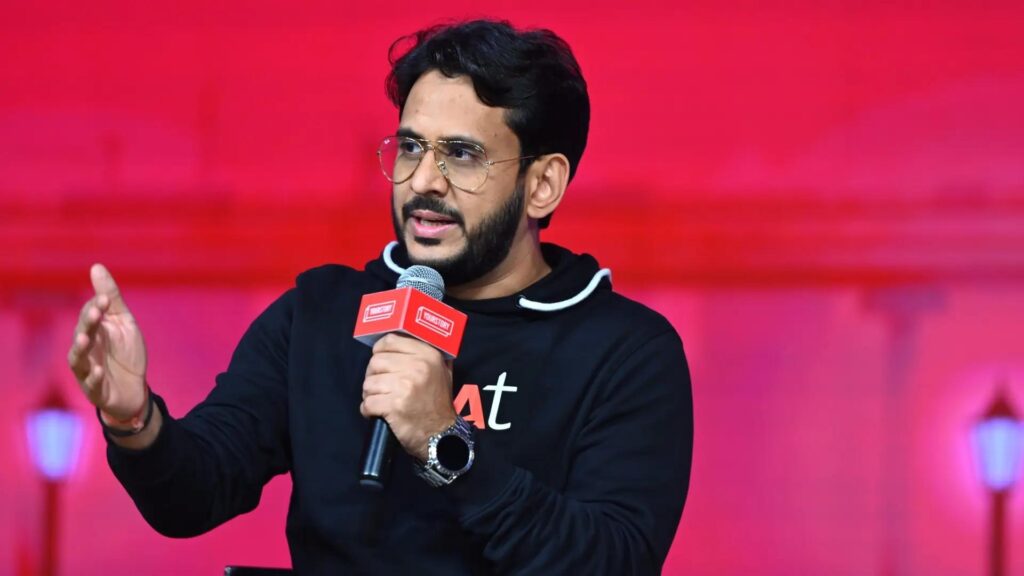
boAt started a year later with a far smaller, far more bootstrapped ambition: tangle-free charging cables, because Aman Gupta and Sameer Mehta noticed young Indians were tired of flimsy imported cords. Banks were not interested in lending to a hardware startup, and venture investors were skeptical, so the founders reinvested early sales into the next product line (mymoneyverse, October 2025). The company expanded into earphones, speakers, and smartwatches, eventually building Make in India manufacturing capacity, with roughly 70 percent of its products made domestically by 2023 (Inc42, November 2023).
How it happened
Move 1: Pricing for a customer the metro-first playbook had written off
Meesho’s founders looked at the unit economics of Flipkart and Amazon’s fashion categories and saw a structural ceiling: branded inventory could never be cheap enough for the next 200 million internet users. So Meesho built a marketplace where the seller, often a small manufacturer in Surat or Jaipur, set the price with no commission tax baked in. boAt’s founders made the same diagnosis in a different category. Premium audio brands in India were importing finished goods and pricing for a tiny urban base. boAt instead designed for the price point first and the brand identity second, treating Rs 999 to Rs 2,999 not as a discount tier but as the actual market.
Move 2: Turning distrust into design
Both companies had to solve a credibility problem before they could solve a growth problem. Meesho’s answer was operational: cash-on-delivery support, return-friendly logistics, and a seller verification layer that let a buyer in a small town trust a stranger’s listing. boAt’s answer was aesthetic: bold colors, gaming-adjacent branding, and aggressive use of cricket and Bollywood-adjacent endorsements to make an unfamiliar electronics brand feel instantly familiar to a young buyer who had never owned a “premium” gadget before.
Move 3: Profitable patience over blitzscaling
Neither company chased growth at any cost forever. boAt slipped into a Rs 129.4 crore net loss in FY23 as it poured money into local manufacturing and smartwatch category seeding, then clawed back to a consolidated profit of more than Rs 60 crore by FY25 (Inc42, June 2024; Entrepreneur, October 2025). Meesho took longer to monetize, leaning on advertising and value-added services on top of its zero-commission core before its 2025 listing, but both founders treated the underserved customer as a multi-year bet rather than a growth-hack to flip quickly.
The strategy behind the success
The shared strategic insight was sequencing, not segmentation. Meesho and boAt did not “also” serve Tier 2 and Tier 3 India alongside a metro business, they built the entire company around that customer from day one and let metro adoption follow as a byproduct of scale and word of mouth. That sequencing mattered because it forced both companies to solve for cost structure and trust before they ever had to solve for brand prestige, which meant the operating model was durable even once bigger, better-funded competitors noticed the same customer. By the time Amazon and Flipkart built dedicated value tiers, and by the time JBL and Sony cut prices to compete with boAt, Meesho and boAt already had years of seller and manufacturing relationships the newer entrants could not replicate quickly.
By the numbers
- Meesho processed close to 2 billion orders in the twelve months to June 2025, more than most Indian marketplaces’ lifetime order count (Zerodha IPO note, 2025). This is the clearest signal that the Tier 2/3 thesis was not a niche, it was the larger market.
- boAt’s FY25 EBITDA crossed Rs 142 crore, evidence that the audio and wearables category can sustain healthy margins once Make in India manufacturing matures (Entrepreneur, October 2025).
- Meesho’s IPO drew roughly 9x overall subscription, with non-institutional and retail investors each oversubscribing by more than 9x, an unusually even spread that suggests broad public conviction rather than institutional momentum alone (Sahi, March 2026).
- India’s D2C e-commerce market is forecast to grow at a 24.3 percent CAGR through 2031, reaching USD 322.1 billion (Mordor Intelligence, January 2026), meaning both companies are still early in the curve they pioneered.
- boAt has raised only about $176 million in total external funding against a peak valuation near $1.32 billion (Tracxn, 2026), a far more capital-efficient path than most consumer hardware unicorns globally.
Comparison table
| Dimension | Meesho | boAt |
|---|---|---|
| Target customer | Value-conscious Tier 2/3 shopper across categories | Young, design-conscious buyer in audio and wearables |
| Category | Horizontal marketplace | Vertical consumer electronics brand |
| Go-to-market | Zero-commission seller network, app-first | D2C site plus marketplace plus retail stores |
| Path to profit | Scaled first, monetized through ads and services pre-IPO | Dipped into losses while building local manufacturing, then turned profitable |
| Status in 2026 | Listed on NSE/BSE since December 2025 | Private, reportedly preparing an IPO (Inc42, June 2024) |
What competitors missed
Flipkart and Amazon spent years optimizing for the customer they already had: urban, card-enabled, brand-loyal. By the time both companies built genuine value-tier offerings, Meesho already owned the seller relationships and trust signals that take years to replicate in a market where word of mouth, not advertising spend, drives adoption in smaller towns. International audio brands like JBL and Sony made a parallel mistake, treating India as a market to export finished, fully-priced inventory into rather than a market that needed its own price architecture and its own aesthetic. As covered in our breakdown of asset-light D2C manufacturing, the brands that won in India built their entire cost base around the price point, not around discounting an import.
Risks and challenges
- Meesho’s marketplace model depends on continued seller trust and quality control at massive scale, and any high-profile counterfeit or fraud incident could damage the platform’s core value proposition faster than it can be repaired.
- boAt’s category is increasingly crowded, with brands like Noise and a wave of Chinese-owned audio labels competing on the same price points the company pioneered.
- Both companies face margin pressure from rising logistics, advertising, and component costs even as they hold prices low for their core customer.
- Public market scrutiny, now live for Meesho and likely ahead for boAt, will demand sustained profitability rather than the growth-first narrative that built both brands.
- Currency and import-cost exposure remains a risk for boAt despite its Make in India push, since key components are still sourced internationally.
- Regulatory changes around e-commerce FDI rules or GST on small sellers could disproportionately affect Meesho’s reseller-heavy base.
What founders can learn
- Build the cost structure for the customer you actually have, not the one your investors assume you should want.
- Treat trust as a product feature, not a marketing line item, especially when selling to a first-time online buyer.
- Capital efficiency compounds: boAt’s modest external funding relative to its valuation gave its founders more control and more room to absorb a loss-making manufacturing pivot.
- Sequencing matters more than segmentation. Design the whole company around the underserved customer first, and let broader adoption follow.
- Profitability and scale are not mutually exclusive timelines, they can be staged, as boAt’s FY23 loss followed by FY25 profit shows.
Expert analysis
Both companies are proof that India’s startup growth story is no longer about who can win Bangalore, Mumbai, and Delhi fastest, it is about who can build a cost and trust architecture for everywhere else. The bear case for both companies is similar: thinner margins than urban-first competitors, and a constant need to defend a low-price position against new entrants who can undercut on the same playbook. The bull case is that both have multi-year head starts in seller and manufacturing relationships that are genuinely hard to copy, which is a stronger moat than brand alone in a market this price-sensitive.
Future outlook
Meesho’s next test as a public company is converting its scale into durable margin, likely through advertising, fintech, and logistics services layered onto the core marketplace. boAt’s next test is defending category leadership in audio while a reported IPO process tests whether public investors will reward a hardware brand for the same profitable-patience strategy that built it. Both companies are likely to keep expanding deeper into smaller towns rather than fighting harder for share in cities where growth is already slowing.

The bottom line
Meesho and boAt did not out-market bigger competitors, they out-designed them for a customer the rest of the industry treated as an afterthought. That customer turned out to be most of the market.
Key takeaways
- Meesho and boAt both built billion-dollar outcomes by designing for Tier 2/3 India from day one, not as an afterthought to a metro strategy.
- Meesho listed on the NSE and BSE on December 10, 2025, at a 46 percent premium to its issue price.
- boAt returned to consolidated profitability in FY25 after a loss-making FY24, on the back of Make in India manufacturing investments.
- India’s D2C e-commerce market is projected to grow at a 24.3 percent CAGR through 2031.
- Both founders prioritized trust and cost architecture over brand prestige in their early years.
- Capital efficiency, not just capital raised, was central to both companies’ long-term control and resilience.
Conclusion
The Meesho and boAt stories are often told separately, one as an e-commerce case study, the other as a consumer electronics one. Read together, they describe the same insight arriving in two different categories at almost the same time: India’s next phase of growth was never going to come from convincing more people in Bangalore to buy more things online, it was going to come from convincing someone in a smaller town that this platform, or this product, was built with them in mind. Both companies bet on that years before it was an obvious or fashionable thesis, and both are now large enough that the bet looks inevitable in hindsight. It was not. It required pricing discipline, operational patience through loss-making years, and a willingness to design for a customer most of the industry was still ignoring.
TFN LENS
Building something of your own? If there is one structural lesson founders building for India should take from Meesho and boAt, it is that the largest opportunity in this market is rarely the one with the loudest competitive set. Both companies found their growth in customers and price points the rest of the industry had already written off, and built years of durable advantage before anyone else noticed. As we have argued in our coverage of [INTERNAL LINK: suggested topic, “India’s micro-SaaS and underserved-market opportunities”], the founders who win in India over the next decade are unlikely to be the ones fighting hardest for the customer everyone else already wants.
Follow The Founder Nation and NamasteVC for curated startup funding news, grant alerts, and founder stories from India’s startup ecosystem, delivered straight to your feed, every week.
Frequently asked questions
Is Meesho a public company now?
Yes. Meesho listed on the NSE and BSE on December 10, 2025, after a Rs 5,421.20 crore IPO priced at Rs 111 a share, debuting at a 46 percent premium (PL Capital, December 2025).
Is boAt profitable?
boAt’s parent company, Imagine Marketing, returned to consolidated profitability in FY25 with a net profit of more than Rs 60 crore on revenue of Rs 3,097.8 crore, after a net loss of Rs 79.7 crore in FY24 (Entrepreneur, October 2025).
Who founded Meesho and boAt?
Meesho was founded in 2015 by Vidit Aatrey and Sanjeev Barnwal. boAt was founded in 2016 by Aman Gupta and Sameer Mehta.
Are Meesho and boAt direct competitors?
No. Meesho is a horizontal e-commerce marketplace, while boAt is a vertically focused consumer electronics and audio brand. They are compared here for their shared go-to-market strategy, not for competing in the same category.
Is boAt planning an IPO?
boAt’s leadership has discussed pursuing an IPO, with one report citing a target raise of around Rs 2,000 crore, though an exact timeline has shifted in past statements (Inc42, June 2024). Confirm the latest status before treating any date as final.
How big is India’s D2C and value e-commerce opportunity?
India’s D2C e-commerce market was valued at roughly USD 87.5 billion in 2025 and is projected to grow to USD 108.76 billion in 2026, reaching USD 322.1 billion by 2031 at a 24.3 percent CAGR (Mordor Intelligence, January 2026).
Sources
- Meesho IPO listing live: shares list at 46% premium, PL Capital, December 2025
- Meesho IPO opens: from price band to GMP, Business Standard, December 2025
- Meesho IPO listing: a 9x retail subscription, Sahi, March 2026
- Meesho Ltd IPO details, Zerodha, 2025
- Meesho company profile and funding, Tracxn, 2026
- Indian e-commerce platform raises $275M, TechCrunch, 2025
- boAt returns to profitability with strong FY25 performance, Entrepreneur India, October 2025
- boAt company profile and funding, Tracxn, 2026
- boAt in talks to raise funds, eyes IPO, Inc42, June 2024
- boAt clocks Rs 3,400+ crore revenue in FY23, Inc42, November 2023
- Aman Gupta boAt case study, MyMoneyVerse, October 2025
- India D2C e-commerce market analysis, Mordor Intelligence, January 2026.
© 2026 The Founder Nation. All rights reserved.