
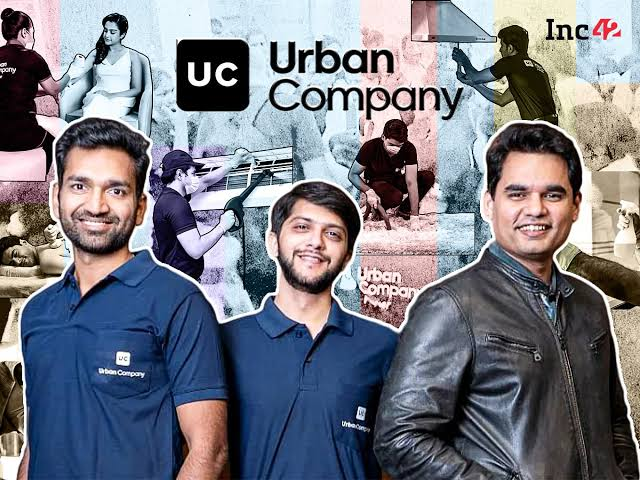
Abhiraj Bhal, Varun Khaitan, and Raghav Chandra built Urban Company into India's leading technology-driven home services marketplace.
Written by TFN Research Desk | covering startups, technology, venture capital, and business strategy.
Quick-Facts Bio Box
Abhiraj Bhal: Born, Patna, Bihar; B.Tech, Electrical Engineering, IIT Kanpur; MBA, IIM Ahmedabad; Occupation: Co-founder and CEO, Urban Company; Years active: 2014-present; prior career: Boston Consulting Group, Singapore (StartUpTalky).
Varun Khaitan: IIT Kanpur alumnus, batchmate of Bhal; Occupation: Co-founder and COO, Urban Company; Years active: 2014-present (Wikipedia).
Raghav Chandra: Computer Science degree, University of California, Berkeley; Occupation: Co-founder and CTPO, Urban Company; Years active: 2014-present; prior career: Yelp, Twitter (Business Model Canvas).
Table of Contents
- Introduction
- The Urban Company Story
- Business Model
- How Urban Company Makes Money
- Funding History
- Revenue and Recent Challenges
- Urban Company vs Competitors
- Current Role and Recent Moves
- Key Takeaways
- FAQs
Introduction
Abhiraj Bhal, Varun Khaitan, and Raghav Chandra, each coming off a failed first startup, founded UrbanClap in October 2014 to organize India’s fragmented home services market. Rebranded Urban Company in 2020, the company listed on the NSE and BSE in September 2025, posting its first full-year profit just before going public.
The Urban Company Story
Bhal and Khaitan, IIT Kanpur batchmates, had earlier co-founded Cinema Box, a service letting bus passengers stream movies over Wi-Fi, which failed to gain traction (Sovrenn). Chandra, a UC Berkeley computer science graduate with stints at Yelp and Twitter, was separately building an auto-rickshaw aggregator called Buggy.in that also shut down (Bollywood Shaadis). A mutual friend introduced the three, and they realized they were circling the same problem: India’s home services sector, from plumbers to beauticians, lacked a trusted, technology-driven marketplace.
They tested the idea informally, connecting local beauticians and plumbers with their personal networks and friends’ companies, before launching UrbanClap.com in November 2014 with an initial ₹4,000 Facebook ad spend (WeRiseByLiftingOthers). The company raised seed funding within months, expanded to 10 cities and 50-plus service categories in its first year, and evolved from a lead-generation model into a full-stack marketplace managing onboarding, training, and payments for service professionals (Business Model Canvas). It rebranded to Urban Company in January 2020 while expanding into Australia, Singapore, and the UAE.
Business Model
Urban Company runs a full-stack marketplace rather than a simple lead-generation directory, managing professional onboarding, training, tools, and even product sales to its service partners (Business Model Canvas). It also sells its own “Native” brand hardware, including water purifiers and smart locks, directly to consumers (INDmoney).
How Urban Company Makes Money
Revenue comes from three streams: platform service fees on bookings (roughly 20-30 percent commission), sales of tools and consumables to service professionals, and direct sales of Native-brand products to consumers (UnlistedZone).
Funding History
| Round | Year | Amount | Lead Investors |
|---|---|---|---|
| Seed | Jan 2015 | $1 million | Accel Partners, SAIF Partners (Wikipedia) |
| Series A | 2015 | $10 million | SAIF Partners, Accel Partners (Wikipedia) |
| Series B | 2016 | $25 million | Bessemer Venture Partners (Wikipedia) |
| Series D | 2018 | $50 million | Steadview Capital, Vy Capital (Wikipedia) |
| Series E | — | $75 million | Tiger Global, Steadview Capital, Vy Capital (Wikipedia) |
| IPO | Sep 2025 | ₹1,900 crore | Anchor investors: Goldman Sachs, Citigroup, Government of Singapore, Nomura (Knowledze) |
Ratan Tata also invested an undisclosed amount in December 2015 (Wikipedia). Roughly 75 percent of the IPO was an offer for sale, letting early backers like Accel (27.3x return), Elevation Capital (19.1x return), and Bessemer (14.4x return) partially exit (INDmoney).
Revenue and Recent Challenges
Revenue from operations grew 38 percent to ₹1,144.47 crore in FY25 from ₹828 crore in FY24, with revenue CAGR of 53 percent between FY23-25 (ICICI Direct). The company posted its first full-year net profit of ₹239.77 crore in FY25, reversing a ₹92.77 crore loss in FY24, though ₹211 crore of that profit came from a one-time deferred tax credit; underlying pre-tax profit was closer to ₹28-29 crore (elitewealth.in). EBITDA margin turned positive at 1.1 percent in FY25, improving to 5.7 percent in Q1 FY26, though Q1 FY26 profit (excluding the tax gain) fell 55 percent year-on-year to ₹5.6 crore (INDmoney).
Urban Company vs Competitors
| Company | Position | Notes |
|---|---|---|
| Housejoy | Home services marketplace | Smaller-scale direct competitor |
| NoBroker Home Services | Cross-sell from NoBroker’s rental platform | Growing adjacent competitor |
| Traditional offline providers | Unorganized local plumbers, electricians, beauticians | Still capture the vast majority of demand |
Urban Company has no listed peer in India and holds a first-mover advantage, but its own IPO filings flagged that online penetration in home services remains below 1 percent, meaning traditional offline, unorganized providers, not any single tech rival, remain its biggest competitive reality (INDmoney).
Current Role and Recent Moves
All three founders remain with the company post-IPO: Bhal as CEO, Khaitan as COO, and Chandra as CTPO, together holding nearly 20 percent combined stake (INDmoney). The stock listed at a 57.5 percent premium after the IPO was subscribed 103.63 times overall (INDmoney). The company has faced recurring gig-worker protests over policies like ID blocking and the “auto-assign” feature, which Bhal has publicly defended while facing criticism from labor groups and reports such as Al Jazeera’s 2024 coverage (Wikipedia).
Key Takeaways
- All three founders had failed first ventures before finding the shared insight behind Urban Company.
- The company evolved from a lead-generation directory into a full-stack marketplace managing training, tools, and even hardware products.
- Urban Company listed on the NSE and BSE in September 2025 after a 103x-subscribed IPO, debuting at a 57.5 percent premium.
- FY25 revenue grew 38 percent to ₹1,144 crore, with a headline profit heavily aided by a one-time deferred tax credit.
- Its real competitive challenge is less about rival apps and more about converting India’s overwhelmingly offline, unorganized home services market online.
FAQs
Who founded Urban Company?
Abhiraj Bhal, Varun Khaitan, and Raghav Chandra, in October 2014 as UrbanClap.
When did it rebrand to Urban Company?
January 2020, alongside expansion into Australia, Singapore, and the UAE.
Has Urban Company gone public?
Yes, it listed on the NSE and BSE on September 17, 2025.
Is Urban Company profitable?
It posted its first full-year profit in FY25, though a large portion came from a one-time tax credit rather than core operations.
Who are Urban Company’s key investors?
Accel Partners, SAIF Partners, Bessemer Venture Partners, Tiger Global, Vy Capital, and Ratan Tata, among others.
How does Urban Company make money?
Platform service fees, product sales to professionals, and direct sales of its Native-brand hardware.
Who are Urban Company’s competitors?
Housejoy and NoBroker Home Services, though the larger competitive reality is India’s unorganized offline service sector.
Do the founders still run the company?
Yes, all three remain in leadership roles post-IPO.
© The Founder Nation | Written by TFN Research Desk