
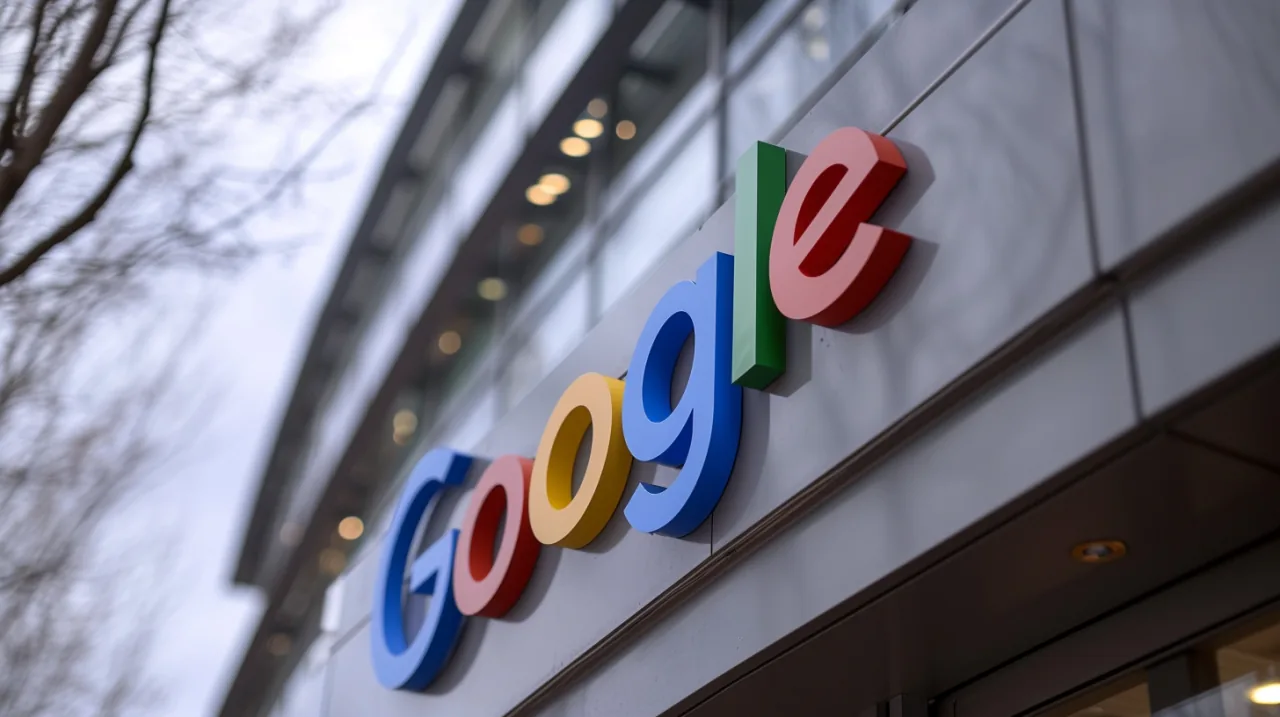
Google is positioning AI at the center of its future, combining Gemini, massive product distribution, cloud infrastructure, and custom silicon to strengthen its technology ecosystem.
Google’s artificial intelligence push in 2026 is not a story about benchmarks. It is a story about control. At Google I/O 2026 in May, the company announced Gemini 3.5 Flash, Gemini Omni, AI agents inside Search, and a rebuilt development platform called Google Antigravity — but the actual strategy running underneath all of it is harder to see from the stage.
The real bet is on distribution, infrastructure, and ecosystem depth. Google is not trying to win the model race. It is trying to make the model race irrelevant.
This distinction matters because the competitive conversation in AI has largely been framed around who has the biggest model, the best benchmark scores, or the most parameters. Google is choosing to compete on different terrain entirely.
The Agentic Shift at Google I/O 2026
Sundar Pichai made his strategic intent clear in the opening minutes of the keynote: this year is about agents — software that plans, acts, and verifies its own work, not just software that answers.
At Google I/O 2026, the company revealed new agentic capabilities in Search where users can create, customize, and manage multiple AI agents for ongoing tasks. Unlike traditional search tools that respond only when prompted, these information agents are designed to operate continuously in the background, 24 hours a day, helping users stay informed without needing to repeatedly search for the same information.
Gemini 3.5 Flash, the first model in the new 3.5 series, was made generally available the same day. It outperforms Gemini 3.1 Pro on challenging coding and agentic benchmarks including Terminal-Bench 2.1 at 76.2%, GDPval-AA at 1656 Elo, and MCP Atlas at 83.6%. The model was positioned not as a general-purpose upgrade but as the backbone for agent fleets — fast, cheap, and built for long-horizon tasks.
The NotebookLM upgrade released on June 8, 2026 followed the same pattern. Google moved NotebookLM onto Gemini 3.5, added agentic source discovery in chat, gave each notebook a secure cloud computer for code execution, and expanded output formats to include charts, PDFs, spreadsheets, structured data, and PowerPoint files. Research workflows are not just becoming more conversational. They are becoming more automated.
The Infrastructure Advantage Nobody Talks About
The public conversation around Google’s AI tends to focus on Gemini. The strategic conversation should focus on TPUs.
Google committed $75 billion in capex for 2025. Actual spend came in at $91.4 billion, and Alphabet guided 2026 capex to $175 to 185 billion. Google Cloud revenue grew 48% year-over-year in Q4 2025, exiting the year at a $70 billion-plus annual run rate.
Google’s TPU strategy is the key differentiator: owning the silicon stack reduces Nvidia dependency and cuts inference costs by an estimated three to five times compared to GPU-based serving. That cost gap compounds over time. Every inference Google runs on its own silicon is cheaper than what a competitor running on Nvidia hardware pays. At the scale Google operates, the difference is not marginal.
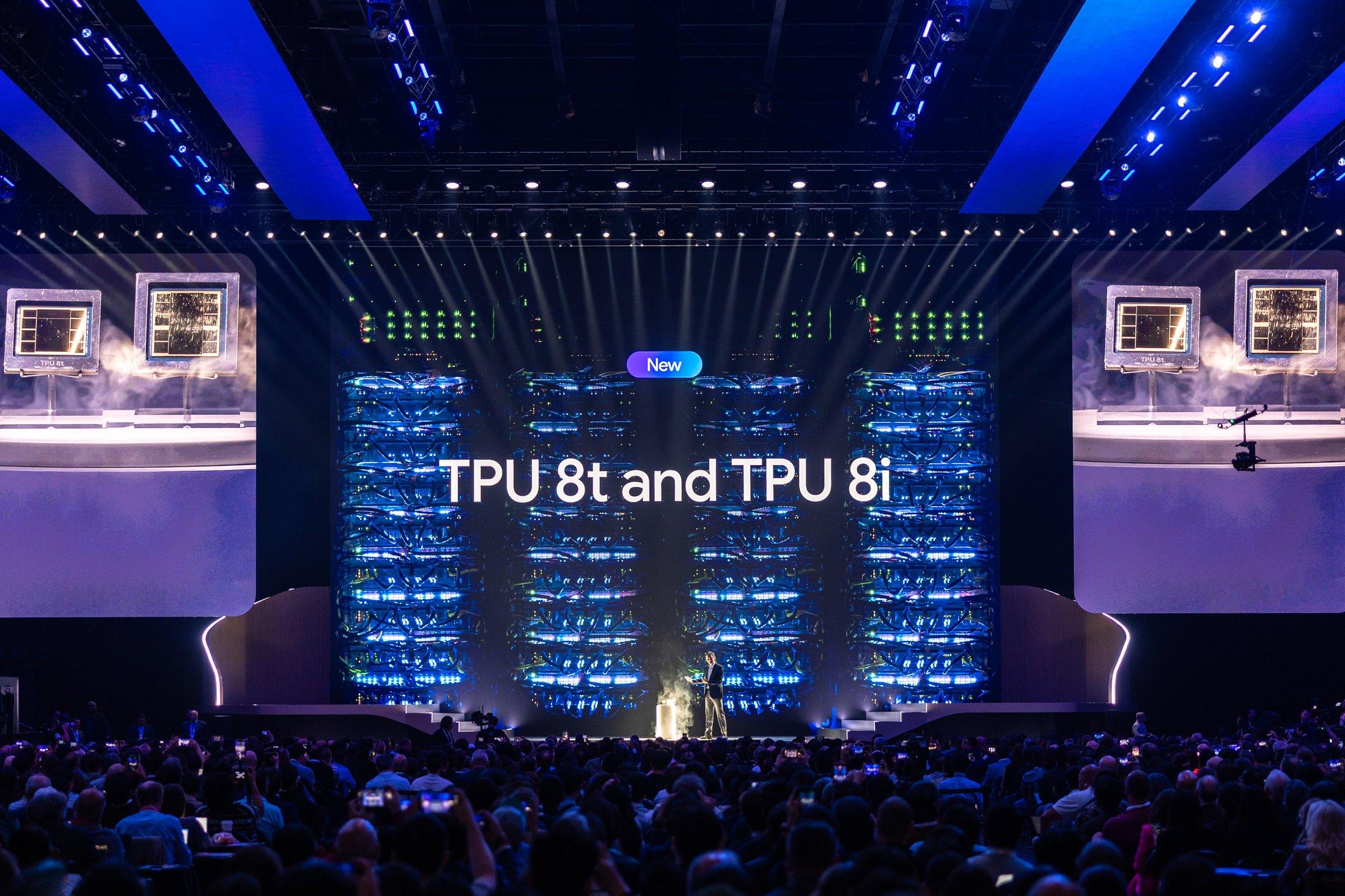
At Google Cloud Next 2026, the company announced a split of its TPU line into TPU 8t for training and TPU 8i for inference, marking a workload-specific approach to custom AI accelerators. The dual-chip strategy signals that workload specialization in AI accelerators has reached a tipping point.
Blackstone has committed $5 billion in an AI infrastructure venture with Google, powered by TPU chips. Separately, Google Cloud showcased developments in what it described as the “IQ Era” by unveiling new agentic AI solutions powered by the Gemini 3.1 Pro model and Vertex AI Agent Builder.
The external appetite for Google’s silicon is real. Google’s expanded agreement with Anthropic covers up to one million TPUs, representing over one gigawatt of capacity. Reporting also suggests Google and Meta are in advanced discussions for a multibillion-dollar arrangement in which Meta would lease TPUs beginning in 2026 and potentially purchase systems outright starting in 2027. Google’s chip division is becoming its own revenue line.
The Distribution Flywheel
Model capability is necessary but not sufficient. What separates Google from every AI-native competitor is where its models actually live.
Google has seven products serving over two billion users each. It can deploy new AI features at a global scale with zero friction, creating a virtuous cycle of user interaction, data collection, and model improvement that is nearly impossible for competitors to replicate.
Google already controls major internet infrastructure through Android, Chrome, Gmail, Maps, YouTube, Search, and Workspace tools. Unlike smaller AI companies that need users to shift platforms, Google can simply inject AI into products people already use daily.
This is the move OpenAI, Anthropic, and Meta cannot easily replicate. They have models. Google has the pipes those models need to reach people at scale. A user can research a trip using Gemini in Search, have their flight confirmations summarized by Gemini in Gmail, get directions from Gemini in Maps on their Android phone, and collaborate on an itinerary with Gemini in Docs. This seamless cross-product experience, powered by a single unified AI drawing from a user’s personal data graph, creates a level of utility and convenience that a collection of disconnected third-party applications cannot match.
AI Mode in Search has surpassed one billion monthly users, with queries more than doubling every quarter since launch. Search queries reached an all-time high last quarter. The feared scenario where AI would destroy Google’s search traffic has not materialized. AI Mode is producing more search activity, not less.
Where the Strategy Has Friction
Google’s integrated approach is powerful, but it is not frictionless.
Google came into 2026 with the best narrative positioning it had ever had in AI, but companies that aren’t locked into the Microsoft ecosystem often default to Google Workspace while Google has historically struggled to convert that presence into the kind of deep enterprise trust that Microsoft has built. That pattern has followed them into AI.
Enterprise buyers are deliberate. Trust in an AI platform takes longer to build than a consumer product launch cycle. Google’s consumer empire is its greatest asset and, in some markets, a liability. Enterprises choosing an AI partner for mission-critical workflows weigh vendor lock-in, data governance, and reliability — areas where Google’s consumer brand image does not automatically transfer.
There is also the question of competitive response. The real battleground for 2026 and 2027 will not be peak FLOPs per chip but rather cluster-level goodput and cross-site scalability. Nvidia is not sitting still. Amazon and Microsoft have their own custom silicon programs. The infrastructure advantage Google has built over a decade is real, but the gap is narrowing.
A Comparison of Google’s Core AI Bets in 2026
| Dimension | Google’s Position | Key Risk |
| Silicon | TPU 8t/8i, own inference stack | Nvidia remains preferred for many enterprise workloads |
| Distribution | 2B+ users across 7 products | Regulatory scrutiny of ecosystem consolidation |
| Agents | Antigravity, AI Mode agents, NotebookLM | Enterprise trust gap vs Anthropic, Microsoft |
| Cloud revenue | $70B+ run rate, 48% YoY growth | Heavy capex commitments ($175–185B in 2026) |
| Models | Gemini 3.5 Flash, Gemini Omni | Narrative still shaped by OpenAI releases |
The strategic picture that emerges from 2026 is less about who has the smartest model and more about who has built an AI system that is hardest to leave. Google is building exactly that. As Google’s own 2026 Responsible AI Progress Report notes, 2025 marked AI’s transition into a “helpful, proactive partner, capable of reasoning and navigating the world with users.” The shift from novelty to infrastructure underpins the entire report.
That framing is not accidental. Infrastructure is where moats are built. Google knows this better than anyone.
Frequently Asked Questions
What is Google’s AI strategy in 2026? Google’s primary AI strategy is not about building the largest model. The focus is on integrating AI agents into its existing product ecosystem — Search, Gmail, Workspace, Android — while owning the underlying compute infrastructure through custom TPUs. The goal is to make switching away from Google’s AI products structurally difficult for both consumers and enterprises.
What was announced at Google I/O 2026? The major announcements included Gemini 3.5 Flash (a fast, agentic model now the default in AI Mode), Gemini Omni (a multimodal model for video creation), Google Antigravity 2.0 (an agent-first development platform), information agents inside Search, and Gemini Spark for enterprise users. The theme across all of them was autonomous agents that act on the user’s behalf rather than waiting to be prompted.
How does Google’s TPU strategy give it a competitive advantage? Google has been developing custom Tensor Processing Units since 2014. The latest generation splits into TPU 8t for training and TPU 8i for inference. Owning its silicon stack allows Google to run AI inference at an estimated three to five times lower cost than competitors using Nvidia GPUs. Google is also licensing its TPUs to third parties including Anthropic and, reportedly, Meta, turning infrastructure into a separate revenue line.
Is Google winning the AI race against OpenAI and Anthropic? The answer depends on which race you are watching. On model benchmarks, the field is close enough that no single company can claim a durable lead. On distribution, Google has a structural advantage that no AI-native company can replicate without decades of product building. Where Google lags is in enterprise trust and narrative, areas where Anthropic and Microsoft have stronger positioning with certain buyer segments.
What is Google Antigravity? Google Antigravity is Google’s agent-first development platform, announced at I/O 2026 as a replacement for earlier developer tooling. It allows developers to build and deploy AI agents using Gemini models, with integrations across Google Cloud, Android Studio, and Workspace. Antigravity 2.0 ships as both a desktop app and a command-line interface and is designed to support long-horizon agentic tasks at scale.
Sources
- Google Blog: What’s new at Google I/O 2026
- Google Blog: 100 things we announced at Google I/O 2026
- Google Blog: Google Search’s I/O 2026 updates: AI agents and more
- TechCrunch: How to use Google’s new AI agents to go beyond your standard searches
- CNBC: Blackstone to invest $5 billion in AI infrastructure venture with Google, powered by TPU chips
- Data Center Frontier: Google’s TPU Roadmap: Challenging Nvidia’s Dominance in AI Infrastructure
- Value Add VC: Google $75B AI Infrastructure Spend 2025: Data Centers, TPUs, and the Gemini Bet
- Hyperframe Research: Google Cloud Next 2026: Google Cloud Bifurcates the AI Future
- Nerova AI: Google NotebookLM Update June 8, 2026
- MindStudio: Google vs OpenAI vs Anthropic Momentum in 2026
Stay in the Loop
For more stories, breakdowns, and unfiltered takes on what is really happening in Indian and global business and tech, follow TheFounder Nation.
Instagram: thefoundernation
We cover what the mainstream business press won’t.
© TheFounder Nation | All rights reserved