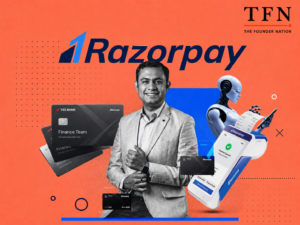

Razorpay's founders built one of India's leading fintech companies after solving a problem they had personally experienced.
While most pitch decks lead with product-market fit, the investors who actually write the first check are quietly screening for something that comes before it, and most founders never name it out loud.
Topic tags: Startup Strategy • Founder-Market Fit • Venture Capital • Founder Stories • Indian Startup Strategy
Harshil Mathur and Shashank Kumar approached nearly 100 banks while building Razorpay, and almost all of them said no (Brandz Magazine, January 2026). What kept them in the room long enough to eventually get a yes was not a polished deck. It was that both founders had lived the exact problem they were solving, repeatedly, while building a separate crowdfunding platform that kept breaking on payment integration (OrangeOwl, May 2025). That lived frustration is the clearest available definition of founder-market fit, and it is a filter investors apply long before they ask about total addressable market.
Why this story matters
Product-market fit gets all the attention in startup discourse because it is measurable: retention curves, NPS scores, cohort data. Founder-market fit is harder to quantify, which is exactly why it gets underrated by founders building their first pitch deck and overrated in importance by the investors evaluating it. Founder-market fit refers to the alignment between a founder’s skills, experience, and passion, and the needs and characteristics of the target market, and it functions as a precondition for everything that follows: market understanding, decision-making speed, and the credibility that makes investors comfortable writing a check before there is much else to evaluate (Pitchdrive, 2026).
The reason this matters more in India specifically than in some other startup ecosystems is structural. India is not one market, it is 20-plus markets segmented by geography, language, income, and digital maturity (Kae Capital, February 2026), and a founder who has not lived inside the specific slice of that market they are building for is starting several steps behind a founder who has.
Background
Founder-market fit is not the same as founder passion, and conflating the two is one of the most common mistakes in early-stage pitching. Passion and commitment matter, but the deeper signal investors look for is whether a founder has direct exposure to the problem: have they worked inside the industry, felt the pain personally, or built deep domain expertise that lets them spot what a generic operator would miss (Pitchdrive, 2026). A founder can be deeply passionate about solving urban mobility and still lack founder-market fit if they have never worked inside logistics, transportation, or the specific regulatory environment that shapes how that market actually functions in India.
Razorpay’s origin story is a clean illustration of the difference. Harshil Mathur and Shashank Kumar were not entrepreneurs looking for a problem to solve in the abstract. They were engineers running into a specific, recurring, expensive obstacle while building something else entirely, and they understood that obstacle from the inside because they had personally tried and failed to integrate existing payment gateways (OrangeOwl, May 2025). That is founder-market fit in its purest form: the founder is also, structurally, the customer.

How it happened
Move 1: Building from lived frustration rather than market research
Most founder-market fit case studies in India share a common origin pattern: the founder did not discover the problem through a market sizing exercise, they discovered it by trying to do something else and hitting a wall the existing market had no answer for. Razorpay’s founders were attempting to build a crowdfunding platform when they kept running into the same payment integration failure, and that repeated frustration, not a TAM slide, is what convinced them the problem was real and underserved (OrangeOwl, May 2025). This pattern recurs across Indian fintech and B2B software specifically, sectors where deep domain understanding cannot be substituted with generic execution speed, because local regulation, banking relationships, and merchant trust take years to understand from the outside (Razorpay Business via Inc42, October 2022).
Move 2: Letting domain credibility do the work that capital cannot
When Razorpay needed a banking partner willing to take a risk on an unproven startup, the deciding factor was not their pitch deck polish, it was that a senior banker was eventually persuaded the founders genuinely understood the mechanics of the problem they claimed to be solving (Brandz Magazine, January 2026). This is the practical payoff of founder-market fit: it compresses the credibility-building process that would otherwise take a generic founder years of relationship-building to establish. Investors increasingly look for founders who possess this kind of fit specifically because it demonstrates commitment, expertise, and the ability to navigate the market successfully without needing to be taught the fundamentals (Pitchdrive, 2026).
Move 3: Choosing complementary co-founders without diluting domain depth
Razorpay’s structure paired Shashank Kumar’s business and fundraising instincts with Harshil Mathur’s technical depth and product vision, a balance that let the company avoid the common trap where a technical founder lacks business strategy or a business founder lacks technical credibility (BrandOwnerDetail, February 2026). The lesson generalizes beyond fintech: founder-market fit at the company level does not require every co-founder to have identical domain exposure, it requires the founding team collectively to cover the market’s real requirements without any critical gap left unaddressed.
What competitors missed
Competing payment gateways in India’s 2014 market were largely built for large enterprises, with complicated onboarding and legacy infrastructure that ignored the much larger population of startups and SMEs who could not navigate that complexity (Venture Linkup, May 2025). The founders building those incumbent platforms were not wrong about the market existing, they simply lacked the founder-market fit to notice that the underserved segment, small and mid-sized businesses, was where the actual unmet need lived. A founder without that lived frustration sees a crowded market and assumes the obvious customer segment is already served. A founder with founder-market fit sees the same market and immediately understands which specific slice has been quietly ignored, because they were standing in that slice themselves.
The broader miss across many funded-but-failed Indian startups is treating founder-market fit as optional once capital is secured. A founder who raises a large round on the strength of a strong pitch but lacks genuine domain exposure often discovers, expensively, that capital cannot substitute for the pattern recognition a founder with real founder-market fit develops naturally over years inside the problem space.
Risks and challenges
Founder-market fit is not static, and founders can lose it as fast as they gained it. It can evolve as market dynamics change or as the founder gains new skills and experience, but it requires continuous reassessment, not a one-time declaration made at the founding moment (Pitchdrive, 2026). A founder with genuine fit for a 2019 fintech landscape may find that fit erodes if the regulatory environment, customer behavior, or competitive set shifts dramatically and the founder does not stay close enough to the ground to track the shift.
There is also a real risk of overclaiming founder-market fit as a story rather than possessing it as a structural advantage. Founders increasingly understand that investors screen for this signal, which creates an incentive to construct a compelling personal narrative around domain expertise that does not actually run as deep as the pitch suggests. Investors who cannot distinguish a constructed narrative from genuine lived experience risk funding founders who talk convincingly about a market they do not actually understand at the operational level.
Founder-market fit can also become a trap when a founder’s expertise is too narrow. A founder who has spent a decade exclusively inside one specific corner of a market may have deep founder-market fit for that corner and a critical blind spot for adjacent segments the business eventually needs to expand into, mistaking comprehensive understanding of a niche for comprehensive understanding of the category.
What founders can learn
Audit your own founder-market fit honestly before fundraising, not as a narrative exercise but as a genuine inventory of what you have lived through directly versus what you have only researched. The gap between the two is exactly what an experienced investor will probe for in diligence.
Build founding teams that cover collective founder-market fit even when no single founder covers it alone. Razorpay’s pairing of technical depth with business and fundraising instinct is a template, not a coincidence, and most successful Indian startups show some version of this complementary structure.
Treat founder-market fit as a renewable resource that requires ongoing investment, not a credential earned once at founding. Staying close to the customer, the regulatory environment, and the competitive landscape as the market evolves is how founders keep the fit current rather than letting it calcify into outdated intuition.
Use founder-market fit to identify the underserved segment competitors are missing, not just to justify entering a market competitors are already serving well. The most defensible founder-market fit stories involve a founder who saw an ignored slice of the market precisely because they were standing inside it, not observing it from outside.
Expert analysis
Bull case. Founder-market fit functions as a genuine moat in categories where domain complexity is high and trust-building is slow, particularly fintech, healthtech, and regulated B2B sectors in India. A founder with real lived exposure to the problem compresses years of credibility-building that a well-funded but domain-naive competitor cannot buy at any price, which is precisely what let Razorpay convert a string of rejections into eventual banking partnerships that pure capital could not have purchased faster.
Bear case. Founder-market fit can become an excuse for founders to avoid hiring outside expertise or challenging their own assumptions, since deep personal conviction about a problem can calcify into resistance to evidence that the market has moved. A founder whose entire credibility rests on having “lived the problem” may be slower to recognize when the problem itself has changed shape.
Contrarian view. The emphasis on founder-market fit in Indian venture circles may be partly a post-hoc narrative applied to already-successful companies rather than a reliable predictive signal at the point of investment. Razorpay’s story reads cleanly in hindsight, but for every founder pair whose lived frustration led to a unicorn, there are founders with equally strong domain exposure whose companies failed for reasons unrelated to founder-market fit entirely, suggesting the concept may be necessary but is far from sufficient.
Future outlook
As Indian investors continue shifting from scale-at-any-cost toward unit-efficiency and defensibility, founder-market fit is likely to gain even more explicit weight in early-stage diligence, particularly as AI tooling compresses the time it takes to build a credible-looking product, making domain depth and lived customer understanding a comparatively harder-to-fake differentiator than execution speed alone. Founders entering regulated or trust-dependent categories, fintech, healthtech, agritech, should expect investors to probe founder-market fit explicitly rather than infer it from a polished pitch.
The bottom line
Product-market fit tells investors the product works. Founder-market fit tells investors why this particular team, and not a better-funded competitor, is the right team to keep making the product work as the market shifts underneath it. Razorpay’s founders did not win because they pitched well after a hundred rejections, they won because they had lived the exact problem they were pitching, and that lived experience is what eventually made a banker, and then investors, willing to bet on them.
Key takeaways
Founder-market fit refers to the alignment between a founder’s skills, experience, and passion and the actual needs of the target market, functioning as a precondition for credibility, decision-making, and investor trust (Pitchdrive, 2026).
Razorpay’s founders developed genuine founder-market fit by personally hitting the payment integration problem while building a separate crowdfunding platform, not through abstract market research (OrangeOwl, May 2025).
Founder-market fit is not static and requires continuous reassessment as market dynamics, customer behavior, and competitive landscapes shift over time (Pitchdrive, 2026).
Founding teams can achieve collective founder-market fit through complementary co-founder skills even when no single founder covers every dimension alone.
Founder-market fit can become a liability when it calcifies into resistance to new evidence, or when a founder’s narrow domain depth creates blind spots in adjacent market segments.
TFN LENS
The clearest distinction between founder-market fit and product-market fit is this: product-market fit is something you discover through the market’s response to what you have built. Founder-market fit is something you bring into the building process before the market has responded to anything at all. It is the reason two founders with a mediocre first product can out-execute a better-funded team with a polished one, because the founders with real fit make faster, better-calibrated decisions at every fork in the road, having lived the problem rather than studied it.
For Indian founders building in regulated or trust-dependent categories in 2026, the operating question before fundraising should not just be “do I believe in this problem.” It should be “have I actually lived inside this problem long enough to make decisions about it faster and more accurately than someone who has only researched it.” Razorpay’s hundred bank rejections were not a sign their founder-market fit was wrong. They were the friction every founder without an existing track record has to push through, and what got them through it was a depth of understanding capital alone cannot buy.
Building something of your own? Follow The Founder Nation and NamasteVC for curated startup funding news, grant alerts, and founder stories from India’s startup ecosystem, delivered straight to your feed, every week.
Frequently asked questions
What is founder-market fit?
Founder-market fit is the alignment between a founder’s skills, lived experience, and passion and the actual needs and characteristics of the market they are building for, distinct from product-market fit, which measures how well the product itself satisfies customer demand (Pitchdrive, 2026).
How is founder-market fit different from product-market fit?
Product-market fit is measured through market response: retention, NPS, repeat usage. Founder-market fit exists before the product is built and reflects whether the founder has the domain credibility, lived experience, and decision-making advantage to build the right product faster and more accurately than a generic competitor.
How did Razorpay’s founders demonstrate founder-market fit?
Harshil Mathur and Shashank Kumar personally encountered the payment integration problem while building a separate crowdfunding platform, giving them direct, lived understanding of the exact pain point they later built Razorpay to solve, rather than discovering the opportunity through external market research (OrangeOwl, May 2025).
Can founder-market fit be built by a team rather than one individual?
Yes. Founding teams can achieve collective founder-market fit through complementary skills, as seen in Razorpay’s pairing of Shashank Kumar’s business and fundraising strength with Harshil Mathur’s technical depth, where the combination covered the market’s full requirements even though neither founder alone covered everything (BrandOwnerDetail, February 2026).
Why do investors care about founder-market fit specifically in India?
India’s market fragmentation across geography, language, income, and digital maturity makes generic execution speed less defensible than deep domain understanding, particularly in regulated or trust-dependent sectors like fintech and healthtech, where lived experience compresses the credibility-building process that capital alone cannot accelerate.
Sources
- Razorpay – https://razorpay.com/
- Kae Capital – https://www.kaecapital.com/
- Inc42 – https://inc42.com/
- Pitchdrive – https://pitchdrive.com/
- Startup India – https://www.startupindia.gov.in/
- Y Combinator – https://www.ycombinator.com/library
- Sequoia Capital – https://www.sequoiacap.com/
©️ The Founder Nation | All rights reserved | Written by TFN Research Desk |