

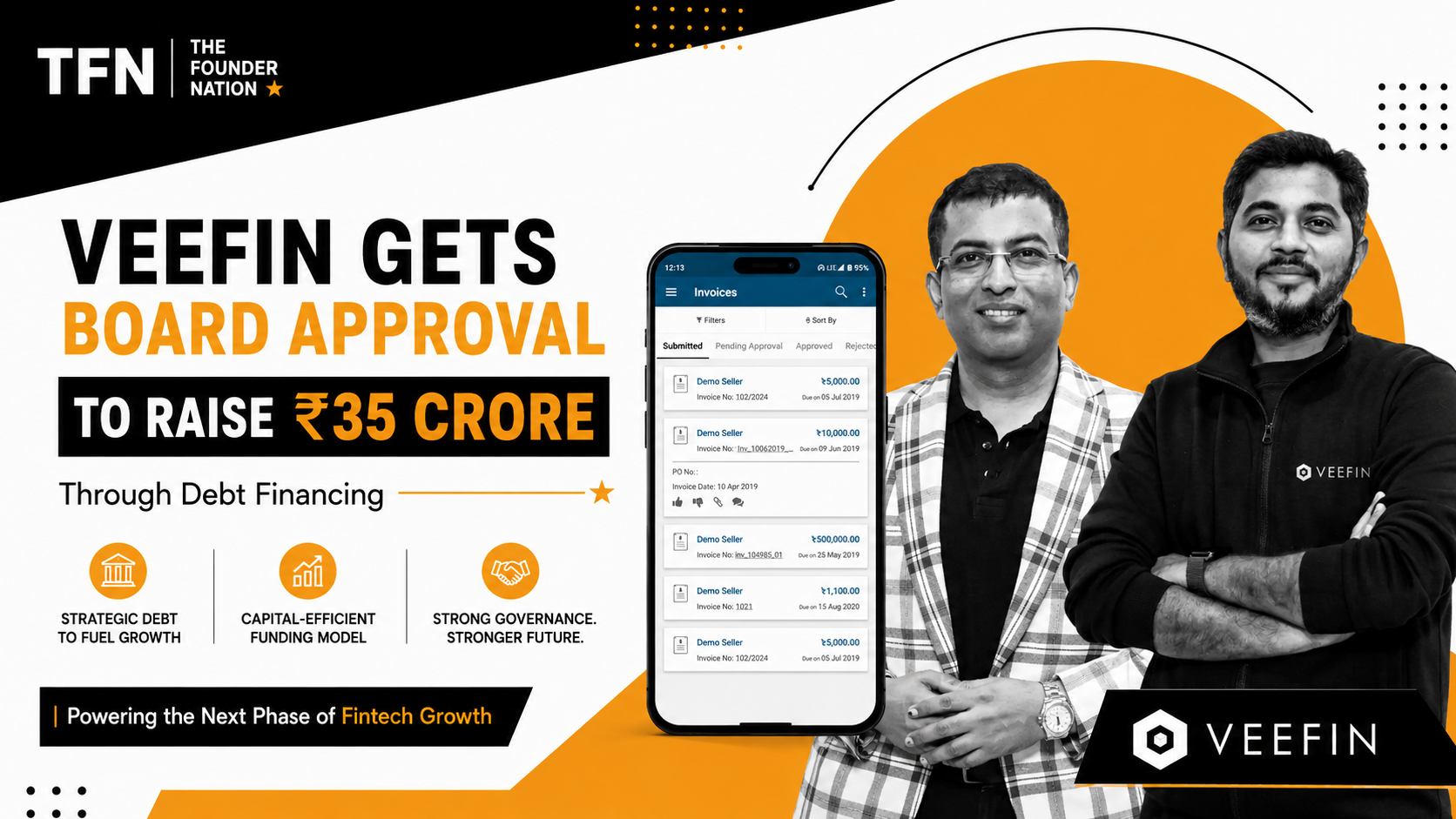
Veefin founders following the company's board approval to raise ₹35 crore through debt financing, supporting its next phase of fintech growth and expansion.
Veefin Chooses Debt Financing to Fuel Growth Without Equity Dilution
Veefin, a financial services fintech platform, received board approval to raise ₹35 crore through debt financing, signalling shift toward capital-efficient fundraising models as equity valuations moderate and debt markets open for high-growth technology companies. The debt capital will fund growth initiatives while maintaining founder-investor alignment and avoiding dilution associated with equity rounds.
Debt financing represents strategic alternative to equity fundraising for profitable or near-profitable technology companies demonstrating consistent revenue growth and positive unit economics. Veefin’s debt capital raise reflects investor confidence in platform’s cash generation capabilities and sustainable business model enabling timely repayment obligations.
Board Approval Signals Maturing Capital Strategy for FinTech Expansion
The fintech platform operates across lending, payments, and financial services verticals, serving small businesses, merchants and individual consumers. Board approval signals governance maturity and institutional investor participation in capital structuring decisions optimising company’s long-term value creation trajectory.
Debt financing trends within Indian startup ecosystem reflect maturing venture capital markets where founders increasingly leverage multiple capital sources including venture debt, strategic borrowing, and revenue-based financing alongside traditional equity rounds. This capital stack diversification reduces founder dilution while providing investors preferred return structures and downside protection.
Veefin’s ₹35 crore debt raise follows successful equity fundraising from institutional investors validating business model and market opportunity. The combination of equity and debt capital enables aggressive expansion into new geographies, product categories and customer segments while maintaining operational leverage and profitability metrics.
The board approval demonstrates founder governance discipline and institutional-grade financial decision-making as venture-backed companies transition toward public market readiness. Debt capital deployment complements equity investment thesis while providing flexible capital deployment aligned with product roadmaps and market expansion strategies.