

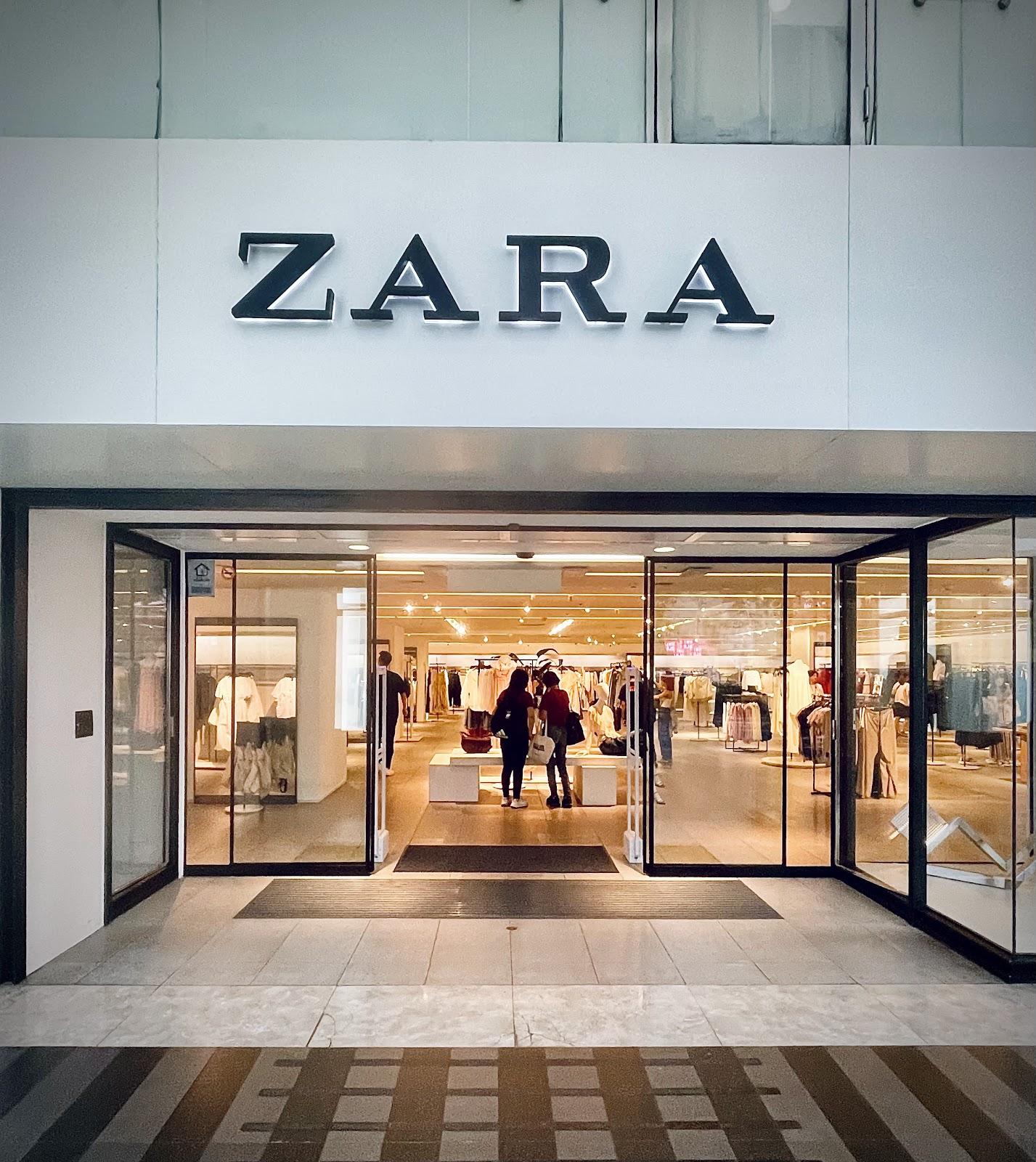
Zara's competitive advantage comes from one of the world's fastest fashion supply chains, allowing new collections to reach stores in as little as 14 days.
While every other fashion brand chased the cheapest labour in Asia, Zara quietly built the world’s most responsive supply chain by doing the opposite.
Topic tags: Supply Chain Strategy • Zara • Proximity Manufacturing • Fast Fashion • Founder Strategy
Zara can move a new design from a designer’s desk to a store shelf in as little as 14 days (Brands Awareness, April 2026). The global fashion industry average is six to nine months. That gap is not explained by better technology or a larger team. It is explained by one structural decision Zara made that no one else was willing to make: manufacturing close to home, not where labour is cheapest.
Why this story matters
The standard playbook in fashion, electronics, and consumer goods has been to chase the lowest unit cost by moving production to Southeast Asia. Zara rejected that playbook entirely, and built a company that is now worth more than its three nearest competitors combined on the strength of a supply chain principle that looks expensive on a spreadsheet and turns out to be the only thing that actually matters in trend-sensitive retail.
For Indian founders building physical product businesses, Zara’s model is not just a supply chain case study. It is a direct challenge to the assumption that cost per unit is the most important number in a manufacturing decision.

Quick facts
| Metric | Value | Source |
|---|---|---|
| Design-to-store time | 14 days | Brands Awareness, April 2026 |
| Share of production in proximity markets | 50-60% | Supplychain360, May 2025 |
| Deliveries per store per week | 2 (up to 4 in dense urban locations) | The Future Factory, April 2026 |
| Sell-through rate | Above 85% | Young Urban Project, June 2026 |
| Industry average sell-through | Approximately 60% | Young Urban Project, June 2026 |
| Total suppliers | 1,800 globally | The Future Factory, April 2026 |
| Inditex logistics investment committed | EUR 1.8 billion | The Future Factory, April 2026 |
Background
Zara is the flagship brand of Inditex, founded in 1975 in Arteixo, a small town in Galicia, northwestern Spain. The founding model was unusual from the start: instead of separating design, production, and distribution into different countries and time zones, the company kept everything tightly integrated and geographically clustered.
Approximately 50 to 60 percent of Zara’s production happens in Spain, Portugal, Morocco, and Turkey, proximity markets within short shipping distance of its Arteixo headquarters (Supplychain360, May 2025). Fashion-sensitive, trend-driven items are made in these nearshore locations. Basic, predictable volume items are produced in Asia where lower labour costs are a genuine advantage for stable, long-run goods.
The logic is product-type specific: for a garment where demand is uncertain and the trend window is three to four weeks, the cost of being wrong, unsold inventory, markdowns, storage, and disposal, vastly exceeds the cost of paying slightly higher wages to a factory in Morocco than one in Bangladesh. For a plain white t-shirt sold year-round in predictable volumes, the calculus flips.
How it happened
Move 1: Separating fashion-sensitive items from volume basics and sourcing each differently
Zara treats its product portfolio as two fundamentally different supply chain problems. Fashion-forward items, roughly 60 percent of its range, are treated as high-risk because demand is uncertain. For these items, production goes to proximity factories in Spain, Portugal, Morocco, and Turkey, where a design adjustment can be incorporated mid-production run within hours rather than weeks. Basic items, the remaining 40 percent, go to high-volume factories in Bangladesh, China, India, and Vietnam (New Asia Garment, January 2026).
This is not an either-or choice between nearshore and offshore. It is a deliberate bifurcation where the sourcing decision follows the demand uncertainty of each product type, not a blanket cost-reduction philosophy.
Move 2: Buying fabric greige and dyeing late to preserve optionality
One of the least-discussed elements of Zara’s supply chain is its fabric sourcing practice. A portion of fabric is purchased undyed and differentiated late through dye or print, a technique called postponement (The Future Factory, April 2026). This practice compresses commitment windows, enabling small initial production lots that are scaled only after early sales data confirms demand. A factory in Morocco can receive greige fabric, dye it in the trending color of the week, and ship finished garments to stores before a Bangladesh-sourced competitor has even loaded a container.
Move 3: Running a centralized distribution hub rather than regional warehouses
Finished goods from all production locations, nearshore and offshore, converge at Zara’s central distribution hub in Arteixo rather than being shipped directly to regional distribution centres (The Supply Chain Link, November 2025). This centralization looks counterintuitive at scale, since it adds a stop in Spain to every global shipment. It is actually the source of Zara’s speed and quality control advantage: all product allocation decisions, which sizes go to which stores in which quantities, are made from a single point with full demand visibility before goods leave the hub. A new Zara logistics platform in Zaragoza, which became operational in 2025, adds robotic handling and AI-driven demand forecasting to this central model (Young Urban Project, June 2026).
Stores receive deliveries twice per week, with selected high-density urban locations in Madrid now receiving four per week (The Future Factory, April 2026). Each replenishment is algorithmically allocated by size and style for each individual store, not determined by manual regional judgment.
What competitors missed
H&M, Shein, and most fast fashion competitors optimized for cost per unit. Shein’s model, producing thousands of new SKUs daily at prices 50 to 70 percent lower than Zara, achieves extraordinary breadth of choice through algorithmic trend identification and cheap offshore production (Brands Awareness, April 2026). Its estimated revenues of roughly 45 billion dollars in 2024 now rival Inditex’s total.
The difference is in the inventory economics. Zara’s sell-through rate sits above 85 percent against an industry average closer to 60 percent (Young Urban Project, June 2026). Inventory levels were 1.7 percent lower in mid-2024 even as revenues rose, a result of the proximity model’s ability to replenish real demand rather than forecast speculative demand months in advance (Brands Awareness, April 2026). Shein’s cost advantage is real, but a brand with 60 percent sell-through is routinely discounting the other 40 percent, paying for storage, and disposing of unsold stock, costs that rarely appear in a unit-cost comparison and rarely reflect well when they do.
Risks and challenges
Labour violations in supply chains remain a reputational risk. Despite overhauled auditing processes, Zara’s parent company Inditex has faced scrutiny over conditions at Tier-2 and Tier-3 suppliers in Brazil and Argentina (Brands Awareness, April 2026). Proximity manufacturing reduces but does not eliminate this risk.
Shein’s algorithmic model represents a genuine structural threat. Competing on breadth and price against an AI-driven inventory system that produces daily new SKUs at a fraction of Zara’s cost is a challenge proximity manufacturing cannot fully answer, since Zara’s advantage is speed and accuracy of replenishment, not infinite variety.
Scaling the centralized distribution model across further geographic growth adds complexity. Inditex has committed EUR 1.8 billion in logistics capacity to preserve the central model as volume grows (The Future Factory, April 2026), which is an enormous fixed investment in a model that has no easy fallback if supply chains shift further.
What founders can learn
The cost of making the wrong product is usually larger than the cost of making the right product slightly more expensively. Zara pays more per unit in Morocco than it would in Bangladesh, and earns significantly more per unit through higher sell-through and fewer markdowns. Founders building physical products should model the full cost of being wrong, not just the cost of manufacturing.
Postponement is a real strategy, not just a supply chain concept. Committing to a product specification as late as possible, whether that means dyeing fabric late, producing in smaller batches, or building modularity into a product design, preserves optionality that early commitment destroys, often at a cost that looks small on a spreadsheet and turns out to be structural.
Centralization of decision-making can be a competitive advantage rather than a bottleneck. Zara’s central distribution hub adds a shipping stop but removes the information asymmetry that regional warehousing creates. Founders scaling physical product operations should ask where the best information sits, and whether their distribution model is taking decisions from that point or from somewhere with worse visibility.
Expert analysis
Bull case. As sustainability regulations tighten and carbon costs become more explicit in global supply chains, nearshore manufacturing will shift from a strategic choice to a structural necessity for European and increasingly Indian brands targeting premium positioning. Zara is not just winning now, it is positioned ahead of the regulatory curve.
Bear case. Shein’s scale and algorithmic speed present a genuine long-term threat. A model that produces 6,000 new SKUs per day with AI-driven demand estimation may eventually close the speed gap that Zara’s proximity manufacturing currently exploits, particularly if AI logistics planning compresses offshore delivery timelines.
Contrarian view. Zara’s proximity model is not replicable by most brands because it required decades of investment in owned and partner manufacturing infrastructure in Galicia and northern Portugal. Founders reading this as a simple “manufacture close to your customer” lesson risk underestimating how much of Zara’s advantage is the accumulated fixed infrastructure of a 50-year-old company, not a strategic decision a startup can make tomorrow.
TFN LENS
The real lesson from Zara is not that proximity is always better than offshore. It is that the most expensive inventory is inventory you cannot sell, and the supply chain design that minimises unsold inventory is usually the winning one, regardless of what it costs per unit to operate. Zara pays more to manufacture close to home and earns dramatically more on each item because it manufactures the right things at the right time in the right quantities.
For Indian founders building physical products in 2026, the operating question Zara poses is simple: do you know what your customers want before you commit to a production run, or are you guessing three to six months in advance and hoping the guess is right. The cost of that guess, measured in markdowns, unsold inventory, and working capital locked in the wrong goods, is usually the real constraint on a physical product business, and the supply chain that minimises it is worth building around, even if it costs more per unit to run.
Building something of your own? Follow The Founder Nation and NamasteVC for curated startup funding news, grant alerts, and founder stories from India’s startup ecosystem, delivered straight to your feed, every week.
Frequently asked questions
Why does Zara manufacture close to home instead of in Asia?
Zara produces 50 to 60 percent of its fashion-sensitive items in Spain, Portugal, Morocco, and Turkey to maintain a 14-day design-to-store cycle, preserve late-stage design flexibility, and achieve sell-through rates above 85 percent, economics that outweigh the higher per-unit labour costs versus Asian manufacturing (Supplychain360, May 2025; Young Urban Project, June 2026).
Does Zara manufacture anything in Asia?
Yes. Basic, high-volume, low-fashion-risk items are manufactured in Bangladesh, China, India, and Vietnam where high-volume production at stable specifications benefits from lower labour costs. The bifurcation is deliberate: nearshore for uncertainty, offshore for stability (New Asia Garment, January 2026).
How often do Zara stores receive new inventory?
Most Zara stores receive deliveries twice per week, with selected high-density urban locations receiving up to four per week, each algorithmically allocated by size and style for each individual store (The Future Factory, April 2026).
What is Zara’s sell-through rate compared to the industry?
Zara’s sell-through rate exceeds 85 percent against an industry average of approximately 60 percent, a gap primarily attributable to the proximity manufacturing model that allows replenishment of proven demand rather than speculative pre-season production (Young Urban Project, June 2026).
Can other fashion brands copy Zara’s proximity manufacturing model?
The model requires decades of accumulated manufacturing infrastructure in proximity markets, centralized logistics investment of the scale Inditex has committed, EUR 1.8 billion in new logistics capacity alone, and organizational discipline to resist the per-unit cost pressure of offshore production. The principle is replicable; the infrastructure is not quickly built (The Future Factory, April 2026).
©️ The Founder Nation | All rights reserved | Written by TFN Research Desk |