

Raising capital can accelerate startup growth, but only when the business model and unit economics have already been validated.
While the founder mythology treats a large round as proof of arrival, the Indian startup graveyard is disproportionately filled with companies that raised exactly the amount everyone congratulated them for.
Topic tags: Startup Strategy • Venture Capital • Founder Lessons • Burn Rate • Indian Startup Strategy
Stayzilla raised 33.5 million dollars across four funding rounds and was burning roughly four crore on marketing for every crore it made in revenue at its peak (Buildd, undated). The company did not run out of ideas, customers, or market opportunity. It ran out of discipline around the one resource that had stopped feeling scarce: money.
Why this story matters
Overfunding does not announce itself the way underfunding does. A startup that cannot raise money fails visibly and immediately, and the lesson is obvious to everyone watching. A startup that raises too much money tends to fail slowly, two or three years later, after a period that looks from the outside like success: bigger offices, more hires, louder marketing, glowing press coverage about the latest round. By the time the failure becomes visible, the root cause, a funding round that arrived before the business model was actually proven, is usually long forgotten, and the postmortem instead blames competition, market timing, or execution.
CB Insights tracked startup postmortems and found that running out of cash came up in 35 percent of failed Indian startup cases, second only to lack of market need at 36 percent (SDC Bank, May 2025). What that statistic obscures is how many of those cash-flow deaths happened to companies that had, at some point, raised what looked like more than enough money. The problem was rarely the absence of capital. It was what capital allowed founders to avoid confronting.
Background
Excess capital changes founder behavior in predictable and well-documented ways. It removes the forcing function that scarcity provides: when money is tight, every hire, every campaign, and every new market entry has to justify itself against a shrinking runway. When money is abundant, that justification process weakens, and founders start making decisions based on ambition rather than evidence. Stayzilla’s founders explicitly stated that a majority of their funding would go toward scaling the company (TechStory, December 2018), a statement that sounds reasonable until you notice it commits capital to growth before the underlying unit economics have proven growth is profitable to sustain.
The pattern recurs across some of India’s most visible startup failures. UrbanClap, now Urban Company, raised 190 million dollars and still found its commission-based revenue model unable to cover rising operational expenses as the company scaled, eventually forcing a shift toward subscription and value-added services to find a sustainable structure (TSST Technology, November 2024). Hike Messenger raised over 150 million dollars and attracted millions of users without ever converting that scale into a revenue model that could support its infrastructure and marketing costs (TSST Technology, November 2024). Paytm Mall poured over 300 million dollars into logistics and discounting, entering a space where Amazon and Flipkart already commanded deep logistics networks, before being wound down in 2023 due to thin margins and an inability to differentiate (APStartup, October 2025). In each case, the capital was real, the ambition was real, and the business model gap that the capital was meant to paper over was also real, and ultimately decisive.
How it happened
Move 1: Treating discount-driven growth as a substitute for unit economics
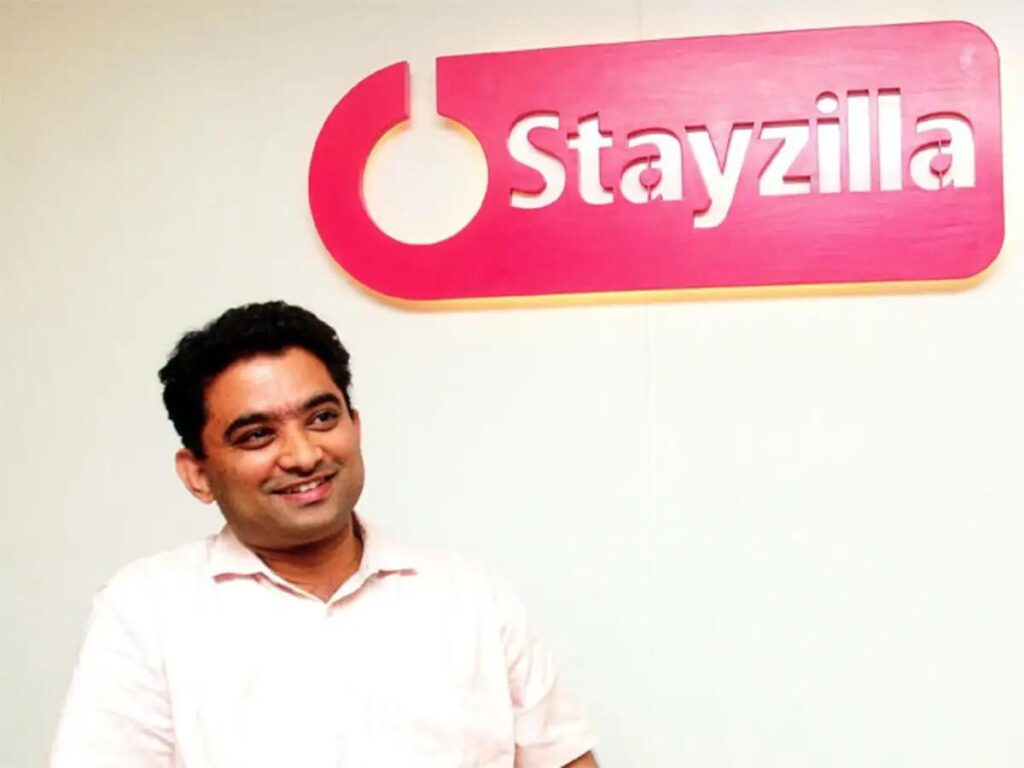
Stayzilla’s collapse illustrates the mechanism with unusual clarity. To compete with hotel aggregators like MakeMyTrip and Goibibo, the company entered discount wars with no long-term plan for how those discounts would eventually become sustainable margins, operating on 10 to 15 percent margins while offering 30 to 50 percent discounts paid directly out of pocket (Buildd, undated). A referral scheme designed to drive growth consumed 20 percent of the company’s entire monthly marketing budget in just five days once it gained traction, a sign that the company was optimizing for growth velocity rather than growth efficiency (Buildd, undated). None of this would have been possible without the comfort of a large funding cushion. A founder operating without that cushion confronts the unsustainable math immediately. A founder with 33.5 million dollars in the bank can keep running unsustainable math for years before the math catches up.
Move 2: Letting capital substitute for the hard work of finding real differentiation
Paytm Mall’s failure followed a different but related pattern. The company entered ecommerce against Amazon and Flipkart, two competitors with years of accumulated logistics infrastructure and customer trust, and attempted to compete primarily through heavy discounting funded by its large capital base rather than through a distinct value proposition (APStartup, October 2025). Capital made it possible to compete on price for an extended period. It did not, and structurally could not, manufacture the differentiation that would have made that price competition sustainable once the capital ran out. The lesson generalizes: large funding rounds are excellent at buying time, and nearly useless at buying the strategic clarity that determines what a company should do with that time.
Move 3: Scaling headcount and infrastructure ahead of proven demand
A consistent thread across overfunded failures is premature scaling, hiring and infrastructure investment that outpaces the evidence that the underlying demand justifies it. Founders are advised to validate revenue before scaling, running a pilot and achieving consistent unit economics before seeking larger funding, precisely because the inverse sequence, raising large capital first and discovering unit economics later, is what produced failures like Udaan Direct, which raised 250 million dollars and was shuttered in 2024 after supply chain complexities and regulatory hurdles that a smaller, more deliberate rollout might have surfaced and addressed far earlier and at far lower cost (APStartup, October 2025).
What competitors missed
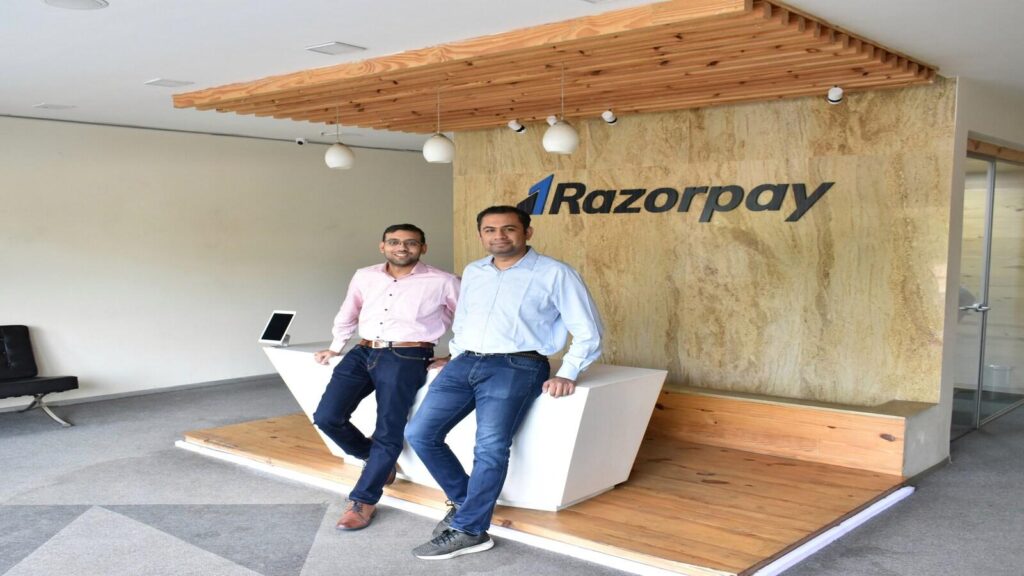
The startups that survived the same competitive environments that killed Stayzilla, Hike, and Paytm Mall generally shared one discipline: they treated every rupee of capital as a tool for testing a specific hypothesis, not as a budget to be deployed against a growth target. Razorpay’s founders were fanatical about cash flow, especially during lean years, and Harshil Mathur has spoken specifically about how starting the company from his hometown of Jaipur, working out of his parents’ house, kept costs close to zero during the earliest and most fragile period of the business (Razorpay Business via Inc42, October 2022). That discipline did not disappear once funding arrived. It became the operating culture that let Razorpay scale capital efficiently rather than simply scale capital deployment.
The deeper miss among overfunded founders is conflating the size of a funding round with validation of the business model itself. A large check from a reputable investor feels like confirmation that the underlying strategy is correct, but investor enthusiasm at the time of a raise reflects a bet on potential, not proof of a working model. CRED’s founders are frequently cited as having deliberately avoided raising large capital until metrics proved people were genuinely hooked on the product, a sequencing choice that inverted the pattern visible in most overfunded failures, where capital arrived to fund a hypothesis rather than to scale a validated result (SDC Bank, May 2025).
Risks and challenges
Vendor and partner trust becomes structurally fragile once a company is burning capital faster than the underlying business generates it. Stayzilla’s collapse included a public, criminal dispute with an advertising vendor over unpaid dues of roughly 1.72 crore, a relatively small amount relative to the 33.5 million dollars the company had raised, but the unpaid debt reflected a company whose cash position had deteriorated to the point where even modest vendor obligations could no longer be met reliably (The Hot Startups, April 2025).
Founder and leadership burnout intensifies under overfunded conditions in a counterintuitive way. The pressure to justify a large valuation and deploy capital effectively can create more, not less, organizational stress than operating lean, since the gap between investor expectations set at the time of the raise and the company’s actual operational maturity tends to widen as the company scales prematurely ahead of its systems.
Down-round and write-off risk compounds the longer an unsustainable model is allowed to run on borrowed time. A company that raises a large round, fails to find sustainable unit economics, and eventually needs to raise again does so from a position of weakness, often forced into a valuation cut, restrictive terms, or a strategic investor relationship that comes with its own complications, a dynamic visible in companies like Dunzo that took on strategic capital with veto powers attached after their core business model came under financial strain.
What founders can learn
Validate unit economics before scaling spend, regardless of how much capital is available. The discipline of running a pilot, confirming that paying customers cover a meaningful share of monthly burn, and only then deploying larger capital is the single most consistently cited difference between founders who survive a large raise and those who do not.
Treat every large funding round as an accelerant for a proven hypothesis, not a substitute for proving one. Capital that arrives before the business model is validated tends to fund the postponement of hard decisions rather than the resolution of them.
Lock in a burn rate discipline that does not loosen simply because the bank balance has grown. Founders who track every rupee of spend with the same rigor in a flush period as in a lean one are the ones who avoid the trap that consumed Stayzilla’s discount-driven growth spiral.
Resist discount-led or subsidy-led growth as a primary strategy unless the path to sustainable margins is explicit and modeled before the spending begins. Growth purchased through unsustainable discounting is not really growth, it is a temporary rental of market share that disappears the moment the subsidy stops.
Maintain transparent governance and board communication, particularly during periods of rapid scaling. Founders who keep investors informed during difficult stretches, rather than only during triumphant funding announcements, tend to retain more flexibility and goodwill when the business needs patience rather than pressure.
Expert analysis
Bull case. Large funding rounds, deployed with discipline, give founders the genuine freedom to make decisions on multi-year timelines rather than being forced into short-term survival thinking. Razorpay’s trajectory shows that capital efficiency and large funding are not mutually exclusive, since a founding team with strong burn discipline can absorb significant capital and use it to compound an already-validated model rather than to discover one.
Bear case. The structural incentive in venture-backed ecosystems still rewards founders for raising larger rounds and growing headline metrics quickly, even when that incentive runs directly counter to the unit economics discipline that determines long-term survival. As long as a large raise is treated as a milestone worth celebrating independent of whether the underlying model has been validated, founders will continue to face pressure to deploy capital faster than the evidence justifies.
Contrarian view. The framing of “too much money” may obscure the real variable, which is not the size of the round but the sequencing of when it arrives relative to validation. A large round raised after genuine product-market fit and proven unit economics, as CRED’s sequencing suggests, behaves completely differently from the same dollar amount raised to fund an unproven hypothesis. The lesson is not that founders should raise less, it is that founders should raise only after the business has earned the right to scale what the capital is meant to accelerate.
Future outlook
As Indian investors continue shifting from growth-at-any-cost toward unit-efficiency-first scaling, term sheets are increasingly expected to include governance and milestone-based structures that limit how quickly capital can be deployed against unproven assumptions (Outlook Business, December 2025). This shift, if it holds, should reduce the frequency of the Stayzilla and Paytm Mall pattern over time, not by reducing the total capital available to Indian founders, but by making the sequencing discipline that separates productive capital from premature capital a more explicit and enforced part of how rounds are structured from the outset.
The bottom line
A startup does not fail because it raised too much money in any absolute sense. It fails because the capital arrived faster than the discipline needed to deploy it well, and removed the scarcity that would otherwise have forced that discipline to develop. Stayzilla had 33.5 million reasons to slow down and fix its unit economics before scaling further. It had zero reasons that felt urgent enough at the time, because the money made urgency optional, right up until it wasn’t.
Key takeaways
- Stayzilla raised 33.5 million dollars across four rounds while burning approximately four crore on marketing for every crore earned in revenue, a structurally unsustainable ratio the funding allowed to persist for years (Buildd, undated).
- CB Insights data shows running out of cash featured in 35 percent of failed Indian startup postmortems, nearly as common as lack of market need at 36 percent, with many of those failures occurring after a substantial funding round (SDC Bank, May 2025).
- UrbanClap, Hike Messenger, and Paytm Mall each raised over 150 million dollars and still failed to convert that capital into a sustainable revenue model before operational costs outpaced what the underlying business could support.
- Founders who survived large raises, such as Razorpay’s founding team, maintained the same burn-rate discipline during flush periods as during lean ones, treating capital as an accelerant for proven economics rather than a substitute for proving them.
- The sequencing of when capital arrives relative to business model validation, not the absolute size of the round, appears to be the more decisive variable separating overfunded failures from overfunded successes.
TFN LENS
The most counterintuitive lesson from India’s overfunded failures is that scarcity, the thing every founder is desperate to escape, is also the forcing function that produces disciplined decision-making. Remove scarcity too early, before the business model has been pressure-tested by it, and a founder loses the single clearest signal that tells them whether a decision is actually good or merely affordable. Stayzilla’s discount wars, Paytm Mall’s logistics spending, and Hike’s infrastructure scaling were each, individually, decisions a flush balance sheet made affordable. None of them were decisions a tight balance sheet would have allowed, and that gap is exactly where the eventual failure was manufactured, years before it became visible to the outside world.
For Indian founders evaluating a large round in 2026’s more disciplined funding environment, the operating question should not be “how much can I raise.” It should be “what specific hypothesis has this business already proven, and is the capital I am about to raise an accelerant for that proof, or a substitute for getting it.” Founders honest enough to answer that question before signing the term sheet give themselves a real chance at avoiding the slow, quietly inevitable collapse that overfunded ambition without validated economics has produced again and again in India’s startup history.
Building something of your own? Follow The Founder Nation and NamasteVC for curated startup funding news, grant alerts, and founder stories from India’s startup ecosystem, delivered straight to your feed, every week.
Frequently asked questions
Can a startup actually fail from raising too much money?
Yes, indirectly. Excess capital does not cause failure on its own, but it removes the scarcity that forces founders to validate unit economics and burn rate discipline early. Stayzilla raised 33.5 million dollars and used the cushion to sustain an unsustainable discount-driven growth model for years before collapsing (Buildd, undated).
What is the most common reason Indian startups fail according to CB Insights data?
Lack of market need leads at 36 percent of failed cases, with running out of cash close behind at 35 percent, and many cash-flow failures occur in companies that had previously raised substantial funding rounds (SDC Bank, May 2025).
How did Stayzilla’s overfunding lead to its collapse?
Stayzilla operated on 10 to 15 percent margins while offering 30 to 50 percent discounts funded out of pocket, burning roughly four crore on marketing for every crore earned, a ratio the company’s 33.5 million dollar funding base allowed to continue for years before cash flow problems became terminal (Buildd, undated).
What should founders do differently before accepting a large funding round?
Validate unit economics through a pilot first, confirming that paying customers cover a meaningful share of monthly burn, and treat the round as an accelerant for a proven hypothesis rather than a substitute for proving one, a sequencing discipline credited with CRED’s more sustainable growth trajectory (SDC Bank, May 2025).
Did any Indian startups successfully manage large funding rounds without overextending?
Yes. Razorpay’s founders maintained strict cash flow discipline through lean years and continued that same discipline as the company scaled, treating large capital as a tool to compound an already-validated model rather than to discover one (Razorpay Business via Inc42, October 2022).
©️ The Founder Nation | All rights reserved | Written by TFN Research Desk |