

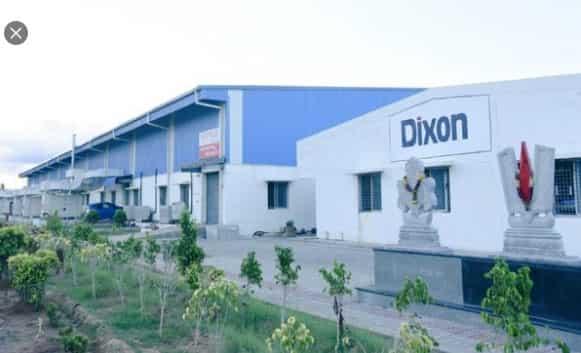
Dixon Technologies has become one of India's leading electronics manufacturing services companies by producing devices for multiple brands without owning consumer products itself.
While “Make in India” conjures images of founders building factories, the companies actually winning the manufacturing boom are mostly the ones that never built one.
Topic tags: Manufacturing • Asset-Light Models • D2C • EMS • Indian Startup Strategy
Dixon Technologies, India’s largest domestic contract manufacturer, reported revenue of Rs 10,510 crore in a single quarter, Q4 FY26, without owning the brands whose phones, appliances, and electronics it builds (Business Standard, June 2026). Dixon makes nothing under its own name. It makes everything under everyone else’s, and that inversion, owning the manufacturing capability while letting brands own the customer relationship, is the structural pattern reshaping how Indian companies, from D2C wellness brands to electronics giants, are choosing to grow in 2026.
Why this story matters
For a decade, the dominant founder anxiety around manufacturing was capital intensity: factories cost crores, take years to commission, and lock a company into a single product category long before product-market fit is proven. Asset-light manufacturing models, contract manufacturing, toll manufacturing, and private label production, have quietly dissolved that anxiety for an entire generation of Indian founders, while a parallel and equally important shift is happening at the infrastructure layer, where companies like Dixon are becoming indispensable precisely because they absorbed the capital risk that hundreds of brands no longer have to carry themselves.
This is not a niche trend. There are 1,333 contract manufacturing startups in India, including major players like Amber Enterprises, Dixon Technologies, and Gokaldas Exports, with 110 of them funded and 159 having secured Series A or later (Tracxn, January 2026). The category spans far beyond electronics: pharmaceuticals through CDMOs, cosmetics, food and beverage, apparel, auto components, specialty chemicals, nutraceuticals, and toys all now run on a mature contract manufacturing ecosystem serving both global brands and domestic D2C labels (IMARC Engineering, June 2026).
Background
The logic driving founders toward asset-light manufacturing is straightforward once stated plainly: contract manufacturing lets brands bypass greenfield capital expenditure, 24 to 48 month commissioning delays, workforce hiring, regulatory licensing, and asset obsolescence risk entirely (IMARC Engineering, June 2026). A founder building a skincare brand or a wellness startup does not need to understand stability testing, clean-room certification, or industrial equipment depreciation schedules. They need a certified manufacturing partner who already understands all of it, freeing the founder to focus entirely on branding, distribution, and market entry (Avedaayur, May 2026).
The asset-light model converts capital that would otherwise be locked in fixed assets into variable operating costs, which is precisely why it appeals to equity investors evaluating early-stage companies: businesses with high scalability and lower capital requirements are inherently more attractive to investors, since they can grow revenue without growing their balance sheet at the same rate (IndiaFilings, April 2026). The model is not unique to manufacturing; ecommerce platforms, software companies, and fintech firms have run the same playbook for years, treating intellectual property, data, and digital platforms as their primary assets rather than buildings and machinery (Business Remedies, May 2026). What is new is how completely this logic has now spread into physical product categories that founders once assumed required direct ownership of production.
How it happened
Move 1: Letting infrastructure specialists absorb the capital risk
Dixon Technologies built its position by doing the opposite of what most consumer brands do: it took on the capital-intensive, multi-decade infrastructure investment so that hundreds of other companies would not have to. Following the government’s approval of a Rs 41,863 crore PLI scheme for electronics manufacturing in January 2026, Dixon secured clearance for two new projects, shifting from simple device assembly toward higher-margin component production including optical transceiver manufacturing, a move that reduces India’s reliance on Chinese imports while vertically integrating Dixon’s own supply chain (TradeBrains, January 2026). Dixon’s strategy is not to compete with the brands that use its factories, it is to become the infrastructure layer those brands cannot economically replicate themselves. The company’s mobile and EMS divisions alone generate over 80 percent of its revenue (Whalesbook, April 2026), and Dixon’s smartphone production guidance for FY27 sits around 33 million units even before accounting for a new joint venture with Vivo that could integrate two-thirds of Vivo’s 35 to 37 million annual India smartphone sales into Dixon’s own manufacturing ecosystem (Business Standard, June 2026).
Move 2: D2C brands choosing brand-building over factory-building, deliberately
On the consumer brand side, the asset-light logic plays out differently but points the same direction. India’s Ayurvedic and wellness sector has shifted decisively toward private label and third-party manufacturing models, where founders are no longer constrained by infrastructure, only by execution speed and brand strategy (Avedaayur, May 2026). A startup using a certified manufacturing cluster can launch a fully compliant product without ever touching a production line, sourcing pre-validated formulations already tested for stability, safety, and regulatory approval (Avedaayur, May 2026). This mirrors a pattern visible in deeptech and materials startups internationally, where toll and contract manufacturing lets a founder supply a formulation or specification to a partner who runs it through their own equipment for a fee, keeping the IP, customer relationships, and process know-how with the startup while the capital-intensive equipment stays with the manufacturing partner (IntelligentHQ, June 2026).
Move 3: Treating manufacturing partner selection as a strategic discipline, not a procurement afterthought
The brands and infrastructure providers executing this model successfully share a common discipline: they treat partner selection as rigorously as a funding decision, not as a vendor procurement task to be delegated and forgotten. Brand sponsors are advised to choose their contract manufacturing business model, original equipment manufacturing, original design manufacturing, toll, or loan license, deliberately, and to invest in rigorous partner selection upfront, since poor choices cost ten times more than diligence would have (IMARC Engineering, June 2026). This discipline extends to backing every manufacturing partnership with strong legal agreements and IP registration, since shortcuts in this area surface as expensive problems years later, often at the exact moment a brand is trying to scale or raise its next funding round.
What competitors missed
Brands and founders who treated manufacturing ownership as a badge of seriousness, building or acquiring their own production capacity earlier than necessary, have generally discovered that the badge cost more than it was worth. Asset-light models are not without real challenges: dependence on external partners can create supply chain risks and reduce operational control, and maintaining quality standards and consistent customer experience across an outsourced production base requires robust oversight mechanisms that founders sometimes underestimate when first adopting the model (Business Remedies, May 2026).
The deeper miss among electronics-adjacent founders specifically has been underestimating how quickly the contract manufacturing layer itself is moving up the value chain. Dixon’s pivot from simple assembly toward component-level production, PCBs, optical transceivers, advanced sub-assemblies, signals that the asset-light advantage is not static. Brands that assumed their contract manufacturer would remain a low-margin assembly partner indefinitely are discovering that the same partner is now capturing more of the value chain through PLI-backed component manufacturing, a development that strengthens India’s manufacturing ecosystem overall but also means brands relying purely on assembly-level outsourcing need to renegotiate their position as their manufacturing partners become more sophisticated and indispensable.
Risks and challenges
Quality and brand consistency risk sits at the center of every asset-light manufacturing relationship. A brand that has outsourced its entire production process has also outsourced a meaningful share of the customer experience, and any quality lapse at the manufacturing partner becomes the brand’s reputational problem regardless of where the actual fault occurred.
Margin compression is a live risk even for the infrastructure providers themselves, not just the brands depending on them. Dixon reported a 35.91 percent decline in consolidated net profit even as revenue grew 2.12 percent in Q4 FY26, a gap attributed to sharply rising component costs, with DRAM prices climbing roughly 70 percent sequentially in early 2026, alongside intense price competition across the EMS sector (Business Standard, June 2026; NiftyTrader, April 2026). A brand depending entirely on a contract manufacturer for cost stability is also exposed to that manufacturer’s own input cost volatility, a risk that is easy to overlook when the appeal of the asset-light model is framed purely around reduced capital exposure.
Customer concentration creates a structural vulnerability on the manufacturing side. Analysts have flagged that a large share of EMS revenue across the sector depends on a small number of key clients, meaning the infrastructure layer that hundreds of brands now depend on is itself dependent on a handful of large original equipment manufacturer relationships, a fragility that could ripple downstream if any single major client relationship weakens (Whalesbook, June 2026).
Policy dependency adds a layer of uncertainty specific to India’s electronics manufacturing boom. Dixon derives a substantial share of its revenue and margin advantage from government PLI incentives, and the transition from the original smartphone PLI scheme, which concluded on March 31, 2026, toward a new value-addition focused incentive structure introduces real uncertainty about how durable the current cost advantages will remain (Whalesbook, April 2026).
What founders can learn
Treat manufacturing partner selection with the same diligence applied to fundraising, since the IMARC guidance that poor partner choices cost ten times more than upfront diligence reflects a real and recurring failure pattern among first-time founders rushing to launch.
Resist the instinct to build owned manufacturing capacity early as a signal of seriousness to investors or customers. The brands and infrastructure providers compounding the fastest in 2026, from wellness D2C startups to Dixon itself, are succeeding precisely because they specialized rather than vertically integrated prematurely.
Build contractual and IP protections into every manufacturing relationship from day one, not after the relationship has scaled. Shortcuts taken during early-stage partner agreements tend to surface as expensive disputes exactly when a brand can least afford the disruption, typically during a scaling phase or funding round.
Understand that your manufacturing partner’s cost structure is now part of your own risk profile. A brand relying on contract manufacturing for cost predictability needs visibility into the input cost volatility, component pricing, and policy dependencies affecting its manufacturing partner, not just the price quoted on the purchase order.
Watch where your manufacturing partner is moving up the value chain, and renegotiate your position accordingly. As EMS providers like Dixon shift from assembly toward component manufacturing, brands that built their cost advantage on commodity assembly pricing need to actively track whether that advantage is eroding as their partner’s capabilities and bargaining power increase.
Expert analysis
Bull case. Asset-light manufacturing has structurally lowered the barrier to building a physical product company in India, letting founders compete on brand, formulation, and distribution rather than capital access alone. Combined with government-backed infrastructure investment through PLI and ECMS schemes that have already attracted over Rs 41,863 crore in fresh electronics manufacturing investment (TradeBrains, January 2026), India is building a contract manufacturing ecosystem sophisticated enough to support both domestic D2C brands and global electronics giants simultaneously, a genuine structural advantage that compounds as the ecosystem matures.
Bear case. The asset-light model concentrates real operational risk at a small number of manufacturing infrastructure providers, and the margin pressure already visible at Dixon, a 36 percent profit decline despite revenue growth, suggests the economics of being the infrastructure layer are not as comfortable as the brands depending on that layer might assume (Business Standard, June 2026). If component costs and global supply chain volatility continue pressuring EMS margins, the cost advantages that made asset-light manufacturing attractive to D2C and electronics brands alike could compress, forcing a repricing across the entire outsourced manufacturing ecosystem.
Contrarian view. The framing of asset-light manufacturing as a universal advantage may understate how much of India’s current manufacturing boom is policy-dependent rather than structurally inevitable. Dixon’s exposure, where PLI incentives and government schemes account for a significant share of revenue and margin, illustrates that much of the asset-light ecosystem’s current attractiveness rests on a specific and time-bound policy window rather than a permanent shift in how manufacturing economics work. Founders building brand strategies entirely around the assumption that contract manufacturing costs will remain this favorable indefinitely may be underpricing policy risk.
Future outlook
As India’s electronics exports reached 47.96 billion dollars in FY26, up 24 percent from FY25 (NiftyTrader, April 2026), and the broader contract manufacturing ecosystem matures across pharmaceuticals, cosmetics, food, and apparel, the asset-light model is likely to become the default starting point for new Indian physical product companies rather than an alternative path. The structural question for the next several years is whether infrastructure providers like Dixon can sustain margins amid component cost volatility and policy transitions, since the durability of asset-light manufacturing’s appeal for brands depends directly on the stability of the partners absorbing the capital risk on their behalf.
The bottom line
Asset-light manufacturing is not a workaround for founders who cannot afford a factory. It is becoming the deliberate strategic choice of founders who understand that owning physical infrastructure is no longer where the defensible advantage in a product business lives. The advantage now lives in brand, formulation, distribution, and the discipline to choose and manage manufacturing partners well, while companies like Dixon Technologies absorb the capital risk and compete to become the infrastructure layer an entire generation of Indian brands depends on.
Key takeaways
- Dixon Technologies, India’s largest domestic contract manufacturer, generated Rs 10,510 crore in revenue in a single quarter without owning any of the consumer brands whose products it manufactures (Business Standard, June 2026).
- There are 1,333 contract manufacturing startups in India across electronics, pharmaceuticals, cosmetics, food, apparel, and chemicals, with 110 funded and 159 having secured Series A or later funding (Tracxn, January 2026).
- Contract manufacturing lets brands bypass 24 to 48 month commissioning delays, regulatory licensing complexity, and asset obsolescence risk, converting fixed capital costs into variable operating expenses (IMARC Engineering, June 2026).
- Dixon’s pivot toward component-level manufacturing, backed by a Rs 41,863 crore PLI scheme approved in January 2026, shows the contract manufacturing layer itself moving up the value chain, capturing more margin than simple assembly alone (TradeBrains, January 2026).
- Margin pressure at the infrastructure level, including a 36 percent profit decline at Dixon in Q4 FY26 despite revenue growth, shows that asset-light manufacturing shifts capital risk to specialized partners but does not eliminate cost volatility for the broader ecosystem (Business Standard, June 2026).
TFN LENS
The deepest misconception about asset-light manufacturing is that it means risk simply disappears. It does not disappear, it relocates. Capital risk moves from the brand to the contract manufacturer, and in India’s 2026 electronics ecosystem specifically, that risk increasingly sits with a small number of large, policy-dependent infrastructure providers like Dixon who are themselves navigating component cost volatility and the transition between PLI scheme generations. A D2C wellness brand, this relocation of risk is almost entirely beneficial: their manufacturing partner has spent decades building regulatory expertise and compliance infrastructure the brand never needs to replicate. For an electronics brand depending on Dixon-style EMS partners, the relocation is more consequential, since the brand’s own cost structure now rises and falls with global memory chip pricing and government policy windows it has no direct control over.
For Indian founders evaluating where to build in 2026, the operating question is not simply “should I own manufacturing or outsource it.” It is “do I understand exactly where the risk has moved to, and is the partner absorbing that risk positioned to keep absorbing it as input costs and policy conditions shift.” Founders who can answer that question with real visibility into their manufacturing partner’s own exposure are building on a genuinely more resilient foundation than founders who outsourced manufacturing and stopped thinking about it the moment the first shipment arrived.
Building something of your own? Follow The Founder Nation and NamasteVC for curated startup funding news, grant alerts, and founder stories from India’s startup ecosystem, delivered straight to your feed, every week.
Frequently asked questions
What is asset-light manufacturing?
Asset-light manufacturing is a model where companies minimize ownership of physical production assets like factories and equipment, instead relying on contract manufacturers, toll manufacturing partners, or private label producers to handle physical production while the brand focuses on product development, branding, and distribution (Kruze Consulting via IndiaFilings, April 2026).
How many contract manufacturing companies operate in India?
There are 1,333 contract manufacturing startups in India spanning electronics, pharmaceuticals, cosmetics, apparel, and food, with 110 of them funded and 159 having secured Series A or later funding rounds (Tracxn, January 2026).
Why is Dixon Technologies considered a leader in India’s asset-light manufacturing ecosystem?
Dixon is India’s largest domestic contract manufacturer, generating over 80 percent of its revenue from mobile and electronics manufacturing services divisions while owning none of the consumer brands it manufactures for, and it is expanding into higher-margin component production backed by India’s PLI and ECMS government schemes (Whalesbook, April 2026; TradeBrains, January 2026).
What are the biggest risks of relying on contract manufacturing?
The main risks include reduced operational control over quality and brand consistency, exposure to the manufacturing partner’s own input cost volatility, customer concentration risk within the manufacturing ecosystem itself, and policy dependency where government incentive schemes that currently make contract manufacturing cost-effective could change over time.
Is asset-light manufacturing only relevant for electronics brands?
No. The model spans pharmaceuticals through CDMOs, cosmetics, food and beverage, apparel, auto components, specialty chemicals, nutraceuticals, and toys, with India’s Ayurvedic and wellness sector specifically shifting toward private label and third-party manufacturing as the default model for new brand launches.
Sources
- Dixon Technologies — https://www.dixoninfo.com
- Tracxn — https://tracxn.com
- Business Standard — https://www.business-standard.com
- India Brand Equity Foundation (IBEF) — https://www.ibef.org
- Invest India — https://www.investindia.gov.in
- Ministry of Commerce & Industry — https://www.commerce.gov.in
- Make in India — https://www.makeinindia.com
©️ The Founder Nation | All rights reserved | Written by TFN Research Desk |