

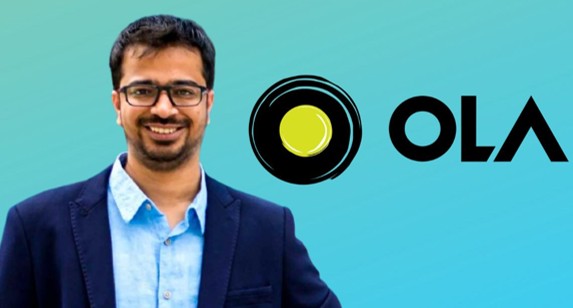
Ankit Bhati, co-founder and former CTO of Ola Cabs, engineered the technology that helped transform Ola into one of India's largest ride-hailing companies.
From IIT Bombay engineer to Ola co-founder, explore Ankit Bhati’s entrepreneurial journey and his role in building India’s leading mobility platform.
Written by TFN Research Desk | startups, technology, venture capital, business strategy.
Table of Contents
- Who is Ankit Bhati?
- Early Life and Education
- Career Before Ola Cabs
- How Ola Cabs Started
- Funding History
- Revenue Growth
- Ola Cabs vs Competitors
- Investor Perspective
- Founder Timeline
- Key Takeaways
- FAQs
- Sources
Who is Ankit Bhati?
Ankit Bhati is the co-founder and former CTO of Ola Cabs, born in 1987 in Jodhpur. He engineered the technology behind Ola’s rise to a $7 billion valuation while co-founder Bhavish Aggarwal ran the business side. An introvert who prefers coding to boardrooms, his love of cycling and adventure trips helped inspire the idea of simplifying urban commutes.
Early Life and Education
Bhati grew up in a middle-class Jodhpur family where owning a computer was rare. He spent his free time at computer centers, eventually becoming an administrator there. In 2004 he enrolled at IIT Bombay for Mechanical Engineering, funding himself through freelance web projects, and completed a Master’s in CAD and Automation in 2010.
Career Before Ola Cabs
Before Ola, Bhati worked at smaller tech firms including Make Sense and Wilcom, plus a stint at Microsoft. He also built Olatrips.com with Aggarwal, a travel site that never scaled but taught both founders about user acquisition. He left corporate security to take the startup risk.
How Ola Cabs Started
A bad cab experience on a road trip pushed Aggarwal toward the idea. In November 2010, he and Bhati founded ANI Technologies in Bangalore, launching Ola publicly on December 3, 2010. Bhati coded through 48-hour stretches in the early days, building real-time tracking, matching, and pricing systems largely from scratch, giving Ola an early reliability edge over rivals.
Funding History
| Round | Year | Amount | Lead Investor(s) |
| Seed | 2011 | $0.5M | Kunal Bahl, Rehan Yar Khan, Anupam Mittal |
| Series A | 2012 | $5.7M | Tiger Global, Matrix Partners |
| Series C | 2014 | $50M | Peak XV Partners, MITIMCo |
| Series D | 2014 | $100M | SoftBank |
| Series F | 2015 | $250M | SoftBank Group, Vanguard |
| Series I | 2017 | $1.1B | Tencent |
| Series J | 2021 | $500M | Arrow Capital, Axis Mutual Fund |
Per Tracxn, Ola has raised $3.84 billion across 25 rounds from 152 investors, reaching a $7.3 billion valuation after its Series J round in December 2021.
Revenue Growth
| Fiscal Year | Revenue (Rs Cr) | Net Loss/Profit (Rs Cr) |
| FY 2022 | 1,350 | (66) |
| FY 2023 | 2,135 | 250 |
Revenue grew 58% in FY 2023, swinging to profit on tighter driver-incentive spending, recovering post-pandemic ride volumes, and reduced subsidy competition from Uber.
Ola Cabs vs Competitors
| Brand | Founded | Latest Revenue | Positioning |
| Ola Cabs | 2010 | Rs 2,135 Cr (FY23) | Diversified: cabs, autos, bikes, delivery |
| Uber India | 2013 | Rs 2,666 Cr (FY23) | Premium four-wheeler focus |
| Rapido | 2018 | Not publicly disclosed | Capital-light bike-taxi model |
Ola leads on geographic reach (250+ cities versus Uber’s roughly 40), though Uber holds an edge in premium-ride quality.
Investor Perspective
Bhati’s years of hands-on coding before co-founding Ola gave investors confidence in the platform’s technical claims. Strengths include real product-market fit and a scale-driven network moat. Risks include thin ride-hailing margins, driver-classification regulation, and cash burn from side ventures like food delivery. Bhati’s 2020 exit from operations raised questions about whether the technical edge would hold, but continued profitability could support an eventual IPO or deeper EV integration.
Founder Timeline
- 1987 — Born in Jodhpur
- 2004 — Enrolled at IIT Bombay
- 2010 — Co-founded ANI Technologies; Ola launches in December
- 2015 — Ola acquires TaxiForSure
- 2017 — Series G–I rounds close; Ola Electric founded
- Early 2020 — Bhati steps down as CTO
- 2021 — Co-founds Amnic Technologies with Sequoia backing
Key Takeaways
- Hands-on technical depth in the early days gave Bhati mastery that paid off as Ola scaled.
- Data-driven optimization of matching and pricing was Ola’s real competitive edge.
- Diversifying into food delivery and other ventures diluted management focus.
- Unclear equity terms on new ventures like Ola Electric strained the founders’ partnership.
FAQs
Who founded Ola?
Bhavish Aggarwal (CEO) and Ankit Bhati (Co-founder, CTO), in 2010.
How much funding has Ola raised?
About $3.84 billion across 25 rounds, per Tracxn.
Is Ola profitable?
Core mobility posted a Rs 250 crore FY23 profit; the wider group still runs losses.
Net worth?
Not publicly disclosed.
Main investors?
SoftBank, Tencent, Tiger Global, Sequoia, Temasek, Warburg Pincus.
What is Bhati doing now?
He co-founded Amnic Technologies (2021), a cloud cost SaaS platform, and keeps his Ola stake.
Why did he leave?
Reports cited tension with Aggarwal over Ola Electric equity.
Sources
- Buildd.co — Ankit Bhati profile
- WeRiseByLiftingOthers — Biography of Ankit Bhati
- StartupTalky — Ankit Bhati: Co-founder at Ola
- Tracxn — Ola Funding Rounds & Investors
- Business Today — Ola mobility FY23 profit
- Inc42 — Ola exits report
- Entrackr — Ola denies Bhati movement report
- Inc42 — Ankit Bhati launches Amnic
- Wikipedia — Ola Cabs
- Business Standard — Ola acquires TaxiForSure
- Sramana Mitra — Billion Dollar Unicorns: Ola at Crossroads
- Clay — Ola Funding & Key Investors
© The Founder Nation | All rights reserved | Written by TFN Research Desk