

AI-powered software introduces real compute costs, changing the economics of traditional SaaS businesses.
Written by TFN Research Desk | covering startups, technology, venture capital, and business strategy.
For thirty years, software had 80-90% gross margins. In 2026, AI-powered software has 50-60%. Here’s why the entire SaaS playbook is breaking.
The SaaS business model was built on a beautiful asymmetry: the marginal cost of serving one more customer was near zero. After you had built the product once, every subsequent customer was nearly pure profit. It was this asymmetry that made SaaS companies so valuable and venture capital so eager to fund them.
That asymmetry is gone.
Every interaction with an AI model burns real compute resources: inference, memory, storage, network. Someone has to pay for those resources. For years, companies like OpenAI and Anthropic subsidised that cost, betting that market dominance would follow. By 2026, they have stopped subsidising. They are passing the full cost to users, and every company that built a product on top of a third-party model is scrambling to figure out how to pass that cost on to customers without destroying their unit economics.
Startup Economics • Explainer • AI Business Models • SaaS Strategy • Profitability
The short answer
Traditional software had near-zero marginal cost: once built, serving the next user cost almost nothing. AI-powered software has significant marginal cost: every query consumes tokens that cost real money. This compression of margins from 80–90% gross margins for traditional SaaS to 50–60% for AI-powered SaaS is not temporary. It is structural, because it is based on the physics of compute, not the whims of the market.
The companies that win in the AI era are not those that build the best AI, but those that figure out how to price AI-powered features in ways that recover inference costs while maintaining gross margins high enough to fund growth, sales, and overhead. The playbook for that is still being written.
Quick facts
| Metric | Traditional SaaS | AI-Powered SaaS |
|---|---|---|
| Gross margin target | 70–90% | 50–60% |
| Margin compression | .. | 15–30 percentage points from SaaS standard |
| Inference cost as % of revenue | .. | ~23% (ICONIQ, 2026) |
| Companies using usage-based pricing | Rare (10–20%) | Standard (92%) (Bessemer, 2026) |
| SaaS stock market performance 2025 vs S&P | -6.5% vs +17.6% | Clear divergence visible |
| Average AI software company pricing model | .. | Mixed; subscription + usage-based hybrid (Fraction, 2026) |
The core problem: intelligence isn’t free
For most of the 2020s, the mental model was correct: software had zero marginal cost. Build once, sell infinitely. That model worked for Salesforce, Zoom, Slack, and thousands of SaaS companies.
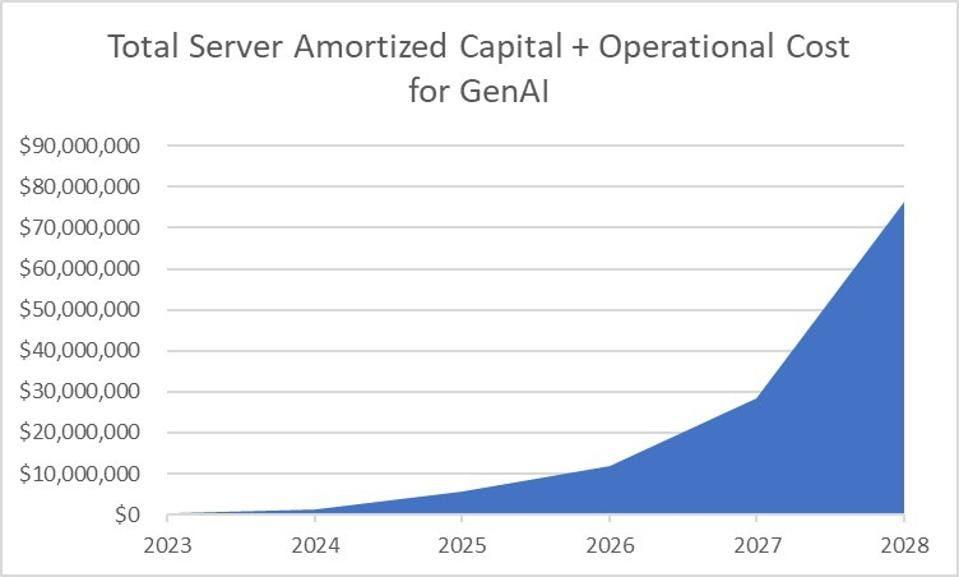
But AI breaks that model in a fundamental way. Unlike traditional software, where the marginal cost of serving one more user approaches zero after fixed development costs are sunk, every AI query burns real compute that somebody has to pay for. Your “software” rides on someone else’s model OpenAI, Anthropic, Google, etc. Each user interaction burns inference tokens, which in turn costs real compute, power, and data centre capacity. Even as unit prices per AI token trend down, token consumption per task rises, so the bill goes up.
“Intelligence is no longer free,” said Tony Wang, Portfolio Manager at T. Rowe Price, in May 2026. “Every AI interaction requires compute, inference, memory, storage and network resources.” That is not poetic. It is literal. And it explains why every public SaaS company that openly talks about AI-driven margin pressure is showing gross margins in the 60–70% range instead of the 80–90% range that SaaS investors spent thirty years expecting.
Why this breaks the SaaS playbook
The SaaS playbook was built on three economic principles:
- High gross margins (70–90%) to fund the R&D, sales, and overhead required to grow a company.
- Low customer acquisition cost relative to lifetime value, because once acquired, a customer cost nearly nothing to serve.
- Recurring subscription revenue, where the same customer paid the same fee every month, making cash flows predictable.
AI-powered SaaS breaks principle #1. When inference costs eat up 20–30% of revenue, gross margins fall from 80% to 50–60%. That 20–30 percentage point hit flows directly to the bottom line, compressing net margins and raising the amount of capital a company needs to reach profitability.
“Pure AI-first companies currently come in at gross margins of 50 to 60 percent, with inference alone eating up around 23 percent of revenue,” reported Jakob Steinschaden in Trending Topics, May 2026. “Across the Q4 2025 and Q1 2026 earnings seasons, a new operating corridor of 60 to 70 percent gross margin has established itself among publicly listed SaaS providers that openly talk about AI-driven margin pressure.”
That 10–20 percentage point range, where AI-infused SaaS companies are landing, is the new normal. It is not going away.
The pricing models companies are adopting
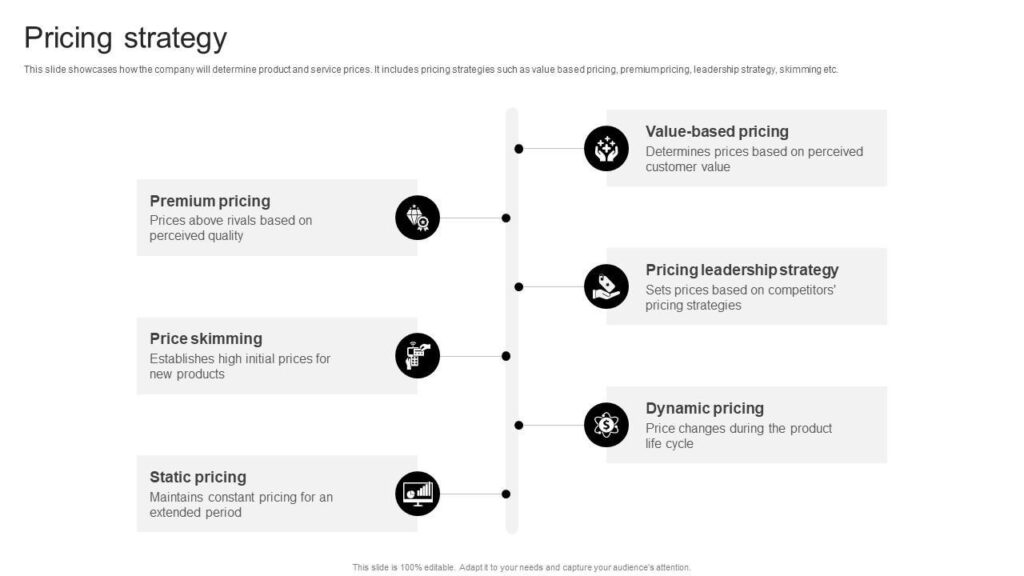
As the economic reality has set in, companies have scrambled to find pricing models that recover inference costs without destroying unit economics. Three patterns have emerged:
1. Usage-based pricing (the default response)
Approximately 92% of AI software companies now use some form of mixed pricing that includes a usage-based component (Bessemer Venture Partners, 2026). This is the defensive move. Instead of charging a flat subscription fee, companies charge per token, per query, per API call, or per unit of work completed. This ensures the vendor is not silently subsidising consumption by customers who use more than average.
SourceGraph’s Amp coding assistant sells credits: all inference a customer uses is explicitly charged, capping SourceGraph’s risk. For individual subscribers, all AI costs are passed through via credits. For enterprises, the model is negotiated but transparent.
The advantage: margins are protected. The disadvantage: it is unpopular with customers who prefer fixed, predictable costs.
2. Tiered pricing with usage caps
Companies set a base subscription price that includes a certain amount of monthly usage, then charge per unit for usage above the tier. This preserves the simplicity of subscription pricing while passing marginal costs to heavy users.
The challenge: customers hate unpredictable bills. If a feature consumes more tokens than expected, customers see surprise charges and churn.
3. Outcome-based pricing (the aspirational model)
The most sophisticated approach is to price based on business outcomes, not consumption. Instead of charging per token consumed, charge based on the business value delivered. An AI legal assistant might charge based on contracts reviewed or time saved. An AI customer service agent might charge based on tickets resolved or cost savings generated.
“Outcome-based pricing is how you get margins back,” reported Fraction in April 2026. “Flat-rate subscriptions work when marginal cost is near zero. They break when every interaction has a cost. Outcome-based pricing is not just defensive. It moves the conversation from ‘charge for consumption’ to ‘charge for value delivered,’ a meaningfully different frame.”
The problem: outcome-based pricing requires trust, measurement infrastructure, and often requires years to establish. It is the direction the market is moving, but it is not available to all companies immediately.
The deeper structural shift
The margin compression is forcing a renegotiation of what venture capital expects from SaaS companies. The 2020s assumption was: high margins mean you can afford high burn rates, high CAC, and long time to profitability, as long as the unit economics eventually math out. With margins compressed to 50–60%, that assumption breaks. Companies need to be profitable faster.
“AI is not just a new product cycle, it is changing the margin structure of the tech industry,” Tony Wang wrote. The phrase “margin structure of the tech industry” is key. This is not a temporary compression. It is a structural shift in what is economically viable.
Investors are responding by:
- Deprioritising traditional SaaS multiples: Public SaaS companies with significant AI-driven margin pressure are trading at lower multiples than non-AI SaaS companies.
- Favoring semiconductor and infrastructure plays: Capital that used to flow to SaaS is now flowing to Nvidia, Broadcom, and the data centre supply chain that actually powers AI.
- Focusing on outcome-based models earlier: Investors are now asking founders in the pitch meeting: “What is the outcome-based pricing model?” instead of: “What is your SaaS pricing model?”
What this means for Indian SaaS founders
For Indian SaaS founders, the margin compression has two implications:
First, it makes the India cost advantage even more important. The absolute labour cost advantage that made Indian SaaS companies viable globally is now more valuable because it allows them to achieve profitability at lower gross margins. A company with 25% net margins at 60% gross margin is more viable than one trying to achieve those nets at 50% gross margin.
Second, it shifts the focus to unit economics discipline early. The Indian SaaS playbook of the 2010s was: raise capital, hire aggressively, focus on growth. The AI-era playbook is: raise capital, hire disciplined, focus on unit economics. That shift favours founders who understand profitability from day one, which is more natural to Indian operational cultures than Silicon Valley blitzscaling.
The TFN lens: Marginal costs and moats
The lesson of the AI-driven margin compression is not that SaaS is broken. It is that the source of a company’s competitive moat matters more than it ever did. In traditional SaaS, the moat came from switching costs: once a customer was trained on your tool, they stayed. In AI-powered SaaS, the moat must come from owned intelligence, proprietary data, or integrated workflows that competitors cannot replicate even if they offer a similar price.
If a company’s AI advantage is purely from access to OpenAI’s API, and competitors have the same access, there is no moat and no defensibility. If a company’s AI advantage comes from domain-specific training on data that only they have, or from integrations that only work inside their system, the moat is real and defensible.
The companies winning in the AI era are the ones where the intelligence layer is defensible, not the ones where the intelligence layer is commoditised. That reframe is worth sitting with for any Indian founder building AI-powered products: what makes your intelligence defensible, and is it defensible enough to justify a gross margin of 50–60% instead of 80–90%?
Key takeaways
- AI-powered SaaS has gross margins of 50–60%, down from the 70–90% that traditional SaaS companies achieve, because inference costs eat up 20–30% of revenue.
- 92% of AI software companies now use mixed pricing models that include a usage-based component, because flat-rate subscriptions break when every interaction has a variable cost.
- The margin compression is structural, based on the physics of compute, not the whims of the market. It will persist as long as AI inference requires real resources.
- Outcome-based pricing is the aspirational model that AI SaaS companies are moving toward, but it requires trust and measurement infrastructure that takes years to establish.
- For Indian SaaS founders, the margin compression makes the India cost advantage more important and shifts focus to unit economics discipline earlier in the company lifecycle.
- Companies with defensible intelligence layers proprietary data, domain-specific training, integrated workflows are the only ones that can justify lower gross margins.
Frequently asked questions
Why do AI queries have a cost when traditional software doesn’t?
Traditional software is compiled code running on servers you own or control. Once built and deployed, serving one more user costs negligible resources. AI software uses models you do not own, accessed via API, where every query consumes tokens that are tracked and billed. The model provider (OpenAI, Anthropic, Google) charges per token, and that cost scales with usage. So every customer interaction has a real, measurable cost.
How much of my revenue should I expect to lose to inference costs?
In 2026, AI-first companies are seeing inference eat up approximately 20–30% of revenue (ICONIQ State of AI, 2026). This varies by use case: a coding agent that generates long code sequences will have higher token consumption than a customer service agent that generates short responses. Plan for inference costs to be one of your top three costs after payroll and infrastructure.
Is usage-based pricing the solution?
It is the most common response, adopted by 92% of AI software companies (Bessemer Venture Partners, 2026). It protects margins by passing costs to users. But it creates friction because customers dislike unpredictable bills. Outcome-based pricing, where you charge for business value delivered rather than tokens consumed, is the aspirational model, but it requires trust and measurement infrastructure.
Why are SaaS stocks underperforming in 2025 and 2026?
Because investors are repricing SaaS companies based on lower gross margins. A traditional SaaS company with 80% gross margins can grow and be profitable. An AI-powered SaaS company with 50% gross margins must choose between growth and profitability. The market is now pricing in that choice, which is why traditional SaaS companies are trading at higher multiples than AI-infused ones.
How should I price my AI-powered product?
Start with usage-based pricing to recover inference costs transparently. Once you understand your cost structure and customer behaviour, experiment with tiered or outcome-based pricing to move toward more predictable revenue. Do not charge flat subscriptions unless you can quantify and manage your inference costs precisely you will find your margins shrinking unexpectedly if you do.
What is the long-term direction of AI software pricing?
Toward outcome-based pricing, where you charge based on business value delivered. But that requires trust, measurement infrastructure, and often years to establish. Until then, usage-based pricing or usage-based components in mixed models will be the dominant approach.
Sources
- T. Rowe Price, “AI Is Changing the Margin Structure of the Tech Industry,” May 2026. troweprice.com/insights
- ICONIQ Capital, “2026 State of AI,” cited in T. Rowe Price analysis.
- Bessemer Venture Partners, “AI Software Company Pricing Models,” 2026. bvp.com
- Jakob Steinschaden, “AI Is Eating Software Margins,” Trending Topics, May 2026. trendingtopics.eu
- Fraction, “AI Is Killing SaaS Margins. Outcome-Based Pricing Is How You Get Them Back,” April 2026. hirefraction.com
- The SaaS CFO, “Your AI Feature Is Quietly Destroying Your Gross Margin,” April 2026. thesaascfo.com
©️ The Founder Nation | All rights reserved | Written by TFN Research Desk |