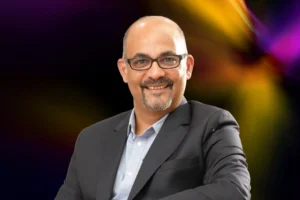


Mukesh Bansal co-founded Myntra and later built Cult.fit into one of India's largest integrated fitness and wellness platforms.
From revolutionizing fashion e-commerce with Myntra to transforming fitness through Cult.fit, explore Mukesh Bansal’s entrepreneurial journey across two iconic Indian startups.
Written by TFN Research Desk | covering startups, technology, venture capital, and business strategy.
Table of Contents
- Who is Mukesh Bansal?
- Early Life and Education
- Career Before Myntra
- How Cult.fit Started
- Funding History
- Revenue Growth and Recent Challenges
- Public Recognition
- Cult.fit vs Competitors
- Investor Perspective
- Founder Timeline
- Key Takeaways
- FAQs
- Sources
Who is Mukesh Bansal?
Mukesh Bansal co-founded Myntra in 2007, sold it to Flipkart in 2014, then built Cure.fit, now Cult.fit, into one of India’s largest health and wellness platforms. An IIT Kanpur computer science graduate, he stepped back from Cult.fit’s CEO role in 2024 to become executive chairman while building newer AI ventures, Nurix AI and Fermi AI.
Early Life and Education
Bansal was born in September 1975 in Haridwar, Uttarakhand, to a government-employee father and homemaker mother. He earned a B.Tech in Computer Science and Engineering from IIT Kanpur, graduating in 1997. He has said he spent his college years reading business biographies by figures like Sam Walton and Akio Morita, an early sign of his entrepreneurial leanings.
Career Before Myntra
Bansal began as a systems analyst at Deloitte Consulting in Chicago for about two years, then moved to Silicon Valley, working across companies including NexTag, eGain, Centrata, and NewScale during the early 2000s dot-com era. After roughly a decade in the US, he returned to India in 2007, pooling savings with co-founders Ashutosh Lawania and Vineet Saxena to launch Myntra as a personalised-gifting platform before it pivoted into fashion e-commerce.
How Cult.fit Started
Myntra grew into India’s leading fashion e-commerce site before Flipkart acquired it in 2014 for roughly Rs 2,000-2,730 crore; Bansal stayed on as head of Flipkart’s commerce and advertising business until 2016. He then co-founded Cure.fit with Ankit Nagori that year, betting that Indians would pay for an integrated fitness, nutrition, and mental wellness platform rather than a standalone gym. His Myntra track record made fundraising unusually easy: Cure.fit raised roughly Rs 100 crore from Accel and IDG Ventures before even launching its first product.
Funding History
| Round | Year | Amount | Lead Investor(s) |
| Series A | 2016 | ~Rs 100 crore | Accel, Kalaari Capital, IDG Ventures |
| Series D | 2020 | Undisclosed | Temasek |
| Series E | June 2021 | $75 million | Tata Digital |
| Series F | Nov 2021 | Undisclosed | Temasek, South Park Commons, 360 One |
| Series F Ext. | Feb 2024 | $10.2 million | Valecha Investments |
| Series G | March 2026 | Rs 440 crore (~$47M) | Temasek (via MacRitchie) |
Cult.fit has raised over $750 million to date, per Inc42, most recently at a post-money valuation of roughly Rs 13,668 crore ($1.45 billion). The Series G is widely reported as its final private round before a planned IPO targeting around Rs 2,500 crore.
Revenue Growth and Recent Challenges
| Fiscal Year | Revenue | Net Loss |
| FY23 | Rs 693.7 crore | Rs 625.5 crore |
| FY24 | Rs 926.6 crore | Rs 888.5 crore |
| FY25 | Rs 1,216 crore | Rs 480.8 crore |
Why this happened: Revenue grew steadily as Cult.fit expanded its Cultpass subscriptions and Cultsport equipment line, but FY24 losses widened sharply on higher advertising and legal costs tied to continued expansion. FY25 marked a real turnaround, with losses narrowing 10% even as revenue rose 31%, driven by improving unit economics at physical centres ahead of the company’s planned public listing.
Public Recognition
Bansal was featured in Fortune India’s 40 Under 40 list, received IIT Kanpur’s Distinguished Alumnus Award in 2021, and was recognised in Business of Fashion’s BoF 500 list for his impact on Indian retail. He also hosts a podcast, SparX, and has authored books including “No Limits” and “The Start-Up Code.”
Cult.fit vs Competitors
| Brand | Founded | Latest Revenue | Positioning |
| Cult.fit | 2016 | Rs 1,216 crore (FY25) | Integrated fitness, nutrition, and mental wellness, hybrid model |
| HealthifyMe | 2012 | Not publicly disclosed | AI-driven nutrition and fitness tracking app |
| Fitternity | 2016 | Not publicly disclosed | Fitness marketplace aggregating gyms and studios |
Cult.fit remains the largest integrated player by scale and funding, having built physical infrastructure across 300+ cities that pure digital rivals like HealthifyMe have not replicated.
Investor Perspective
Bansal’s Myntra exit gave him credibility and capital that made Cult.fit’s early fundraising unusually smooth. His strengths include a proven ability to scale consumer platforms twice and to step back from day-to-day leadership when the business needed fresh execution, as shown by promoting co-founder Naresh Krishnaswamy to CEO in 2024. The risks remain real: years of losses, heavy metro concentration, and reliance on continued Temasek and Tata Digital backing. If the planned IPO succeeds and FY25’s improved unit economics hold, Cult.fit could become one of India’s rare profitable consumer health-tech listings.
Founder Timeline
- 1997 — Graduates IIT Kanpur; joins Deloitte
- 2007 — Co-founds Myntra with Ashutosh Lawania and Vineet Saxena
- 2014 — Flipkart acquires Myntra
- 2016 — Co-founds Cure.fit with Ankit Nagori
- 2021 — Cult.fit reaches unicorn status
- 2024 — Steps down as CEO, becomes executive chairman; launches Nurix AI
- 2026 — Cult.fit raises Rs 440 crore Series G, prepares IPO
Key Takeaways
- Bansal’s Silicon Valley years gave him product instincts he applied twice, first at Myntra, then at Cult.fit.
- A successful prior exit made early fundraising far easier than for a first-time founder.
- Cult.fit’s hybrid physical-digital model built a moat pure digital fitness apps have struggled to match.
- Stepping back from CEO duties in 2024 shows a founder willing to hand over execution once scale demanded it.
- Pivoting to AI ventures like Nurix AI reflects a pattern of moving into new categories after each company matures.
FAQs
Who founded Cult.fit? Mukesh Bansal and Ankit Nagori, in 2016, as Cure.fit.
Did Mukesh Bansal found Myntra? Yes, in 2007 with Ashutosh Lawania and Vineet Saxena, before Flipkart acquired it in 2014.
Is Cult.fit profitable? Not yet; FY25 losses narrowed to Rs 480.8 crore on Rs 1,216 crore revenue.
How much funding has Cult.fit raised? Over $750 million, per Inc42, most recently at a $1.45 billion valuation.
Is Mukesh Bansal still CEO of Cult.fit? No, he became executive chairman in 2024 when Naresh Krishnaswamy took over as CEO.
What is Mukesh Bansal working on now? Nurix AI and Fermi AI, newer AI ventures, alongside his chairman role at Cult.fit.
Sources
- Mukesh Bansal – IIT Kanpur
- Mukesh Bansal’s journey: From Myntra and Cult to Nurix AI — YourStory
- CureFit’s FY24 Loss Zooms 42% To INR 889 Cr — Inc42
- Exclusive: Temasek increases stake in Cult.fit to 12% — Entrackr
- Cult.fit’s income crosses Rs 1,000 Cr in FY24 — Entrackr
- How Much Did Cult.fit Raise? Funding & Key Investors — Clay
© The Founder Nation | All rights reserved | Written by TFN Research Desk