

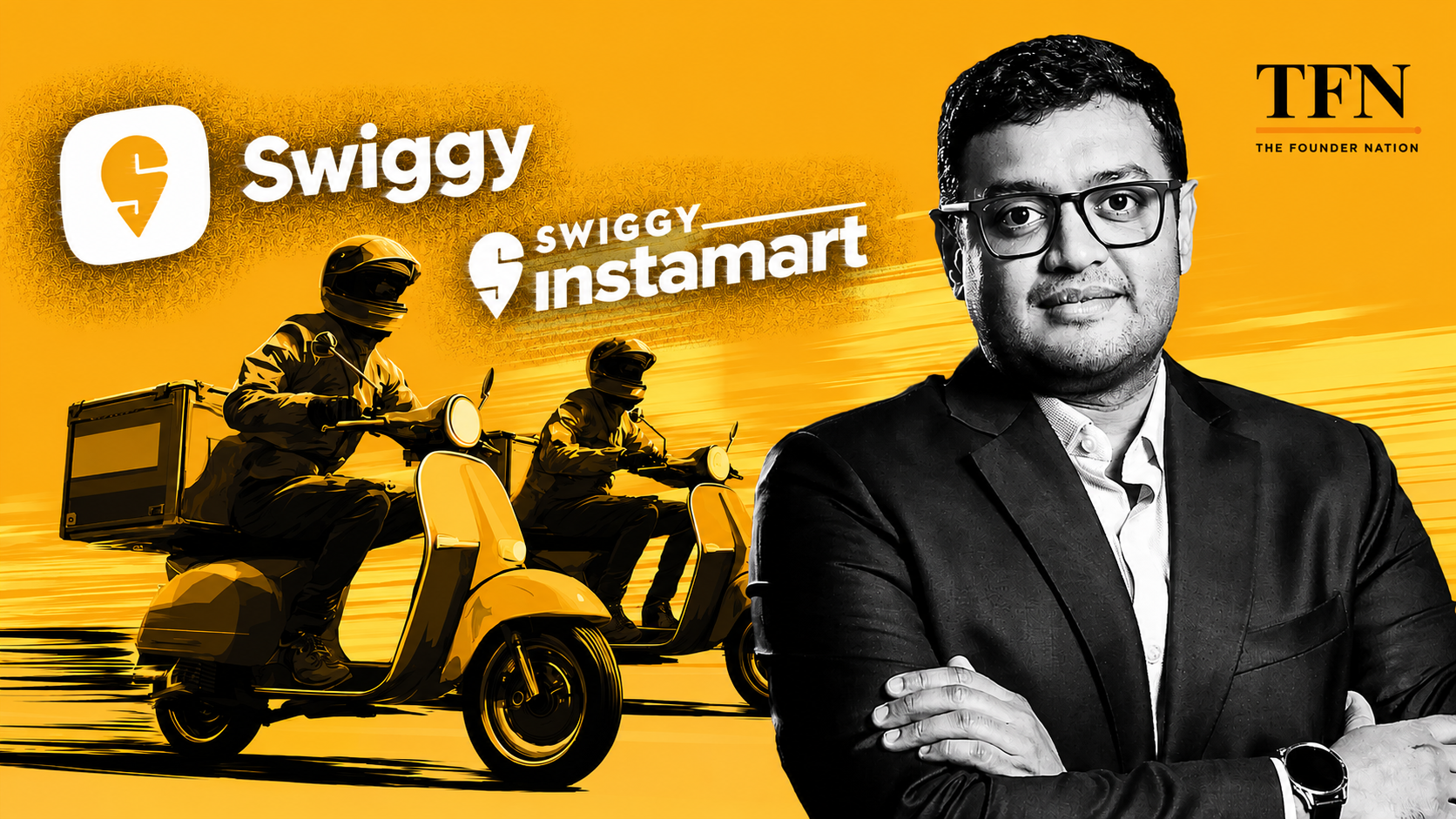
Swiggy CEO Sriharsha Majety with delivery riders in an editorial illustration highlighting the company's multi-service platform strategy as more than 35% of users engage across multiple services.
Swiggy customer data revealed over 35 percent of platform users actively utilise multiple services spanning food delivery, quick commerce and logistics verticals, validating super-app strategy but facing order frequency headwinds amid intense competitive pressure.1 The multi-service adoption signals customer acceptance of unified platforms consolidating diverse delivery categories within single application interfaces.2
Swiggy’s Multi-Service Strategy Drives Customer Adoption Across Businesses
However, order frequency metrics declined reflecting broader quick commerce market saturation and customer migration toward specialised platforms optimising individual delivery categories.3 Customers increasingly segment service usage across multiple platforms based on category-specific requirements rather than defaulting to unified super-app approaches.
The divergence between multi-service adoption and declining order frequency presents strategic challenge for Swiggy’s business model evolution. While platform expansion into adjacent categories attracts new customer cohorts and increases wallet share from existing users, specialisation dynamics incentivise customers to maintain relationships with category-focused competitors.4
Competition Across Quick Commerce Continues to Pressure Customer Engagement
Swiggy’s order frequency decline reflects competitive intensity from pure-play food delivery players including Zomato and quick commerce entrants including Blinkit, Zepto and Dunzo capturing specific customer segments through differentiated unit economics and category-specific optimisation. The platform faces balancing growth aspirations across categories against core competency excellence in food delivery where margins remain structurally challenged.
The multi-service adoption metrics validate consumer openness toward integrated delivery platforms while frequency trends indicate execution challenges monetising platform expansion effectively.5 Swiggy’s profitability trajectory depends on achieving sustainable unit economics across diversified service offerings while defending core food delivery market position against specialised competitors.