
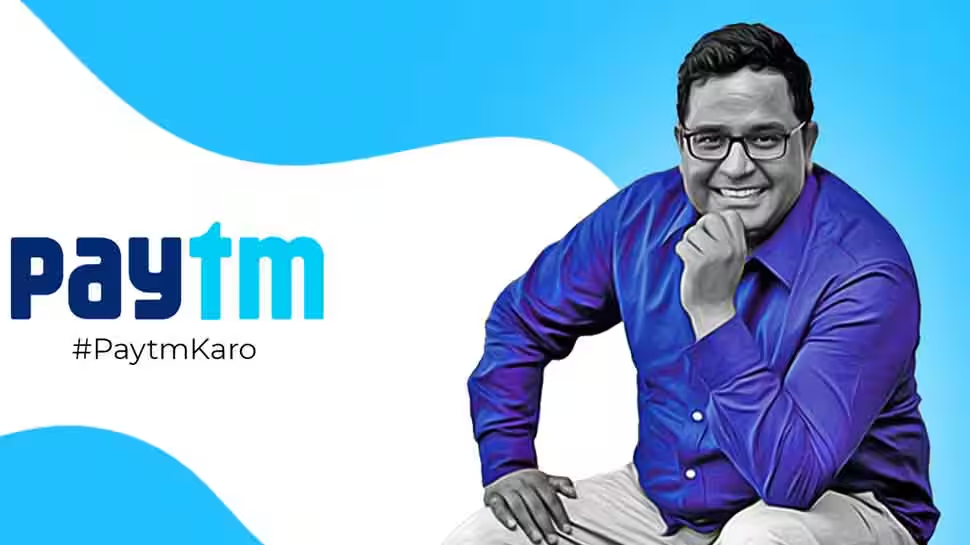
Vijay Shekhar Sharma founded Paytm and transformed it into India's leading digital payments and fintech platform, pioneering the country's digital payment revolution.
Written by TFN Research Desk | covering startups, technology, venture capital, and business strategy.
Quick Facts
Vijay Shekhar Sharma: Born June 7, 1978, in Aligarh, Uttar Pradesh. (Wikipedia) Alma mater: Delhi College of Engineering, B.Tech in Electronics and Communications. (Clay) Occupation: Founder, Chairman and CEO of One97 Communications (Paytm). Years active: 1997 to present. Spouse: Mridula Parashar Sharma. Children: one.
Table of Contents
- Introduction
- The Paytm Story
- Business Model
- How Paytm Makes Money
- Funding History
- Revenue and Recent Challenges
- Paytm vs Competitors
- Current Role and Recent Moves
- Key Takeaways
- FAQs
Introduction
Vijay Shekhar Sharma turned a mobile recharge website into Paytm, the brand that defined digital payments in India after the 2016 demonetization wave. One97 Communications delivered India’s largest-ever IPO in November 2021, then fought a regulatory shutdown of its banking arm before posting its first full annual profit in FY25. This profile covers Sharma’s founding story, Paytm’s business model, its funding history, and where it stands against PhonePe and Google Pay.
The Paytm Story
Sharma enrolled at Delhi College of Engineering at 15 and graduated at 19, having already sold a website, indiasite.net, for $1 million as a student. (Wikipedia) In 2000, he founded One97 Communications, a mobile content business. (Global Indian) Paytm launched under it in 2010 as a recharge and bill-payment platform. (Clay) The 2016 demonetization of high-value currency notes pushed millions toward digital wallets almost overnight, making Paytm a household name. (Wikipedia) Sharma expanded into e-commerce, banking, and investing, then priced India’s largest IPO in November 2021 at Rs 2,150 a share; the stock fell on debut and kept sliding for years. (Yahoo Finance) In early 2024, the RBI barred Paytm Payments Bank from accepting new deposits over compliance failures, and Sharma resigned as its non-executive chairman. (Wikipedia)
Business Model
Paytm runs a super app combining consumer payments, merchant solutions, and financial services distribution, offering UPI, recharges, ticketing, QR codes, and Soundbox devices. (Screener) After the RBI action, it shifted to a Third-Party Application Provider model, routing UPI through partner banks like Axis, HDFC, and SBI. (MatrixBCG)
How Paytm Makes Money
Revenue comes from merchant payment processing fees, Soundbox subscription rentals, and commissions from distributing loans, insurance, and wealth products. Financial services distribution has become the key profit driver as pure UPI carries near-zero margins under India’s zero-MDR policy. (Outlook Business)
Funding History
| Round | Year | Amount | Lead Investors |
|---|---|---|---|
| Growth round | 2015 | $246 million | Alibaba Group, SAIF Partners |
| Growth round | 2016 | $680 million | SoftBank, SAIF Partners, Discovery Capital |
| Growth round | May 2017 | $1.4 billion | SoftBank Group |
| Growth round | Aug 2018 | $356 million | Berkshire Hathaway |
| Growth round | Nov 2019 | $1 billion | T. Rowe Price, Ant Financial, SoftBank Vision Fund |
| IPO | Nov 2021 | $2.5 billion (Rs 18,300 crore) | Public issue at Rs 2,150/share |
(Sourced from Wikipedia and TechCrunch)
Pre-IPO funding across these rounds totaled well over $3 billion, making Paytm one of the most heavily capitalized fintechs globally before its IPO added $2.5 billion more.
Revenue and Recent Challenges
One97 Communications posted revenue of Rs 8,437 crore in FY25, up 22 percent, with merchant GMV growing 27 percent. (Goodreturns) It reported a net profit of Rs 552 crore, its first full annual profit, reversing a Rs 663 crore loss the prior year. (Goodreturns) The turnaround follows two hard years after the RBI restriction forced a costly bank migration and eroded UPI share, though cost discipline and financial services growth drove the recovery. (Sakshi Post)
Paytm vs Competitors
| Competitor | Founded | Revenue/GMV | Positioning |
|---|---|---|---|
| PhonePe | 2015 | Rs 7,115 crore, FY25 | UPI leader, Walmart-backed, pursuing 2026 IPO |
| Google Pay | 2017 (India) | Not publicly disclosed | Alphabet-backed, no separate India financials |
(Figures from CoinLaw and IndMoney)
Paytm holds only 6 to 8 percent of UPI volume against PhonePe’s roughly 45 percent and Google Pay’s 35 percent. (Angel One) But PhonePe remains EBITDA-negative on a reported basis due to heavy ESOP costs, while Paytm’s leaner structure let it reach profitability first despite far smaller UPI volume. (Outlook Business)
Current Role and Recent Moves
Sharma remains founder, Chairman, and CEO of One97 Communications. He resigned from Paytm Payments Bank’s board in February 2024 while remaining at the helm of the listed parent. (Wikipedia) SoftBank and Ant Financial have substantially or fully exited, most recently Antfin’s complete stake sale in August 2025. (Forbes)
Key Takeaways
- Sharma built Paytm from a 2010 recharge platform into the brand behind India’s demonetization-era payments boom.
- The November 2021 IPO raised $2.5 billion, India’s largest listing, but the stock fell sharply after debut.
- A 2024 RBI crackdown on Paytm Payments Bank forced a costly banking migration and cost UPI market share.
- FY25 marked Paytm’s first full annual profit, Rs 552 crore, on Rs 8,437 crore revenue.
- Paytm now competes on profitability rather than raw UPI volume, where PhonePe and Google Pay dominate.
FAQs
Who founded Paytm?
Vijay Shekhar Sharma founded One97 Communications in 2000 and launched Paytm under it in 2010.
How much did Paytm raise in its IPO?
$2.5 billion (Rs 18,300 crore) in November 2021.
Why was Paytm Payments Bank restricted?
The RBI barred new deposits in early 2024 over persistent non-compliance.
Is Paytm profitable now?
Yes, with a first full annual net profit of Rs 552 crore in FY25.
Who are Paytm’s key investors?
SoftBank, Alibaba/Ant Financial, and Berkshire Hathaway, though most have since sold down.
How does Paytm compare to PhonePe in UPI share?
Paytm holds roughly 6 to 8 percent versus PhonePe’s 45 percent, but reached profitability sooner.
What does Sharma do now?
He remains founder, Chairman, and CEO of One97 Communications.
© The Founder Nation | Written by TFN Research Desk