

Discord built one of the world's largest online communities by prioritizing private conversations, user trust, and subscriptions over advertising.
While every platform with 200 million users was racing to add algorithmic feeds and advertising revenue, Discord kept turning both down, and kept growing.
Topic tags: Product Strategy • Discord • Community Building • Platform Strategy • Founder Strategy
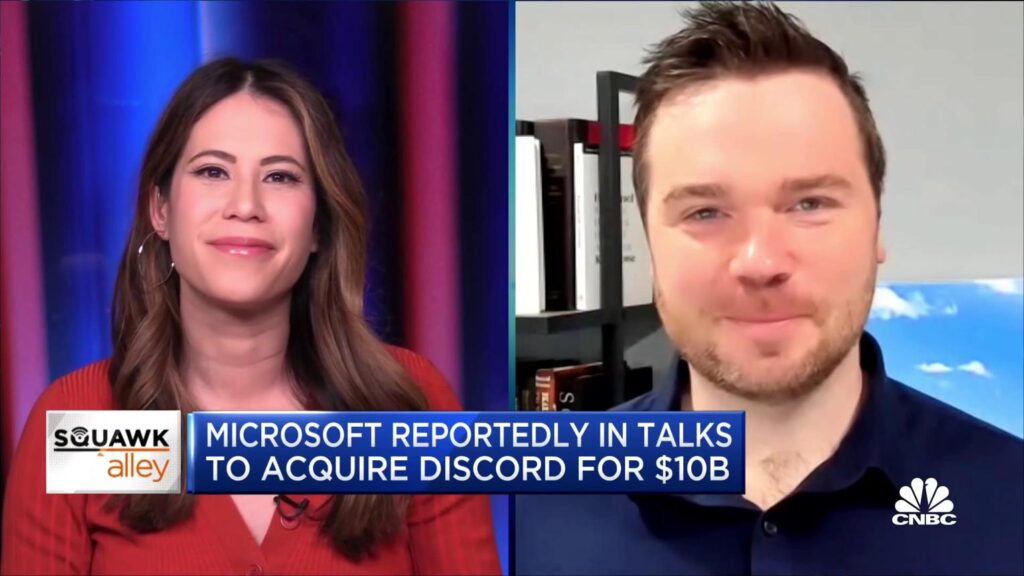
Discord turned down a reported 10 billion dollar acquisition offer from Microsoft in 2021 (Early Startup Days, April 2025). At the time, the platform had over 150 million monthly active users and was growing faster than any communication app outside of Clubhouse’s pandemic spike. The Microsoft offer would have returned extraordinary value to investors and given the platform resources that most consumer technology companies never access. Discord said no, raised another round of private funding at a 15 billion dollar valuation, and continued building exactly what it had always been: a private, community-driven communication platform that deliberately avoided the algorithmic feeds, advertising revenue, and public broadcast mechanics that define traditional social networks.
By 2025, Discord had 200 million monthly active users and 19 million weekly active servers (Wikipedia, Discord). The platform that refused to become social media became one of the most-used communication products in the world.
Why this story matters
Discord’s strategic choices are a direct challenge to the assumptions embedded in most consumer platform thinking: that more users require a public feed, that scale requires advertising, and that growth requires making content as broadly visible as possible. Every assumption Facebook, Instagram, X, and TikTok are built on, Discord has systematically rejected.
For founders building community products, content platforms, or communication tools, Discord’s trajectory poses a specific question: what if your competitive advantage is specifically what you refuse to build, not what you do build.
Background
Jason Citron founded Discord in 2015 after two prior startup ventures. His first, OpenFeint, a social gaming network for mobile, was acquired by GREE for 104 million dollars in 2011 (Wikipedia, Discord). His second, Hammer and Chisel, was a game studio whose multiplayer game Fates Forever was commercially unsuccessful. During Fates Forever’s development, Citron noticed how frustrating existing voice communication tools were for his team coordinating in games like League of Legends and Final Fantasy XIV. The available tools were either clunky (TeamSpeak), designed for a different purpose (Skype), or insufficiently low-latency for real-time game coordination.
Discord launched in 2015 as a voice and text chat tool specifically for gamers. Its defining design choices from day one were non-public: servers were invite-only by default, there was no algorithmic feed surfacing content from strangers, and the core experience was built around small groups of people who already knew each other coordinating in real time around shared activities.
How it happened
Move 1: Winning the gaming community before expanding to anyone else
Discord’s early growth was concentrated entirely within gaming communities, specifically on Reddit’s gaming subreddits and among esports players and Twitch streamers who used it to coordinate with their audiences (DiCloak, November 2024). By late 2016, the platform had 25 million users without ever targeting a non-gaming audience. The gaming community’s word-of-mouth was the entire distribution channel, and it worked because Discord was genuinely solving a real problem, low-latency coordinated voice communication, better than any existing tool.
This concentration gave Discord a technical and cultural foundation that proved durable when the platform eventually expanded. Gaming communities are large (3.3 billion gamers globally as of 2026, per Contrary Research), technically sophisticated, and disproportionately influential in internet culture. A platform that became the default communication layer for gaming communities had an organic expansion path into every other interest-based community on the internet, and did not need to manufacture that expansion through advertising or algorithm.
Move 2: Refusing advertising and building a subscription model instead
Discord’s revenue model is built on Nitro subscriptions (premium features for individual users), server boosts (community members paying to improve server capabilities), and, historically, a games storefront that was later de-emphasised (Wikipedia, Discord). The platform has never built an advertising product.
This is not an oversight. It is a structural choice driven by a specific belief: advertising-based social networks optimize for engagement metrics that are often achieved by surfacing conflict, controversy, and algorithmically amplified content, because conflict drives clicks. Discord optimized instead for what Citron described as “intimate, community-driven experiences” where users feel like their friends are right next to them rather than performing for a public audience (GeekNews Central, April 2024). The subscription model aligns Discord’s revenue with user satisfaction rather than engagement volume, a fundamentally different incentive structure from ad-supported platforms.
Move 3: Expanding beyond gaming while refusing to become generic
The COVID-19 pandemic in 2020 pushed Discord into a mainstream growth phase as people used servers for study groups, remote work, and social hangouts. By 2021, the platform had 150 million monthly active users across communities including education, art, anime, investment, and general social groups (Early Startup Days, April 2025).
What is notable about this expansion is what Discord did not do during it. It did not add an algorithmic feed that surfaced content from outside a user’s servers. It did not introduce a public profile page that made individual users’ activity visible to strangers. It did not build a follower-based broadcast mechanic. The expansion into non-gaming communities happened because Discord’s existing architecture, private servers, invite-based membership, interest-driven community structure, was genuinely useful for any community that wanted those properties, not because Discord changed its product to attract new audiences.
What competitors missed
Every major social platform that launched a competing feature to Discord, Slack (social channels), Twitter (Spaces), Facebook (Groups chat), Reddit (video chat), assumed that the feature gap was the main reason users chose Discord. They built voice channels, community rooms, and real-time coordination features. None of them displaced Discord in gaming or in the communities Discord had built, because the feature gap was not the actual advantage.
Discord’s advantage is architectural: it is private by default, community-owned by structure, and designed for people who already have a shared interest, not for broad public discovery. A Discord server is not competing with a Twitter timeline or an Instagram feed. It is competing with a group chat and a community forum simultaneously, and it wins that comparison because it combines both with low-latency voice communication in a single product.
The Microsoft acquisition offer makes this point most directly. Microsoft offered 10 billion dollars for a product that had approximately 150 million monthly active users. Discord said no because accepting would likely mean integrating Discord’s architecture into Microsoft’s existing product ecosystem, changing the product to serve Microsoft’s enterprise and consumer priorities, and losing the specific community-driven identity that had built the platform’s user loyalty (Early Startup Days, April 2025).
Risks and challenges
Content moderation at scale is Discord’s most persistent and most serious challenge. With an estimated 28 percent of teenagers using the platform (Contrary Research), Discord has faced intense regulatory scrutiny over child safety. In April 2025, the state of New Jersey sued Discord for failing to protect minors on its platform. Following the lawsuit, Discord introduced age verification through face and ID scanning, which then led to a separate data breach in October 2025 that exposed government IDs of approximately 70,000 users (Wikipedia, Discord). The private, pseudonymous nature of Discord’s architecture that makes it valuable for community building also makes it harder to moderate than public social networks where content is more visible to platform oversight.
Monetisation ceiling is a real structural risk. Discord’s Nitro subscription model generates revenue from a minority of its user base, and without an advertising product, the platform’s revenue per user is structurally lower than ad-supported competitors. Citron stepped down as CEO in April 2025 specifically to prepare for a public listing, and publicly traded companies face investor pressure for revenue growth that subscription-only models may not sustain at the multiples expected from consumer platforms (Contrary Research).
Platform dependency risk from its gaming roots. Discord’s largest and most engaged user base is still the gaming community, and the platform’s relationship with that community is structural to its identity. If gaming culture shifts significantly, either through the decline of PC gaming as a primary entertainment format or through a new coordination layer emerging within games themselves, Discord’s organic growth engine could slow materially.
What founders can learn
What you refuse to build is a product decision as significant as what you choose to build. Discord’s refusal to add algorithmic feeds, advertising, and public broadcast mechanics is not a list of missing features. It is the product identity that made the platform valuable to the specific communities that use it most loyally.
Scale does not require advertising if the core use case is strong enough. Discord built to 200 million monthly active users on subscription revenue and word-of-mouth within interest-based communities, without an advertising product. Founders building community or communication products should examine whether advertising would actually align their incentives with users’ interests, or work against them.
Turning down an acquisition is a real strategic choice, not a negotiating tactic. Discord’s decision to reject Microsoft at 10 billion dollars allowed the company to maintain its product identity and architectural choices. Founders considering acquisition offers should model what the product becomes post-acquisition, not just the financial outcome.
Community trust is an asset that advertising destroys. Discord’s users trust the platform precisely because it does not optimize against their attention. That trust is the moat, and it is incompatible with the advertising model that most platform companies default to at scale.
Expert analysis
Bull case. Discord’s combination of 200 million monthly active users, a private community architecture that is structurally different from every major social platform, and an upcoming IPO with a new CEO from Activision Blizzard positions the company for a public market debut that could value it significantly above the 15 billion dollar private valuation. The gaming market alone, at 3.3 billion users globally (Contrary Research), represents a large and engaged base, and Discord’s extension into non-gaming communities has diversified its dependence on any single vertical.
Bear case. The monetisation model has a structural ceiling without advertising. Discord Nitro penetration among its 200 million monthly users is not publicly disclosed, but subscription conversion rates for free consumer platforms are typically in the low single digits, meaning a large majority of Discord’s users generate zero direct revenue. The IPO will require the company to demonstrate either subscription growth at scale or a credible path to advertising revenue, and the latter would change the product identity that built the user base.
Contrarian view. Discord may be the last consumer platform of this scale that was built on a fundamentally different set of incentives from the advertising-based platforms that defined the previous decade of consumer technology. If the next generation of internet users, Gen Z and younger, genuinely prefer private, interest-based community experiences over public broadcast social networks, Discord’s architecture is not a limitation but the foundation of the most durable consumer product built in the last decade.
TFN LENS
The principle Discord has demonstrated, that the users who trust you the most will evangelise for you without any paid acquisition at all, is the same principle that built every great community-first product, from Reddit’s early subreddits to WhatsApp’s group messaging. What is unusual about Discord is that the company built a 200-million-user platform while holding this principle all the way through a 10 billion dollar acquisition offer and into a planned IPO, without once being tempted to monetise the attention its users generate through advertising.
For Indian founders building community products, tools, or platforms in 2026, Discord’s trajectory poses the most direct available test of conviction: if you have a community that trusts you, what are you willing to not build to preserve that trust. The platforms that answered “everything” have the largest advertising revenue. The platform that answered “advertising itself” has the most loyal users, and may prove to have the more durable business.
Building something of your own? Follow The Founder Nation and NamasteVC for curated startup funding news, grant alerts, and founder stories from India’s startup ecosystem, delivered straight to your feed, every week.
Frequently asked questions
Why did Discord turn down Microsoft’s $10 billion acquisition offer?
Discord declined the reported 10 billion dollar offer to remain independent and maintain its product identity, instead raising another private funding round at a 15 billion dollar valuation in 2021. Citron’s stated priority was preserving Discord’s architecture and gaming-first community culture, which would likely have been subsumed within Microsoft’s broader product ecosystem (Early Startup Days, April 2025).
How many users does Discord have in 2025?
Discord has 200 million monthly active users and 19 million weekly active servers as of 2025 (Wikipedia, Discord).
How does Discord make money without advertising?
Discord’s primary revenue sources are Discord Nitro (a premium subscription for individual users with enhanced features), server boosts (community payments to improve server capabilities), and historically a games storefront. The platform has never built an advertising product (Wikipedia, Discord).
Is Discord only for gamers?
No. Discord began as a gaming tool but expanded during the COVID-19 pandemic into study groups, professional communities, fan communities, investment groups, and general social hangouts. As of 2025, 3.3 billion people play games globally, but Discord’s user base spans interest groups well beyond gaming (Contrary Research).
Who is the current CEO of Discord?
Humam Sakhnini, a former vice chairman at Activision Blizzard, became CEO of Discord in April 2025 after Jason Citron stepped down. Citron stated his departure was in anticipation of taking Discord public and that he is “more of a builder, an early-stage kind of guy” (Contrary Research).
©️ The Founder Nation | All rights reserved | Written by TFN Research Desk |