
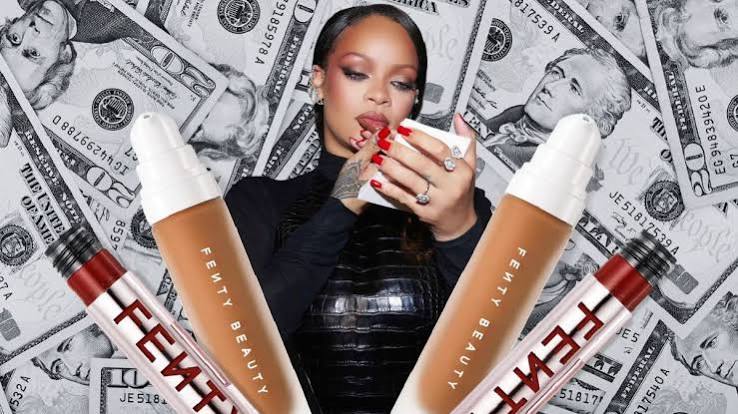
Rihanna built Fenty Beauty into one of the world's most influential beauty brands through inclusivity, strategic partnership with LVMH, and global retail expansion.
The Story: In September 2017, Rihanna launched a makeup line with 40 foundation shades at a time when most beauty brands offered a fraction of that range. The bet wasn’t subtle it was that an entire industry had been ignoring a massive, underserved market. Fenty Beauty generated over $100 million in sales within its first two months. By 2026, the brand has helped make Rihanna a multi-billionaire, forced competitors across the industry to expand their own shade ranges, and is reportedly now headed toward a change in ownership as LVMH explores a sale of its 50% stake.
People Also Ask
- What is Fenty Beauty? A cosmetics brand launched by Rihanna in partnership with LVMH’s Kendo Brands in September 2017, known for pioneering a 40-shade foundation range and inclusive marketing.
- How much is Fenty Beauty worth? Estimates place the brand’s valuation around $2.8 billion, with some 2026 reports citing the combined Fenty Beauty and Savage X Fenty empire at $3 billion or more.
- Who owns Fenty Beauty? Rihanna owns 50% of Fenty Beauty; LVMH owns the remaining 50% through Kendo Brands and handles distribution via Sephora. As of 2026, LVMH has reportedly explored selling its stake.
- Is Rihanna a billionaire? Yes estimates for 2026 place her net worth between $1.4 and $1.7 billion, with the large majority tied to her Fenty Beauty equity.
- What is the “Fenty Effect”? Industry shorthand for the wave of beauty brands that expanded their shade ranges and inclusive marketing after Fenty Beauty demonstrated that serving diverse skin tones was a multi-billion-dollar opportunity, not a niche concern.
Timeline: From 40 Shades to a Multi-Billion-Dollar Joint Venture
| Date | Event | Significance |
|---|---|---|
| Sept 8, 2017 | Fenty Beauty launches | 40-shade Pro Filt’r foundation range; partnership with LVMH’s Kendo Brands |
| Late 2017 | First two months of sales | Reported $100+ million in revenue |
| End of 2018 | Annual sales near $570–573 million | 15 months of operation; Forbes and Bernard Arnault confirm figures |
| 2017–2022 | “Fenty Effect” reshapes the industry | Competing brands expand shade ranges to match consumer expectations |
| Aug 2021 | Rihanna becomes a billionaire | Forbes credits Fenty Beauty equity as the primary driver |
| 2023–2025 | Sales growth slows in North America | Reported 4% revenue decline at LVMH overall in first nine months of 2025 |
| 2026 | Brand valued at ~$2.8 billion | Rihanna’s 50% stake estimated near $1.4 billion |
| 2026 | LVMH reportedly explores selling its 50% stake | Evercore engaged to find potential buyers, per Reuters-sourced reporting |
| March 2026 | Combined Fenty empire (Beauty + Savage X Fenty) reaches ~$3 billion | Expansion into new markets including Guyana |
Quick Facts
| Metric | Value | Source |
|---|---|---|
| Founder | Rihanna (Robyn Fenty) | Public record |
| Launch Date | September 8, 2017 | Wikipedia/Company |
| Joint Venture Partner | LVMH (Kendo Brands) | Multiple outlets |
| First-Year Revenue | ~$570 million | Forbes/Bernard Arnault |
| Estimated 2026 Annual Revenue | $600 million+ | brandclickx.com |
| Brand Valuation (2026, est.) | ~$2.8 billion | Multiple outlets |
| Rihanna’s Ownership Stake | 50% | Wikipedia/multiple outlets |
| Rihanna’s Net Worth (2026, range) | $1.4–1.7 billion | Multiple outlets |
| Distribution | Sephora, 50+ countries | Company |
| Shade Range at Launch | 40 shades (Pro Filt’r foundation) | Wikipedia |
| Combined Fenty Empire Valuation (2026) | ~$3 billion (Fenty Beauty + Savage X Fenty) | sunsiriusmedia.com |
How Rihanna Built a Beauty Empire Around an Industry Blind Spot
The Insight: Inclusivity Wasn’t Charity, It Was an Unmet Market
Before Fenty Beauty, most prestige foundation lines offered a narrow band of shades clustered around lighter skin tones, leaving millions of consumers underserved by an industry that treated them as a niche. Rihanna’s bet was that serving that overlooked market wasn’t a social-good side project — it was a multi-billion-dollar gap waiting for the first major brand willing to actually fill it. The 40-shade Pro Filt’r launch proved the thesis almost immediately: the range sold out across multiple shades within days, generating real demand data that competitors couldn’t dismiss as a one-off marketing stunt.
Structuring It as Ownership, Not Endorsement
The defining business decision wasn’t the shade range it was the joint-venture structure with LVMH. Rather than licensing her name to an existing cosmetics company for a royalty, Rihanna co-owns Fenty Beauty outright at 50%. That distinction is the difference between collecting a fee on revenue and capturing half the entire enterprise value as the brand scales a structure that turned her into a billionaire when LVMH’s beauty incubator infrastructure (manufacturing, Sephora distribution, global retail relationships) combined with her cultural reach to produce hundreds of millions in annual revenue.
The “Fenty Effect” Reshaped a $500 Billion Industry
Fenty Beauty’s success forced a structural response across the cosmetics industry. Competing brands faced pressure to expand shade ranges, improve undertone matching technology, and rethink marketing that had previously centered narrower beauty standards. That shift created what the industry now calls “the Fenty Effect” the recognition that inclusive product development wasn’t a cost center, it was a growth lever every major beauty company eventually had to adopt or risk losing market share to brands that did.
A Maturing Brand and a Changing Ownership Picture
By 2023–2025, Fenty Beauty’s North American sales growth slowed as the broader prestige beauty category matured and LVMH’s overall revenue dipped. In 2026, reporting indicated LVMH under pressure to focus capital on core luxury holdings like Dior was exploring a sale of its 50% Fenty Beauty stake, with investment bank Evercore engaged to identify buyers. Whether that produces a new majority owner, a buyout by Rihanna herself, or another structure remains an open question as of mid-2026.
Fenty Beauty’s Model vs. Other Celebrity Beauty Brands
| Model | Fenty Beauty (Rihanna) | Rare Beauty (Selena Gomez) | Licensed Celebrity Line |
|---|---|---|---|
| Ownership structure | 50/50 joint venture with LVMH | Majority founder-owned, independent | Royalty/licensing, minimal equity |
| Distribution backbone | LVMH/Sephora global infrastructure | Sephora, then Ulta (2026) | Varies, often limited retail |
| Core differentiator | 40-shade inclusivity at launch | Mental-health mission, viral blush | Celebrity name recognition |
| Valuation (2026, est.) | ~$2.8 billion | ~$1.3–2.7 billion (disputed) | Typically far lower |
| 2026 status | Mature; possible ownership change | Growing; explored and paused a sale | Often short-lived |
The Risks Ahead
1. Ownership Transition Uncertainty: A potential sale of LVMH’s stake could change Fenty Beauty’s distribution backbone, manufacturing relationships, and strategic direction in ways that are hard to predict from the outside.
2. Category Maturation: Reported North American sales softness suggests the inclusive-beauty wave that powered Fenty’s early growth has matured into a more competitive, multi-brand category.
3. Founder Engagement: Rihanna has stepped back from day-to-day involvement in recent years, which can affect a brand whose original momentum was deeply tied to her personal visibility and marketing presence.
4. Industry-Wide Commoditization of Inclusivity: Because so many competitors adopted expanded shade ranges, the feature that once differentiated Fenty Beauty is now closer to a baseline industry expectation rather than a unique selling point.
Key Takeaways
- Fenty Beauty launched in 2017 with a 40-shade foundation range and generated over $100 million in sales within its first two months
- The brand is structured as a 50/50 joint venture with LVMH rather than a licensing deal, giving Rihanna direct equity rather than royalty income
- Fenty Beauty’s success forced a broader “Fenty Effect” across the cosmetics industry, pushing competitors to expand shade ranges and inclusive marketing
- The brand’s roughly $2.8 billion valuation makes Rihanna’s 50% stake the dominant driver of her estimated $1.4–1.7 billion net worth
- LVMH’s reported 2026 exploration of selling its stake signals a potential ownership shift as the brand matures
The Bottom Line
Fenty Beauty’s lesson isn’t really about makeup it’s about identifying a market an entire industry had decided wasn’t worth serving, and structuring the business as genuine ownership rather than a licensing fee. Rihanna didn’t just put her name on someone else’s product line; she co-built the infrastructure that let a single, well-timed insight about inclusivity become one of the largest wealth-creation events in modern celebrity business history.
Sources
- Wikipedia: “Fenty Beauty” https://en.wikipedia.org/wiki/Fenty_Beauty
- nss G-Club: “LVMH Sells 50% of Fenty Beauty: End of a Beauty Revolution?” https://www.nssgclub.com/
- brandclickx: “Fenty Beauty: How Rihanna Built a $2.8 Billion Beauty Empire” https://brandclickx.com/
- sunsiriusmedia: “Rihanna’s Fenty Empire Reaches Historic $3B Combined Valuation” https://www.sunsiriusmedia.com/
- sociallifemagazine: “Rihanna Net Worth 2026: Inside the $1.4 Billion Fenty Empire” https://sociallifemagazine.com/
Stay in the Loop
For more stories, breakdowns, and unfiltered takes on what is really happening in business and tech, follow TheFounder Nation.
Instagram Handle : https://www.instagram.com/thefoundernation?igsh=MTZobDUwc2xqZWdhOA==
We cover what the mainstream business press won’t.
© The Founder Nation | All rights reserved | Written by TFN Research Desk