
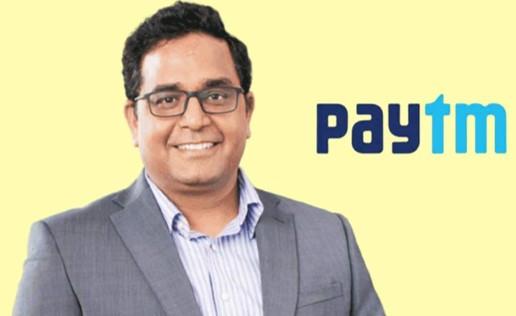
Vijay Shekhar Sharma transformed Paytm from a mobile recharge platform into one of India's leading digital payments and fintech companies.
Vijay Shekhar Sharma built Paytm from a mobile recharge platform into one of India’s most influential fintech companies, transforming the country’s digital payments ecosystem.
Written by TFN Research Desk | covering startups, technology, venture capital, and business strategy.
Table of Contents
- Who is Vijay Shekhar Sharma?
- Early Life and Education
- Career Before Paytm
- How Paytm Started
- Funding History
- Revenue and Recent Challenges
- Public Recognition
- Paytm vs Competitors
- Investor Perspective
- Founder Timeline
- Key Takeaways
- FAQs
- Sources
Who is Vijay Shekhar Sharma?
Vijay Shekhar Sharma is the founder, managing director, and CEO of One97 Communications, the parent company behind Paytm, India’s early digital payments pioneer. He built the company from a mobile content service into a listed fintech platform spanning payments, lending, insurance, and wealth management. What makes his story distinctive is that he arrived in Delhi at 15 unable to read English fluently, then taught himself the language from song lyrics and newspapers.
Early Life and Education
Sharma was born on June 7, 1978, in Aligarh, Uttar Pradesh, the third of four children of a schoolteacher father and homemaker mother. Educated in Hindi-medium schools in the small town of Harduaganj, he enrolled at Delhi College of Engineering, now Delhi Technological University, at age 15 and graduated with a degree in electronics and communications engineering at 19. The language barrier he faced there pushed him toward self-study and early entrepreneurship rather than derailing him.
Career Before Paytm
While still in college in 1997, Sharma built the website indiasite.net and sold it two years later for $1 million, an early signal of his instinct for internet businesses. He also co-founded XS Communications, a content management venture. After graduating, rather than take a salaried job, he launched One97 Communications in 2000, providing mobile content like ringtones, cricket scores, and jokes to telecom operators. The business struggled financially for years, and Sharma has spoken about periods when he could not pay employees or himself.
How Paytm Started
Paytm launched in 2010 under One97 as a mobile recharge and bill payment platform, at a time when digital payments were barely understood in India. Growth was gradual until the 2016 demonetization of high-value currency notes created sudden mass demand for cashless payment options, and Paytm’s early lead in QR codes and mobile wallets let it capture that surge faster than most rivals.
Funding History
| Round | Year | Amount | Lead Investor(s) |
| Early funding | 2011 | Not publicly disclosed | SAIF Partners |
| Growth round | 2015 | $246 million | Alibaba Group, SAIF Partners |
| Growth round | 2016 | $680 million | SoftBank, SAIF Partners, Discovery Capital |
| Series (unnamed) | May 2017 | $1.4 billion | SoftBank |
| Growth round | 2018 | $356 million | Berkshire Hathaway |
| Growth round | Nov 2019 | ~$1 billion | T. Rowe Price, Ant Financial, SoftBank |
| IPO | Nov 2021 | $2.46 billion | Public listing on NSE/BSE |
Paytm has raised roughly $2.76 billion in private funding according to Tracxn, on top of its landmark ₹18,300 crore IPO in November 2021, then India’s largest, though the stock fell sharply after listing.
Revenue and Recent Challenges
| Fiscal Year | Revenue | Net Loss |
| FY23 | Not publicly disclosed (base year) | ₹1,777 crore |
| FY24 | ₹9,978 crore | ₹1,423 crore |
| FY25 | ₹6,900 crore | ₹663 crore |
FY24 was One97’s first full year of operating EBITDA profitability since the IPO, aided by strong GMV growth. FY25 revenue fell sharply after the Reserve Bank of India restricted Paytm Payments Bank in early 2024, forcing a migration of UPI users to partner banks and a decline in payments revenue. Losses narrowed even as revenue dropped, reflecting cost discipline, though the company briefly turned quarterly profitable in Q2 FY25 before a one-time ESOP charge from Sharma forgoing his own stock options widened Q4 losses.
Public Recognition
Sharma featured on Time’s 100 most influential people list in 2017 and Forbes’ billionaires list the same year, becoming one of India’s youngest self-made billionaires. He has also drawn public scrutiny, including a 2022 traffic incident involving a police vehicle.
Paytm vs Competitors
| Brand | Founded | Latest Revenue | Positioning |
| Paytm | 2010 | ₹6,900 crore (FY25) | Broad fintech: payments, lending, wealth, insurance |
| PhonePe | 2015 | ₹7,115 crore (FY25) | UPI market leader, Walmart backed |
| Google Pay | 2017 (India) | Not publicly disclosed | UPI payments, no lending stack |
PhonePe and Google Pay together hold roughly 80 percent of UPI transaction volume, leaving Paytm with 12 to 15 percent, a steep decline from its earlier market leadership.
Investor Perspective
Sharma’s willingness to build from a mobile recharge tool into a full financial services stack shows real product ambition, and Paytm remains one of India’s most recognized fintech brands. The core risk is that regulatory action against its banking arm has structurally shrunk its payments business, and UPI rivals with deeper pockets have overtaken it in market share. If Paytm’s shift toward high-margin financial services distribution succeeds, sustained profitability and a valuation recovery become plausible outcomes.
Founder Timeline
- 1978 — Born in Aligarh, Uttar Pradesh
- 1993 — Enrolls at Delhi College of Engineering at age 15
- 1997 — Builds and later sells indiasite.net
- 2000 — Founds One97 Communications
- 2010 — Launches Paytm
- 2016 — Demonetization drives mass adoption
- 2017 — SoftBank invests $1.4 billion
- 2021 — Paytm’s ₹18,300 crore IPO
- 2024 — RBI restricts Paytm Payments Bank
- 2025 — Revenue declines, losses narrow further
Key Takeaways
- Being first to market during demonetization gave Paytm an advantage it later struggled to defend against better-funded UPI rivals.
- Regulatory dependence on a banking license proved a structural vulnerability that reshaped the whole revenue base.
- Founder sacrifices, like Sharma forgoing his own ESOPs, can affect reported profitability more than core operations do.
- Diversifying into financial services distribution offers a path to margins that pure payments volume cannot.
FAQs
Who founded Paytm?
Vijay Shekhar Sharma, launching it in 2010 under One97 Communications, founded in 2000.
How much funding has Paytm raised?
Around $2.76 billion privately, plus a $2.46 billion IPO in 2021.
Is Paytm profitable?
Not yet on a full-year basis, though losses have narrowed significantly.
What is Vijay Shekhar Sharma’s net worth?
Estimated near $1.1 billion by Forbes as of 2022; not independently verified since.
Who are Paytm’s main investors?
SoftBank, Alibaba/Ant Financial, and Berkshire Hathaway.
What caused Paytm’s FY25 revenue drop?
RBI restrictions on Paytm Payments Bank in 2024.
Where did Sharma study?
Delhi College of Engineering, now Delhi Technological University.
What makes Paytm different?
Its breadth across payments, lending, insurance, and wealth distribution under one platform.
Sources
- Wikipedia — Vijay Shekhar Sharma: https://en.wikipedia.org/wiki/Vijay_Shekhar_Sharma
- Wikipedia — Paytm: https://en.wikipedia.org/wiki/Paytm
- TechCrunch — Paytm $2.2 billion IPO filing: https://techcrunch.com/2021/07/15/paytm-files-for-2-2-billion-ipo/
- TechCrunch — Paytm IPO anchor investors: https://techcrunch.com/2021/11/03/paytm-raises-1-1-billion-from-anchor-investors-in-indias-blockbuster-ipo/
- Tracxn — Paytm funding data: https://tracxn.com/d/companies/paytm/__fX4oqtQT22EtlxMtcmif3tdSbDtGsDBMOclMMnK_dvE
- Paytm Investor Relations — FY24 results: https://paytm.com/blog/investor-relations/paytm-fy24-revenue-increases/
- Business Standard — Paytm Q4 FY25 and full-year results: https://www.business-standard.com/companies/news/paytm-reports-consolidated-loss-of-539-8-crore-in-q4fy25-revenue-drops-125050601502_1.html
- Business Upturn — Paytm Q4 FY25 results: https://www.businessupturn.com/sectors/fintech/paytm-q4-fy25-results-pain-continues-as-net-loss-widens-159-qoq-to-rs-539-crore-ceo-forfeits-esops/
- Entrackr — PhonePe FY25 results: https://entrackr.com/fintrackr/phonepe-posts-rs-7115-cr-revenue-and-rs-630-cr-adjusted-pat-in-fy25-10487742
- Couponsly — Paytm statistics and market share: https://couponsly.in/paytm-users-in-india/
© The Founder Nation | All rights reserved | Written by TFN Research Desk