
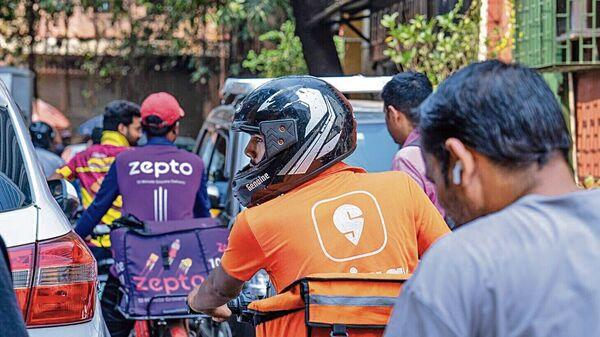
Dense fulfillment networks, dark stores, and rapid delivery infrastructure have become stronger competitive moats than product features alone.
Learn why distribution has become a startup’s biggest competitive advantage as customer acquisition costs continue to rise. Discover how leading companies are building scalable distribution channels to drive sustainable growth and outperform product-first competitors.
Written by TFN Research Desk | covering startups, technology, venture capital, and business strategy.
While Indian founders kept polishing features, the cost of reaching a customer quietly tripled, and the startups winning in 2026 are the ones who noticed first.
Topic tags: Startup Strategy • Distribution • Quick Commerce • Customer Acquisition • Indian Startup Strategy
D2C customer acquisition costs in India moved from Rs 800 to Rs 1,200 per customer in 2023, to Rs 1,200 to Rs 1,800 in 2024, and now sit at Rs 1,800 to Rs 2,500 in 2025 (upGrowth D2C Performance Marketing Playbook via Adtric, April 2026). Meta CPMs in India are up roughly 40 to 60 percent since 2023 (Adtric, April 2026). Building a better product used to be the entire game. It is no longer enough to win it.
Why this story matters
For a decade, Indian startup advice repeated one instruction above all others: build something people want, and growth will follow. That instruction is now incomplete. A founder can build a genuinely better product today and still lose the market to a competitor with a worse one, because the competitor solved the harder problem first: how do you reach the customer without paying a number that erases your margin.
This is not a contrarian take. It is visible in the market structure of every category that has consolidated in the last three years. Quick commerce did not get won by the company with the best app. Zepto, Blinkit, and Swiggy Instamart all run functionally similar dark store models with comparable delivery times (CIIM, October 2025). Blinkit pulled ahead with a market share of roughly 44 to 46 percent against Zepto’s 29 to 30 percent (CIIM, October 2025) not because its product was meaningfully superior, but because it inherited Zomato’s distribution: an existing user base, an existing delivery fleet, and an existing brand trust layer that a standalone product could not buy at any price.
Background
The economics changed because the auction changed. India added over 800 D2C brands in under five years, and most of them are bidding for the same urban shopper on the same Meta and Google auctions (Adtric, April 2026). The supply of attention did not grow nearly as fast as the demand for it. The result is a market where the price of being seen has compounded every year while the price of being good has not changed at all.
This created a structural shift that most founders have been slow to internalize. Product quality is now table stakes, the entry ticket to the conversation, not the thing that wins it. Distribution, the system through which a company reaches, acquires, and retains customers repeatedly and cheaply, has become the asset that determines who survives a category shakeout and who gets acquired or shut down quietly.
The clearest evidence sits in two businesses that have spent the most public capital teaching this exact lesson, one by inheriting distribution and one by building it from nothing.
How it happened
Move 1: Inheriting distribution beats building product from scratch
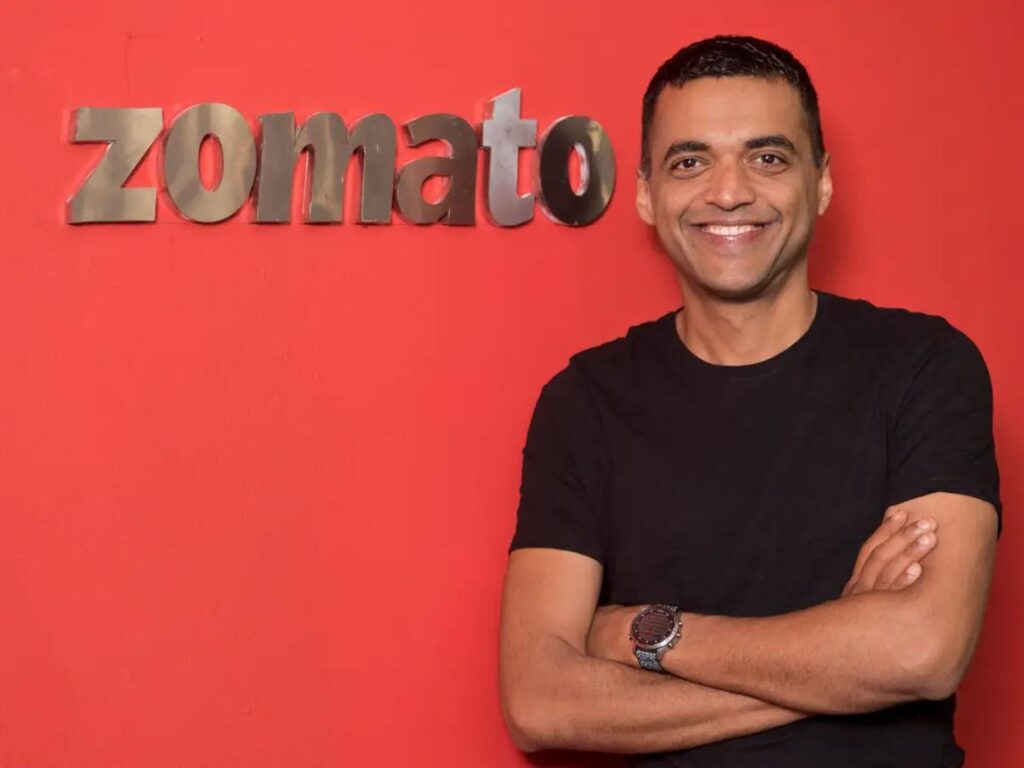
Zomato’s Blinkit acquisition is the starkest example available in Indian tech. Blinkit, originally Grofers, struggled for years as a standalone grocery delivery app competing on product alone. Once folded into Zomato in 2022, it inherited an existing demand funnel, cross-sell access to Zomato’s food delivery user base, and operational logistics relationships that would have taken years and hundreds of crores to build independently (Zomato case study via Acmeadvertiser, December 2025). Blinkit’s quick-commerce revenue surged 116 percent year-on-year, from Rs 1,063 crore in FY23 to Rs 2,301 crore in FY24 (Studocu Blinkit Analysis, August 2025). The product did not change dramatically in that window. The distribution underneath it did.
Move 2: Building proprietary distribution as a moat, not a function
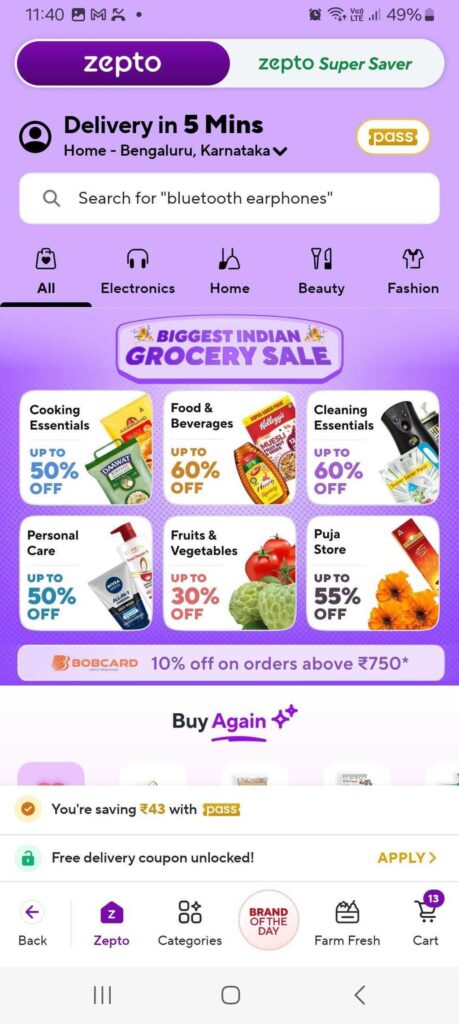
Zepto took the opposite path, choosing to build distribution from zero rather than inherit it, and the company treated dark store density itself as the core competitive asset rather than a support function for the app. Once city-level density is reached, unit economics shift, average order value rises, and return deliveries drop (PredictGrowth, September 2025). That density, not the interface or the ten-minute promise alone, is what makes the model defensible against a well-funded copycat. A competitor with a better app but no dark stores in the same pin codes cannot compete on delivery time, and delivery time is the entire value proposition.
Move 3: Recognizing when paid acquisition stops being a growth lever
The third move is less visible but more important for early-stage founders without quick-commerce capital. As CAC has climbed, brands that scale profitably in 2026 are shifting Meta’s share of total marketing spend from 70 to 80 percent down to 40 to 50 percent, moving the freed budget into organic content, owned audiences, and brand-building work that compounds instead of decaying with each campaign (Adtric, April 2026). This mirrors a finding from a decades-old British advertising study now being quoted across Indian boardrooms: for most consumer categories, roughly 60 percent of marketing budget should build brand and 40 percent should drive activation, because pure performance marketing decays over time in a way brand investment does not (Les Binet and Peter Field via Adtric, April 2026).
What competitors missed
The founders who lost share in quick commerce and D2C over the last three years largely made the same assumption: that a 10 to 15 percent better product would offset a worse distribution position. It did not, because distribution is not a multiplier on product quality, it is a gate in front of it. A superior product that nobody can afford to reach does not get a chance to prove itself superior. Competitors who treated marketing spend as a constant, rather than tracking the auction inflation happening underneath them, found their CAC quietly doubling while attributing the drop in growth to product fatigue rather than channel economics.
The deeper miss was treating distribution as someone else’s job, a marketing function bolted onto a product-first company, rather than a structural decision made at the same table as the product roadmap. Zepto’s founders built dark store density as a first-class strategic bet, not a logistics afterthought. Zomato’s leadership treated the Blinkit acquisition as a distribution acquisition first and a product acquisition second. Founders who keep these decisions in separate departments tend to discover the gap only after a better-distributed competitor has already taken the category.
Risks and challenges
Distribution-first strategy is not free of risk. Inheriting distribution through a parent company creates dependency: Blinkit’s growth is partly a function of Zomato’s continued health and willingness to subsidize quick commerce while it scales toward profitability. Building proprietary distribution, as Zepto did, requires capital intensity that most bootstrapped or seed-stage founders simply do not have access to, and burns cash for years before density produces a defensible moat. A founder pursuing distribution-first strategy without either inherited scale or venture capital runway risks building an expensive system that never reaches the density needed to pay for itself.
There is also a category-dependent ceiling. Distribution-as-moat logic applies most clearly to high-frequency, logistics-heavy categories like quick commerce, food delivery, and certain fintech rails. A B2B SaaS company selling to enterprise procurement teams faces a fundamentally different distribution problem, one closer to relationship-building and trust accumulation than dark store density or ad auction efficiency.
What founders can learn
Treat distribution as a product decision, made in the same room and on the same roadmap as feature development, not handed off to a marketing team after the product ships.
Track CAC inflation as a leading indicator, not a lagging one. If your category’s CPMs are rising 40 percent year-on-year and your product roadmap has not adjusted its growth assumptions accordingly, the gap will surface as a funding problem before it surfaces as a marketing problem.
Choose your distribution path deliberately: inherit it through partnership or acquisition, build it through capital-intensive density, or shift toward owned and organic channels that compound rather than decay. Each path has a different capital requirement and a different timeline, and founders who default into paid acquisition because it is the easiest to start often end up the most exposed when the auction tightens further.
Reallocate spend toward owned audiences before the category forces it on you. The brands already shifting Meta’s share of budget down to 40 to 50 percent are doing it from a position of strength, not crisis (Adtric, April 2026). Waiting until CAC becomes unsustainable to make this shift means making it from a position of weakness instead.
Expert analysis
Bull case. Founders who internalize distribution as a first-class strategic asset, not a downstream function, will compound an advantage that is very difficult for a product-only competitor to close. The quick commerce sector has already demonstrated this with brutal clarity, and the pattern is now spreading into D2C, fintech, and SaaS categories as the cost of paid acquisition climbs further across the board.
Bear case. Distribution-first strategy can become an excuse for under-investing in product quality. A company with strong distribution and a mediocre product can win share temporarily, but category leaders who rely entirely on distribution without continuing to invest in product eventually face churn pressure that distribution alone cannot solve. Blinkit’s customer retention sits around 45 percent against BigBasket’s roughly 60 percent (Studocu QCM 101, August 2025), a reminder that distribution wins the acquisition battle but not automatically the retention one.
Contrarian view. The framing of “distribution versus product” may itself be a false choice that obscures the real shift, which is that distribution has simply become harder to fake than product. A mediocre product can be disguised for a quarter or two through clever positioning and good copy. A weak distribution system cannot be disguised at all, because its failure shows up immediately in CAC, churn, and growth rate. The lesson is not that product no longer matters, it is that distribution has become the part of the business that is impossible to bluff.
Future outlook
As CAC inflation continues across Meta, Google, and the broader Indian digital ad market, expected to reach close to USD 14.56 billion by the end of 2026 (Research and Markets via GlobeNewswire, February 2026), founders without inherited distribution advantages will face increasing pressure to build owned channels earlier in their company lifecycle rather than treating paid acquisition as a default growth engine. The startups that build community, content, and retention-driven organic distribution in their first 18 months will likely hold a meaningfully lower CAC than competitors who wait until the auction forces the shift.
The bottom line
Product quality earns a customer’s first purchase. Distribution determines whether a company can afford to earn that first purchase at scale, repeatedly, without burning through its runway to do it. In a market where attention has become more expensive every single year, the founders building distribution as deliberately as they build product are the ones still standing when the auction prices the rest out.
Key takeaways
D2C customer acquisition costs in India have nearly tripled since 2023, moving from Rs 800 to 1,200 to a current range of Rs 1,800 to 2,500 (Adtric, April 2026).
Blinkit’s quick-commerce revenue surged 116 percent year-on-year after inheriting Zomato’s distribution infrastructure, not primarily from product changes (Studocu, August 2025).
Zepto built dark store density as a first-class strategic moat rather than a logistics afterthought, and density itself, not the app, is what makes the model defensible.
Brands scaling profitably in 2026 are deliberately shifting marketing spend away from pure performance channels toward organic and owned audiences that compound over time (Adtric, April 2026).
Distribution has become harder to fake than product, which is the real reason it now commands more strategic weight than feature development alone.
TFN LENS
The real shift here is not that distribution beat product. It is that distribution became the part of the business model that can no longer be bootstrapped on instinct alone. A founder with a sharp eye and a small team can still build a genuinely good product on a shoestring budget. Building a distribution system that survives a 40 percent CPM increase requires a different kind of discipline: tracking auction economics like a finance function, treating channel mix as a portfolio decision, and building owned audiences years before they are needed.
For Indian founders building in 2026, the operating question has flipped. It used to be: is the product good enough to spread on its own. Now it is: have I built a system that can reach customers profitably even after the channel I am using today gets twice as expensive. Answer that question honestly, and the product roadmap that follows will look different.
Building something of your own? Follow The Founder Nation and NamasteVC for curated startup funding news, grant alerts, and founder stories from India’s startup ecosystem, delivered straight to your feed, every week.
Frequently asked questions
Is distribution really more important than product for startups?
Not more important in an absolute sense, but increasingly the harder constraint to solve. Product quality is necessary to retain a customer once acquired, but distribution determines whether a startup can afford to acquire that customer at all, given that Indian D2C CAC has roughly tripled since 2023 (Adtric, April 2026).
Why did Blinkit beat Zepto in quick commerce market share?
Blinkit’s acquisition by Zomato gave it inherited distribution: an existing user base, delivery fleet, and brand trust that a standalone app could not replicate quickly. Blinkit holds roughly 44 to 46 percent market share against Zepto’s 29 to 30 percent (CIIM, October 2025).
How much has customer acquisition cost risen in India?
D2C CAC moved from Rs 800 to 1,200 per customer in 2023 to Rs 1,800 to 2,500 in 2025, while Meta CPMs in India rose roughly 40 to 60 percent over the same period (Adtric, April 2026).
Should early-stage Indian startups avoid paid acquisition entirely?
No, but founders should treat it as one channel among several rather than a default growth engine. Brands scaling profitably in 2026 are shifting Meta’s share of total spend from 70 to 80 percent down to 40 to 50 percent, redirecting the rest toward organic and owned channels (Adtric, April 2026).
What is the biggest risk of a distribution-first strategy?
Capital intensity. Building proprietary distribution, as Zepto did with dark store density, requires sustained cash burn for years before density produces a defensible cost advantage, a path not realistically open to most bootstrapped or seed-stage founders.
Official Sources
- Adtric – D2C Performance Marketing & CAC Trends: https://adtric.com/
- CIIM – Quick Commerce Market Share Report: https://ciim.in/
- PredictGrowth – Quick Commerce & Dark Store Analysis: https://predictgrowth.ai/
- GlobeNewswire – India Digital Advertising Market: https://www.globenewswire.com/
- Zomato Investor Relations: https://www.zomato.com/investor-relations
- Zepto Official: https://www.zeptonow.com/
©️ The Founder Nation | All rights reserved | Written by TFN Research Desk |