


AI infrastructure, fintech infrastructure, deeptech, and spacetech are emerging as the strongest contenders for India's next wave of unicorn startups.
While ecommerce and fintech built India’s first wave of unicorns, the data from 2026’s new entrants points somewhere founders are still underestimating.
Topic tags: Venture Capital • Unicorns • Deeptech • AI Infrastructure • Indian Startup Strategy
Of the five Indian startups that joined the unicorn club in 2026 through June, three were headquartered in Bengaluru, and the sectors they represented, payment infrastructure, lending technology, AI infrastructure, and deeptech space, tell a more precise story than the broad “fintech and ecommerce lead” headline most coverage repeats (Inc42, June 2026). India now has 131 unicorns total, and the pace of new entrants in 2026 is running ahead of 2025, but the composition of who is joining the club has shifted meaningfully (Tracxn, June 2026).
Why this story matters
The instinctive answer to “which sector creates India’s next unicorn” is fintech, because fintech has 26 unicorns and remains one of the two largest sectors alongside ecommerce’s 29 (Inc42, June 2026). That answer is true historically and increasingly incomplete going forward. Late stage private funding remained under pressure through 2025, while growth stage investments rose 14 percent year-on-year, and investor interest increasingly shifted toward AI, deeptech, and other long-term innovation-led sectors (Inc42, June 2026). The unicorns being minted in 2026 are not a continuation of the 2021 consumer internet pattern, they are a different cohort entirely, and founders building toward the next milestone need to understand which gap is actually open rather than which sector already has the most logos on a slide.
Background
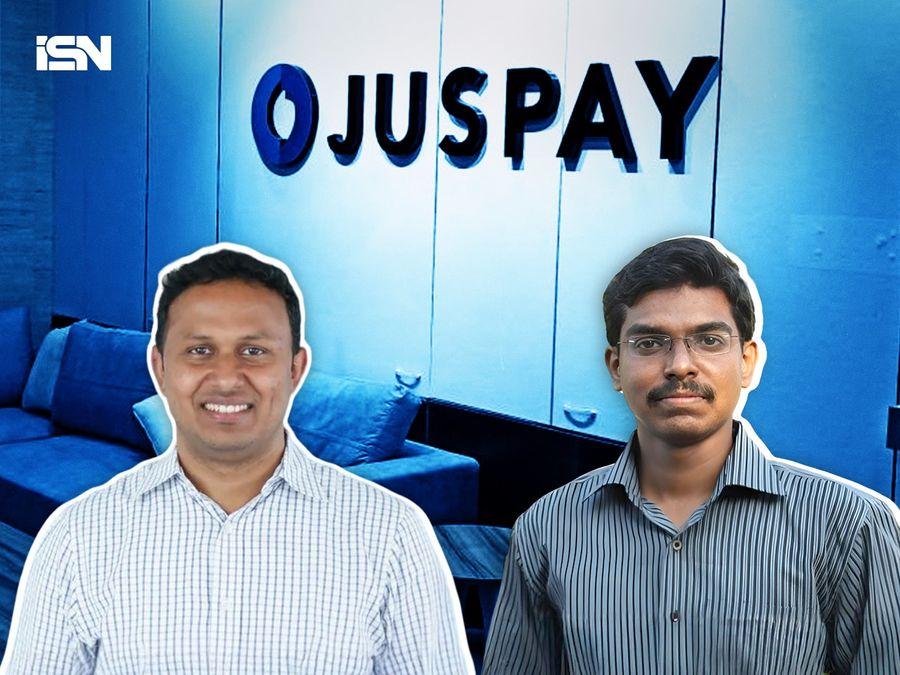
India’s unicorn count crossed 131 by June 2026, with five new entrants in the year so far: Juspay in January, KreditBee in April, Skyroot Aerospace in May, and AI startup Sarvam AI along with proptech major Square Yards joining shortly after (Inc42, June 2026). At this pace, the ecosystem is on track to mint eight to ten unicorns in 2026, an improvement on 2025 but still well below the 45 startups that crossed the threshold during the 2021 funding peak (Inc42, June 2026).
What makes the 2026 cohort distinct is not just the pace, it is the category composition. Juspay is fintech infrastructure, the invisible plumbing powering payment flows for thousands of merchants, not a consumer-facing payments app (Pro Edge Hub, June 2026). KreditBee represents lending technology addressing India’s credit gap for an emerging middle class with limited formal credit history (Pro Edge Hub, June 2026). Skyroot is deeptech and space, India’s first private spacetech unicorn (Pro Edge Hub, June 2026). None of these fit neatly into the “ecommerce and fintech” framing that describes India’s unicorn base historically, even though Juspay and KreditBee technically sit inside the fintech umbrella.
How it happened
Move 1: Infrastructure over consumer-facing apps within fintech itself
The fintech sector is not monolithic, and the distinction between consumer-facing fintech and fintech infrastructure has become the more useful lens for spotting where the next unicorn is likely to emerge. UPI processed 2.6 trillion dollars in transactions in 2025, with Razorpay, PhonePe, and CRED as the anchors, but the next wave of value creation is shifting toward credit infrastructure, BNPL rails, SMB lending, and insurance distribution built on India Stack (Value Add VC, May 2026). Infrastructure providers like M2P and Perfios benefit from the long-term digitization of financial services without carrying the customer acquisition costs that consumer-facing fintechs have to absorb (Business Outreach, June 2026), which is precisely why Juspay’s payment orchestration model, not a new consumer wallet, became the first unicorn of 2026.
Move 2: Deeptech moving from optionality to strategic necessity
Deeptech is continuing to move from future optionality to strategic necessity in 2026, as capital follows sovereignty, security, and industrial capability (Inc42, December 2025). Skyroot Aerospace’s unicorn milestone, India’s first private spacetech company to cross the threshold, is not an isolated event but a signal that startups such as Pixxel, SatSure, Agnikul Cosmos, and GalaxEye addressing satellite launches, Earth observation, and geospatial intelligence are positioned for similar trajectories (Business Outreach, June 2026). Deeptech and AI-native startups now represent roughly 15 percent of deals, the fastest-growing segment by deal share even though it remains smaller in absolute volume than fintech or B2B SaaS (Value Add VC, May 2026).
Move 3: AI infrastructure attracting premium valuations ahead of AI applications
The strongest momentum of any sector in 2026 is AI and deep tech specifically, with Indian AI startups building on India-specific data sets, regional language capabilities, and enterprise AI integration attracting premium valuations (Pro Edge Hub, June 2026). Neysa, an AI infrastructure company, raised 1.2 billion dollars in one of the largest funding rounds for any Indian startup, highlighting that AI infrastructure and deep tech companies are increasingly leading the next generation of Indian unicorns rather than consumer-facing AI applications (Business Connect India, June 2026). Sarvam AI’s entry into the unicorn club reinforces the same pattern: the company builds India-specific language model infrastructure, not a single consumer product, mirroring the same infrastructure-over-application logic playing out in fintech.
What competitors missed
Founders and investors who continued chasing the 2021-era consumer internet playbook, prioritizing user acquisition velocity and funding round size over unit economics, have largely missed the structural shift in what 2026-era investors are actually rewarding. The measures that mattered in 2021 were the size of a funding round and speed of user acquisition. The measures that matter in 2026 are unit economics, gross margin trajectory, and months of runway relative to burn (Pro Edge Hub, June 2026). A founder pitching a consumer app with strong growth numbers but weak margins is increasingly competing for a smaller, more skeptical pool of capital than a founder pitching infrastructure with a clear path to profitability, even if the infrastructure story sounds less exciting on a pitch deck.
The deeper miss is treating deeptech and AI infrastructure as a niche or a long-horizon bet unsuitable for most founders. India has over 680,000 startups, with 34,200 funded companies having collectively raised 618 billion dollars (Pro Edge Hub, June 2026), and close to 3,000 Global Capability Centres now operate in India, the largest base globally, with over 120,000 AI professionals across 185-plus AI and machine learning focused GCC hubs (Inc42, December 2025). This existing talent base, originally built for IT services and now expanding into full-stack AI engineering, is a structural advantage that deeptech and AI infrastructure founders can draw on in a way that was simply not available to the consumer internet founders of the 2015 to 2021 era.

Risks and challenges
Deeptech exits are governed by strategic acquisitions rather than IPOs, with only a few exceptions such as Tonbo Imaging, meaning founders and investors in this sector need a longer time horizon and different exit expectations than the public-listing pathway increasingly available to fintech and ecommerce unicorns (Inc42, December 2025).
Talent scarcity is the primary constraint in deeptech specifically, ahead of capital or policy. A shortage of experienced chip design and systems engineers is emerging as the bottleneck for India’s semiconductor and hardware-adjacent deeptech ambitions, even as capital and policy support through schemes like PLI continue to grow (Inc42, December 2025).
Capital concentration is reshaping who gets funded at all. Investors are deploying fewer, larger cheques into fewer companies, with profitability as the primary entry point at growth and late stage if an IPO is not realistically on the cards (Inc42, December 2025). This means founders in any sector, including the favored AI infrastructure and deeptech categories, face a narrower path to funding than the broad-based capital availability of 2021, regardless of how aligned their sector is with current investor thesis.
What founders can learn
Distinguish between a sector being fashionable and a sector being structurally underserved. Fintech remains India’s largest unicorn-producing sector by count, but within fintech, the infrastructure layer, not consumer-facing apps, is where 2026’s new entrants are concentrated.
Treat unit economics and margin trajectory as the primary pitch, not a footnote to a growth story. The capital available in 2026 explicitly rewards months of runway relative to burn over speed of user acquisition, a reversal from the 2021 playbook many founders are still implicitly running.
Consider deeptech and AI infrastructure plays even without a typical consumer tech background, given India’s existing GCC talent base of over 120,000 AI professionals already working inside AI and machine learning focused hubs (Inc42, December 2025). This talent pool is a resource many founders building consumer apps are not leveraging at all.
Plan for a strategic acquisition exit rather than an IPO if building in deeptech, since the exit pathway in this category looks structurally different from the public listing route increasingly available to mature fintech and ecommerce companies.
Build for India-specific data and language advantages in AI specifically, since the premium valuations in 2026’s AI cohort are concentrated in companies building India-specific datasets and regional language capabilities rather than generic AI wrappers competing directly with global foundation model providers.
Expert analysis
Bull case. AI infrastructure and deeptech represent the most structurally underbuilt categories relative to India’s existing talent and policy advantages. With over 3,000 GCCs and a fast-growing pool of AI engineers already embedded in the country, combined with deliberate government investment through the IndiaAI mission and PLI schemes, India has the underlying inputs to produce its next wave of category-defining unicorns from this segment specifically, not from another iteration of consumer internet.
Bear case. Deeptech and AI infrastructure are capital-intensive, talent-constrained, and structurally slower to reach exit than fintech or ecommerce. The strategic-acquisition-only exit pathway for most deeptech companies means investor liquidity timelines stretch significantly longer, and the talent shortage in chip design and systems engineering specifically could cap the pace at which this sector can actually mint new unicorns regardless of how much capital is theoretically available.
Contrarian view. The framing of “which single sector wins” may itself be the wrong question for India’s 2026 ecosystem. The data shows unicorns emerging simultaneously across payment infrastructure, lending technology, spacetech, and AI infrastructure, suggesting the more accurate pattern is not sector concentration but infrastructure concentration across multiple sectors at once. The common thread across Juspay, KreditBee, Skyroot, Sarvam, and Neysa is not their industry classification, it is that each company builds infrastructure that other businesses depend on, rather than a consumer-facing product competing directly for end-user attention.
Future outlook
As funding stabilizes around 11.5 to 13.8 billion dollars for 2026, structurally closer to 2019-2020 levels than the 2021 peak, capital will remain available but concentrated, gated, and increasingly domestically anchored rather than reliant on global arbitrage capital (Inc42, December 2025). The sectors most likely to produce India’s next unicorns over the following 24 to 36 months are infrastructure plays within already-large categories, fintech infrastructure and credit rails specifically, alongside deeptech and AI infrastructure companies building on India’s existing GCC talent base and government-backed sovereignty push.
The bottom line
India’s next unicorn is unlikely to come from a single obviously dominant sector. It is more likely to come from the infrastructure layer underneath several sectors at once, fintech, AI, and deeptech specifically, built by founders who understood that 2026’s capital rewards companies other businesses depend on, not companies competing for the same consumer’s attention that the 2021 cohort fought over.
Key takeaways
- Three of the five Indian startups that became unicorns in 2026 through June, Juspay, KreditBee, and Sarvam AI, sit inside infrastructure-layer fintech and AI categories rather than consumer-facing apps (Inc42, June 2026; Pro Edge Hub, June 2026).
- Skyroot Aerospace became India’s first private spacetech unicorn in May 2026, signaling deeptech’s continued shift from optionality to strategic necessity backed by sovereignty-driven capital (Inc42, December 2025; Business Outreach, June 2026).
- Deeptech and AI-native startups represent roughly 15 percent of deals by share, the fastest-growing segment even though it remains smaller in absolute volume than fintech or B2B SaaS (Value Add VC, May 2026).
- India’s GCC ecosystem, with over 3,000 hubs and 120,000-plus AI professionals, represents a structural talent advantage for AI infrastructure founders that is largely untapped by traditional consumer tech startups (Inc42, December 2025).
- 2026’s funding environment rewards unit economics, gross margin trajectory, and runway discipline over user acquisition speed, a clear reversal from the metrics that defined the 2021 unicorn boom (Pro Edge Hub, June 2026).
TFN LENS
The most useful way to read India’s 2026 unicorn cohort is through what each new entrant has in common structurally, not what sector label it carries. Juspay, KreditBee, Skyroot, and Sarvam AI are all, in their own categories, infrastructure that other businesses and institutions build on top of. None of them are racing for the same end consumer’s attention the way Swiggy, Zomato, and a dozen quick commerce challengers did during the 2021 cycle. That shift, from consumer attention to infrastructure dependency, is the actual signal underneath the sector-by-sector breakdown, and it explains why a category as seemingly niche as spacetech can produce a unicorn in the same year as a fintech infrastructure company, while flashier consumer categories struggle to mint new entrants at the same pace.
For founders trying to position for the next 24 to 36 months, the operating question should not be “which sector is hot.” It should be “what does an entire category of businesses or institutions need that does not yet have a reliable provider, and do I have the access to India’s existing talent and capital advantages to build it.” That question points toward infrastructure, in fintech, in AI, in deeptech, more reliably than any single sector label currently being repeated across funding headlines.
Building something of your own? Follow The Founder Nation and NamasteVC for curated startup funding news, grant alerts, and founder stories from India’s startup ecosystem, delivered straight to your feed, every week.
Frequently asked questions
Which sector created the most Indian unicorns in 2026 so far?
Through June 2026, five startups joined the unicorn club: Juspay (fintech infrastructure), KreditBee (lending technology), Skyroot Aerospace (deeptech and space), Sarvam AI (AI infrastructure), and Square Yards (proptech), showing a spread across infrastructure-heavy categories rather than concentration in one traditional sector (Inc42, June 2026).
Is fintech still the leading sector for Indian unicorns overall?
Yes, by total count. Fintech has 26 unicorns and ecommerce has 29, making them the two largest categories historically, but the newest 2026 entrants are concentrated in the infrastructure layer of fintech specifically rather than consumer-facing apps (Inc42, June 2026).
Why is deeptech considered a strong candidate for India’s next unicorn wave?
Deeptech is moving from optionality to strategic necessity as capital follows sovereignty, security, and industrial capability, supported by government schemes like PLI and India’s GCC talent base, though the sector faces longer exit timelines since most deeptech exits happen through strategic acquisition rather than IPO (Inc42, December 2025).
What is driving premium valuations in Indian AI startups specifically?
Indian AI startups building on India-specific data sets, regional language capabilities, and enterprise AI integration are attracting premium valuations, exemplified by Neysa’s 1.2 billion dollar funding round and Sarvam AI’s unicorn entry, both positioned as infrastructure rather than consumer-facing AI products (Pro Edge Hub, June 2026; Business Connect India, June 2026).
How is the funding environment different in 2026 compared to the 2021 unicorn boom?
2026 funding is expected to total 11.5 to 13.8 billion dollars, structurally closer to 2019-2020 levels than the 45 billion dollar-plus 2021 peak, with investors deploying fewer, larger cheques and prioritizing unit economics and profitability over user acquisition speed (Inc42, December 2025).
©️ The Founder Nation | All rights reserved | Written by TFN Research Desk |